
An awning window hinges at the top and opens outward from the bottom, working like a small canopy over your wall. That shape lets you crack it open during a downpour without water pouring inside, which is exactly why so many Ontario homeowners lean on this style for basements, kitchens, and rooms that need airflow without a security risk. If you've been searching for a window that ventilates well and seals tight against a Canadian winter, you're looking at the right style.
This article breaks down what makes awning style windows different from casement or sliders, and why they've become a go-to choice across Innisfil and the surrounding region. You'll get straight answers on how they operate, where they perform best in a home, and what to expect from vinyl awning windows specifically, since vinyl frames handle our temperature swings far better than older wood or aluminum options.
We'll also walk through sizing, from compact units to large awning windows and stacked or triple awning windows for bigger openings, plus what drives price when you're comparing awning windows for sale. By the end, you'll know exactly what to ask for before you request a quote.
Why Canadian homeowners choose awning windows
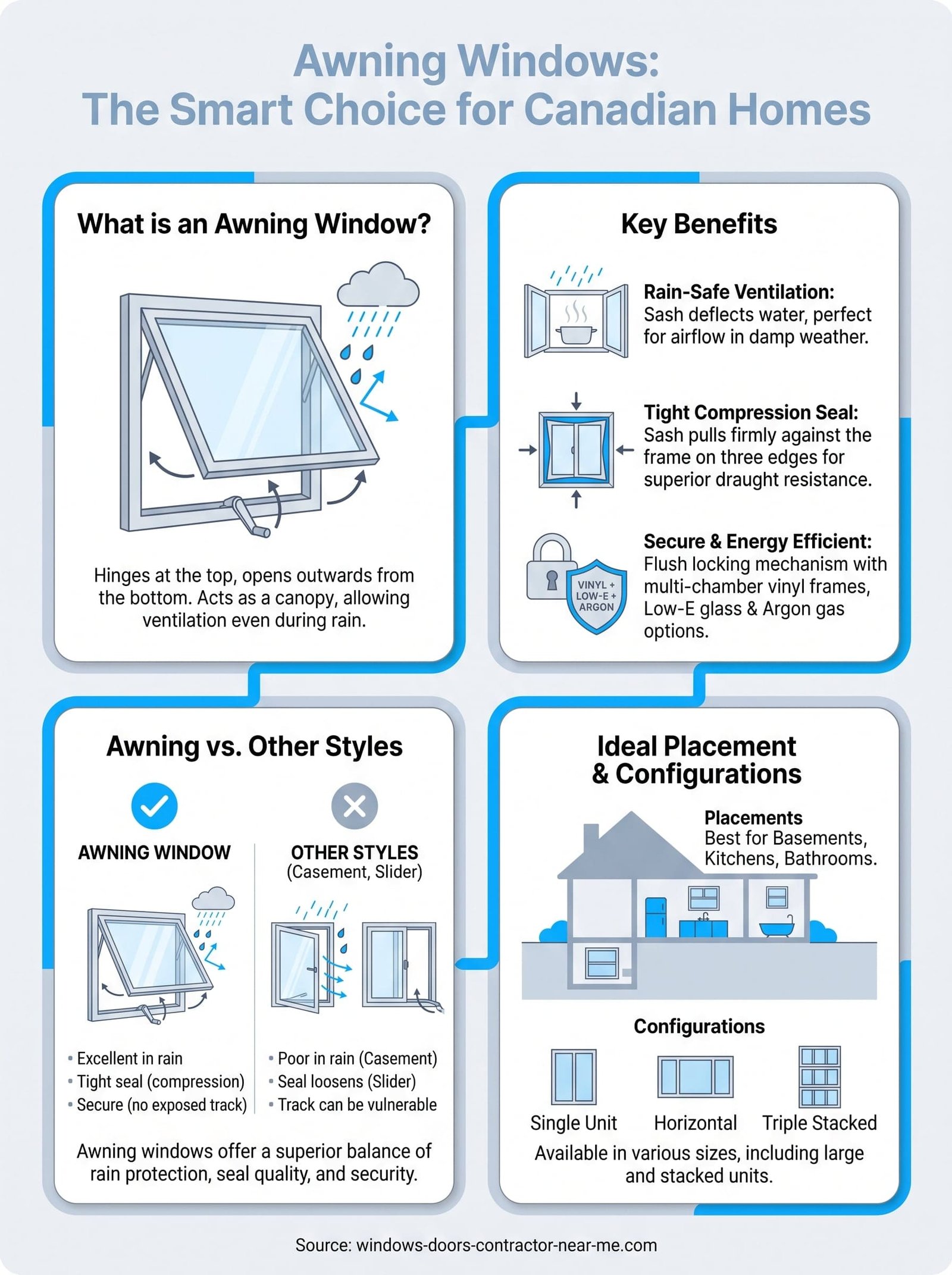
Winter is the real test for any window in Ontario, and awning windows pass it better than most styles because of how the sash compresses against the frame. When you crank one shut, the top-hinged design pulls the whole sash tight into the frame from three sides, creating a compression seal that's harder for wind-driven cold air to break through. Compare that to a slider, which relies on two sashes meeting in the middle and riding along a track that can loosen over time, and you can see why so many homeowners in Innisfil switch to awning style windows after a few rough Februaries.
Compression seals on all three open edges make awning windows one of the tightest-sealing styles available for a Canadian winter.
Ventilation is the other reason these windows show up so often in kitchens, bathrooms, and basements. Because the window opens outward from the bottom while the top stays fixed, you get airflow even during a light rain, since the sash itself acts as a small roof deflecting water away from the opening. That makes awning windows a practical pick for rooms where you need to clear steam or odours but can't leave a window wide open every time the sky looks grey. Basements benefit for a slightly different reason: awning units sit well above grade level and still let you crank them open for airflow without the security gap a slider or a fully open casement leaves behind.
Security and energy performance tie together closely here too. Since the sash swings outward and the crank mechanism locks it flush against the frame, there's no glass panel a person can pop out from outside the way you sometimes see with older slider hardware. Add a vinyl awning window frame with multi-chamber construction, Low-E glass coatings, and Argon gas fills, and you're looking at a window built specifically to handle the swing between a minus 20 January and a plus 30 July, which is a swing most window styles imported from milder climates simply weren't engineered for.
Where they fit best in an Ontario home
- Basements: above-grade placement plus tight ventilation control without a security gap
- Kitchens: crank-open airflow near sinks and stovetops without rain getting in
- Bathrooms: quick humidity clearing in a smaller footprint than a casement
- Above kitchen sinks or counters: no interior handle swing to clear cabinets or backsplashes
- Combined with fixed picture windows: adds ventilation to an otherwise sealed, view-focused wall
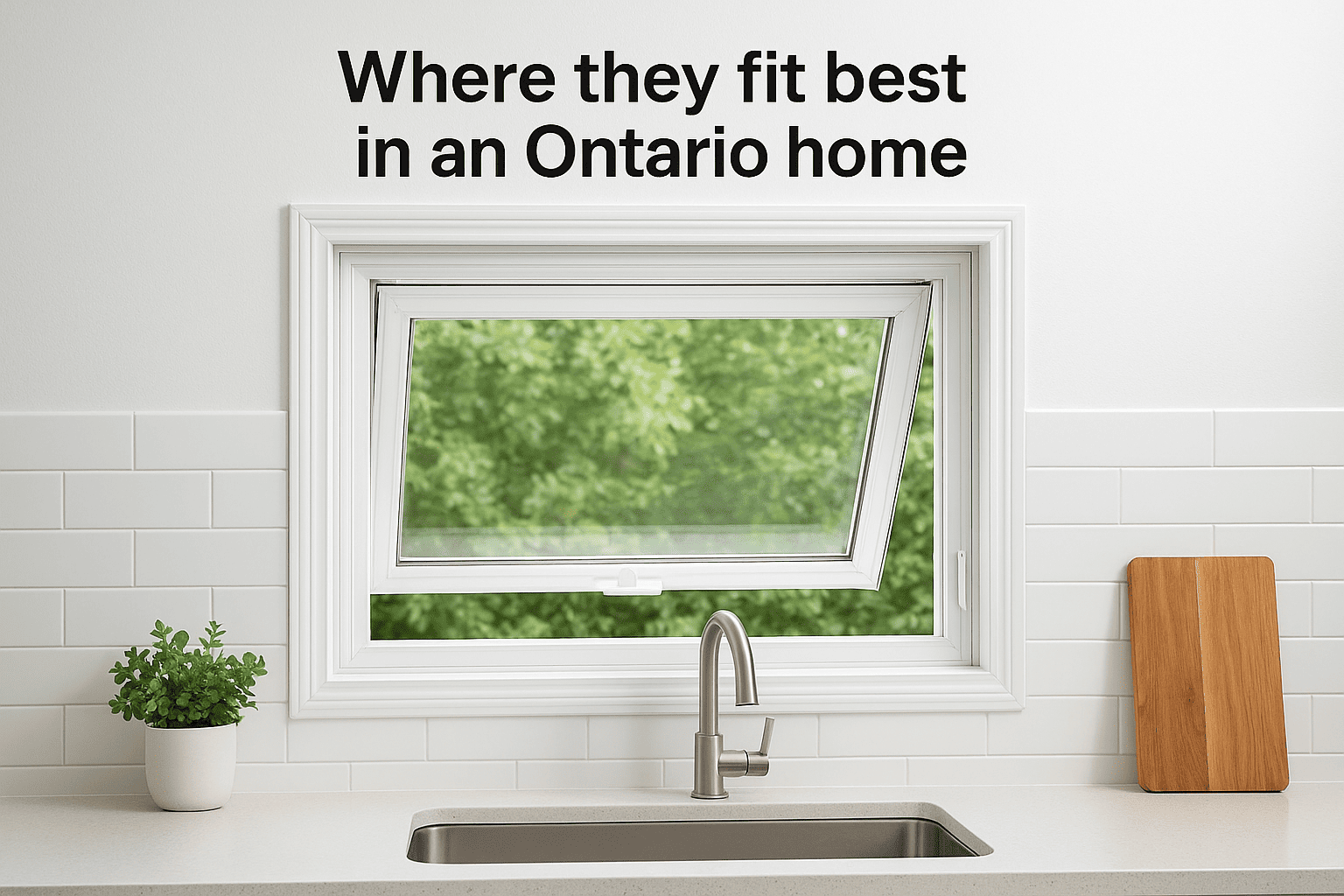
Ultimately, homeowners keep coming back to awning windows because they solve three problems at once: draft resistance, rain-safe ventilation, and a locking mechanism that doesn't leave an easy entry point. Very few window styles handle all three without a trade-off somewhere, which is exactly why this shape has held its place in Canadian home design for decades rather than fading out as a niche option.
How to choose the right awning window for your home
Selecting the right awning window style starts with the room, not the catalogue. A bathroom or laundry closet rarely needs anything beyond a single small unit, while a great room or a bedroom wall often calls for large awning windows or a stacked triple awning windows configuration to bring in more light without losing the tight seal. Think about how the window will be used day to day: if you're clearing steam from a shower, a compact unit does the job; if you're trying to flood a kitchen or living space with natural light while keeping ventilation options open, size up.
Match the window size to the room's job, not the wall's width, and you'll avoid paying for glass you never actually open.
Sizing and configuration options
Here's how the common configurations break down for Ontario homes:
- Single small unit: bathrooms, laundry rooms, above-counter kitchen spots
- Standard mid-size awning: bedrooms, home offices, secondary living spaces
- Large awning windows: great rooms, walkout basements, statement front elevations
- Horizontal awning windows: wide, shorter openings above kitchen sinks or along a basement band
- Triple awning windows: stacked or side-by-side units for maximum airflow and light on feature walls
Frame material and glass package
Once size is settled, focus on the frame. Vinyl awning windows dominate the Ontario market for good reason: multi-chamber vinyl doesn't rot, warp, or conduct cold the way older wood or aluminum awning type windows did. Ask about Low-E coatings and Argon gas fills too, since those two upgrades do more for your winter heating bill than almost any other spec on the order form. If you're comparing a supplier's lineup, request the actual U-factor and energy rating numbers rather than a general "energy efficient" claim, and check them against Natural Resources Canada's ENERGY STAR window criteria so you know the number in front of you actually means something.
Awning windows versus other popular window styles
Picking between window styles gets easier once you line up how each one actually performs, rather than comparing looks alone. Casement windows swing outward from a side hinge like a door, giving you a wide-open airflow path, but that same full-panel swing leaves a bigger gap that rain can sneak through and a larger surface for wind to catch during a storm. Awning type windows solve that by hinging at the top instead, so the sash itself blocks rain while still letting air move through the gap underneath.
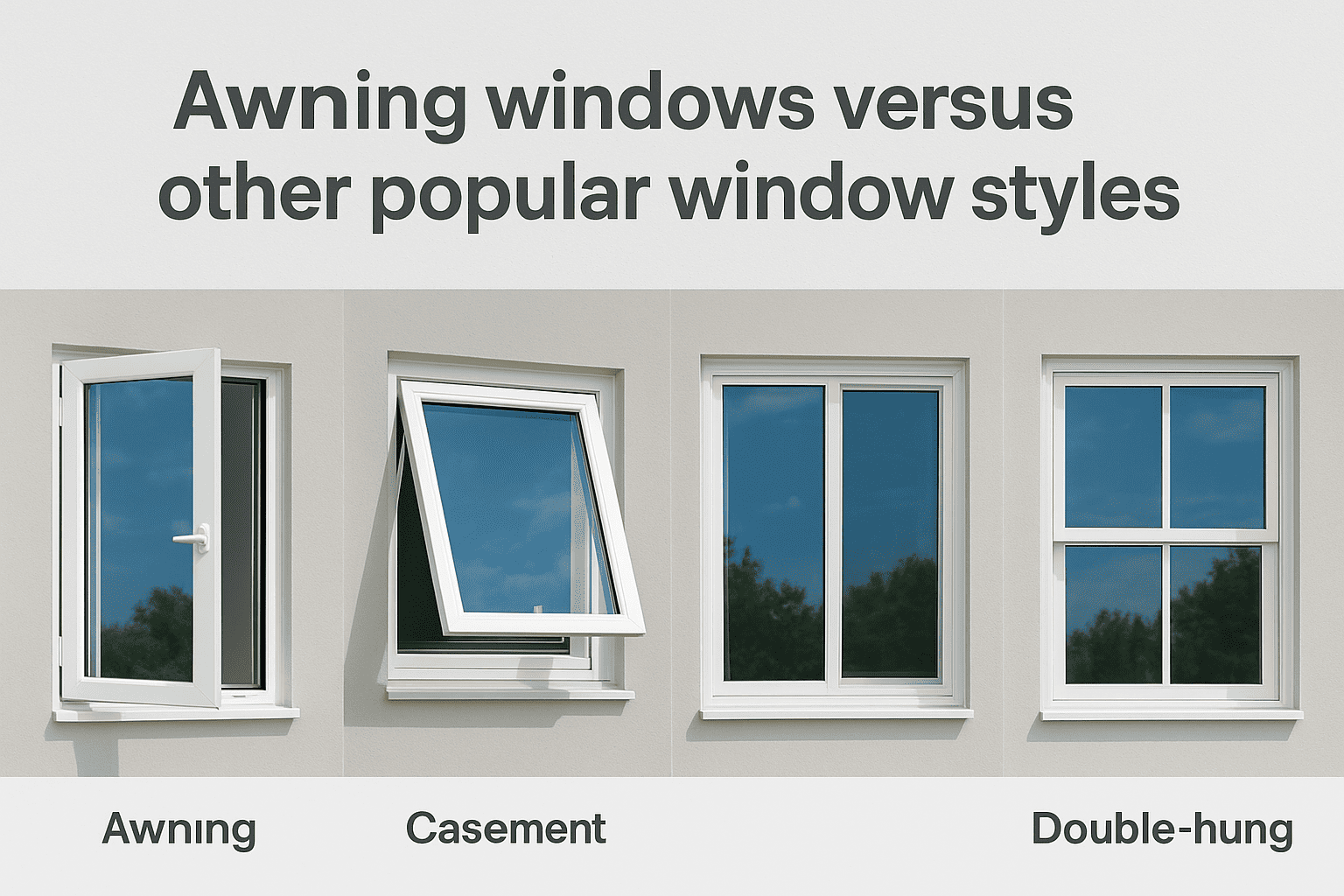
A casement gives you more airflow on a calm day, but an awning window is the one you can leave open during a storm.
Sliders and double-hung windows bring a different trade-off. Both rely on sashes riding along tracks, and those tracks loosen with age, which is why older slider units in Innisfil homes often develop draughts long before the glass itself fails. Double-hung windows add a vertical track and two moving sashes, meaning twice the hardware that can wear down. Neither style seals as tightly as a cranked-shut awning window style, since compression seals on three edges beat a track-and-latch system for keeping cold air out.
Quick comparison
| Style | Ventilation in rain | Seal quality | Security | Best rooms |
|---|---|---|---|---|
| Awning | Excellent | Tight (3-edge compression) | Strong (no accessible track) | Basements, kitchens, bathrooms |
| Casement | Poor | Good | Moderate | Bedrooms, living rooms |
| Slider | None | Fair (loosens over time) | Weaker over time | Larger walls, patios |
| Double-hung | None | Fair | Moderate | Traditional facades |
Think of it this way: if your priority list runs draught resistance, rain-safe ventilation, and tamper resistance, awning windows tick all three boxes at once, which is more than most competing styles manage.
What to expect when buying and installing awning windows
Buying awning windows for sale should feel straightforward once you know what questions to ask, and a factory-direct supplier makes that easier since you're dealing with the people who actually build the frame rather than a middleman reselling someone else's stock. Expect a free in-home consultation first, where a measurer checks your rough openings, discusses frame colour and glass options, and gives you a written quote that breaks down the awning window unit cost separately from installation labour. That separation matters because it lets you compare apples to apples if you're shopping multiple quotes.
Getting an accurate quote
Ask for these details before signing anything:
- Exact frame material and chamber count (vinyl multi-chamber vs standard)
- Glass package specifics: Low-E coating, Argon fill, U-factor rating
- Installation timeline and crew credentials (licensed and insured)
- Warranty terms in writing, not just verbal assurance
- Whether the quote is price-matched against competitor offers
A written, itemised quote protects you far more than a verbal promise ever will.
Installation day and warranty coverage
Crews typically remove the old sash and frame down to the rough opening, check for rot or moisture damage in the framing, then set and shim the new unit before sealing and trimming. A tight, square install matters more for an awning style window than most styles, since the compression seal only works if the frame sits perfectly plumb. Reputable installers finish most single-window jobs in under two hours.
Expect strong warranty backing from an established Canadian manufacturer: look for at least a 15-year seal failure warranty on the glass unit and a 5-year warranty covering both the product and the installation work itself. Suppliers who stand behind their own manufacturing tend to offer longer coverage than retailers reselling imported stock, since they're accountable for the whole product from factory floor to your wall.
Finding the right window for your home
An awning window earns its place in a Canadian home by doing three things well at once: sealing tight against winter draughts, venting steam and odours even in a downpour, and locking flush without leaving an easy entry point. Whether you need a single unit over a kitchen sink or a run of triple awning windows across a great room wall, the style scales without giving up that compression seal that makes it worth choosing over a slider or casement.
Getting the right fit still comes down to accurate measurements, a solid vinyl frame, and a supplier who stands behind the install as much as the glass. That's where working factory-direct pays off, since you skip the markup and get a team accountable for the whole job. Ready to compare pricing and book a free in-home consultation? Get a quote from MK Windows and Doors and see what a proper factory-direct install looks like.