
Your energy bills spike every January and drop again every July, and if your windows are more than 15 years old, they're likely the reason why. Choosing energy efficient windows isn't just about picking a nice frame colour; it's about understanding U-factors, Low-E coatings, and gas fills that actually keep Canadian winters and summers where they belong, outside your house.
This guide answers the real question homeowners ask us at MK Windows and Doors: how do you tell a genuinely efficient window from one that's just marketed that way? We'll walk you through ENERGY STAR certified windows, explain what an energy star rating for windows actually measures in this climate zone, and show you which frame materials, glazing options, and installation details make the biggest difference to your heating and cooling costs.
As a factory-direct manufacturer based in Innisfil, Ontario, we've built and installed thousands of windows designed specifically for Ontario's temperature swings. By the end of this article, you'll know exactly what to look for, what questions to ask a supplier, and how to compare energy efficient replacement windows without getting lost in technical jargon or overpaying for features you don't need.
Why energy efficiency matters for Canadian windows
Winter in Ontario doesn't forgive weak windows. Cold air finds every gap in a worn frame, and your furnace runs longer to compensate. Natural Resources Canada estimates that windows and doors account for roughly 25% of a home's total heat loss, which means an old, single-pane or poorly sealed window is quietly working against your furnace every single day. Energy efficient windows address this directly by cutting the heat transfer through the glass and frame, so your HVAC system doesn't have to fight as hard.
The real cost of an inefficient window
Summer flips the problem around. Unshaded, poorly rated glass lets solar heat pour into your living room, forcing your air conditioner to work overtime just to hold a comfortable temperature. This is where replacement windows energy efficient enough for both seasons pay for themselves, because they manage heat gain in July and heat loss in January with the same glazing package.
A window that's efficient in only one season isn't efficient, it's a compromise you're paying for twice.
Ontario's climate zone changes the math
Ontario sits across multiple climate zones, and Natural Resources Canada uses these zones to set the ENERGY STAR performance bar. A window rated for a mild coastal climate won't necessarily hold up in Innisfil's winters, so the zone rating matters as much as the certification itself.
| Factor | Impact on your home |
|---|---|
| Heat loss through old windows | Higher furnace runtime, higher gas bills |
| Solar heat gain in summer | Higher A/C usage, uneven room temperatures |
| Draughts and condensation | Mould risk, discomfort near windows |
| Frame and seal degradation | Rising energy costs year over year |
Making the switch to properly rated energy star windows canada wide isn't a cosmetic upgrade. It's a structural fix to a problem that compounds every heating and cooling season you leave it unaddressed.
Step 1. Check ENERGY STAR certification and ratings
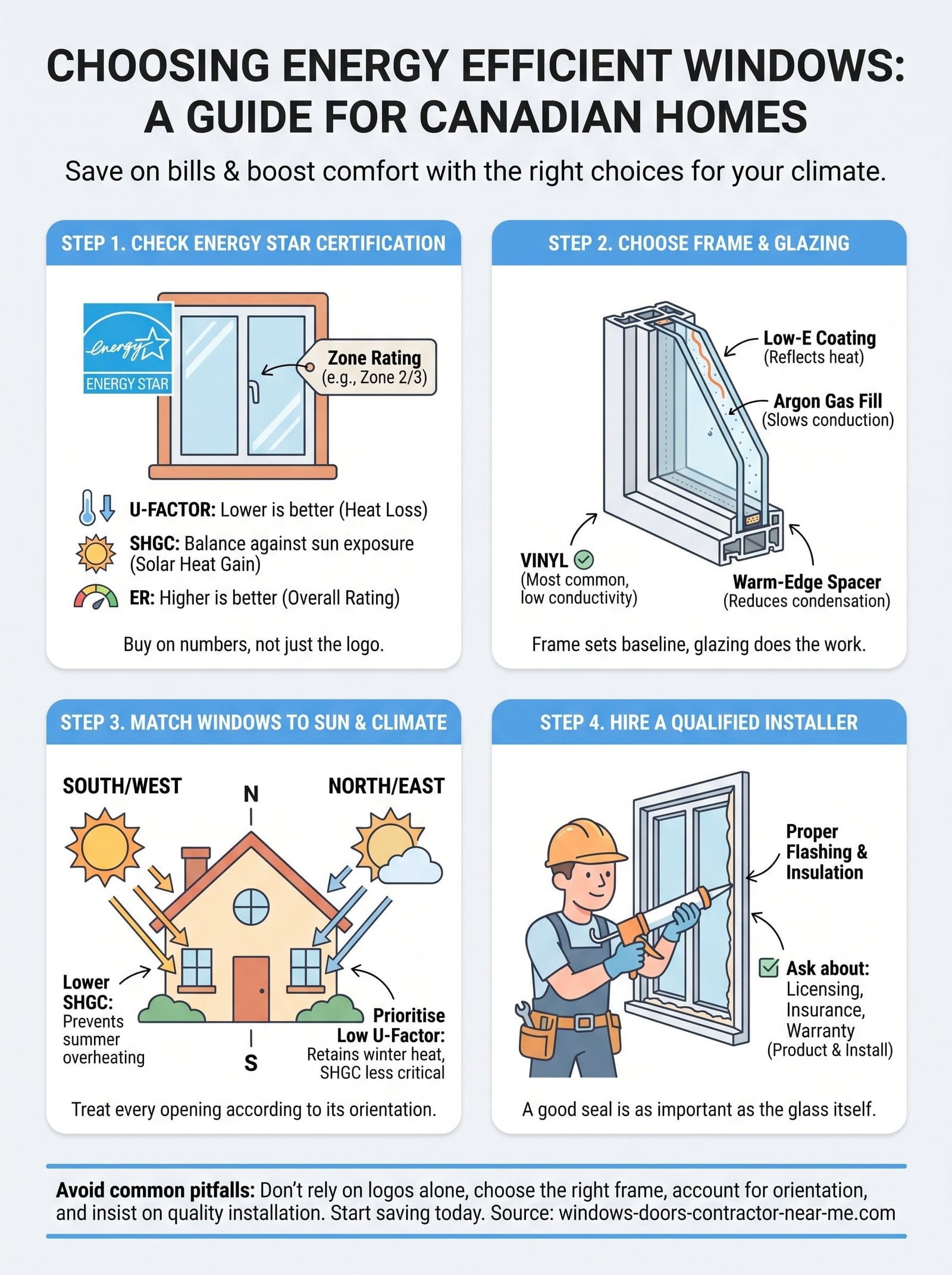
Start with the label, not the sales pitch. ENERGY STAR certified windows have been independently tested against Natural Resources Canada's climate zone requirements, so the sticker on the glass tells you far more than any brochure claim about "maximum efficiency." Look for the ENERGY STAR logo and confirm it's paired with a zone number that matches where you live, since a window certified for Zone 1 won't perform the same way in Innisfil's Zone 2 or 3 conditions.
Reading the numbers that matter
Once you've confirmed the logo, dig into the actual energy star rating for windows you're comparing. Three figures do the heavy lifting:
- U-factor: measures heat loss; lower is better, aim below 1.4 W/(m²·K) for Ontario homes
- Solar Heat Gain Coefficient (SHGC): measures solar heat let through; balance this against your window's sun exposure
- Energy Rating (ER): a combined score NRCan uses; higher ER numbers mean better overall performance
Don't buy on the logo alone, buy on the numbers behind it.
Asking the right questions before you buy
When you're comparing energy star qualified windows from different suppliers, ask for the NFRC or CSA test label directly, not just a spec sheet summary. A supplier who manufactures locally, like we do in Innisfil, can usually show you the certification for the exact configuration you're ordering, not a generic model number.
Step 2. Choose the right frame and glazing
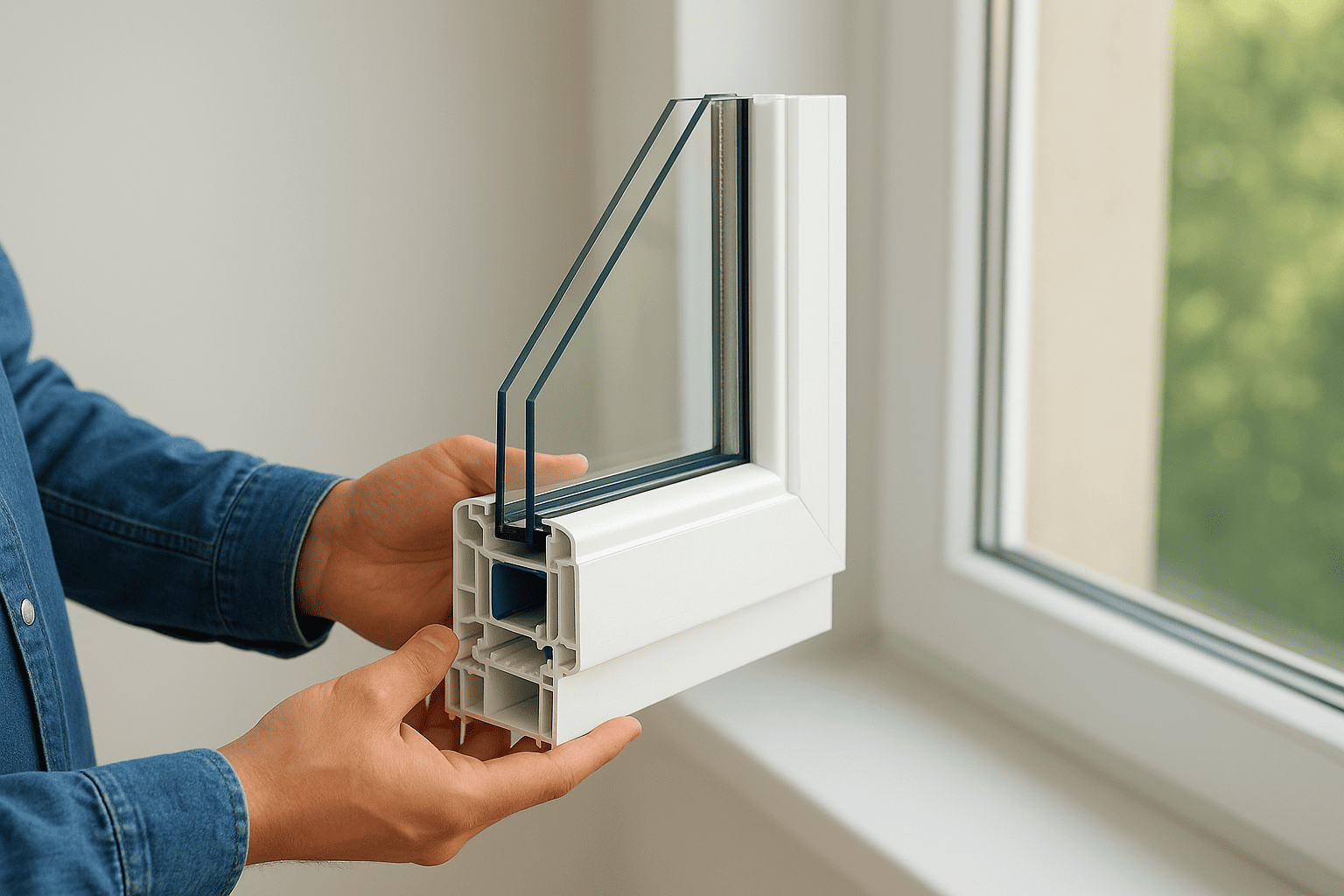
Frame material sets the baseline for performance before you even consider the glass. Vinyl frames dominate the Canadian replacement market because they don't conduct cold the way aluminium does, and they hold up against moisture and temperature swings without warping. Fibreglass runs a close second, offering slightly better dimensional stability in extreme heat or cold, which matters if your home takes direct afternoon sun for hours at a stretch.
Frame materials compared
| Frame type | Thermal performance | Maintenance | Typical use | |---|---|---| | Vinyl | Excellent, low conductivity | Minimal | Most Ontario homes | | Fibreglass | Excellent, very stable | Minimal | Extreme temperature swings | | Aluminium | Poor unless thermally broken | Low | Not recommended for Ontario winters | | Wood | Good, but needs upkeep | High | Heritage or custom aesthetics |
Glazing decides the rest. Double-glazed units with a Low-E coating and argon gas fill are the minimum standard we install on any energy efficient replacement windows project in Innisfil, since the coating reflects infrared heat while the argon slows conduction between panes. Triple-glazing pushes performance further and suits north-facing rooms or homes backing onto open, windy lots.
The frame keeps the cold out at the edges, the glazing does the work in the middle, and you need both performing well to see real savings.
Spacer bars matter too. Warm-edge spacers reduce condensation risk at the glass edge, a detail cheaper suppliers often skip to shave cost off a quote.
Step 3. Match your windows to sun and climate
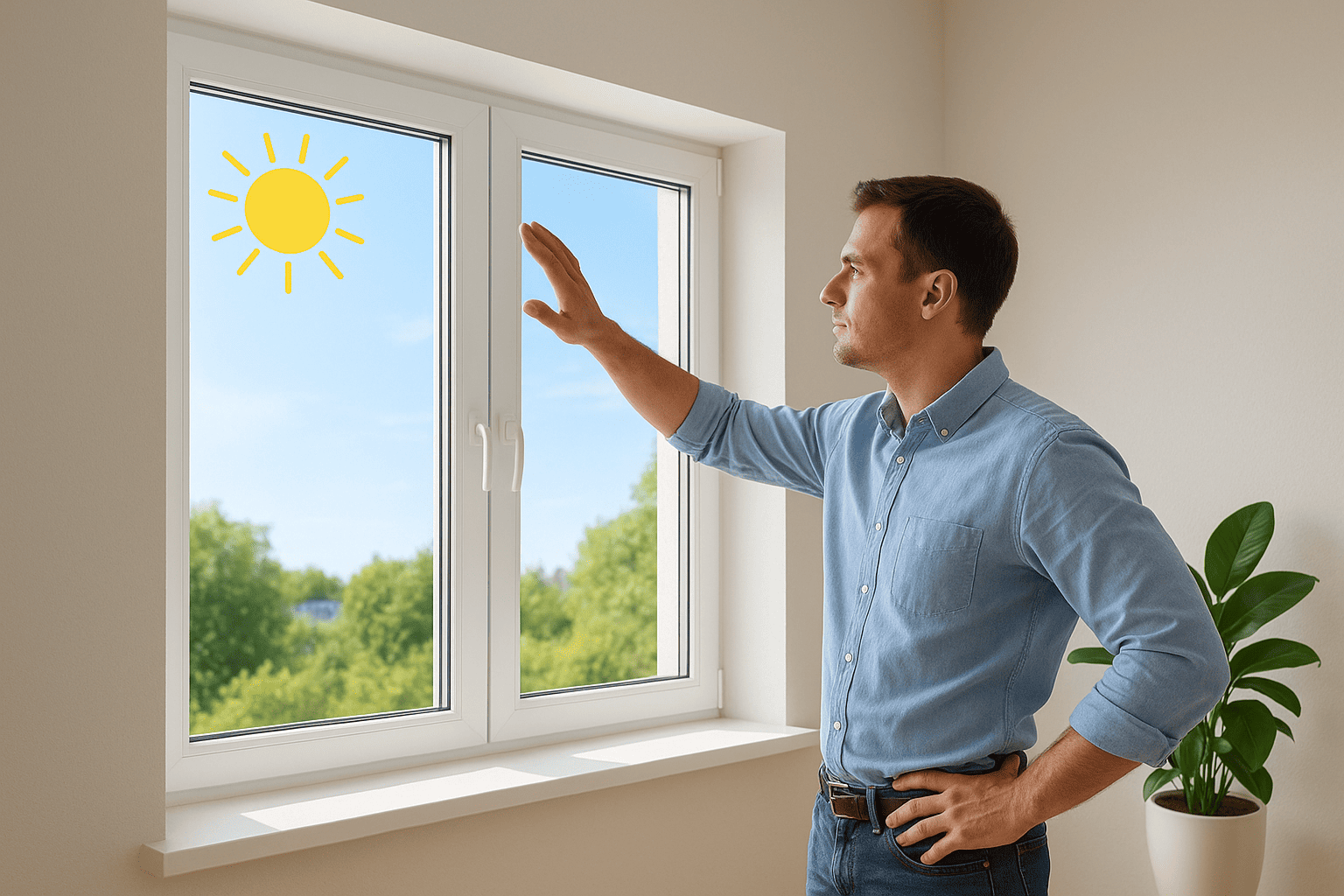
Orientation changes what "efficient" actually means for a given window. A south-facing room in Innisfil soaks up direct sun for most of the day, so you want a lower SHGC there to stop it turning into a greenhouse in July. North-facing rooms rarely see direct sun, so you can prioritise a lower U-factor instead, letting in what little solar heat is available during winter without worrying about summer overheating.
Orientation-by-orientation guidance
Use this as a starting point when you're speccing out energy star rated windows room by room, then adjust for trees, overhangs, or neighbouring structures that shade the glass:
- South-facing: lower SHGC, consider exterior shading or deeper overhangs
- West-facing: lower SHGC, watch for intense late-afternoon heat gain
- North-facing: prioritise low U-factor, SHGC matters less
- East-facing: moderate SHGC, morning heat gain is shorter-lived
A window spec that works on your south wall can be the wrong choice on your north wall, so stop treating every opening in the house the same way.
Why one glazing package rarely fits a whole house
Wind exposure adds another layer. A lot backing onto open fields or water gets hit harder by winter wind, which increases convective heat loss regardless of what your U-factor label says in a lab test. If your property sits exposed like that, lean toward triple-glazing or upgraded spacer bars on the walls taking the worst of it, even if the rest of the house does fine with a standard double-glazed, argon-filled unit.
Step 4. Hire a qualified installer
Even the best-rated glass fails if it's installed badly. A poorly sealed frame lets draughts sneak in around the edges, undoing everything you paid for in energy star certified windows and leaving you with the same heat loss you were trying to fix. Installation quality is the variable most homeowners overlook, and it's the one that determines whether your new windows actually hit their rated performance in real conditions, not just in a lab test.
What to check before signing a contract
Ask any installer for proof of licensing, insurance, and experience with your specific frame material, since vinyl, fibreglass, and wood all need different fastening and sealing techniques. A qualified crew will also flash and insulate around the frame properly, not just caulk the visible gap and call it finished.
A window is only as efficient as the seal around it, and that seal is only as good as the installer who set it.
Questions worth asking before you commit
- Are you licensed and insured in Ontario?
- What warranty covers the installation itself, separate from the product warranty?
- Can you show references from recent local jobs?
- Do you follow manufacturer specs for flashing and insulation?
At MK Windows and Doors, our installers are vetted and licensed specifically because we've seen how much a rushed install can cost a homeowner down the line.
Making a confident window choice
Choosing energy efficient windows comes down to four checks: the ENERGY STAR label and zone rating, the frame and glazing combination, how each window suits its orientation, and who's installing it. Skip any one of these and you're leaving performance, and money, on the table every winter and summer after the fact.
Getting this right doesn't require an engineering degree. It requires a supplier who'll show you the actual test numbers, not just a logo, and an installer who treats the seal around the frame as seriously as the glass itself. That combination is what turns energy star rated windows from a marketing term into a real reduction on your utility bill.
If you're ready to compare options for your home in Simcoe county or across GTA, book a free in-home consultation with MK Windows and Doors and get certification details for the exact configuration you'd be buying, not a generic spec sheet.