
If your basement feels damp, stuffy, or dark, the windows are usually the problem. Awning basement windows hinge at the top and swing outward from the bottom, which means you get airflow even during a downpour, and light that doesn't disappear the moment you close the blinds. For a lot of Innisfil homeowners finishing a basement or fighting mildew, this style solves both issues at once.
So what exactly makes an awning window basement installation different from a standard hopper or slider? It comes down to how the sash opens and where the window sits relative to grade. That difference affects ventilation control, security, and whether the window can double as an emergency exit, which matters if you're finishing the space into a bedroom or rental unit.
This guide walks through how basement awning windows work, where they outperform hopper and slider alternatives, and what to check before you order custom sizes. We'll also cover energy efficiency features like Low-E glass and Argon fills, since a poorly sealed basement window undoes a lot of insulation work upstairs.
Why awning windows work so well for basements
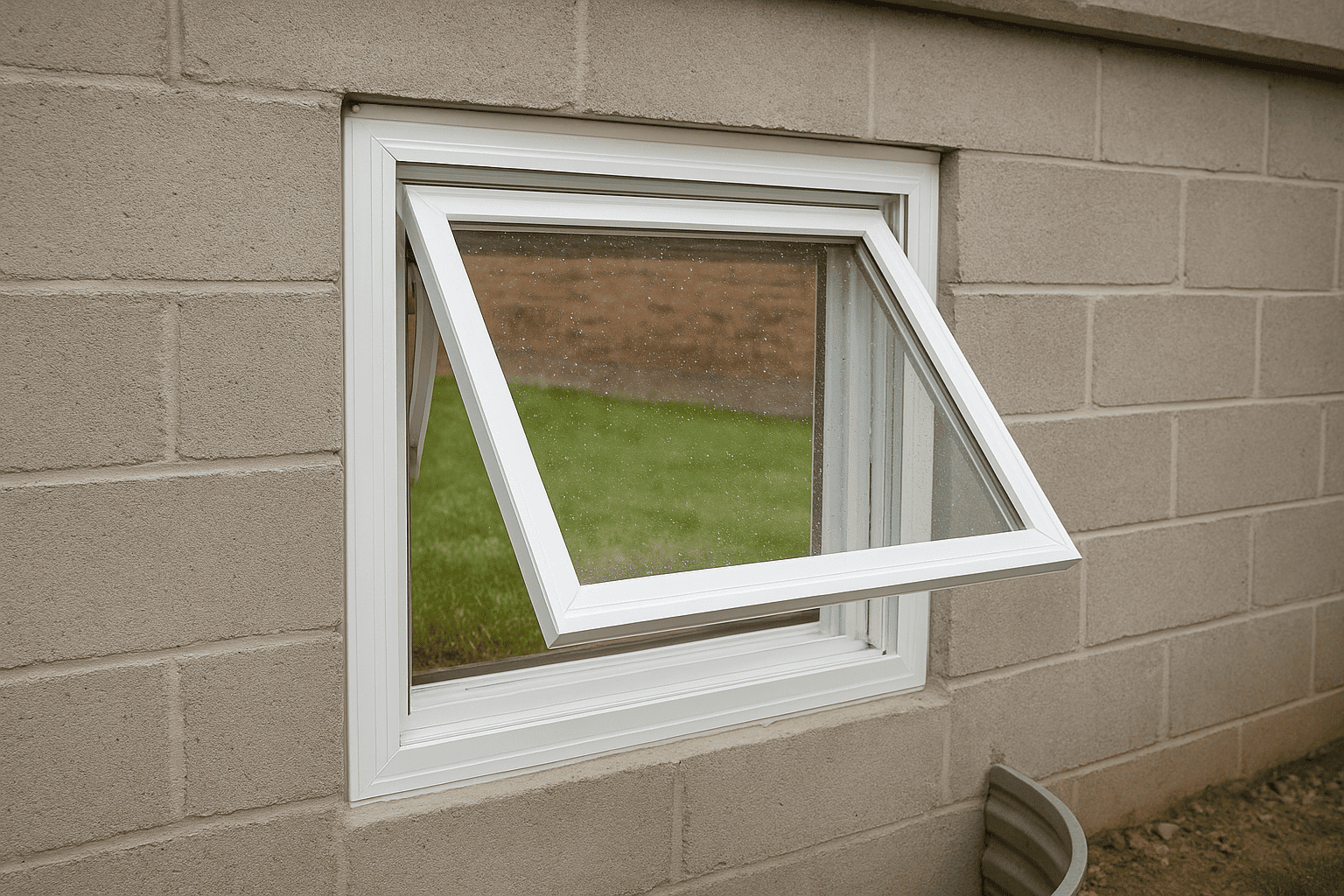
Basements have three problems that most windows make worse: low placement near grade, limited wall height, and a constant fight against moisture. Awning windows for basement installations solve all three because of one simple mechanical trick. The hinge sits at the top, so the sash swings out and up like a little awning, shielding the opening from rain even when it's wide open. You can leave it cracked overnight during a summer storm without water pooling on the sill.
Ventilation without the moisture risk
Standing water and condensation are what turn a basement into a mould problem, and ventilation is the fix. Because the sash tilts outward rather than sliding sideways, awning basement windows create a natural funnel that pushes humid air out even in light rain or wind. This matters more in a basement than anywhere else in the house, since below-grade rooms already trap moisture from the soil around the foundation.
An awning window is the only basement style that lets you ventilate during a rainstorm without getting water inside.
Better light and sightlines near grade
Basement windows sit low on the wall, often half-buried below the yard line, so every inch of glass counts. Awning sashes don't need a big swing radius like a hopper does, which means the frame can be shallower and the glass area larger for the same wall opening. Homeowners finishing a basement into a family room or bedroom notice the difference immediately: more daylight reaches the far wall, and the window will feels less like a tunnel.
Security and weather sealing
Compression seals close tighter on an awning sash than on a slider, because the whole frame presses against the weatherstripping when locked, rather than just the track edges. That tighter seal also blocks drafts, which is why we pair these units with Low-E glass and Argon gas fills for basements in Innisfil, where frost and freeze-thaw cycles punish weak seals. Locking hardware sits on the interior, out of reach from outside, giving basements an extra layer of security that ground-floor sliders don't have.
How to choose the right awning window for your basement
Sizing comes first when you're shopping for a basement awning window, because most below-grade openings are narrower and shorter than standard wall cutouts. Measure the rough opening before you fall in love with a style, then check that the window well outside gives the sash room to swing without hitting the retaining wall. A window that can't open fully defeats the whole point of choosing an awning style over a fixed pane.
Match size to egress and building code
Ontario building code sets minimum opening sizes for basement bedrooms, and awning windows need extra scrutiny here because part of the frame stays fixed. Before you order, confirm the clear opening (not just the frame size) meets local egress rules if the room will be used as a bedroom. Talk to your installer about custom sizes rather than settling for a stock unit that technically fits but fails inspection later.
Glass, frame, and hardware options worth asking about
Once sizing is settled, focus on the details that affect comfort and upkeep for years:
- Vinyl frames that won't rot or warp against damp foundation walls
- Low-E coated glass with Argon fill to cut heat loss through the below-grade opening
- Multi-point locking hardware for added security at ground level
- Screens that resist moisture and won't sag in a humid window well
Pick the frame material and glass package for the basement's moisture level, not just the price tag.
Working through a supplier who manufactures the awning windows themselves means you can adjust these specs without paying a distributor markup on every change.
Awning vs hopper windows for basements
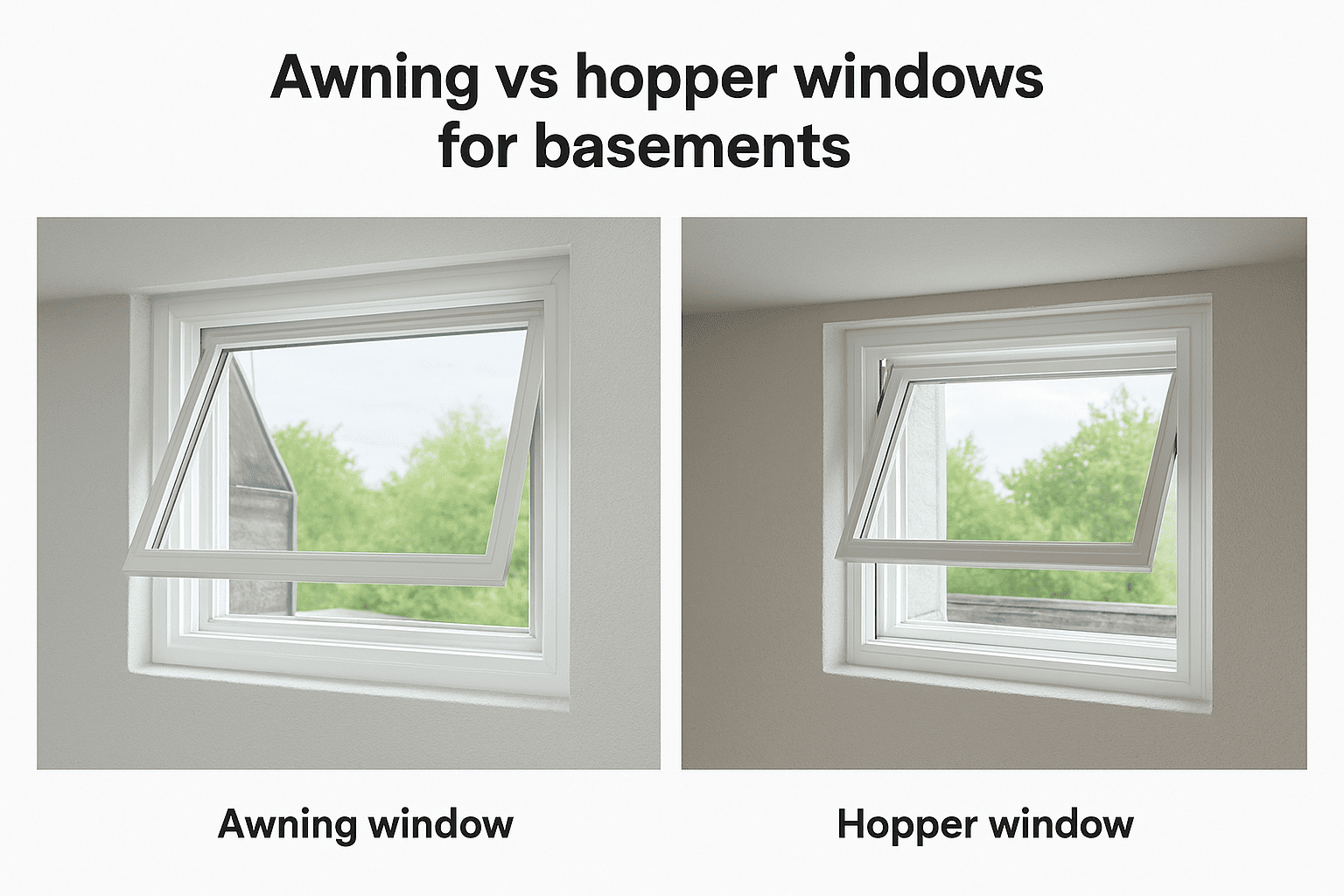
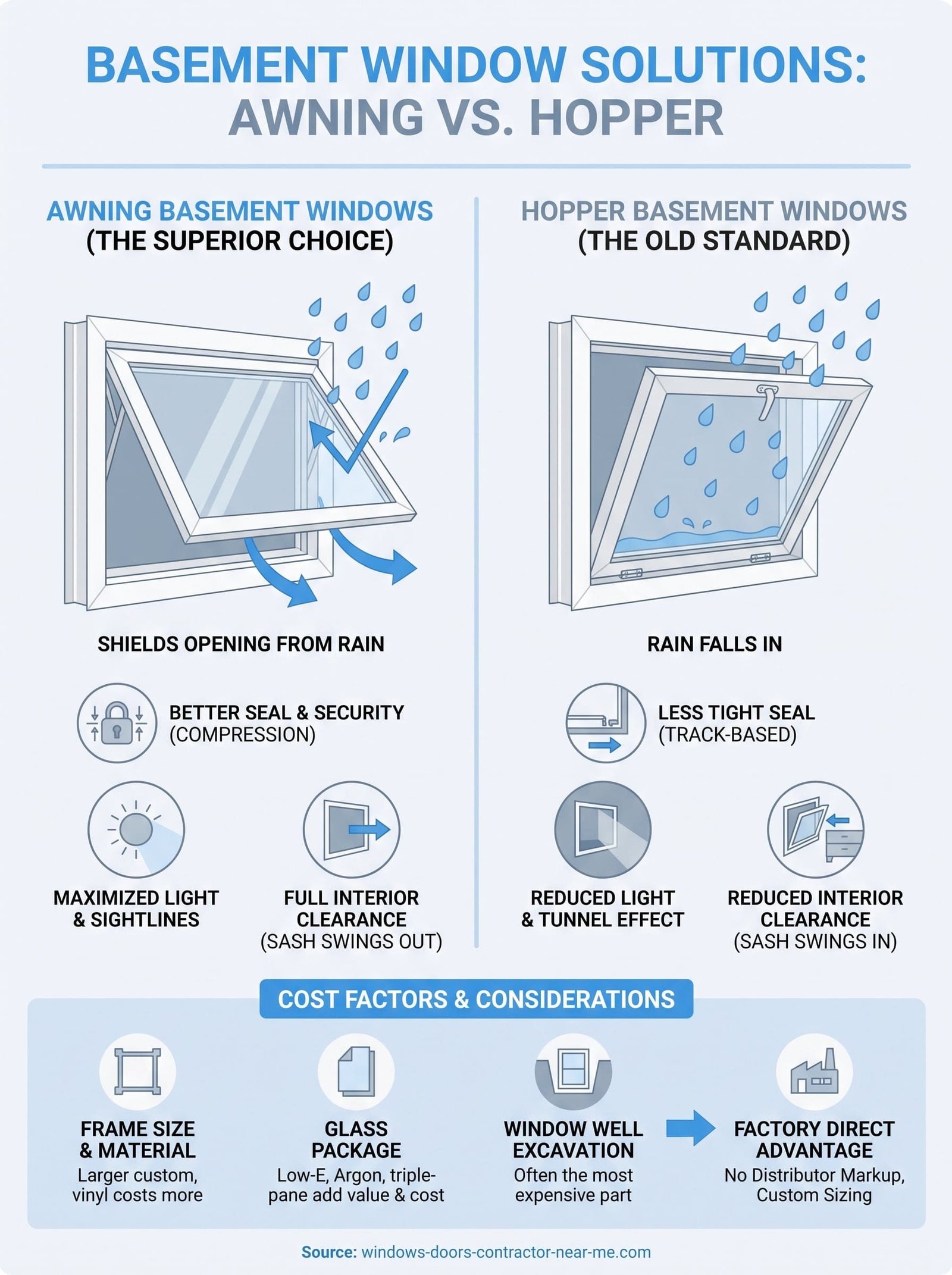
Hopper windows dominate older basements because builders default to them, not because they perform better. A hopper hinges at the bottom and tilts inward, which means rain and yard debris can fall straight into the opening whenever it's cracked for airflow. Basement awning windows flip that problem by hinging at the top and swinging out, so the sash itself acts as a small roof over the gap. If you've ever mopped up a puddle under a hopper after a summer storm, that difference alone is worth switching styles.
Where hoppers still make sense
Hoppers aren't useless. They cost less upfront, and in a mechanical room or storage area where airflow matters more than comfort, that trade-off is fine. They also swing inward, which some homeowners prefer in tight window wells where outward clearance is limited.
Choose a hopper for utility spaces, and an awning for any basement room people actually spend time in.
Where awning windows win
For finished basements, bedrooms, or home offices, awning windows basement installations beat hoppers on nearly every practical point:
| Feature | Awning window | Hopper window |
|---|---|---|
| Ventilation in rain | Yes, sash shields opening | No, opening is exposed |
| Interior clearance | Full, sash swings outward | Reduced, sash swings inward |
| Seal tightness | Compression seal, tighter | Track-based, more prone to drafts |
| Typical use | Living spaces, bedrooms | Utility rooms, crawl spaces |
Interior clearance matters more than people expect. A hopper swinging inward can clip furniture, blinds, or a headboard pushed against the wall, while an awning window for basement rooms keeps that space free entirely.
What affects the cost of basement awning windows
Cost for a basement awning window swings widely depending on size, frame material, and glass package, and most homeowners underestimate how much the window well itself adds to the final bill. Standard vinyl frames with double-pane Low-E glass sit at the affordable end, while custom sizes, triple-pane glass, or Argon-Krypton fills push the price up quickly. Excavation for a new or deeper window well, especially where the ground slopes toward the foundation, often costs more than the window itself.
A basement awning window is rarely the expensive part of the job; the excavation and well construction usually are.
Installation complexity matters just as much as the product. Retrofitting an awning basement window into an existing rough opening is cheaper than cutting a new opening through poured concrete, which can require structural review before anyone touches a saw.
| Cost factor | Impact on price |
|---|---|
| Frame size | Larger custom openings cost more than stock sizes |
| Glass package | Triple-pane and gas fills add cost, cut heat loss |
| Window well depth | Deeper wells need more excavation and drainage |
| New vs existing opening | Cutting new concrete openings costs more than retrofits |
| Egress requirements | Bedroom-code sizing often means larger, pricier units |
Requesting a quote directly from a manufacturer rather than a retailer usually trims a meaningful chunk off that total, since you're not paying a distributor markup on top of installation labour.
Getting the right window for your basement
A basement window has one job upstairs windows never face: keep water out while letting air in, all from a spot half-buried in the ground. Awning basement windows handle that job better than hoppers or sliders because the hinge placement turns the sash into its own little roof. Get the sizing right for egress, pick a glass package suited to your basement's moisture level, and factor the window well into your budget from the start, not as an afterthought once excavation begins.
None of this needs guesswork if you're working with people who manufacture the units themselves. Skipping the distributor markup keeps custom sizing and upgraded glass within reach, rather than pricing you into a stock window that barely meets code. If you're ready to stop losing heat and light through the wrong basement window, get a free quote from MK Windows and Doors and have a factory-direct awning window built for your exact opening.