
Staring at a drafty, foggy, or damaged front window and wondering what it will cost to fix? You're not alone. Front window replacement cost is one of the first questions homeowners across Ontario ask us, and the honest answer is that it depends on size, style, and materials, but there are clear price ranges you can plan around.
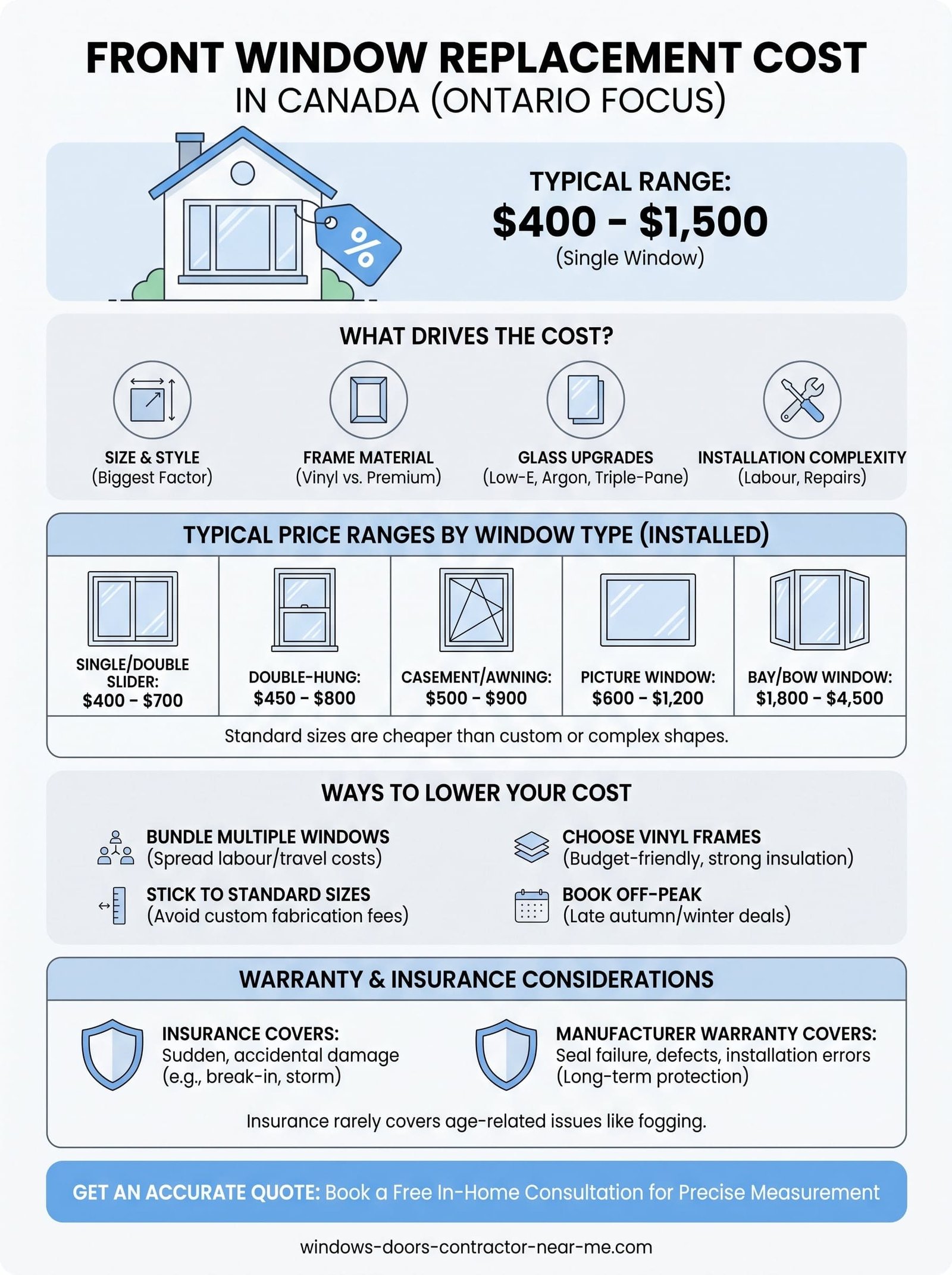
If you want a straight answer, most homeowners in Canada pay between $400 and $1,500 for a single front window replacement, with bay and picture windows running higher due to their size and structural requirements. Factors like frame material, glass upgrades such as Low-E coatings and Argon gas fills, and whether you need custom sizing all shift that number up or down.
We've built and installed windows in Innisfil since 2006, so we've quoted this job thousands of times and seen every budget and home style come through our doors. In this article, we break down typical price ranges by window type, explain what actually drives cost up or down, and show you where you can save without sacrificing energy efficiency or curb appeal.
Why front window replacement costs vary so much
Several factors combine to push your front window replacement cost up or down, and no two quotes ever look the same because no two homes are the same. A quote for a 2006-built bungalow differs from a heritage home with a custom bay window, even if both projects seem similar on paper. Understanding what actually drives the price helps you spot a fair quote from an inflated one, especially if you're comparing several contractors before signing anything.
Size and Style Set the Baseline
Standard sizes such as single-hung or slider windows sit at the lower end of the price scale because manufacturers produce them in bulk and installation is straightforward. Bay and bow windows, on the other hand, require structural support, multiple panes joined at angles, and often custom framing, which can double or triple the price compared to a standard picture window. The bigger and more complex the shape, the more labour and material go into fabrication and fitting, so this is usually the single biggest lever on your final bill.
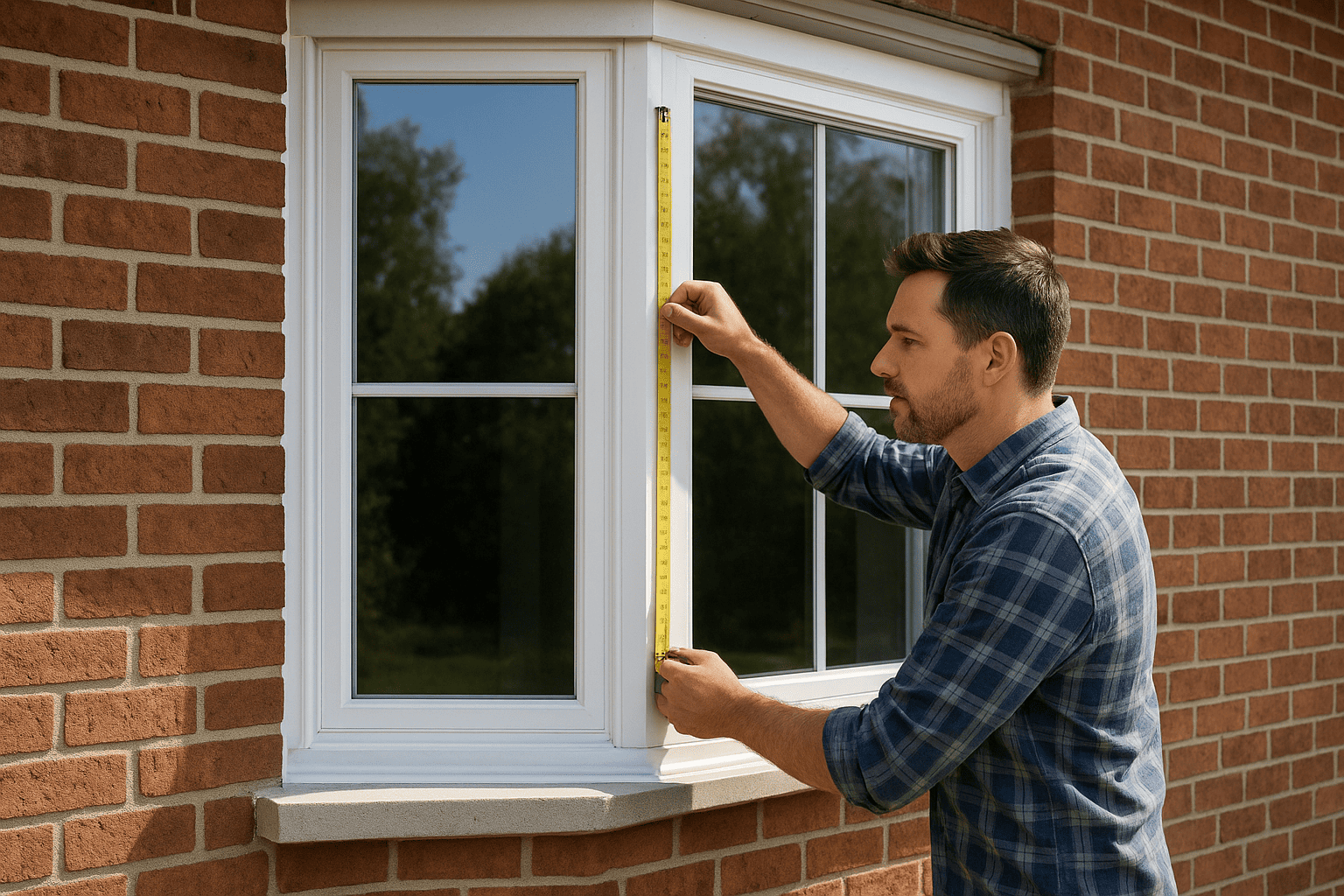
The window's size and shape usually account for the biggest swing in your final price, more than any other single factor.
Frame Material Changes the Price Tag
Vinyl frames remain the most budget-friendly option for Ontario homeowners, offering strong insulation without the higher price of wood or aluminium-clad alternatives. Fibreglass frames cost more upfront but resist warping in extreme temperature swings, which matters when you're dealing with Canadian winters dropping below minus 20°C and summers pushing past 30°C. Choosing the wrong material for your climate can mean paying for a replacement again within a decade, which erases any savings you thought you made at purchase.
Glass Upgrades Add Real Value
Glass technology has a direct line to both your comfort and your bill. Upgrades like Low-E coatings, Argon gas fills, and triple-pane configurations all raise the sticker price but lower your energy bills over the life of the window, which matters more the longer you plan to stay in the home.
- Low-E coatings: reflect heat back into your home during winter and block it out in summer
- Argon gas fills: sit between panes to slow heat transfer
- Triple-pane glass: adds another layer of insulation, ideal for north-facing or street-facing front windows
- Tinted or bevelled glass: adds privacy and curb appeal at a higher cost
Installation Complexity Affects Labour Costs
Swapping an old window for a new one of the same size, in the same opening, is the cheapest scenario you'll find. Widening an opening, replacing rotted framing, or working around brick or stucco exteriors adds hours to the job and pushes the labour portion of your quote higher. Homes built before Ontario's energy codes tightened often need extra work around the opening before a new window will seal properly, and that hidden cost catches a lot of budget-conscious homeowners off guard when they only planned for the window itself, not the framing behind it.
How to get an accurate replacement quote
Getting a precise number for your front window replacement cost means doing a bit of homework before you call anyone out. Vague quotes lead to surprises on installation day, and surprises usually mean extra charges you didn't budget for.
Measure the Opening Yourself First
Knowing your rough window dimensions before a consultation helps you spot a quote that's wildly off base. Measure the width and height of the existing frame in three places, since older homes often have openings that aren't perfectly square. Take a few photos of the exterior and interior trim too, since these details affect whether the installer needs to do extra finishing work around brick, siding, or stucco.
Insist on an Itemised Breakdown
A trustworthy contractor separates the cost of the window unit, the frame material, glass upgrades, and labour into distinct line items rather than handing you one lump figure. This lets you compare apples to apples between quotes and see exactly where your money goes.
A quote you can't break down into materials and labour is a quote you can't trust.
Here's what a proper quote should include:
- Window unit price by size and style
- Frame material and glass package (Low-E, Argon, triple-pane)
- Labour and disposal of the old unit
- Any framing repair or structural work
- Warranty terms in writing
Book a Free In-Home Consultation
Photos and phone measurements only get you so far. A proper home window replacement quote needs someone on site checking the condition of your framing, sill, and surrounding wall for rot or moisture damage that photos can hide. We offer free in-home consultations across Innisfil and the surrounding Ontario area precisely because measuring on paper and measuring in person rarely produce the same number, and we'd rather you know the real figure upfront than get hit with change orders halfway through the job.
Skipping this step is the single biggest reason homeowners end up paying more than their original estimate, so treat the in-home visit as non-negotiable rather than optional.
Typical price ranges across Canada
Prices for front window replacement cost shift depending on where you live, but Ontario numbers give a solid benchmark for most of the country. Costs run higher in remote areas where shipping custom units adds freight charges, and lower in dense urban markets where installers compete hard for business. Below is a breakdown by window style so you can see where your project likely lands before you even request a quote.
Price by Window Type
Different window styles carry very different price tags, and this is often the fastest way to sanity-check a quote you've received.
| Window Style | Typical Price Range (installed) |
|---|---|
| Single or double slider | $400 – $700 |
| Double-hung | $450 – $800 |
| Casement or awning | $500 – $900 |
| Picture window | $600 – $1,200 |
| Bay or bow window | $1,800 – $4,500 |
A standard slider and a bay window can sit thousands of dollars apart, even though both are technically your "front window."
Fixed and awning styles tend to land in the middle of the pack, since they're smaller than picture windows but need more precise sealing than a basic slider. Grid patterns, tinted glass, and premium hardware push any of these ranges toward the top of their bracket.
Regional Differences Across Canada
Ontario homeowners generally see mid-range pricing compared to the rest of the country, thanks to a competitive manufacturing base and shorter shipping distances from local factories like ours in Innisfil. Homeowners in Atlantic Canada or the Prairies sometimes pay 10 to 15 percent more for the same specification because units travel further and fewer manufacturers operate locally. Meanwhile, buyers in British Columbia's coastal climate often skip triple-pane upgrades that Ontario homeowners consider essential, which can lower their quotes but leaves less protection against our harsher winters.
Wholesale buyers, including retailers and contractors sourcing in bulk, typically see per-unit costs drop by 15 to 20 percent compared to single-window retail pricing, which matters if you're renovating multiple openings at once or supplying several projects.
Ways to lower your replacement cost
Cutting your front window replacement cost doesn't mean settling for a worse window. It means being smart about timing, bundling, and where you spend your upgrade budget. A few practical choices can shave hundreds off a quote without touching the energy performance you actually need.
Bundle Multiple Windows Together
Contractors quote lower per-unit prices when you replace several windows in one visit rather than calling them back for one window at a time. Labour, travel, and disposal costs get spread across the whole job instead of loaded onto a single opening, so even replacing your front window alongside one or two others nearby can bring the average down noticeably.
Stick to Standard Sizes When Possible
Custom shapes and oversized frames cost more to fabricate, so if your front window opening is close to a standard size, ask your installer whether a stock unit fits without major alterations. Skipping custom fabrication is one of the easiest ways to keep your quote near the lower end of the range.
Choose Vinyl Over Premium Frame Materials
Vinyl frames deliver strong insulation at a fraction of the cost of fibreglass or wood, and for most Ontario homes, that trade-off makes financial sense. Save the premium material budget for windows facing harsh weather exposure, and use vinyl elsewhere in the house.
Spending your upgrade budget on glass rather than frame material usually delivers better long-term savings.
Time Your Purchase Around Off-Peak Seasons
Spring and early summer are the busiest installation months in Ontario, and pricing reflects that demand. Booking your home window replacement in late autumn or winter, when crews have more availability, often unlocks better scheduling and occasional seasonal pricing.
Compare Factory-Direct Pricing
Buying through a manufacturer that also installs cuts out the retail markup that distributors and big-box stores add to every unit. That's the whole idea behind factory-direct pricing: fewer hands touching your order means fewer markups stacked onto your final bill.
Here's a quick checklist to keep costs down without cutting corners:
- Replace multiple windows in one visit
- Match standard sizes wherever the opening allows
- Use vinyl frames unless exposure demands otherwise
- Book installation during off-peak months
- Buy factory-direct instead of through a retail middleman
- Always request a price-match against competing quotes
Insurance coverage and warranty considerations
Most homeowners assume insurance covers a cracked or failing window, but that's rarely the full picture, and understanding the fine print before you file a claim saves you from an unpleasant surprise. Front window replacement cost is only partially covered in most cases, and knowing the difference between an insurable event and normal wear keeps you from expecting a payout that never arrives.
When Home Insurance Actually Applies
Insurers typically cover sudden, accidental damage such as a tree branch through the glass, a break-in, or storm damage from hail or high wind. They almost never cover gradual issues like seal failure, fogging, or age-related deterioration, since insurers treat those as maintenance problems rather than covered losses. Check your policy wording for terms like "named perils" versus "all risk," since that distinction determines whether a cracked front window from an accidental impact gets reimbursed or denied outright. The Insurance Bureau of Canada publishes plain-language guides on what standard homeowner policies typically include, which is worth a quick read before you assume you're covered.
A window that fails from age isn't an insurance claim, it's a maintenance expense you need to budget for separately.
Why Manufacturer Warranties Matter More Long-Term
Since insurance rarely covers gradual failure, your manufacturer warranty becomes the real safety net for most homeowners. A strong warranty protects you against the two most common long-term failures: seal breakdown and installation defects.
| Warranty Type | What It Covers | Typical Length |
|---|---|---|
| Seal failure warranty | Fogging between panes, gas leakage | Up to 15 years |
| Manufacturer warranty | Product defects, installation errors | 5 years |
We back every window we build with a 15-year seal failure warranty and a 5-year manufacturer warranty covering both the product and the installation itself, since a window is only as good as the seal that keeps it airtight and the crew that fit it.
Reading the Fine Print Before You Sign
Always confirm whether a warranty transfers to a new homeowner if you sell, since that detail affects resale value more than most sellers realise. Ask whether labour is included if a defect shows up years later, because some warranties cover the part but not the technician's time to fix it.
Deciding on your next step
You now know what drives front window replacement cost up or down, from frame material and glass upgrades to bay windows versus standard sliders. The next move is turning that knowledge into a real number for your own home, and that only happens once someone measures your actual opening and checks the framing behind it. Guesswork from online calculators won't catch rot, uneven openings, or the structural quirks that separate a $500 quote from a $3,000 one.
Skip the back-and-forth with multiple contractors and get a straight, itemised number from a factory-direct manufacturer that also installs, which cuts out the retail markup entirely. We've quoted this exact job across Innisfil and Ontario since 2006, and we'll price-match any competing quote you've already received. Book your free in-home consultation and find out exactly what your front window replacement will cost, no guesswork required.