
If your old sash windows are painted shut, letting in draughts, or costing you more on heating bills every winter, you're likely shopping for replacement windows double hung right now. It's one of the most common window styles in Ontario homes, but that doesn't make buying one simple. Sizes, frame materials, and installation methods vary enough that a wrong choice means paying twice.
This guide answers what you actually need before signing a quote: how double hung replacement windows differ from sliders and casements, what drives the price up or down, and whether DIY installation is realistic or a false economy. We'll also cover sizing standards, energy ratings suited to Canadian winters, and questions worth asking any installer before they touch your walls.
We manufacture and install windows for homeowners across Ontario from our Innisfil factory, so this isn't theory pulled from a catalogue. It's what we tell customers in person, covering everything from frame materials to warranty terms, so you can compare quotes with confidence and avoid the common mistakes that turn a window upgrade into a costly redo.
Why upgrade to replacement double-hung windows
Most homeowners don't wake up wanting to buy windows. They upgrade because something's gone wrong: a draught that won't quit, a sash that won't stay open, or a heating bill that keeps climbing. Replacement windows double hung solve those problems directly because the design itself, two sashes that slide vertically past each other, ages poorly once seals fail and wood swells. Swapping out tired originals for new double hung window replacement units isn't just cosmetic. It changes how your house holds heat, how much street noise gets through, and what a buyer sees when they walk up to your front door.
Energy loss you're probably paying for
Older double-hung windows, especially wood ones from before the 1990s, rely on simple weatherstripping and often single-pane glass. That combination lets warm air escape in January and hot air in during July, forcing your furnace and air conditioner to work harder than they should. New units built with Low-E coated glass and Argon gas fills between panes cut that heat transfer dramatically, and Natural Resources Canada notes that upgrading to ENERGY STAR certified windows can meaningfully lower a home's energy use in Canadian climate zones.
A window that's lost its seal isn't insulating your home anymore, it's just decoration with a draught behind it.
We see this constantly on service calls in Innisfil: homeowners assume their heating bill problem is the furnace, when it's actually four or five windows losing their fight against a cold snap.
Mechanical failure and daily annoyance
Beyond energy, double-hung windows fail mechanically in ways other styles don't. Sash cords snap. Balances wear out and the upper sash won't stay up without a prop. Paint seals the window shut entirely, which becomes a safety issue if that window is a secondary means of egress from a bedroom. Double hung windows replacement at this stage isn't optional maintenance, it's fixing a window that's stopped doing its job. Common signs it's time include:
- Sashes that won't stay open without propping
- Visible condensation or fogging between panes
- Wood that's soft, rotting, or swollen shut
- Cold air you can feel near the frame on a windy day
- Difficulty locking the window fully
Resale value and curb appeal
Tired, mismatched windows are one of the first things a prospective buyer notices, whether they say so or not. Replacing them with clean, properly fitted units improves how the whole facade reads, and it signals the rest of the house has been maintained too. Remodeling industry cost-value reports consistently rank window replacement among the renovations that return a strong share of their cost at resale, which matters if you're planning to sell within the next several years. Buyers also increasingly ask about energy ratings during showings, so having documentation on hand for new double hung window replacements can shorten negotiations rather than complicate them.
Security plays into this too. Modern double-hung windows come with multi-point locking hardware that's harder to defeat than the single latch on a 30-year-old original, which matters for ground-floor rooms in particular. Between the energy savings, the reduced maintenance, and the security upgrade, most homeowners find the case for replacing straightforward once they've priced out what staying with failing originals actually costs them over a few more winters.
How to choose the right double-hung windows
Picking the right unit starts with frame material, because that choice drives everything else: price, maintenance, and how long the window lasts before you're back here again. Vinyl frames dominate the Canadian market for good reason. They don't rot, don't need repainting, and hold up well through freeze-thaw cycles that crack wood and warp aluminium over time. Fibreglass costs more but flexes less with temperature swings, which matters if you're in an exposed spot that takes wind off open fields or water. Whatever material you land on, make sure the glass package includes Low-E coating and Argon gas fill as standard, not an upsell, since choosing energy-efficient windows like these is what actually cuts your heating bill.
The frame material decides how many winters you get before you're shopping for windows again.
Comparing frame materials at a glance
| Frame material | Maintenance | Typical lifespan | Best for |
|---|---|---|---|
| Vinyl | Very low, no painting | 20 to 30 years | Most Ontario homes, budget-conscious buyers |
| Fibreglass | Low | 30+ years | Exposed sites, extreme temperature swings |
| Wood | High, needs refinishing | 15 to 20 years without upkeep | Heritage or period-style homes |
| Aluminium | Low, but conducts cold | 20 to 25 years | Rarely recommended for cold climates |
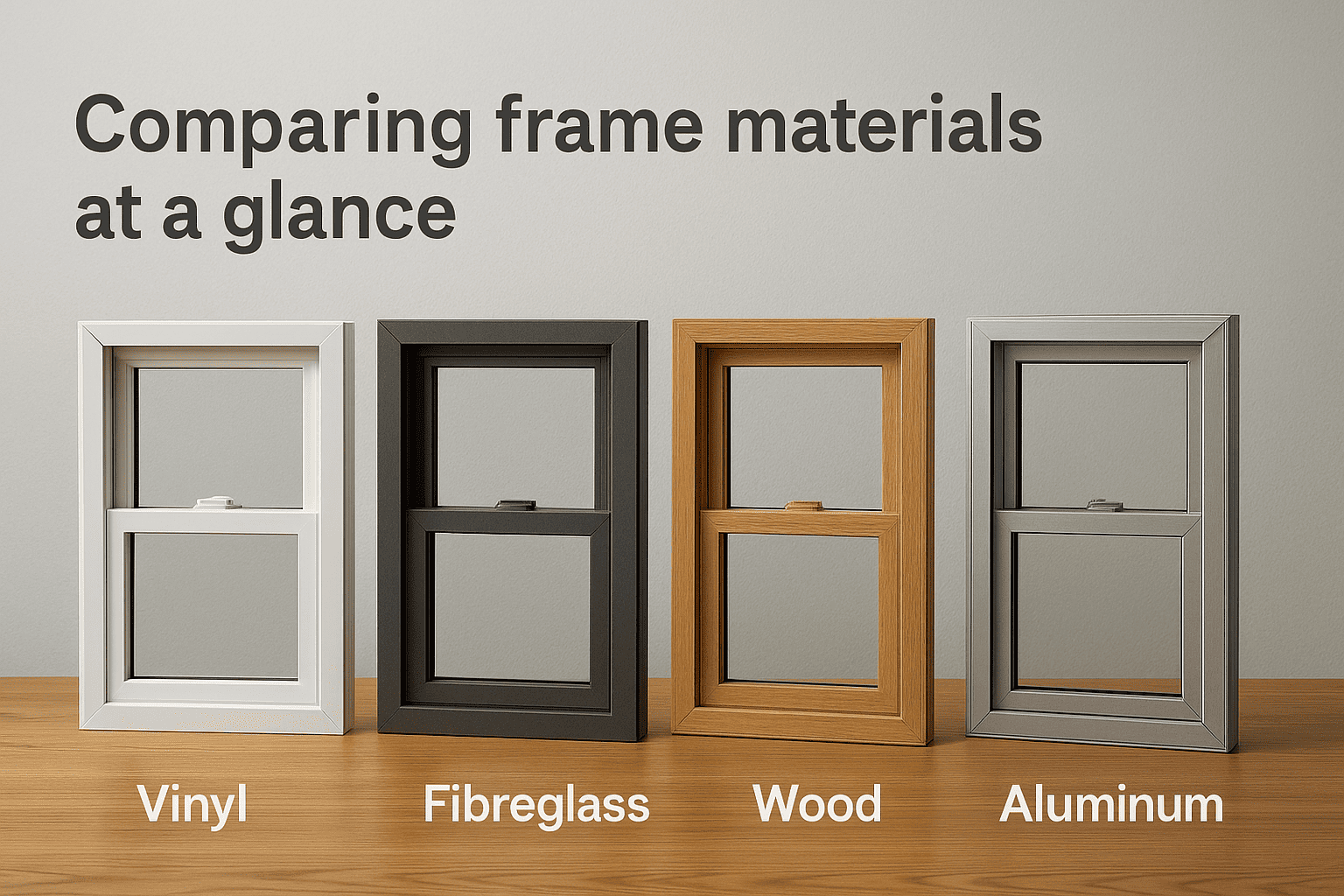
Understanding these trade-offs before you call an installer means you're negotiating on facts, not guessing at what a sales rep tells you.
Hardware, warranty, and installer checklist
Beyond glass and frame, the hardware decides how the window feels day to day. Cheap balances wear out fast and leave sashes drooping within a few years, so ask specifically what balance system is used and whether it's rated for the sash weight in your size. Warranty terms deserve equal attention, since a 15-year seal failure warranty tells you far more about a manufacturer's confidence than any brochure claim. Before signing anything, run through this list with your installer:
- What's the seal failure warranty length, and does it cover labour or just parts?
- Is the glass Low-E coated with Argon fill as standard?
- What balance hardware holds the sashes, and is it replaceable?
- Are installers licensed and insured, not just subcontracted casually?
- Can you see a sample unit or visit the factory first?
Working through our own custom double-hung windows range, we walk every customer through exactly this before quoting, because a rushed choice here is the one that costs you twice.
Double-hung window sizes and twin configurations
Getting the size right matters more with double-hung units than most styles because two sashes have to travel past each other inside one frame, so tolerances are tighter. Manufacturers work from standard width and height increments, but almost every replacement double hung windows order still needs custom measuring since houses settle and openings shift over decades. Never assume your existing rough opening matches a catalogue size exactly, because a millimetre of gap in the wrong place means air leaks no amount of caulking fixes properly.
Standard sizing charts
Most Canadian manufacturers, ours included, build around common width and height combinations, then custom-size beyond that for older or non-standard openings. Here's a rough guide to what's typically available off a standard production run:
| Width range | Height range | Typical use |
|---|---|---|
| 24" to 36" | 36" to 48" | Bedrooms, secondary rooms |
| 30" to 48" | 48" to 60" | Living rooms, main facades |
| 36" to 60" | 60" to 72" | Larger openings, feature windows |
Anything outside these ranges usually means a custom order rather than a stock size, which adds lead time but shouldn't add much to the price if you're already working with a factory-direct supplier.
Twin and triple configurations
A twin double hung window pairs two double-hung units side by side in one combined frame, sharing a centre mullion instead of a full wall stud between them. It's a popular choice where a single unit can't cover the width you need but a slider window or picture window doesn't suit the home's style. Triple configurations extend the same idea across three units, often with the centre one slightly wider to anchor the composition visually.
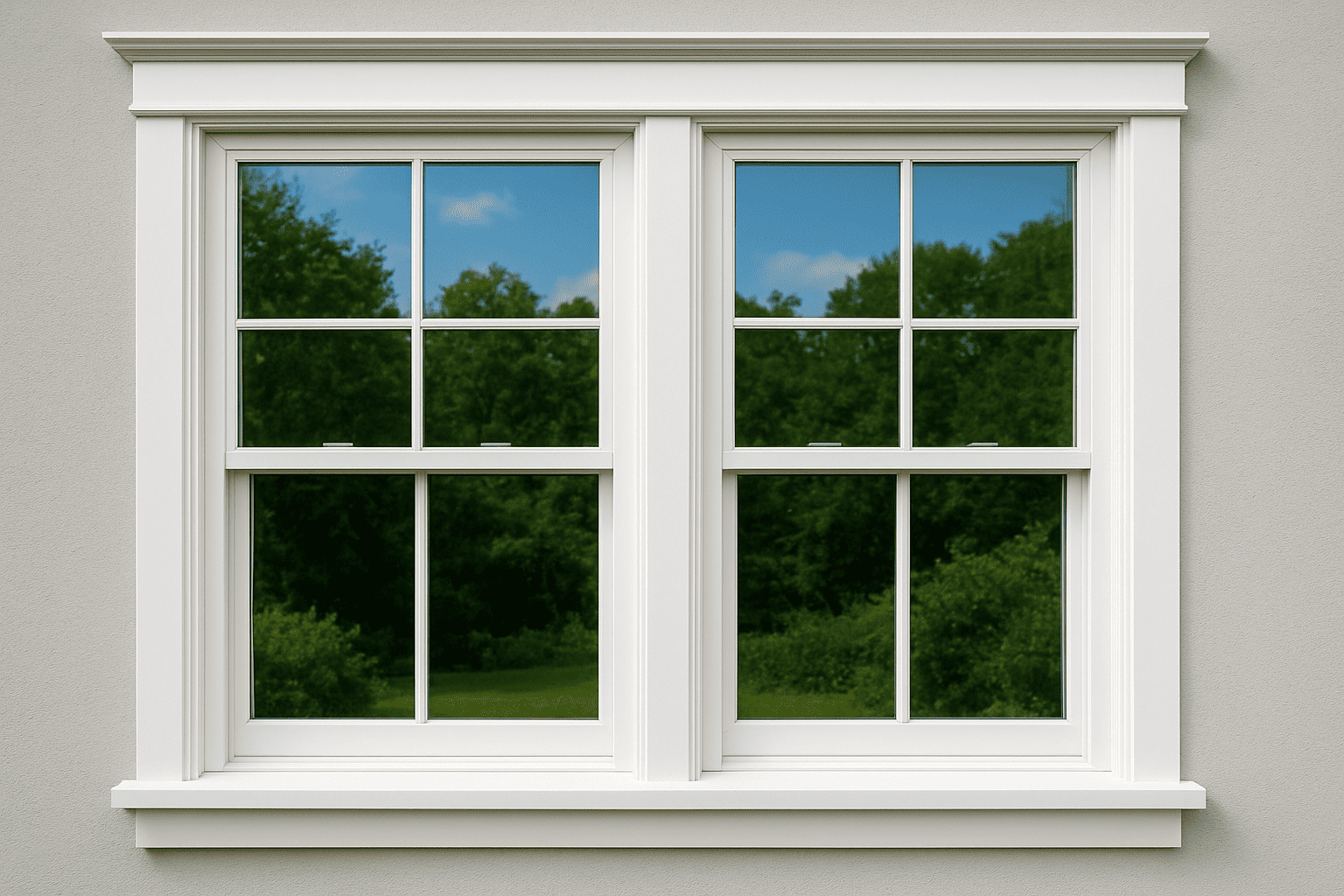
A twin configuration gives you the width of a picture window with the ventilation of two full sashes.
Going this route means paying attention to structural support during double hung window replacement, since a wider combined unit puts more load on the header above it than a single window would. Ask your installer whether the opening needs reinforcement before the new frame goes in, particularly on older homes where the original header was sized for a smaller window. Combined units also cost more than two separate single windows bought apart, but they typically install faster than two separate rough openings, which can offset some of that difference in labour.
DIY versus professional installation
Swapping a double hung window replacement yourself looks straightforward on a video tutorial, and for a like-for-like insert into a sound frame, some handy homeowners manage it fine. But double-hung units have two moving sashes, balance systems, and weep holes that all need to align precisely, and a frame that's out of square by even a few millimetres causes drafts and premature seal failure. Before you commit to doing it yourself, weigh what's actually involved against what a licensed crew brings to the job.
Why DIY tempts homeowners, and where it goes wrong
Cost is the obvious draw. Skipping labour charges can shave hundreds off a single window, and that adds up fast across a whole house. Handy owners with carpentry experience can manage a simple insert-style replacement where the existing frame is square and sound. Still, the risks stack up quickly once you look past the sticker price:
- Voided manufacturer warranty if installation isn't done by a certified installer
- Air and water leaks from imperfect shimming or flashing
- Damaged siding or trim during removal of the old unit
- Structural issues left unnoticed behind rotten sills
- No recourse if the window fails within a year
Saving on labour means nothing if a bad seal costs you the warranty on the window itself.
That last point matters more than most DIYers expect. Warranties on replacement double hung windows typically require professional installation to stay valid, so a weekend project can quietly cancel out the protection you paid for in the unit itself.
When professional installation pays for itself
Professionals bring tools and know-how that homeowners rarely have on hand: laser levels, proper flashing tape, and years of experience reading what's hiding behind old trim. Insured, licensed installers also carry liability if something goes wrong mid-job, which matters when you're dealing with second-storey openings or load-bearing headers above a twin double hung window. Vetted crews from a factory-direct supplier also install faster since they've handled the exact units before, often finishing multiple windows in a day where a first-time DIYer might spend a whole weekend on one.
Generally, we recommend professional fitting for anything beyond a single, simple insert, and our own installation team handles everything from measuring through final caulking so the warranty stays intact from day one.
What affects double-hung window replacement costs
Pricing a double hung window replacement isn't a single number you can quote off a shelf, because so many variables stack on top of each other before you get a final figure. Frame material, glass package, size, and how much carpentry the opening needs before the new unit goes in all move the price independently, which is why two quotes for what looks like "the same window" can land hundreds apart. Knowing which factors carry the most weight helps you spot a fair quote from an inflated one.
The main cost drivers
Size and material set the baseline, but labour and structural repairs often decide the final bill more than the window itself. A twin double hung window costs more than a single unit but less than two separate installs bought apart, since one combined frame means less trim work and fewer flashing points. Custom sizing beyond standard catalogue dimensions adds a modest premium, and rotten sills or headers discovered mid-job add real cost that no quote can predict until the old window actually comes out.
- Frame material: vinyl runs lowest, fibreglass costs more upfront but lasts longer
- Glass package: Low-E coating and Argon gas fill add a small premium but pay back through lower heating bills
- Size and configuration: twin and triple units cost more than a single sash but less than buying two separate windows
- Structural repairs: rotten sills, damaged headers, or out-of-square openings add labour
- Number of windows: whole-house orders typically bring the per-unit price down
The cheapest quote rarely stays cheapest once hidden repairs turn up behind the old frame.
Where factory-direct pricing changes the equation
Retail markups on windows can run surprisingly high once a distributor, a showroom, and a subcontracted installer each take a cut of the same job. Buying replacement double hung windows direct from a manufacturer strips those layers out, which is why factory-direct pricing on comparable units often beats big-box retail by a meaningful margin. We price-match and beat competitor quotes by up to $500 precisely because manufacturing, supply, and installation all happen under one roof here in Toronto, without a middleman adding their own margin between our factory and your front door. Getting a written, itemised quote before work starts, one that separates unit cost from labour and any structural repair allowance, is the single best way to compare offers fairly and avoid surprises once the old window's already out of the wall.
Double-hung versus single-hung windows
Confusing these two styles is easy, since they look nearly identical from the street, but the difference matters once you're comparing quotes for double hung window replacement. Both use two sashes stacked in one frame, yet only a double-hung window lets both sashes slide. A single-hung window fixes the top sash in place and only the bottom one moves, which cuts cost but also cuts function in ways worth understanding before you buy.
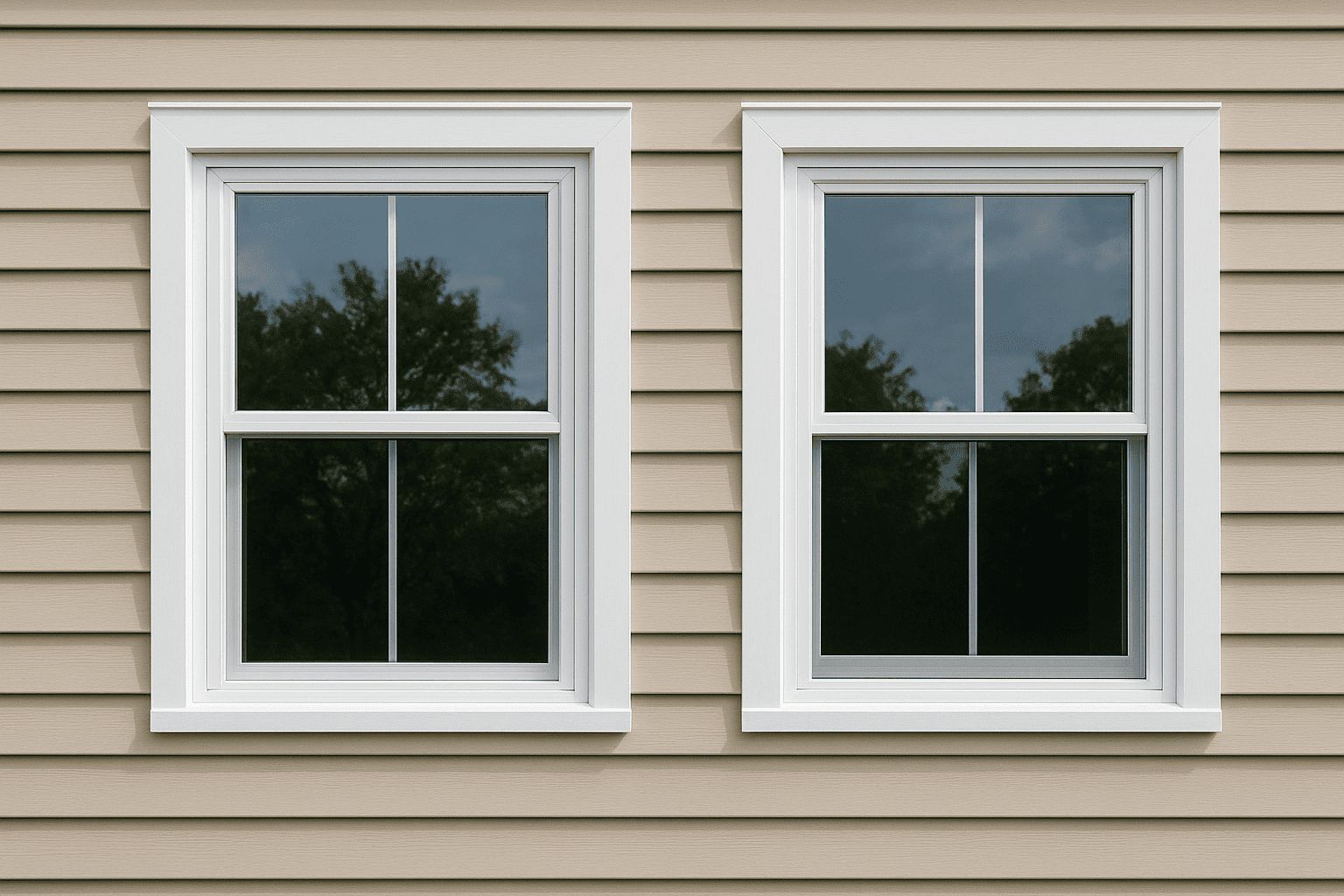
How the two styles actually work
Grasping the mechanical difference explains most of the price gap you'll see between quotes. Double-hung units need two working balance systems, one for each sash, along with hardware that lets the upper sash tilt in for cleaning from inside your home. Single-hung windows only need one balance system, since the top sash is sealed shut permanently, which is exactly why they cost less to manufacture and install.
Paying for two moving sashes only makes sense if you'll actually use both.
| Feature | Double-hung | Single-hung |
|---|---|---|
| Sashes that move | Both top and bottom | Bottom only |
| Ventilation options | Top or bottom opening, or both | Bottom opening only |
| Cleaning from inside | Both sashes tilt in | Bottom sash only |
| Typical price | Higher | Lower |
| Best for | Bedrooms, kitchens, upper floors | Basements, budget replacements |
Which one actually suits your home
Selecting between the two comes down to how you'll actually use the window, not just the price tag on a quote. Bedrooms benefit from double-hung units because opening the top sash lets hot air escape near the ceiling while cool air enters lower down, a airflow trick a single-hung window can't manage. Upper-floor rooms with young kids also do better with double-hung windows, since you can crack the top sash for ventilation without leaving a reachable opening at floor level.
Budget-driven replacements, particularly in basements or rooms where ventilation matters less, are where single-hung windows earn their keep. Choosing single-hung there isn't a downgrade, it's matching the window to the job rather than paying for flexibility you won't use. If you're weighing double hung window replacements against single-hung across a whole house, it's rarely an all-or-nothing decision, and mixing styles room by room based on actual use is standard practice.
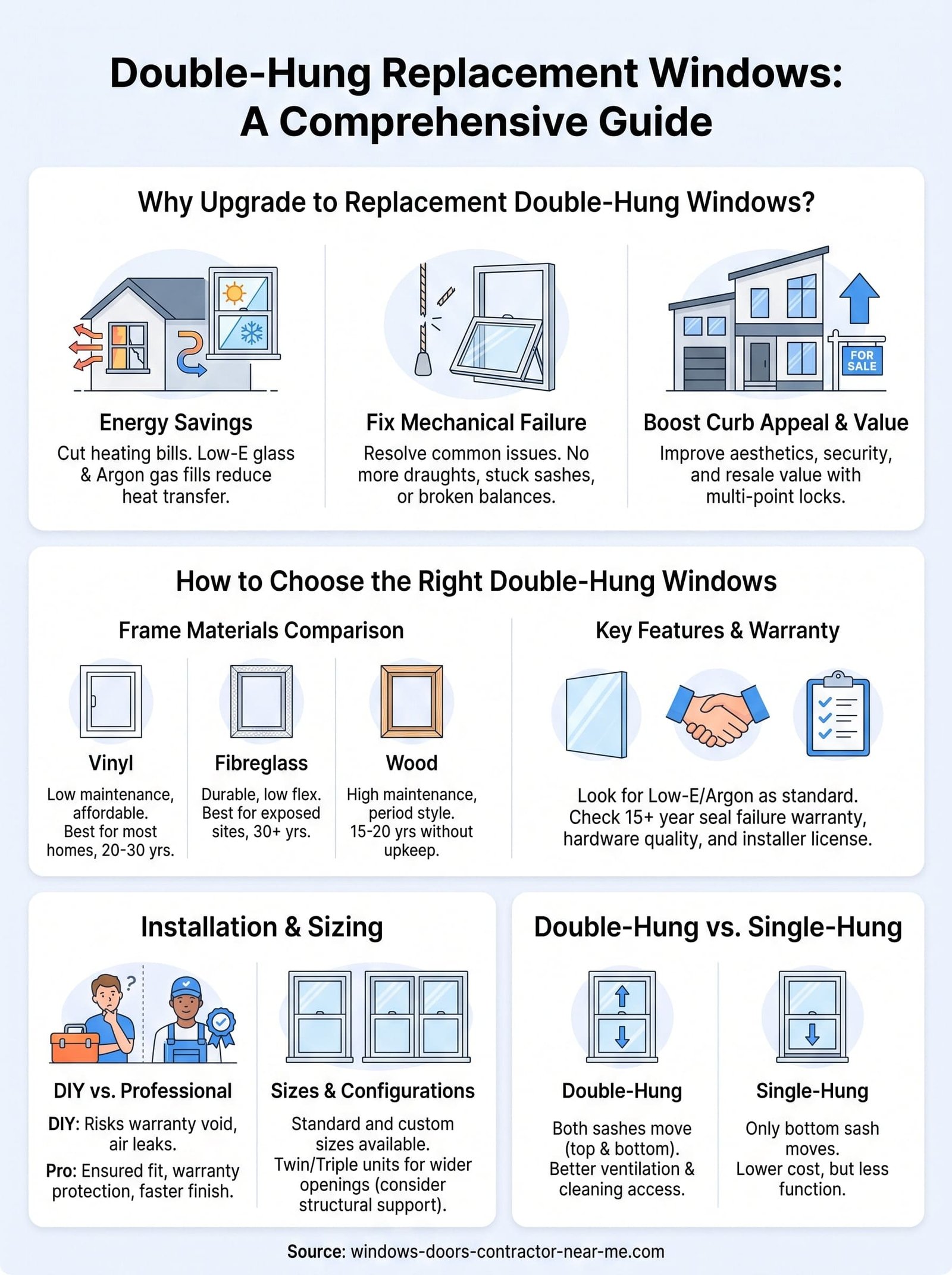
Finding the right fit for your home
Getting replacement windows double hung right comes down to a handful of decisions: the right frame material for your exposure, a glass package that actually earns its keep against Canadian winters, and installation done by someone who'll stand behind the seal. Skip any one of those and you're back here again sooner than you'd like, paying twice for what should've been a one-time job.
Measuring twice, checking warranty terms properly, and getting an itemised quote before anyone touches your walls saves more money than chasing the lowest sticker price ever will. Whether you need a single unit for a bedroom or a full twin double hung window across your main facade, matching the window to how you actually live in that room beats guessing from a showroom brochure every time.
Ready to compare real numbers for your home? Get a free, no-obligation quote from our Toronto factory and see what factory-direct pricing actually looks like.