
You're staring at a quote for new windows and the salesperson keeps mentioning "single-hung" and "double-hung" like you already know the difference. You don't, and that's fine, most homeowners don't until they're actually replacing windows. The single vs double hung windows question comes down to one simple mechanical detail: how many sashes actually move. That detail changes your ventilation, your cleaning routine, and how much you'll pay.
In a single-hung window, only the bottom sash slides up. In a double-hung window installation, both the top and bottom sashes move, which gives you more airflow control and lets you tilt both sashes inward for easier cleaning from inside your home. Double-hung units typically cost more upfront, but the added convenience and resale appeal often justify it.
We've fitted both styles across Innisfil and the surrounding Ontario area for nearly two decades, so this comparison covers what actually matters on the job: operability and airflow, maintenance demands, energy performance in our climate, and real price differences, so you can choose the window that suits your home rather than just the cheaper option on paper.
Why the difference matters for your home
Ventilation control that actually works
Airflow is where the double-hung windows vs single-hung comparison starts to matter in real life, not just on a spec sheet. A single-hung window only lets air in through the bottom opening, which means hot air trapped near your ceiling has nowhere to escape. A double-hung window lets you drop the top sash while raising the bottom one, creating a natural chimney effect that pulls stale, warm air out while pulling cooler air in. If you've ever sat in a stuffy upstairs bedroom in July wondering why the fan isn't helping, this is usually why: single-sash airflow just can't move air the way a two-way system can.
Cleaning without a ladder
Maintenance is the second reason this choice sticks with you long after installation day. Because both sashes tilt inward on a double-hung window, you can clean the outside glass from inside your living room, no ladder, no balancing on a windowsill two storeys up. Single-hung windows usually only tilt the bottom sash, so the fixed top pane on a second-storey window often means calling in a window cleaner or risking a fall. Over a decade of ownership, that difference adds up in both time and safety, particularly on homes with upper floors that back onto tight side yards where a ladder simply doesn't fit.
A double-hung window turns a two-storey cleaning job into a five-minute task from your own living room.
Energy performance in Ontario winters
Energy efficiency is where a lot of homeowners assume double-hung windows automatically win, and that's only partly true. Because a double-hung window has two operable sashes, it has more moving parts and more places where air can theoretically leak if the seals aren't built well. A properly manufactured double-hung unit with quality weatherstripping performs just as well as a single-hung window in an Ontario winter, but a cheaply made one won't. This is why the manufacturer matters as much as the window style, and why it pays to understand how to choose energy efficient windows for a Canadian home before you commit. At MK Windows and Doors, every vinyl window we build uses Low-E coatings and Argon gas fills regardless of whether it's single or double hung, so you're not trading energy performance for convenience. Look into the energy-efficient window styles and glazing options available before assuming one style is automatically the more efficient choice.
Resale value and buyer expectations
Finally, think about how the next buyer will see your home. Double-hung windows read as a slightly more premium, more traditional feature, especially on older or character-style homes across Ontario where buyers expect that detailing. Single-hung windows are common, functional, and perfectly acceptable, but they don't carry the same subtle upgrade signal on a listing. If you're replacing windows purely for your own comfort and plan to stay put for twenty years, this matters less. If resale is even a small part of your thinking, it's worth weighing alongside the price difference.
| Factor | Single-Hung | Double-Hung |
|---|---|---|
| Sashes that open | Bottom only | Top and bottom |
| Airflow style | One-directional | Cross-ventilation |
| Interior cleaning | Partial (bottom sash tilts) | Full (both sashes tilt) |
| Typical resale perception | Standard | Slight upgrade |
| Moving parts | Fewer | More |
Each of these factors feeds into the next section, because none of them exist in isolation. The window that suits a bungalow's ground-floor bedroom rarely suits a two-storey home's stairwell window, and your budget will shift depending on which features you actually need versus which ones just sound nice on paper.
How to choose between single and double hung windows
Start with how you actually live in the room, not with the price tag. The single hung vs double hung windows decision isn't about which style is objectively better, it's about matching the window to what a specific room needs. A bedroom on the second floor that never gets opened except for a hot week in August doesn't need the full flexibility of a double-hung unit. A kitchen window over the sink that gets opened daily and needs regular wiping down benefits enormously from that top sash tilting inward.
Run through this checklist before you decide
Work through these questions room by room rather than trying to pick one style for the whole house:
- Does this window sit above the second storey, where cleaning access is difficult?
- Do you open this window often enough that airflow control actually matters?
- Is the room prone to trapped heat, like an attic bedroom or a sun-facing living room?
- Does your budget allow for the upgrade on every window, or only the ones that need it most?
- Will this room be visible to potential buyers who notice window detailing?
Answering yes to two or more of the first three questions usually points towards double-hung. If your answers lean towards "rarely" and "ground floor," a single-hung window will do the job without the extra cost.
Weigh reach and safety honestly
Height matters more than most homeowners expect when comparing double hung vs single hung windows. On a bungalow or a ground-floor room, you can reach the outside of a single-hung window's fixed top sash easily enough with a step stool once or twice a year. On a two-storey home, that same fixed pane becomes a genuine safety problem, and that's usually the deciding factor for our clients rather than airflow.
If you can't safely reach the glass without a ladder, double-hung isn't a luxury, it's the practical choice.
Treat your budget as a per-window decision, not a whole-house one
Your budget doesn't have to force an all-or-nothing choice across the entire house. Mixing styles room by room is common and sensible: double-hung where cleaning access or airflow genuinely matters, single-hung everywhere else. You end up spending money where it actually improves daily life instead of paying a premium on every opening just because one style sounds nicer on a brochure.
Where each window type works best in your home
Placement decides more than most homeowners realise before they start comparing quotes. A window that performs brilliantly in a stairwell might be the wrong pick for a basement rec room, and matching style to location is where the single-hung windows vs double-hung debate actually gets practical. Walk through your home room by room and you'll usually find the answer sits in how the space is used, not in a general preference for one style over the other.
Bungalows and ground-floor living spaces
Ground-floor rooms in a bungalow rarely need the full flexibility of a double-hung unit. You can reach the glass easily for cleaning, airflow through a single opening is usually enough for a bedroom or den, and a single-hung window keeps your costs down without sacrificing anything you'd actually notice day to day. This is where a single-hung window earns its keep, particularly in newer builds where the layout doesn't demand cross-ventilation.
Second-storey bedrooms and stairwells
High windows change the calculation completely. A double-hung vs single-hung windows comparison tips firmly towards double-hung once you're dealing with a second floor, because the ability to tilt both sashes inward removes the ladder from the equation entirely. Stairwell windows are a classic case: they're often tall, hard to reach, and rarely get opened, yet when they do need cleaning, a fixed top pane turns a five-minute job into a call to a window cleaning company.
The higher the window, the more double-hung pays for itself in access alone.
Kitchens, sunrooms, and rooms you open daily
Kitchens over the sink and sunrooms that trap heat all afternoon benefit from the cross-ventilation a double-hung window provides. You'll open these windows often, so the ability to pull warm air out through the top sash while letting cooler air in below makes a real difference to comfort, especially through an Ontario summer.
| Room type | Better fit | Why |
|---|---|---|
| Ground-floor bedroom | Single-hung | Easy reach, lower cost |
| Second-storey window | Double-hung | Safe interior cleaning |
| Kitchen over sink | Double-hung | Daily airflow, easy wiping |
| Basement utility room | Single-hung | Rarely opened, budget-friendly |
| Sunroom or attic | Double-hung | Cross-ventilation cuts heat build-up |
Basements and utility rooms sit at the other end of the scale. These windows get opened a handful of times a year at most, so paying extra for a second operable sash rarely makes sense. Save the upgrade for the rooms where it actually gets used.
Cost and installation considerations in Ontario
Money is usually what tips the decision once you've worked through room-by-room needs, so let's talk real numbers rather than vague ranges. A double-hung vs single-hung windows cost comparison in Ontario typically shows a gap of $50 to $150 per window, depending on size, frame material, and glass package, not the dramatic markup some homeowners expect. Factory-direct pricing narrows that gap further because you're not paying a retailer's margin on top of the manufacturing cost.
What you'll actually pay
Size, grille pattern, and glass package pricing move the price more than the sash type does. Here's a rough breakdown we quote across Innisfil window and door replacement projects and the surrounding area:
| Window size | Single-hung (installed) | Double-hung (installed) |
|---|---|---|
| Standard (24" x 36") | $350 to $500 | $420 to $580 |
| Mid-size (30" x 48") | $480 to $650 | $560 to $740 |
| Large (36" x 60") | $650 to $850 | $750 to $950 |
The price gap between styles is smaller than most quotes make it look, once you strip out frame and glass upgrades.
Installation timeline and labour
Labour costs barely shift between the two styles because installation follows the same steps: removing the old frame, checking the rough opening, setting the new unit, and sealing it against the Ontario weather. A licensed installer typically fits a standard vinyl window in under an hour once the opening is prepped, whether it's single or double hung. Where labour does climb is on older homes with settled frames or non-standard openings, so get a proper measurement rather than relying on a rough estimate from photos.
Getting the best price without overpaying
Ontario's window market has plenty of retailers marking up factory-built units, which is exactly the middleman cost a factory-direct supplier removes. We price-match competitor quotes by up to $500, and every window carries a 15-year seal failure warranty regardless of style, so you're not paying extra for peace of mind. Before signing anything, ask for a written breakdown that separates the sash style cost from the frame, glass, and installation charges, so you can see exactly what you're paying for and where a single-hung swap might save you money on windows that don't need the upgrade.
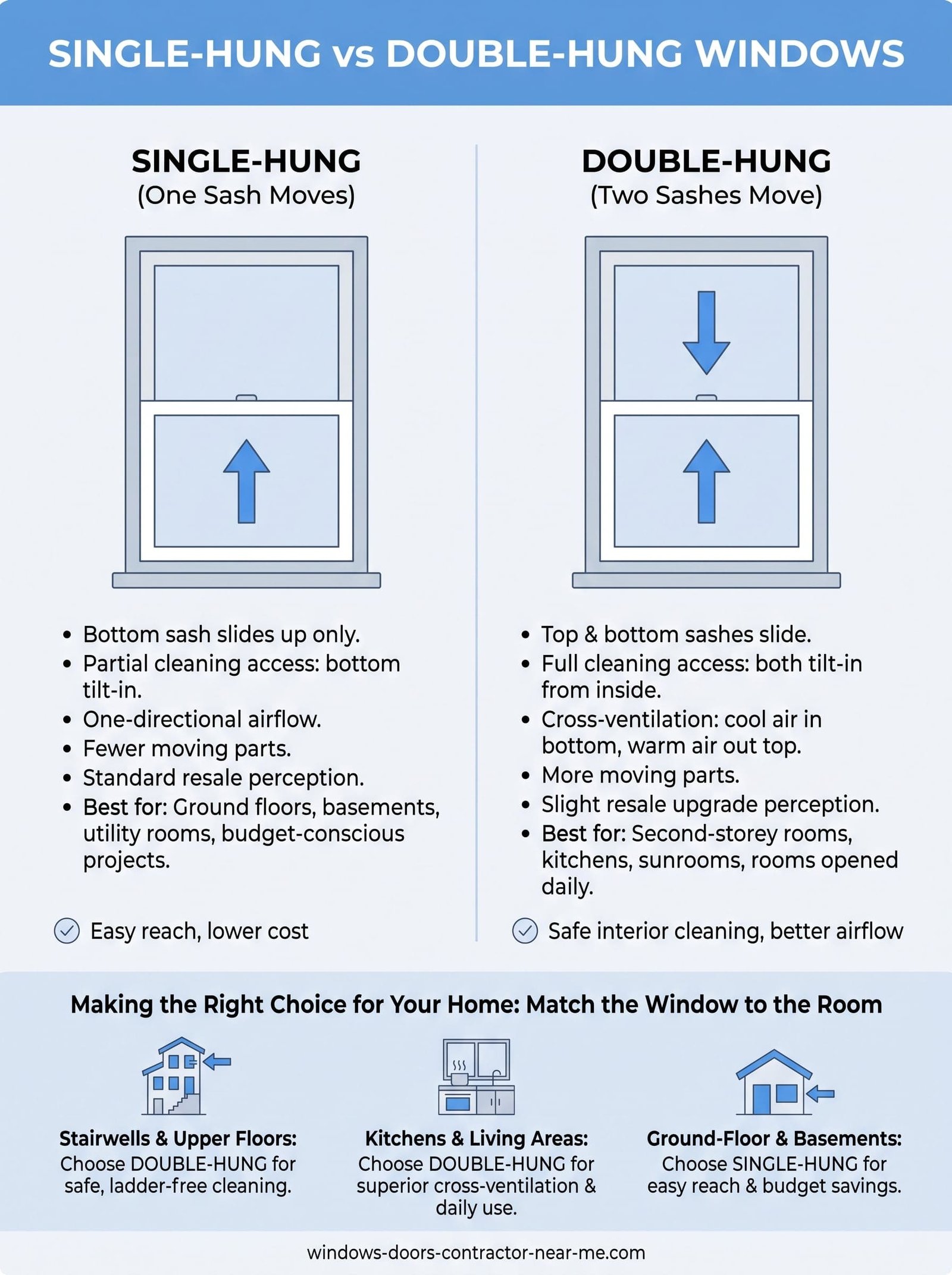
Making the right choice for your home
The single vs double hung windows decision isn't complicated once you strip away the sales pitch. Choose double-hung for second-storey rooms, kitchens, and any space you open often, where cross-ventilation and interior cleaning genuinely matter. Choose single-hung for ground-floor rooms, basements, and utility spaces where you'd rarely notice the missing top sash but would notice the extra cost. Mixing both styles across your home is normal, sensible, and often the cheapest way to get exactly what each room needs.
Quality manufacturing matters more than the style you pick. A well-built window, single or double hung, with proper weatherstripping and Low-E glass will outperform a cheap version of either style through an Ontario winter. Get a free in-home consultation and a proper measurement before you decide anything based on price alone. Book a free in-home quote with MK Windows and Doors and get factory-direct pricing built around what your home actually needs.