
Pricing out awning windows cost for a renovation or replacement job usually turns up numbers all over the map, and it's hard to know which quote actually reflects a fair Ontario price versus one padded with middleman markups. If you've been comparing awning window price estimates from different suppliers and getting wildly different answers, you're not doing anything wrong. The gaps come down to material, size, glass package, and whether installation is bundled in.
This guide breaks down what Canadians are actually paying in 2026, from a standard-size vinyl unit to a large awning window built for a feature wall. We'll cover aluminum awning windows versus vinyl, how size and hardware push costs up, and what installation typically adds to the final bill.
As a factory-direct manufacturer, we handle awning window installation across Ontario every week, so the ranges here reflect real jobs, not guesswork. Whether you're planning a single replacement or pricing out awning windows for a full home upgrade, you'll leave with realistic numbers to budget against.
Why awning window costs vary across Canada
Ask five different suppliers for awning windows prices on the same job and you'll likely get five different numbers, sometimes with a $1,000 spread on a single window. That's not a sign that someone's trying to cheat you. Regional labour rates, transport distances from the factory, local permit rules, and even the harshness of the local climate all feed into the final figure. A window built to handle lake-effect wind off Georgian Bay isn't specced the same way as one going into a sheltered suburban build near Toronto, and the price reflects that difference.
Regional pricing patterns across Ontario and beyond
Living close to a manufacturer changes your math. Buyers within an hour or two of a factory, like homeowners across Simcoe County and the Greater Toronto Area, tend to pay less simply because delivery and site-visit logistics are cheaper. Move further north or into rural stretches of Ontario, and freight costs, longer installer travel times, and thinner competition among local crews push quotes upward. The table below shows typical ranges we see for a standard vinyl awning window, installed, across different parts of the country.
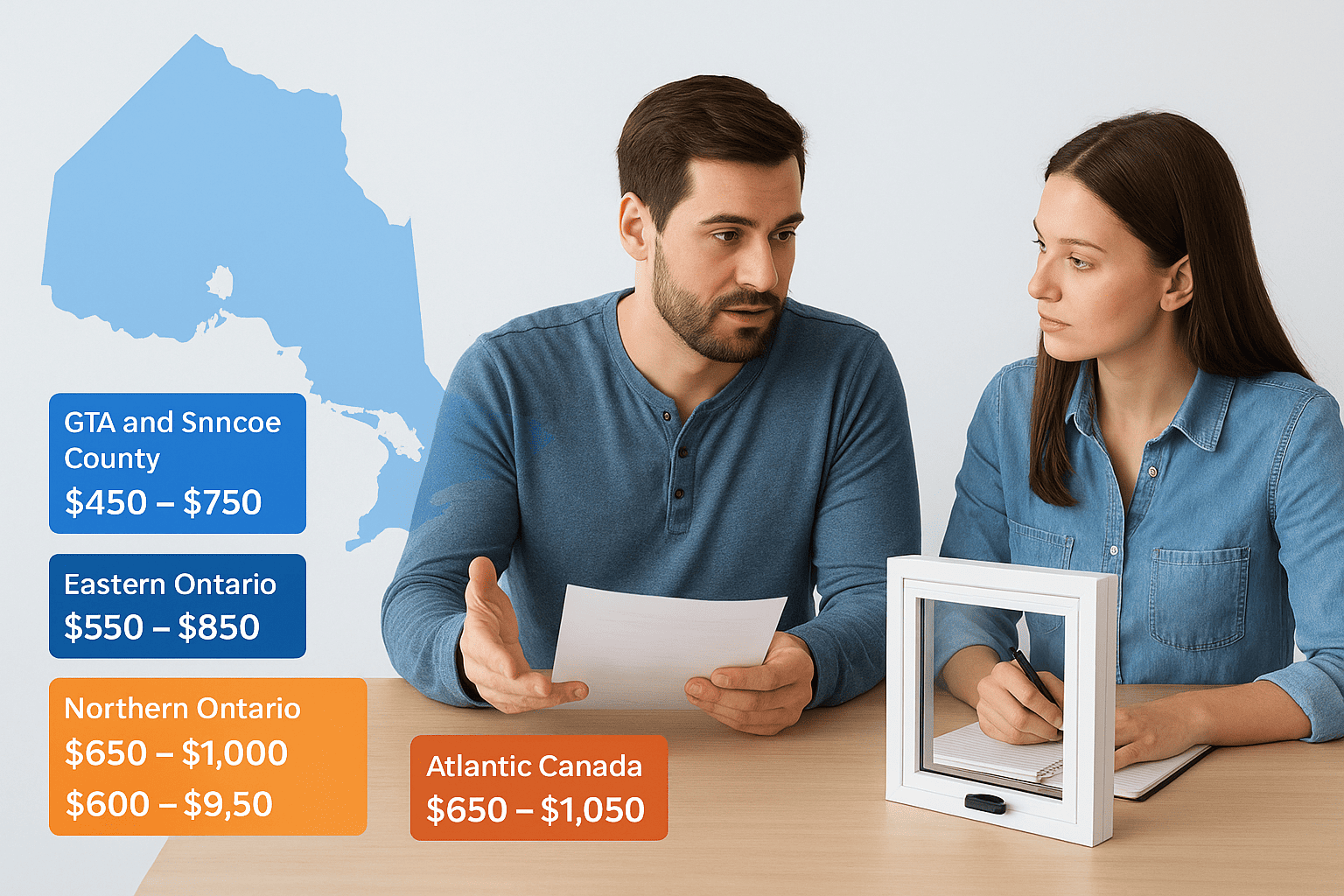
| Region | Typical installed price (per window) | Main cost driver |
|---|---|---|
| GTA and Simcoe County | $450 – $750 | Close to factory, strong installer competition |
| Eastern Ontario | $550 – $850 | Longer delivery distance |
| Northern Ontario | $650 – $1,000 | Freight, fewer local installers |
| Western Canada (BC, AB) | $600 – $950 | Higher labour rates, import shipping |
| Atlantic Canada | $650 – $1,050 | Limited local manufacturing, longer supply chains |
Buying factory-direct within reach of your manufacturer is usually the single biggest lever you have over your final quote.
Climate zones and building code requirements
Canada's building code doesn't treat every region the same, and neither should your window supplier. Homes in colder zones, think Sudbury, Thunder Bay, or anywhere north of the Muskokas, often need thicker glass units, triple-pane options, or upgraded Low-E coatings to meet local energy code minimums, which is worth reading up on before choosing energy efficient windows for a Canadian home. Those upgrades aren't optional extras in those climates, they're baseline requirements, and they add real dollars to the quote compared to a milder zone like Windsor or Niagara. Coastal areas in BC and Atlantic Canada face different pressures, with humidity and wind-driven rain demanding better weatherstripping and sometimes reinforced frames, particularly for exterior awning windows mounted on exposed elevations.
Supply chain length and middleman markups
Here's where a lot of the price variation actually comes from, and it has nothing to do with geography or climate. Most window retailers don't manufacture anything. They buy from a factory, mark the product up, hand it to a subcontracted installer who marks it up again, and pass the combined total to you. Each link in that chain adds a margin, and by the time a window reaches your quote sheet it might have passed through two or three sets of hands. Cutting that chain is exactly why factory-direct buying, ordering through the manufacturer that actually builds and installs the window, tends to land 15% to 30% below retail equivalents for the same spec. We see this constantly at our facility handling windows replacement in Innisfil: a customer brings in a big-box quote for a mid-size unit, and our factory-direct price for the identical vinyl frame, Low-E glass, and Argon fill comes in several hundred dollars lower, installation included.
Seasonal demand and timing
Ontario's renovation season runs hard from April through October, and pricing tends to firm up during those peak months simply because installers are booked solid and manufacturers are running at capacity. Ordering awning window cost estimates in the dead of winter, by contrast, often gets you more attention from sales teams and occasionally a better rate, since factories are filling slower production slots. If your project has flexibility, locking in a winter quote for a spring installation can shave a meaningful amount off the total, particularly on larger orders involving multiple awning windows across a full home.
Putting all of this together, the fair way to read a quote isn't to compare it against some national average, it's to weigh it against your specific region, climate zone, and how many hands the product passed through before reaching you. That context is what the rest of this guide will help you apply.
How to budget for your awning window project
Budgeting for a window job isn't just picking a number and hoping the quote lands close. You need a realistic awning windows cost range before you call a single supplier, otherwise every quote sounds either shockingly high or suspiciously low with nothing to compare it against. Start by counting how many windows you actually need replaced, then multiply a mid-range per-unit estimate against that count to get a rough project ceiling before you factor in extras like trim work or interior finishing.
Set a per-window baseline first
Grounding your budget in a per-unit figure keeps quotes honest. For a standard-size vinyl awning window installed in the GTA or Simcoe County, plan on $450 to $750 per opening as a working baseline, adjusting upward for northern or rural delivery as covered earlier. If you're pricing a large awning window for a feature wall or an oversized bedroom opening, push that baseline toward $900 to $1,400 per unit, since bigger glass packages and reinforced frames cost more to build and ship.
A realistic per-window baseline, not a vague total, is what separates a fair quote from a padded one.
Build a full-project budget, not just a window total
Homeowners often forget that the window itself is only part of the bill. A proper budget accounts for removal of the old unit, disposal fees, interior and exterior trim, caulking, and any structural work if the rough opening needs adjusting. Here's a quick checklist to work through before you request quotes:
- Count total openings being replaced, including any doors bundled into the same project
- Decide on frame material (vinyl, fibreglass, or aluminum) for each opening
- Note which openings need larger or custom sizes versus standard stock dimensions
- Ask whether trim, caulking, and disposal are included or billed separately
- Set aside 10% to 15% contingency for surprises behind old trim or damaged framing
Running through that list before you shop protects you from a quote that looks great on paper but balloons once the installer opens the wall and finds rot or an out-of-square frame.
Compare quotes apples-to-apples
Suppliers rarely present quotes the same way, so line-by-line comparison matters more than the bottom-line number. One quote might bundle installation and disposal, while another lists them as add-ons that surface later. Push every supplier for the same breakdown: frame material, glass package, hardware, and labour, itemised separately. That's the only way to know whether a lower awning window price actually reflects a better deal or just a stripped-down spec missing things you'll need anyway.
Timing your purchase also plays into the budget. If your project isn't urgent, booking a free in-home consultation during a slower season often gets you a more detailed, itemised quote with room to negotiate, since our team isn't rushing between back-to-back installs. That extra time upfront tends to save homeowners from budget surprises once the crew is on site.
What drives the price of an awning window
Every awning window cost breaks down into a handful of variables, and once you know what they are, a quote stops looking like a mystery number and starts looking like a spec sheet with a price attached. Size, glass package, frame material, hardware, and how complicated the install turns out to be all stack together to form the final figure. Strip any one of those out and you can usually spot exactly why one quote runs higher than another for what looks like the same window on paper.
Size and glass package
Glass is the single biggest cost driver on most jobs, more so than the frame itself, and the same pattern shows up in window glass replacement cost figures. A standard-size opening with double-pane Low-E glass and Argon fill sits at the low end of the range, while stepping up to triple-pane glass, tinted or Low-E366 coatings, or a wider sash pushes the number up fast because you're paying for more glazing surface and heavier hardware to support it. Grid patterns and decorative glass options add further cost, usually in smaller increments than the glazing upgrade itself.
Glass upgrades, not the frame, are usually what separates a $500 quote from a $900 one.
Frame material and hardware
Vinyl, fibreglass, and aluminum all carry different price points before you even factor in size, something we break down in full in the next section. Hardware matters more than most homeowners expect too. A basic crank operator and standard lock cost far less than multi-point locking hardware or a heavy-duty crank rated for a large awning window sash. Colour and finish also shift price, with woodgrain finishes on fibreglass units and custom exterior colours on vinyl both adding a premium over standard white or almond.
Site conditions and installation complexity
What's happening behind the wall matters as much as what you're buying. A straightforward swap into an existing, square opening costs far less than a job requiring header work, brick-to-brick reframing, or correcting a rough opening that's shifted over decades. Older Ontario homes, especially anything built before the 1980s, often hide surprises like rotted framing or non-standard sizing that only show up once the old unit comes out.
Here's a quick rundown of the main drivers and roughly how much weight each carries in a typical quote:
| Cost driver | Typical impact on price |
|---|---|
| Glass package (double vs triple pane, coatings) | High |
| Frame material | High |
| Window size | High |
| Hardware (locks, crank operators) | Moderate |
| Colour and finish | Moderate |
| Site conditions and reframing needs | Moderate to high |
| Regional delivery and labour | Moderate |
Understanding this breakdown also helps when comparing awning windows as a bundled project, since doors carry their own version of the same variables, glass, hardware, and frame material, just at a larger scale. Once you can point to which line item is driving a quote up, you're in a much stronger position to negotiate or trim the spec without sacrificing the performance you actually need.
Awning window prices by frame material
Frame material sets the floor for your awning window price before size or glass even enter the conversation. Vinyl, fibreglass, and aluminum each bring a different balance of upfront cost, energy performance, and lifespan, so the cheapest option on the quote isn't always the cheapest option over ten winters. Knowing where each material sits lets you weigh a lower sticker price against what you'll actually spend on heating bills and maintenance down the road.
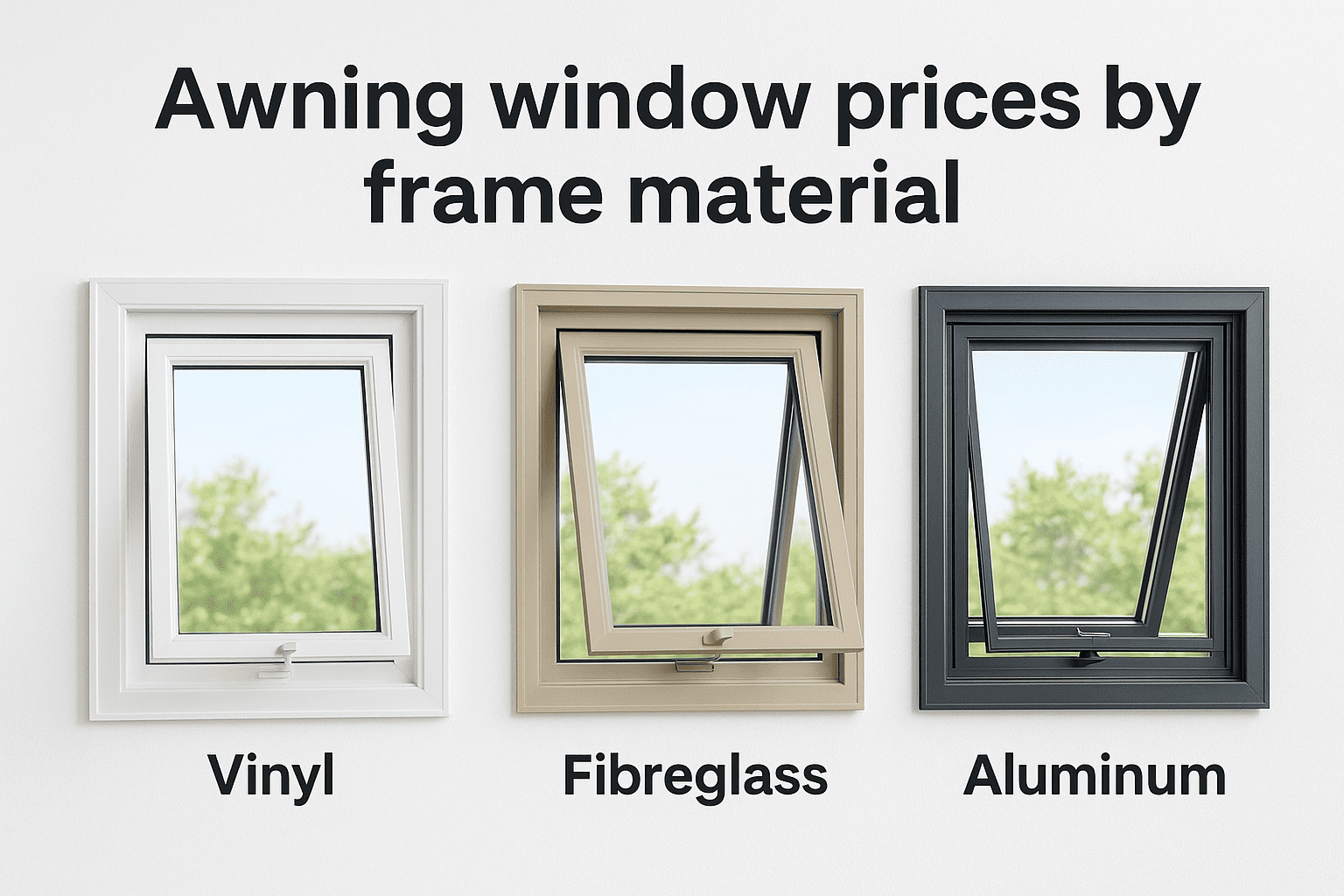
Vinyl: the standard choice for most Ontario homes
Vinyl remains the default pick for most homeowners we quote, and for good reason. It's maintenance-free, resists warping through Ontario's freeze-thaw cycles, and pairs well with Low-E coatings and Argon fills without pushing the price into premium territory. Expect a standard vinyl awning window installed to land in the $450 to $750 range covered earlier, with custom exterior colours adding a modest premium over standard white or almond. For homeowners comparing straightforward awning windows cost across a full house replacement, vinyl usually delivers the best balance of price and thermal performance.
Fibreglass: higher upfront cost, longer lifespan
Fibreglass frames cost more than vinyl, typically running 20% to 35% higher per unit, but they hold their shape better under extreme temperature swings and take paint if you want to match a specific exterior colour later. Homeowners investing in a full renovation, or pairing windows with our fibreglass entrance doors, often choose fibreglass across the whole project for a consistent look and matched durability. It's a stronger long-term bet for anyone planning to stay in the home for fifteen years or more, since the frame won't sag or discolour the way lower-grade vinyl sometimes does after a decade in direct sun.
Aluminum: slim sightlines, lower insulation value
Aluminum awning windows show up most often in modern architectural builds, additions, or commercial-style renovations where slim sightlines matter more than raw thermal performance. They cost roughly in line with mid-range vinyl but conduct heat and cold far more readily unless fitted with a thermal break, which adds cost back onto the quote. For most Ontario homes chasing lower utility bills through a cold winter, aluminum isn't the strongest pick, but it earns its place in specific design situations where a narrow frame profile is the priority.
The cheapest frame material on the quote isn't always the cheapest one to own over a decade of Ontario winters.
| Frame material | Typical price range (installed) | Best suited for |
|---|---|---|
| Vinyl | $450 – $750 | Most residential replacements, best value |
| Fibreglass | $600 – $1,050 | Long-term durability, colour matching |
| Aluminum | $500 – $850 (more with thermal break) | Modern builds, narrow sightlines |
Whichever material you land on, ask your supplier to itemise the frame separately from glass and hardware on the quote. That's the only way to confirm you're paying a fair rate for the material itself, rather than a bundled number that hides where the real cost is coming from.
Cost differences for small, large and largest sizes
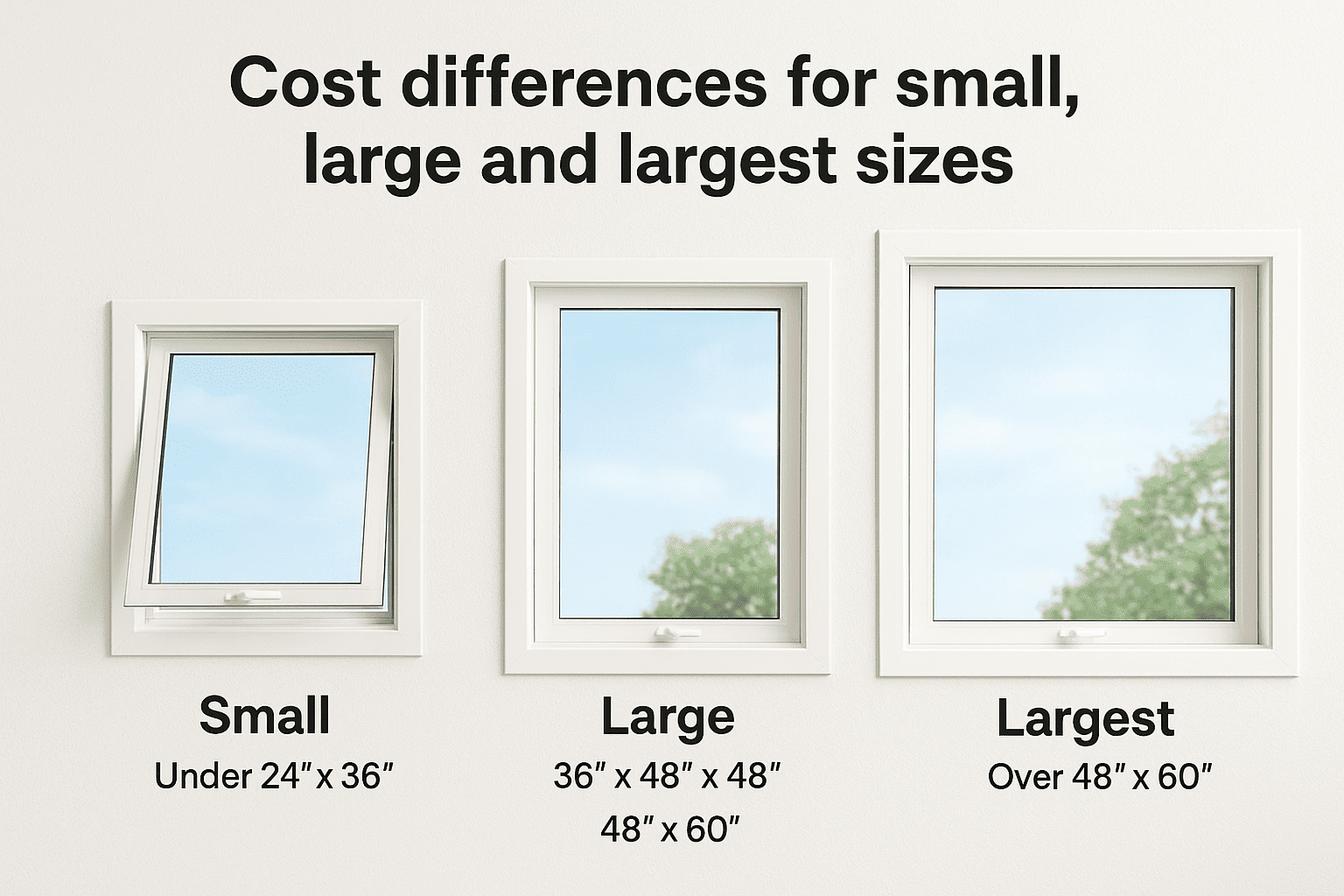
Size changes an awning window price faster than almost any other variable on the spec sheet. A small basement or bathroom unit and a wide feature window for a great room aren't just different products, they're built on entirely different hardware, glass thickness, and reinforcement requirements. Once you understand where the size breakpoints sit, you can spot whether a quote is charging you fairly for the extra glass and steel, or padding the number because "custom" sounds expensive.
Small awning windows: the budget-friendly end
Small openings, typically anything under 24 by 36 inches and common in basements, bathrooms, and laundry rooms, sit at the bottom of the pricing table because they use less glass, lighter crank hardware, and standard stock sizing that doesn't require custom fabrication. Expect these to land toward the lower end of the vinyl range, often $350 to $550 installed, assuming the opening is straightforward and doesn't need reframing. These are also the easiest units to bundle into a multi-window order, since factories can run several small sashes through production together and pass some of that efficiency on in the quote.
Large awning windows: where price climbs fastest
Once you move into a large awning window, generally anything over 36 by 48 inches, the cost curve steepens. Wider sashes need heavier crank operators to lift the glass without strain, thicker glass to resist deflection, and often multi-point locking hardware instead of a single latch. These units commonly run $900 to $1,400 installed, and that range climbs further if you're specifying triple-pane glass or a premium colour finish. Feature walls and great-room installations frequently call for this size, and it's worth budgeting accordingly rather than assuming a linear jump from the small-window price.
Size doesn't scale price evenly, a large awning window can cost twice as much as a small one for the glass and hardware alone, not just the extra square footage.
The largest awning windows and custom fabrication
At the top end, a largest awning window order, think openings pushing past 48 by 60 inches or custom architectural shape windows, moves out of stock sizing entirely and into custom fabrication. These jobs often run $1,500 to $2,200 or more per unit once you factor in reinforced framing, heavy-duty hardware rated for the sash weight, and sometimes structural adjustments to the rough opening to support the added load. Custom sizing also extends lead times, so factor a longer production window into your renovation schedule if you're planning around this size.
| Size category | Typical dimensions | Installed price range |
|---|---|---|
| Small | Under 24" x 36" | $350 – $550 |
| Standard | 24" x 36" to 36" x 48" | $450 – $750 |
| Large | 36" x 48" to 48" x 60" | $900 – $1,400 |
| Largest / custom | Over 48" x 60" | $1,500 – $2,200+ |
Matching your size category against this table before requesting quotes gives you a realistic anchor point, so a $1,600 quote on a genuinely oversized custom unit doesn't read as a rip-off when it's actually a fair price for the fabrication involved.
Installation costs for exterior awning windows
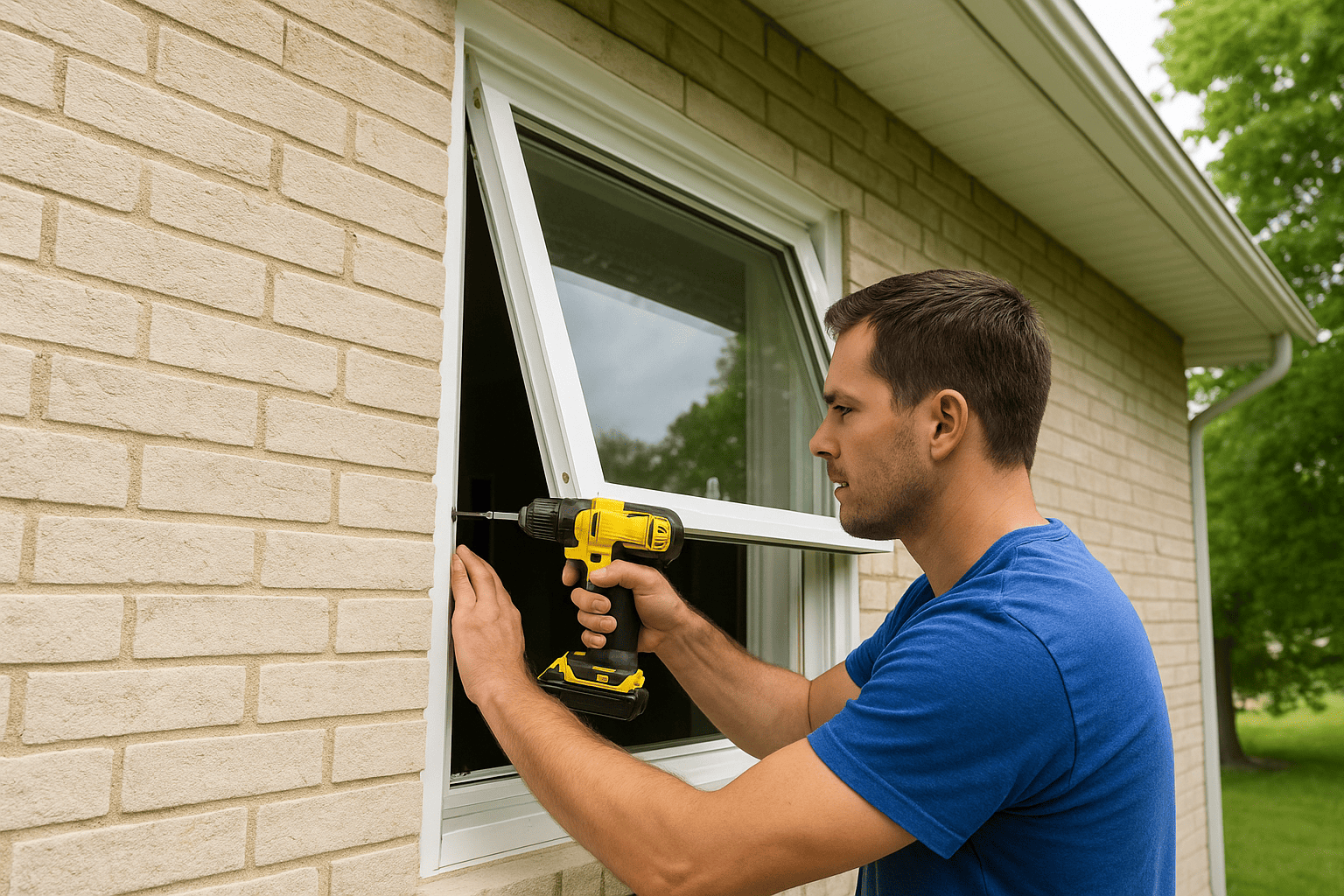
Installation is where a lot of homeowners get caught out, because the window price and the labour price are two separate numbers that suppliers don't always break apart clearly. For exterior awning windows, installation typically adds $150 to $400 per opening on top of the unit cost, depending on whether it's a straightforward retrofit or a full-frame job that involves removing brick, siding, or trim to get to the rough opening. Knowing which category your project falls into before you get quotes stops you from being surprised when the labour line turns out to be double what you expected.
Retrofit versus full-frame replacement
Retrofit installation, sometimes called an insert or pocket install, reuses the existing frame and only swaps the sash and glass unit inside it. It's faster, cheaper, and usually runs $150 to $250 per window, but it only works if the old frame is square, dry, and free of rot. Full-frame replacement tears out everything down to the rough opening, including exterior trim and sometimes a section of siding or brick moulding, and typically costs $250 to $400 per window in labour alone. Older Ontario homes, particularly anything built before the 1980s, more often need full-frame work because decades of settling have shifted the opening out of square.
Retrofit installs save money, but only a proper inspection tells you whether your frame is actually in good enough shape to reuse.
What a professional installation should include
A fair installation quote covers more than just fitting the window into the hole. Before signing off on any quote, confirm these items are included, not billed as surprise add-ons later:
- Removal and disposal of the old window unit
- Air sealing and insulation around the new frame
- Exterior caulking and weatherproofing at the sill and jambs
- Interior trim reinstallation or replacement
- A final check of operation, lock engagement, and weep hole clearance
Skipping any of these steps doesn't just look unfinished, it undermines the energy performance you paid for with a Low-E glass package in the first place. Gaps in caulking or insulation around the frame let cold air bypass the window entirely, no matter how good the glass is.
Licensed installers versus general contractors
Who actually does the install matters as much as what's in the quote. Licensed, insured window installers carry manufacturer training on flashing, sealing, and hardware setup that general contractors doing windows as a side job often skip. That difference shows up years later as drafts, condensation between panes, or a warranty claim denied because the installation voided it. Our crews at MK Windows and Doors are vetted, licensed, and insured, which is why our installation pricing sits inside the ranges above with nothing hidden in a second invoice once the crew shows up.
| Installation type | Typical labour cost (per window) | Best suited for |
|---|---|---|
| Retrofit/insert | $150 – $250 | Square, dry existing frames |
| Full-frame replacement | $250 – $400 | Older homes, damaged or out-of-square openings |
Awning windows versus other window and door styles
Once you've nailed down an awning window cost, it's worth checking what awning windows are and why Canadians choose them, rather than defaulting to the style because that's what was there before. Casement, slider, and double-hung windows all solve slightly different problems, and picking the wrong style from the modern window styles for Ontario homes can cost you more in the long run through poor ventilation or a weaker seal against Ontario weather. Comparing them side by side against awning windows helps you see where the extra dollars for one style actually buy you something.
Awning versus casement windows
Crank-open casement windows share a lot of DNA with awning units, both crank open and both seal tightly against a compression gasket, but they hinge on the side rather than the top. That difference matters more than it sounds: awning windows can stay cracked open during light rain since the sash deflects water outward, while casements can't. Pricing between the two sits close, usually within $50 to $100 of each other for the same size and glass package, so the decision usually comes down to placement rather than budget. Awning units make more sense above a sink or in a basement where rain protection while venting matters; casements suit taller openings where full-width airflow is the priority.
Awning versus sliders and double-hung windows
Sliders and double-hung replacement windows typically cost less than awning units, often $100 to $200 cheaper per opening for a comparable size, because the mechanism is simpler and there's no crank hardware to manufacture. What you give up is the seal quality. A sliding sash rides on a track with more opportunity for air infiltration than a crank-compressed awning sash, which matters in a Canadian winter. If your priority is the lowest awning window price alternative and the opening isn't exposed to driving wind, a single tilt slider window can be a reasonable trade-off. If it's a north-facing wall catching winter gusts, the airtightness of an awning unit usually earns back its premium in heating savings within a few seasons.
A cheaper window style only saves money if it doesn't cost you more in heating bills every winter after.
Awning windows paired with patio doors
Many of our Innisfil customers pair awning windows with sliding and garden patio doors on the same wall, using the awning units for ventilation above or beside a large sliding glass door that stays fixed for the view. This combination shows up often in great-room renovations where the homeowner wants airflow without compromising the sightline the patio door provides.
| Style | Typical price vs. awning | Best suited for |
|---|---|---|
| Casement | Similar, within $50–$100 | Full-width ventilation, taller openings |
| Slider/double-hung | $100–$200 less | Budget projects, sheltered walls |
| Fixed/picture | Often less (no hardware) | Views, light, no ventilation needed |
| Patio door | Significantly more | Large openings, indoor-outdoor flow |
Weighing these trade-offs against your specific wall, exposure, and ventilation needs is what turns a generic quote comparison into a decision you won't second-guess two winters from now.
Tips to get the best awning window price in Ontario
Getting a fair awning windows cost in Ontario isn't about haggling harder, it's about removing the padding before it ever reaches your quote sheet. Most homeowners overpay not because they negotiated poorly, but because they never questioned how many hands their window passed through, or whether the timing and bundling of their order worked against them. A few deliberate choices can shave hundreds off a single window and thousands off a full-house project.
Buy factory-direct whenever you can
Going straight to a manufacturer instead of a retailer is the single most reliable way to cut cost without cutting quality. Retailers add a margin on top of the factory price, then hand installation to a subcontractor who adds another layer on top of that. Ordering through a factory-direct supplier like MK Windows and Doors removes both markups, since the same team that manufactures the window also installs it. Ask any supplier a direct question before you sign anything: do you manufacture this window yourselves, or are you reselling someone else's product? The answer tells you a lot about where your money is actually going.
The fastest way to lower an awning window price is to remove a link from the supply chain, not to negotiate harder with the link that's already there.
Bundle your order and time it right
Ordering multiple openings together, rather than one window at a time over several years, gives suppliers room to quote you a better per-unit rate, since production and installation both run more efficiently in batches. Pairing awning windows with other awning windows on the same project, like a patio door replacement happening at the same time, often unlocks further savings because a single installer visit covers everything. Timing matters too: booking during Ontario's slower winter months, rather than the packed April-to-October renovation season, tends to get you more attention from sales staff and occasionally better pricing on the same spec.
Push for itemised quotes and price matching
A vague, bundled quote hides exactly where your money is going, so insist on a breakdown covering frame material, glass package, hardware, and labour as separate lines. Once you have that, use it as leverage: bring a competitor's itemised quote to a supplier offering a price-match guarantee and you can often beat the lower number outright rather than just matching it.
- Request a written, itemised quote before agreeing to anything verbally
- Ask whether the supplier manufactures the window or resells it
- Bundle multiple openings, including doors, into one order where possible
- Time non-urgent projects for the winter off-season
- Bring competing quotes to a supplier offering price matching
- Confirm licensed, insured installation is included, not billed separately
Working through that list before you commit to any supplier turns the whole process from guesswork into a straightforward comparison, and it's usually enough to get your final number well below the first quote you were handed.
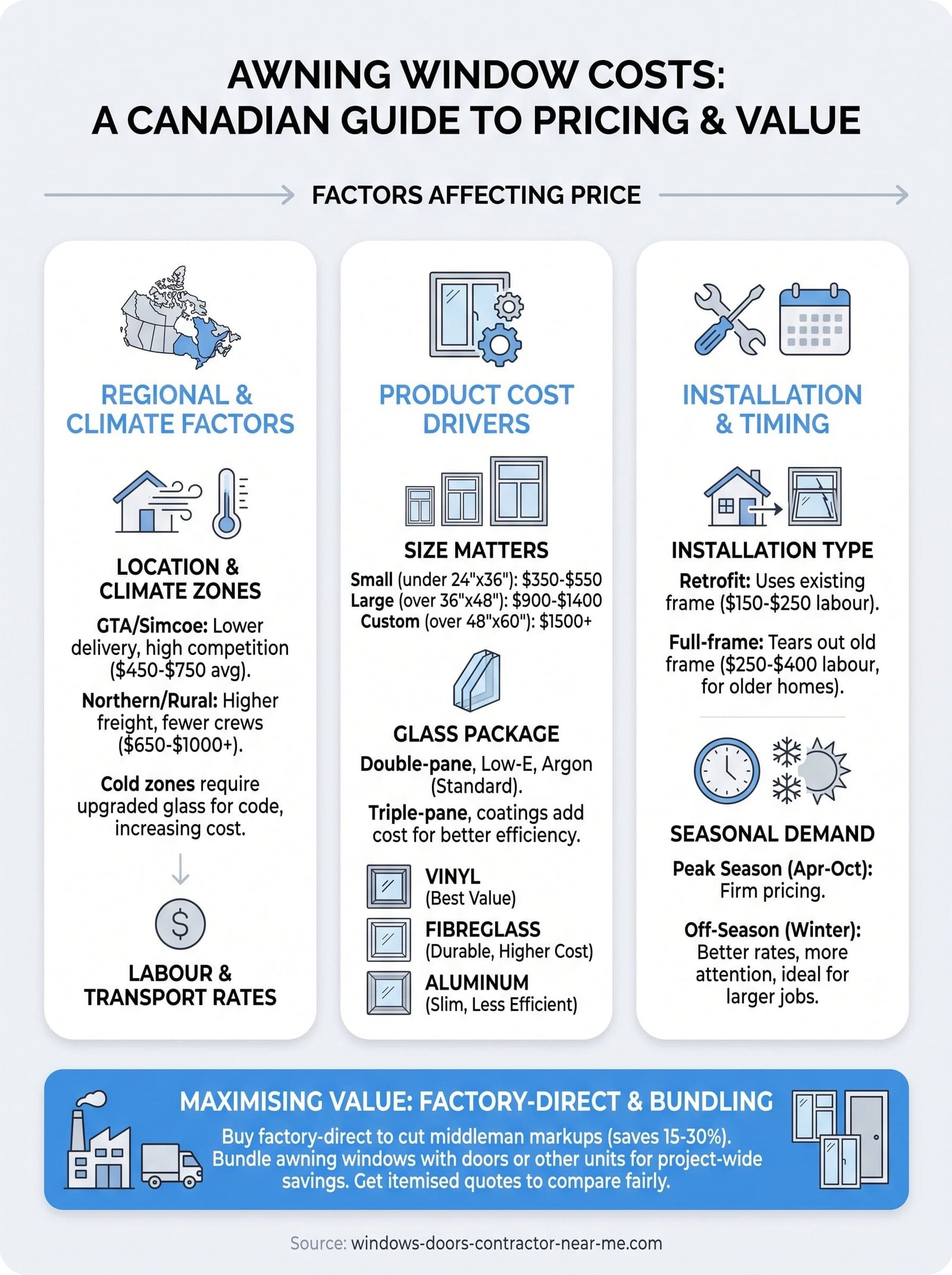
What to remember before you buy
Getting your awning windows cost right comes down to a handful of decisions: choosing the correct frame material for your climate, sizing the opening honestly, and confirming installation is quoted in full rather than padded with hidden add-ons. Vinyl covers most Ontario homes well, fibreglass earns its premium over time, and size categories move price faster than most homeowners expect. None of that matters much, though, if the quote in front of you has already passed through two or three sets of hands before reaching your inbox.
Question every markup, itemise every quote, and buy factory-direct wherever you can. That single habit protects your budget more than any negotiating tactic ever will. If you're ready to see what a straightforward, no-markup number actually looks like, book a free in-home consultation with our windows and doors specialists and get a quote built around your home, not around someone else's margin.