
If your old crank-out windows are stuck, draughty, or letting cold air straight into the living room, you're probably already looking at replacements. Casement vinyl windows are the go-to choice for Ontario homeowners who want a tight seal against harsh winters without paying for wood upkeep every few years. That combination of a crank-operated design and low-maintenance frame is exactly why they've become one of the most requested styles we install across the region.
So what actually makes vinyl casement windows worth the investment, and what should you expect to pay in Ontario? This guide breaks down the hardware, glass options, and insulation features that separate a well-built unit from a cheap one, plus the price ranges you'll realistically see quoted by suppliers across casement windows Canada wide.
We'll walk through how these windows perform against wind and cold, where they fit best on your home, and how factory-direct pricing compares to retail markups. By the end, you'll know exactly what to ask for when you request a quote, and why so many homeowners searching for casement windows Ontario end up choosing vinyl over every other frame material.
Why choose casement vinyl windows for your home
Vinyl casement windows for Ontario homes earn their spot on so many renovation lists because they solve the two biggest complaints homeowners have with older windows: draughts and upkeep. Unlike a sliding sash that relies on friction to stay shut, a casement window cranks outward on a hinge and pulls itself tight against the frame with a compression seal. That seal is the reason vinyl casement windows consistently test better for air infiltration than double-hung or slider units of the same size, and it's the first thing we point out when a client asks why casements cost a bit more upfront.
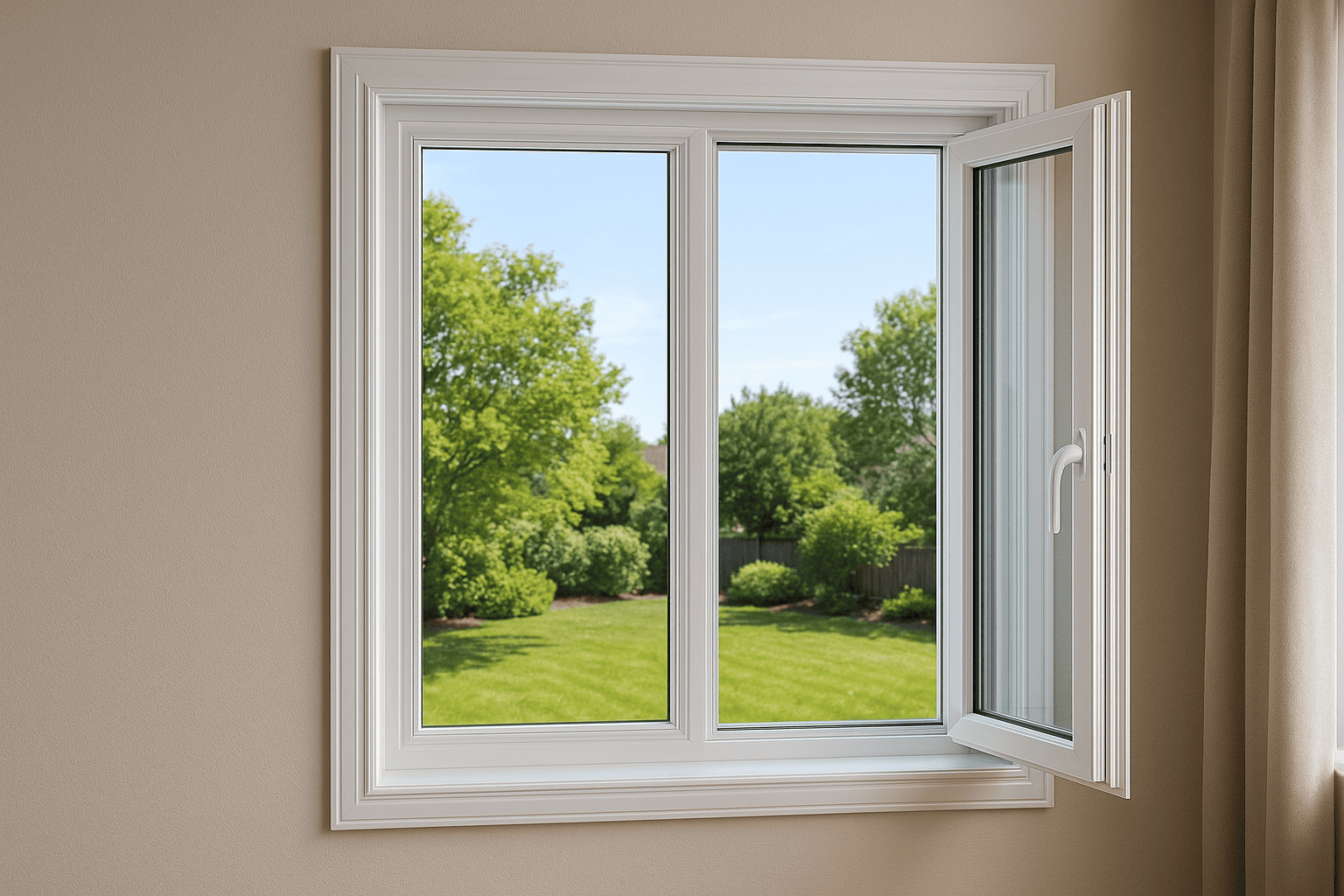
A casement window's compression seal closes tighter than gravity or friction ever could, which is why it stays the top pick for draught-prone Ontario homes.
Built for Ontario's climate, not a showroom
Ontario throws a lot at a window frame over a year: minus 20°C wind chill in January, humid heat in July, and wind-driven rain in between. Vinyl handles that swing better than wood or aluminum because it doesn't expand, contract, or corrode the way those materials do over a decade of freeze-thaw cycles. Pair that frame stability with **Low-E coated glass** and an Argon gas fill, both standard on our custom vinyl windows, and you get a unit that keeps indoor heat in during winter and reflects solar heat out during summer. Homeowners comparing energy bills before and after a casement upgrade typically see the difference within the first heating season, not years down the line.
Less upkeep than wood, more durability than aluminum
Vinyl doesn't need painting, staining, or the annual inspection for rot that wood frames demand. A quick wipe with soap and water keeps the frame looking new, and the material won't chip, peel, or warp under UV exposure the way lower-grade plastics do. This is one of the main reasons retailers and contractors we supply on a wholesale basis keep reordering vinyl casement windows for their clients instead of steering them toward wood alternatives that need refinishing every three to five years.
- No painting or staining, ever
- Resistant to rot, rust, and insect damage
- Colour-fast frames that don't fade in direct sun
- Simple cleaning routine: mild soap, water, and a soft cloth
Better ventilation and a clearer view
Because the sash swings fully open rather than sliding halfway, casement windows catch passing breezes and funnel them into the room far more effectively than a slider ever could. That full-opening design also means fewer horizontal bars and thicker frame sections cutting across your sightline, so you get an unobstructed view of the backyard or street. Add a multi-point locking mechanism, standard on most casement hardware, and you've got a window that's genuinely harder to force open from outside than a standard slider, which only relies on a single latch.
Finally, resale value plays into the decision more than most homeowners expect. Buyers touring a home notice draughty, foggy, or hard-to-open windows immediately, and they factor replacement costs into their offer. Installing quality casement vinyl windows before listing removes that objection entirely and signals that the rest of the home has been looked after. It's a smaller investment than a kitchen renovation but one that shows up in almost every home inspection report, for better or worse.
How to choose the right casement vinyl windows
Picking the right unit comes down to matching specs to your specific wall, not just grabbing whatever's cheapest at a big-box store. Start with the energy rating printed on the sticker, since every window sold for Canadian homes should carry an Energy Star zone rating that reflects our climate rather than a generic North American average. Ontario falls into the coldest Energy Star zones, so look for a whole-window U-factor and confirm the glass package includes Low-E coating with Argon fill before you sign anything.
Frame thickness and reinforcement matter more than colour
Once the energy specs check out, look at the frame itself. A thin, flexible vinyl profile might close fine in the showroom but flex under wind load once it's installed on an exposed second-storey wall. Ask your supplier about the multi-chambered frame design and whether steel or aluminum reinforcement runs through the sash, particularly on wider casement units. Frames without reinforcement can bow slightly over time, which throws off the compression seal that makes casements worth choosing in the first place.
A window is only as good as its weakest chamber, so ask about reinforcement before you ask about colour swatches.
Sizing, swing direction, and hardware
Measuring the rough opening correctly avoids the two most common installation headaches: gaps that need excessive shimming and units that bind against existing trim. Beyond dimensions, decide whether each window should crank open left or right, since swing direction affects both ventilation flow and whether the sash clears a deck railing, air conditioner, or bush outside.
- Confirm rough opening measurements against manufacturer tolerances
- Choose crank direction based on obstructions outside the window
- Ask for a multi-point locking handle rather than a single-point latch
- Check that screens are included and easy to remove for cleaning
Get quotes that compare the same specs
Comparing quotes only works if every supplier is pricing the same glass package, frame grade, and hardware. It's common for a lower quote to quietly drop the Argon fill or swap in a cheaper single-point lock, so ask each supplier to itemise the build. A factory-direct manufacturer can usually walk you through these specs in more detail than a retail showroom rep reading from a brochure, since they're the ones building the unit rather than reselling someone else's stock.
Finally, think about how the window will look from the street before you commit to a grid pattern or finish. Matching frame colour to your existing trim, or choosing a contrasting exterior colour deliberately, changes the whole facade far more than most homeowners expect once the windows are actually installed.
Casement windows vs other window styles
Comparing casement windows against every other frame style on the market helps you see exactly why installers keep recommending them for exposed walls and problem rooms. Double-hung, slider, awning, and fixed windows all have their place, but none of them combine airtight sealing with full ventilation the way a crank-out casement does. Understanding the trade-offs before you order a full house of windows saves you from mismatching styles to rooms where they don't actually perform well.
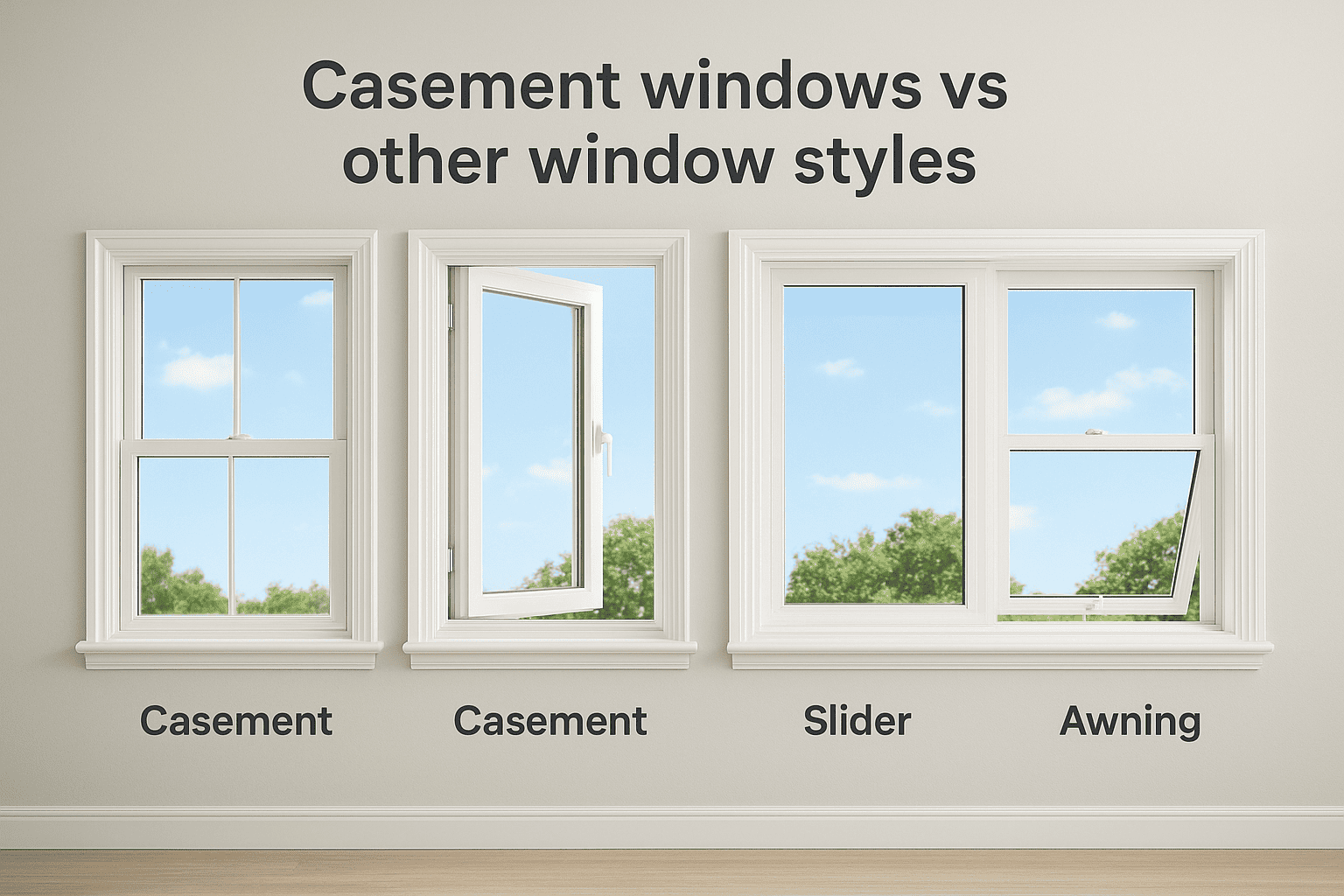
Casement vs double-hung and sliders
Double-hung windows and sliders rely on two sashes moving past each other, which means there's always a seam where air can sneak through no matter how new the weatherstripping is. Casement vinyl windows avoid that problem entirely because the single sash presses shut against the frame rather than sliding alongside it. Tilt slider windows also lose viewing area to the overlapping sash, while a casement gives you one uninterrupted pane from top to bottom.
A sliding sash can only ever meet the frame, but a casement sash compresses against it, and that difference is the whole story on draughts.
Casement vs awning and fixed windows
Awning windows hinge at the top and crank outward from the bottom, so they're great above a sink or in a basement where you want ventilation without rain getting in, but they don't offer the same full-width breeze that a side-hinged casement does. Fixed casement windows seal the tightest of any style simply because they never open, which makes them ideal for a stairwell or high wall but useless for airflow. Weighing these differences against your household's ventilation needs, rather than picking a style purely on looks, is what separates a good window plan from a mediocre one.
| Window style | Ventilation | Air sealing | Best use |
|---|---|---|---|
| Casement | Full opening | Compression seal, tightest | Living rooms, bedrooms, kitchens |
| Double-hung | Partial, top and bottom | Moderate, sash overlap | Traditional facades, upper floors |
| Slider | Partial, side to side | Moderate, sash overlap | Wide openings, patios |
| Awning | Full opening, rain-safe | Compression seal, tight | Basements, above sinks |
| Fixed | None | Tightest, no moving parts | Stairwells, accent walls |
Matching the right style to the right room, rather than using one window type across the whole house, gets you better airflow where you need it and better insulation where you don't.
Key features and customisation options
Vinyl casement windows aren't a one-size-fits-all product, and the customisation options available today let you match a window to the exact style, light, and security needs of each room. Beyond the basic crank mechanism, most manufacturers offer a full menu of glass types, grille patterns, frame colours, and hardware finishes, so two homes on the same street can end up with completely different-looking casements even though the underlying frame is identical. Knowing what's actually adjustable, rather than assuming vinyl means limited choice, helps you avoid settling for a builder-grade unit when a few upgrades would suit your home far better.
Glass and grille choices
Glass packages go well beyond a single pane of clear glass. Low-E coatings reduce heat transfer, tinted or beveled glass adds privacy and curb appeal, and internal grilles let you recreate a traditional divided-light look without the extra cleaning that true multi-pane windows require. Homeowners in older Ontario neighbourhoods often choose a colonial grille pattern to match the street's existing architecture, while newer builds tend to skip grilles entirely for a cleaner, more contemporary sightline.
A window's glass package does more for comfort and privacy than its frame colour ever will, so spend your customisation budget there first.
Frame colours and finishes
Gone are the days when vinyl only came in white. Suppliers now stock a range of exterior colours and even woodgrain-style finishes, so you can match trim, brick, or siding without switching to a wood or fibreglass frame. Our own line of custom vinyl windows ships in multiple colour and finish combinations specifically because Ontario homes vary so much street to street, and a mismatched frame colour is one of the fastest ways to make a fresh window installation look out of place.
Hardware and security upgrades
Hardware finishes and lock styles round out the customisation list, and they matter more than most homeowners expect:
- Multi-point locking handles for tighter security than a single latch
- Choice of handle finish (satin nickel, bronze, white) to match interior decor
- Reinforced hinges for wider casement sashes
- Optional screens with fine mesh for better airflow without pests
Getting these details right at the ordering stage, rather than after installation, is the difference between a window that simply fits the opening and one that fits your home.
Casement vinyl window prices in Ontario
Pricing for casement vinyl windows in Ontario typically runs anywhere from $450 to $1,200 per window installed, and the spread comes down to size, glass package, and hardware grade rather than the frame material itself. A standard 24-by-36-inch unit with basic Low-E glass sits at the lower end, while a wider casement with Argon fill, upgraded multi-point locks, and a woodgrain finish pushes toward the top of that range. Getting an accurate number means requesting a quote based on your exact measurements, not a generic online estimate.
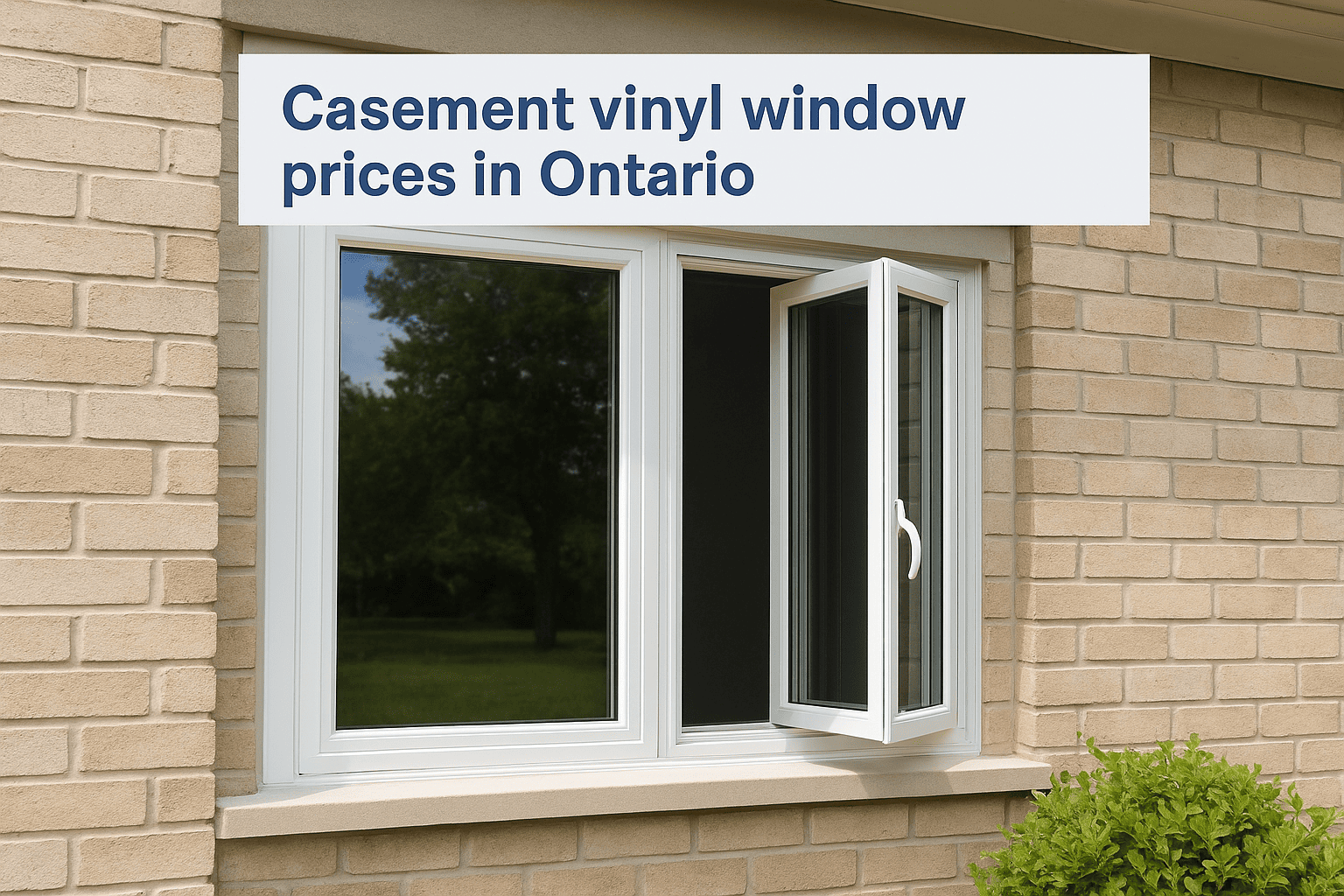
Two windows can look identical from the driveway and still differ by $300 once you compare the glass package and hardware behind the frame.
Typical price ranges by size and spec
Use this table as a starting point when you're comparing quotes from different suppliers across Ontario:
| Casement window size | Basic glass package | Upgraded Low-E + Argon package |
|---|---|---|
| Small (20" x 36") | $450 - $600 | $600 - $750 |
| Standard (24" x 48") | $600 - $800 | $800 - $950 |
| Large (36" x 60") | $850 - $1,000 | $1,000 - $1,200 |
Ranges assume standard vinyl in white with a single crank handle; woodgrain finishes, tinted glass, and reinforced hardware add to the total.
What pushes the price up or down
Several variables move these numbers more than homeowners expect:
- Glass upgrades (tinted, beveled, triple-pane) add the most to the base price, the same way window glass replacement cost climbs with glazing type
- Grille patterns and custom colours typically add a modest flat fee per window
- Reinforced hardware for wider sashes costs more but prevents frame flex over time
- Bulk orders for a full house of windows almost always bring the per-unit price down
Vinyl casement windows Canada wide follow similar pricing logic, though Ontario quotes tend to sit slightly higher than national averages because of stricter Energy Star zone requirements for the coldest climate bands.
Why factory-direct pricing beats retail
Retail showrooms mark up windows to cover a middleman's margin on top of whatever the manufacturer charged them, and that markup can add hundreds per window without changing the product at all. Working directly with a manufacturer that also installs, like MK Windows and Doors, removes that layer and lets you get a free quote built around your exact specs, with price-matching against competitor quotes built into the process rather than negotiated after the fact.
Installation and maintenance tips
Even the best casement vinyl windows underperform if they're installed poorly, so the installation step deserves as much attention as picking the glass package. A gap of even a few millimetres around the rough opening lets air bypass the compression seal entirely, which defeats the whole point of choosing a casement over a slider. Proper flashing and shimming around the frame, along with a continuous bead of low-expansion foam rather than standard spray foam, keeps that seal intact for the life of the window.
Why professional installation protects the warranty
Hiring a licensed installer isn't just about avoiding a crooked frame. Most manufacturer warranties, including the 5-year installation warranty MK Windows and Doors backs its work with, only apply when a vetted, insured installer does the job according to spec. Homeowners who try to save money with a DIY install often void that coverage without realising it, then end up paying full price for repairs a warranty would have covered.
A window is only as airtight as its installation, no matter how good the frame or glass behind it.
Seasonal maintenance checklist
Vinyl frames need far less attention than wood, but a few minutes twice a year keeps hardware and seals working properly:
- Wipe frames and tracks with mild soap and water to clear dust and pollen
- Lubricate the crank mechanism and hinges with a silicone-based spray, never oil
- Inspect the weatherstripping for cracking or compression and replace it if it's lost its spring
- Check the multi-point lock engages fully on all points, not just the handle side
- Clear debris from the weep holes at the base of the frame so meltwater can drain
Skipping the lubrication step is the most common mistake we see. A crank handle that suddenly feels stiff usually just needs silicone spray, not a service call.
Troubleshooting common issues
Occasionally a homeowner notices the sash won't close flush against the frame anymore, which almost always points to a settling issue in the wall rather than a defect in the window itself. Loosening the hinge screws slightly, realigning the sash, and retightening usually solves it in under ten minutes. Persistent draughts after a proper install, on the other hand, usually mean the compression seal needs a minor adjustment rather than a full replacement, and most suppliers will handle that under warranty at no cost.
Finally, don't ignore condensation between panes. That's a sign the seal on a double or triple-pane unit has failed, and it's exactly what a 15-year seal failure warranty, like the one MK Windows and Doors includes, is designed to cover.
Finding a reliable supplier in Canada
Choosing a supplier matters just as much as choosing the window itself, because even a well-built casement sash performs poorly if it's ordered from a company that cuts corners on measurements or disappears after installation. Vinyl casement windows are only as good as the people standing behind them, so vetting a supplier before you sign anything saves you from chasing warranty claims later. Homeowners searching for casement windows Canada wide should treat the supplier search with the same care they'd give the product spec sheet.
What separates a factory-direct supplier from a reseller
Working with a company that manufactures its own product, rather than reselling stock built elsewhere, gives you a direct line to the people who actually know the frame specs, glass options, and hardware tolerances. Resellers often can't answer detailed questions about reinforcement or seal construction because they didn't build the unit themselves. A factory-direct manufacturer that also installs, like MK Windows and Doors, controls the whole process from extrusion to final caulking, which means fewer handoffs where quality or accountability gets lost.
When one company builds, sells, and installs the window, there's nowhere for a defect to hide behind someone else's paperwork.
Questions worth asking before you commit
Before signing a quote, run through a short checklist with every supplier you're comparing:
- Are installers licensed, insured, and employed directly rather than subcontracted?
- What does the seal failure warranty cover, and for how many years?
- Does the quote include Argon fill and Low-E glass, or are those extras?
- Can they provide references or examples of recent installs in your area?
- Do they offer price-matching against a competitor's written quote?
Suppliers who hesitate on any of these points, or who won't put warranty terms in writing, usually aren't the ones you want handling a full house of windows.
Red flags that should end the conversation
High-pressure sales tactics, quotes that expire within 24 hours, and vague answers about frame reinforcement are all signs to walk away. A reputable supplier explains the build rather than rushing the signature, and they're happy to show you sample frames or arrange a factory visit. MK Windows and Doors has been building and installing windows across Ontario since 2006, and offers a free in-home consultation along with price-matching that beats competitor quotes by up to $500, so you can compare numbers without guessing what's actually included.
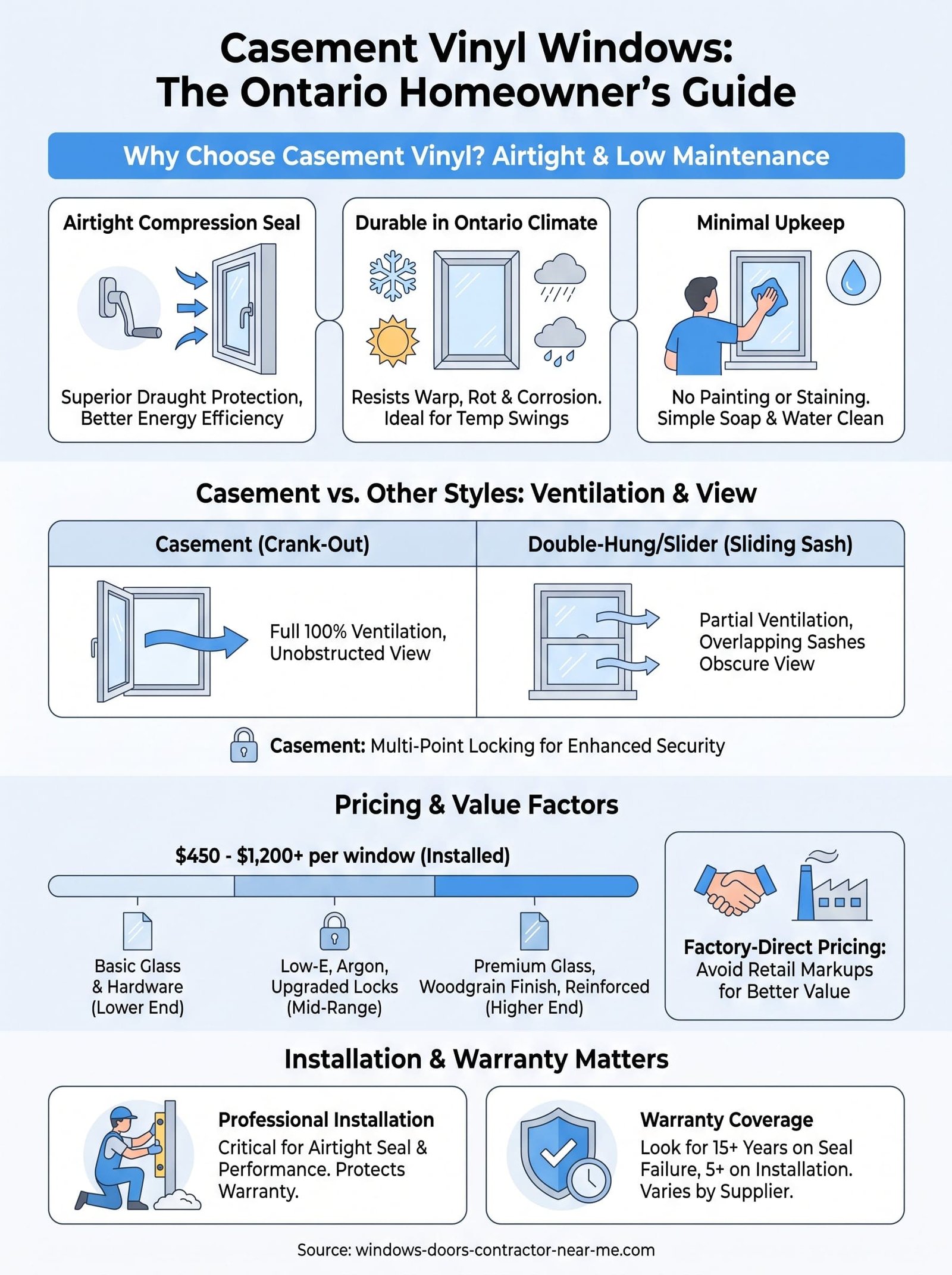
Choosing windows that last
Casement vinyl windows earn their reputation because the compression seal, reinforced frame, and low-maintenance material solve the exact problems that drive homeowners to replace windows in the first place: draughts, rot, and constant upkeep. You've now seen how the specs stack up against sliders and double-hung units, what pushes Ontario prices up or down, and why the supplier behind the quote matters just as much as the glass package itself. None of that knowledge helps much sitting on a browser tab, though.
Getting the right result comes down to matching those specs to your actual walls and getting a straight answer on pricing before you commit. Skip the guesswork and the showroom markup by going straight to the people who build the units themselves. Request a free quote from MK Windows and Doors and find out what factory-direct casement vinyl windows actually cost for your home.