
You've noticed the draught around your bay window, the fogged-up glass, or the quote from a contractor that made you wince. Before you commit to anything, you want a straight answer on the cost of bay window replacement, not a vague range buried in sales talk. Bay windows carry a bigger price tag than a standard picture window because of the extra framing, structural support, and labour involved, and that catches a lot of Ontario homeowners off guard.
On average, a bay window replacement cost in Ontario runs higher than most other window types, and the final number depends heavily on size, glass options, and whether structural work is needed to support the projection. We'll break down what actually drives that price up or down, from frame material to installation complexity.
This article walks through typical pricing tiers, the specific factors that affect price, and what a fair quote should include, so you can compare estimates with confidence and avoid overpaying for a job that should be straightforward when handled by an experienced, factory-direct installer.
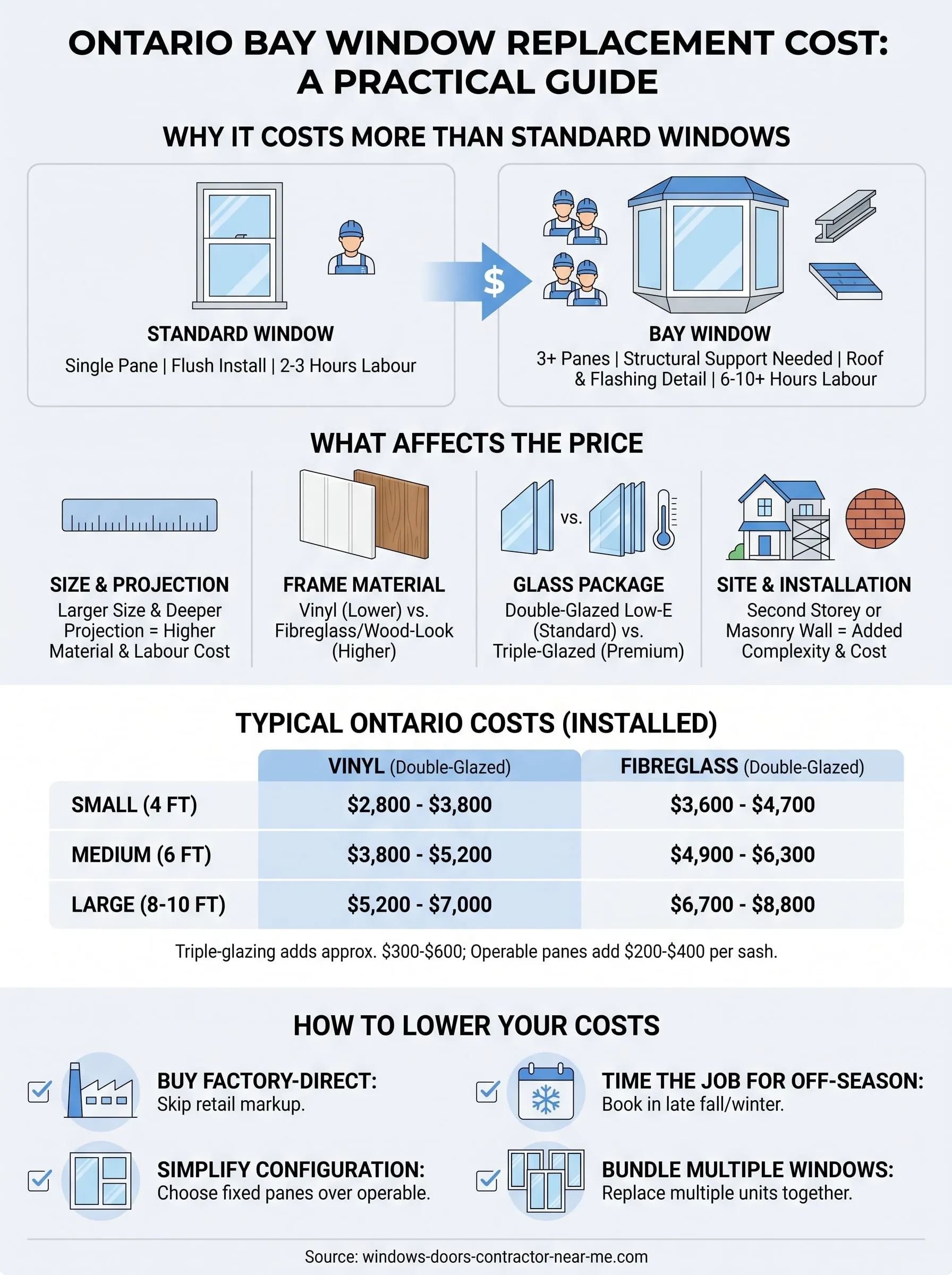
Why bay windows cost more than standard windows
Bay windows cost more because they're not really one window, they're three or more windows joined at an angle and cantilevered out from your exterior wall. That single design choice changes almost everything about the job, from the framing crew needs to the number of panes being manufactured. A standard picture window sits flush in an existing opening. A bay window projects outward, usually 12 to 24 inches, which means it needs its own support system to carry the weight and resist wind load. That's the core reason the cost of bay window replacement sits well above a like-for-like swap of a single window, which you can compare against typical window replacement pricing in Ontario.
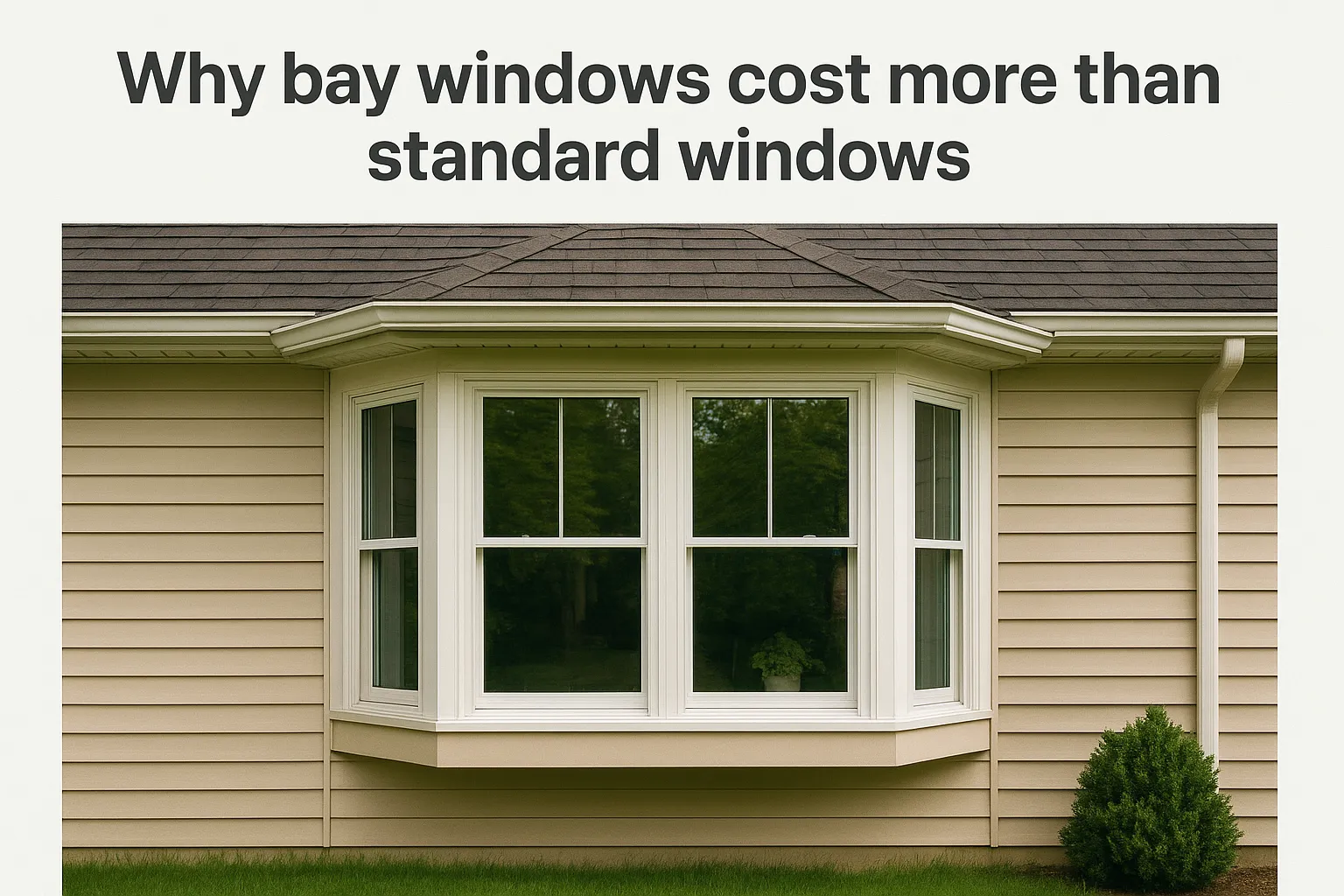
The structural support changes the job
Once a window projects past the wall line, gravity becomes a real concern. Installers typically need to add a knee wall, cable support system, or steel bracket underneath the unit to hold it in place, especially on larger bay windows or ones installed above grade on a second storey. This structural work wasn't part of the original build in older Ontario homes, so replacement crews sometimes discover rot, inadequate framing, or missing insulation once they open up the wall. That's labour and material cost that a standard window replacement never triggers.
A bay window isn't priced like a window, it's priced like a small structural addition to your home.
More glass, more frame, more manufacturing time
A bay window, like its curved cousin the bow window with multiple angled panels, is built from multiple sashes, usually a large fixed centre pane flanked by two smaller operable or fixed side windows set at 30 or 45 degree angles. Manufacturing three connected units to precise angles takes longer than producing one flat window, and the frame material needed to join them securely (mullions, corner posts, seals) adds to the bill of materials. Every one of MK's custom-built windows goes through this same multi-piece assembly process, whether it's a custom bay window for an Ontario home, a bow, or a box configuration, and that complexity is baked into the quote before installation even starts.
The roof system adds a hidden cost
Most bay windows include a small sloped roof above the projection to shed rain and snow away from the wall. Ontario winters make this roof section non-negotiable, since standing snow load on a flat top would eventually cause leaks or structural strain. Building or replacing this roof means flashing, insulation, and often matching your existing exterior siding or shingles, work that a standard window job simply doesn't require. Contractors who skip proper roof detailing on a bay window are setting you up for water damage within a few winters, so don't let anyone quote you a price that leaves this out.
Labour hours stack up quickly
Installing a bay window typically takes a two-person crew a full day or more, compared to two to three hours for a standard window swap. Removing the old unit, verifying or rebuilding the support structure, setting three angled panes level and square, then sealing and finishing the roof detail all add hours a standard installation never sees.
| Factor | Standard window | Bay window |
|---|---|---|
| Number of glass units | 1 | 3 (or more) |
| Structural support needed | Rarely | Almost always |
| Roof/canopy detail | No | Yes |
| Typical install time | 2-3 hours | 6-10+ hours |
| Crew size | 1-2 installers | 2+ installers |
Understanding these differences upfront helps you make sense of why quotes for a bay window replacement cost land so much higher than a basic window job, and it also tells you exactly what a fair, complete quote should account for. If a quote seems suspiciously low, one of these components is probably missing, and you'll likely pay for it later as an unpleasant surprise mid-project.
How to get an accurate replacement cost estimate
Getting a number you can actually rely on means skipping the phone quotes and insisting on someone measuring your wall in person. Bay windows have too many variables, projection depth, roof pitch, structural condition behind the drywall, for any contractor to give you a real figure without seeing the opening. A free in-home consultation is the only reliable starting point, and any company unwilling to offer one should raise a flag before you go further.
What a proper site visit should include
A thorough assessment goes beyond a tape measure. The installer should check the exterior wall framing, look for signs of moisture or rot around the existing bay, confirm whether the roof structure above the window needs rebuilding, and measure the exact angles of your current unit. This is where MK Windows and Doors' free in-home consultations earn their keep, since our team catches structural issues on-site rather than after demolition has already started.
The only accurate quote is one written after someone has stood in front of your actual window, not your postal code.
Ask for a written, itemised quote
Once the site visit is done, insist on a breakdown rather than a single lump sum. A proper estimate separates the costs so you know exactly where your money goes:
- Window unit cost (frame material, glass package, size)
- Structural support work (knee wall, brackets, cable system)
- Roof or canopy construction and flashing
- Removal and disposal of the old unit
- Labour and installation time
- Warranty coverage included
This level of detail matters because it lets you compare two quotes on equal footing instead of guessing which one is hiding a cheaper install behind a lower headline number.
Get more than one estimate, and check the warranty terms
Booking two or three consultations isn't overkill, it's standard practice for a job this size. Compare not just the bottom line but what backs it up: a 5-year manufacturer warranty on products and installations and a 15-year seal failure warranty on the glass units, for example, tell you the company stands behind its work long after the crew has left. Contractors offering rock-bottom pricing with vague or short warranty terms are usually cutting corners somewhere in the structural work you can't see once the drywall goes back up.
Finally, ask whether the quote includes price matching. MK Windows and Doors, as a factory-direct manufacturer, will beat a competitor's written quote by up to $500, which gives you leverage even after you've already collected other estimates. That single question can shift your final cost of bay window replacement by a meaningful margin without sacrificing quality or warranty coverage.
What affects the price of your bay window replacement
Size is the first lever that moves your quote up or down. A compact 4-foot bay window costs noticeably less than an 8 or 10-foot version, simply because you're paying for more glass, more frame length, and a wider roof cap. Beyond width, projection depth matters too, since a deeper cantilever needs beefier structural support underneath, which pushes labour and material costs higher even if the width stays the same.
Frame material changes the baseline price
Vinyl frames sit at the more affordable end of the scale and hold up well against Ontario's freeze-thaw cycles without warping or rotting. Fibreglass costs more upfront but resists expansion and contraction better over decades, which matters on a projecting structure that takes more wind and thermal stress than a flush window. Wood-look composite finishes, meanwhile, add a premium for the woodgrain finish itself, whether that's oak, cherry, or mahogany, on top of the base frame cost.
Frame material is the one choice you'll live with for 20-plus years, so don't shop it on price alone.
Glass package and energy performance
Double-glazed units with Low-E coatings and Argon gas fill are close to standard now, but triple-glazing adds a real jump in price, one usually justified if the bay faces north or catches heavy wind, and what the glass alone costs to replace is worth knowing before you upgrade. Beveled or tinted glass, decorative grilles, and obscure privacy glass on side panes all add line items too. If lowering utility bills is your main goal, spending on the parts that actually improve efficiency typically pays back faster than spending it on cosmetic upgrades elsewhere.
Configuration and number of operable panes
A bay window with two fixed side panes costs less than one with casement or awning sashes that open, since operable hardware, weatherstripping, and hinges all add parts and labour. Deciding how many panes actually need to open, versus how many exist purely for the view, is one of the simplest ways to control cost without sacrificing the look you want.
Site conditions and accessibility
A second-storey bay window replacement generally costs more than a main-floor one, since scaffolding or lift equipment adds a rental cost and extra labour hours. Homes with brick or stone exteriors also cost more to modify around the new frame than homes with vinyl or wood siding, because matching and re-flashing masonry takes specialised skill.
| Factor | Lower cost driver | Higher cost driver |
|---|---|---|
| Frame material | Vinyl | Fibreglass, wood-look composite |
| Glass | Double-glazed, Low-E | Triple-glazed, beveled/tinted |
| Configuration | Fixed side panes | Operable casement/awning panes |
| Location | Main floor, siding exterior | Second storey, brick/stone exterior |
Weighing these factors against your own priorities, energy savings versus upfront budget, view versus ventilation, is what turns a generic estimate into a number that actually fits your home.
Typical costs by size, material and configuration
Numbers help more than percentages when you're staring down a renovation budget, so here's what Ontario homeowners typically pay once size, frame material, and glass options are factored in. These figures assume a standard main-floor installation with vinyl siding and no unexpected structural repairs, since those variables can shift the total in either direction. Think of this table as a starting point for comparing quotes, not a final price, because your specific wall condition and finish choices will move the number up or down.
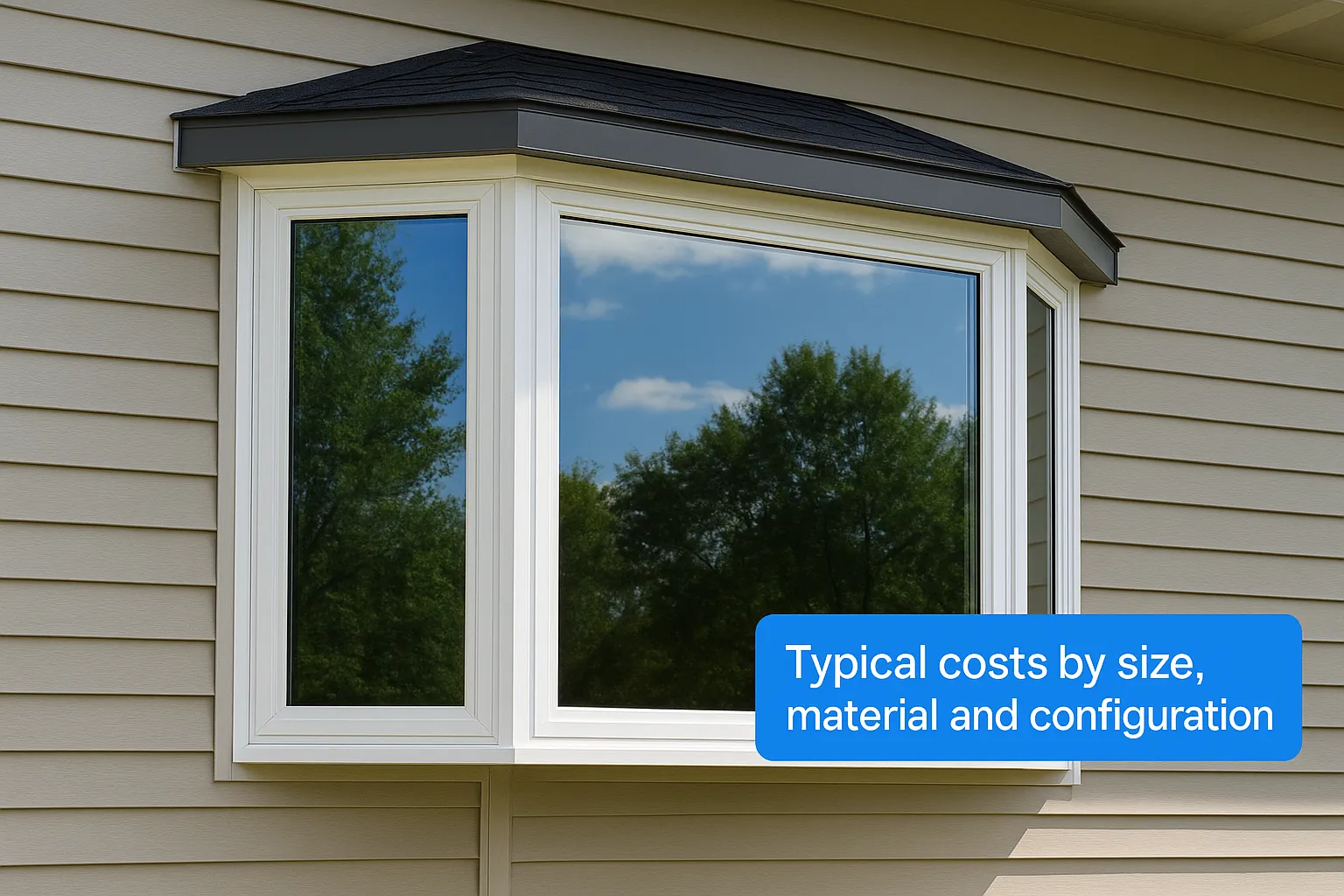
A realistic budget for most Ontario bay windows sits between $3,000 and $7,500 installed, with fibreglass and triple-glazing pushing past that range.
Price ranges by size and material
Smaller bay windows cost less mainly because there's less glass and frame to manufacture, and the roof cap spans a shorter distance. Larger units, especially anything past 8 feet wide, need heavier structural bracing underneath, which is why the jump from a medium to a large bay window is steeper than the jump from small to medium.
| Size | Vinyl (double-glazed) | Fibreglass (double-glazed) |
|---|---|---|
| Small (4 ft) | $2,800 - $3,800 | $3,600 - $4,700 |
| Medium (6 ft) | $3,800 - $5,200 | $4,900 - $6,300 |
| Large (8-10 ft) | $5,200 - $7,000 | $6,700 - $8,800 |
How glass and configuration shift the total
Triple-glazed units typically add $300 to $600 over the double-glazed price shown above, and that premium is worth paying if your bay window faces a cold north wall or a windy exposure. Operable side panes, whether casement or awning style, add roughly $200 to $400 per sash compared to fixed panes, since hinges, weatherstripping, and hardware all cost more to manufacture and install. Ordering beveled or tinted glass, decorative grilles, or a wood-look woodgrain finish on the frame adds further to the base price, sometimes by several hundred dollars depending on how much of the unit is customised.
Where second-storey and masonry jobs land
Second-storey installations generally run 15 to 25% higher than the figures above, mostly due to lift equipment rental and added labour hours. Brick or stone exteriors add a similar premium because re-flashing and trimming masonry around a new frame takes more skilled labour than working with vinyl or wood siding. These are the two variables most likely to make an otherwise average-sized bay window replacement cost estimate come in higher than a homeowner expected going in.
How to lower your bay window replacement costs
Cutting your cost of bay window replacement doesn't mean settling for a flimsy frame or skipping the roof detail that keeps Ontario winters out. It means being deliberate about which upgrades actually matter to you and stripping out the ones that don't. A few smart choices at the quote stage can shave hundreds, sometimes thousands, off the final invoice without touching structural integrity or warranty coverage.
Buy factory-direct to skip the markup
Going through a retailer or general contractor means paying for their markup on top of the manufacturer's price. Buying from a factory-direct manufacturer like MK Windows and Doors removes that middleman entirely, since the same crew that builds your window also installs it. Ask any company you're quoting whether they manufacture their own units or resell someone else's, because that answer alone can explain a $500 to $1,000 gap between two otherwise similar quotes.
The fastest way to lower a bay window quote is to remove the middleman, not the quality.
Simplify the configuration
Every operable pane, decorative grille, and premium tint adds cost that a simpler design avoids. If your budget is tight, these choices trim the total without touching structural quality:
- Choose vinyl over fibreglass or wood-look composite
- Keep both side panes fixed instead of operable
- Stick with clear double-glazed Low-E glass instead of tinted or beveled options
- Skip decorative grilles unless they match your home's existing style
None of these cuts affect the bay window replacement cost driver that matters most, the structural support and roof detail, so you're saving on finish choices rather than safety.
Time the job for the off-season
Booking your installation in late fall or winter, rather than the busy spring and summer months, often gets you faster scheduling and occasionally better pricing, since installers have more open calendar slots. Contractors are more willing to negotiate when their crews aren't fully booked, and a shoulder-season quote sometimes lands lower than the exact same job priced in June.
Bundle multiple windows into one project
Replacing your bay window alongside two or three other windows in the same visit spreads the crew's setup and travel time across more units, which lowers the per-window labour cost. If you're already planning to replace an ageing sliding or garden patio door or a few standard windows elsewhere in the house, scheduling everything together is one of the simplest ways to reduce your overall project cost per opening.
Planning your next steps
You now know why the cost of bay window replacement sits above a standard window swap, what drives that number up or down, and where you can trim costs without gutting quality. The next move is simple: get a real quote based on your actual wall, not a phone estimate built on guesswork. Bring your measurements, your priorities (energy savings, view, budget), and a couple of competing quotes to compare against.
Ontario winters don't forgive shortcuts on structural support or roof detailing, so weigh any low quote against what it's leaving out. A factory-direct manufacturer with a solid warranty and price-match guarantee gives you room to negotiate without sacrificing the work you can't see once the drywall's back up.
Ready to get a number that actually reflects your home? Book a free in-home bay window consultation with MK Windows and Doors and get a written, itemised quote before you commit to anything.