
If you're shopping for patio doors, you've probably noticed the choices go well beyond a plain sliding panel. Between sliding, folding, and swinging styles, plus vinyl, fiberglass, and aluminum frames, it's easy to end up comparing quotes that don't seem to match on materials, glass packages, or installation quality at all.
This guide breaks down exactly what you're choosing between: the common sliding patio doors configurations, how replacement patio doors differ from new installations, and what actually drives the price up or down. You'll see how frame material affects insulation through a Canadian winter, which glass options cut noise and UV damage, and what a fair sliding patio door replacement quote in Ontario looks like once labour and hardware are factored in.
We've built and installed patio doors ontario homeowners rely on since 2006, from Innisfil out across the region, so the comparisons here come from actual project pricing and product specs, not generic estimates. By the end, you'll know which style suits your space, which materials hold up best, and roughly what to budget before you request a quote.
Why patio doors matter for Ontario homes
Ontario's climate puts more stress on a patio door than almost any other feature in your home. Winters swing to minus 25 with wind chill, summers hit 30 plus with humidity, and your patio door sits through every bit of it as one of the largest single openings in your exterior wall. A worn frame or failing seal here doesn't just let in a draught, it becomes the weak point that drives your heating bill up and lets condensation build between the panes. Homeowners searching for patio doors ontario wide usually come to us after noticing a cold spot by the slider or fog trapped inside the glass, both signs the unit has already failed.
Energy efficiency and your heating bill
Glass and frame junctions lose heat faster than solid wall, so an inefficient patio door can undo a lot of the insulation work you've done elsewhere in the house. Natural Resources Canada notes that windows and doors account for a significant share of residential heat loss, and a large glazed opening like a patio door magnifies that effect if the frame isn't sealed or insulated properly. Low-E coatings paired with Argon gas fills cut that heat transfer dramatically compared with older double-pane units from the 1990s and early 2000s, which is exactly the era a lot of Innisfil and Barrie homes are still running on.
A patio door with poor thermal performance can cost you more in wasted heat over ten years than the price of replacing it properly today.
Beyond comfort, this affects your Energy Star eligibility and your resale numbers. Buyers touring a home in January notice a cold draught by the sliding door immediately, and it's the kind of detail that shows up in a home inspection report too, whether the house is in Innisfil or one of the windows and doors replacements we handle in Barrie.
Standing up to freeze-thaw and moisture
Freeze-thaw cycling is brutal on frame materials that expand and contract at different rates than the glass and hardware around them. Vinyl handles this well because it moves with temperature changes without warping, while older wood or poorly reinforced aluminum frames can crack, stick, or let moisture seep into the wall cavity over a few seasons. Once water gets behind a frame in an Ontario winter, it freezes, expands, and accelerates rot or corrosion you can't see until the damage is extensive. This is one reason replacement patio doors built specifically for Canadian conditions differ so much from the mass-market imports you'll find at some big box retailers, which are often designed for milder American climates.
Natural light without sacrificing security
Sliding and folding patio doors bring in far more daylight than a standard window, which matters through Ontario's shorter winter days when natural light is limited from November through February. That extra glass area also opens up sightlines to the backyard, deck, or garden, making a room feel larger without any structural work. The tradeoff homeowners worry about is security, since a large glass panel can seem like an easy entry point.
Modern hardware solves this without giving up the light. Multi-point locking systems, reinforced strike plates, and laminated or tempered glass options mean a well-built patio door is no less secure than a secure steel entry door, and in many cases more resistant to forced entry than an ageing single-point lock slider.
Adding real value to your home
Upgrading a patio door is one of the more visible renovations you can make, and it shows up in how a home shows to buyers or appraisers. A clean, well-sealed slider or folding door signals that the rest of the building envelope has probably been maintained too, as you can see across real Ontario installation projects we've completed. Combined with the energy savings and reduced maintenance, that's why patio doors sit high on the list of upgrades that pay back both in comfort and in resale value for Ontario homeowners.
Popular patio door styles to consider
Most Ontario homeowners land on one of three configurations: sliding, folding, or swinging. Each handles space, light, and airflow differently, so the right pick depends on your deck size, door swing clearance, and how much of the wall you actually want to open up. Below is a rundown of what we build most often, along with the trade-offs each style brings once winter weather and everyday use enter the picture.
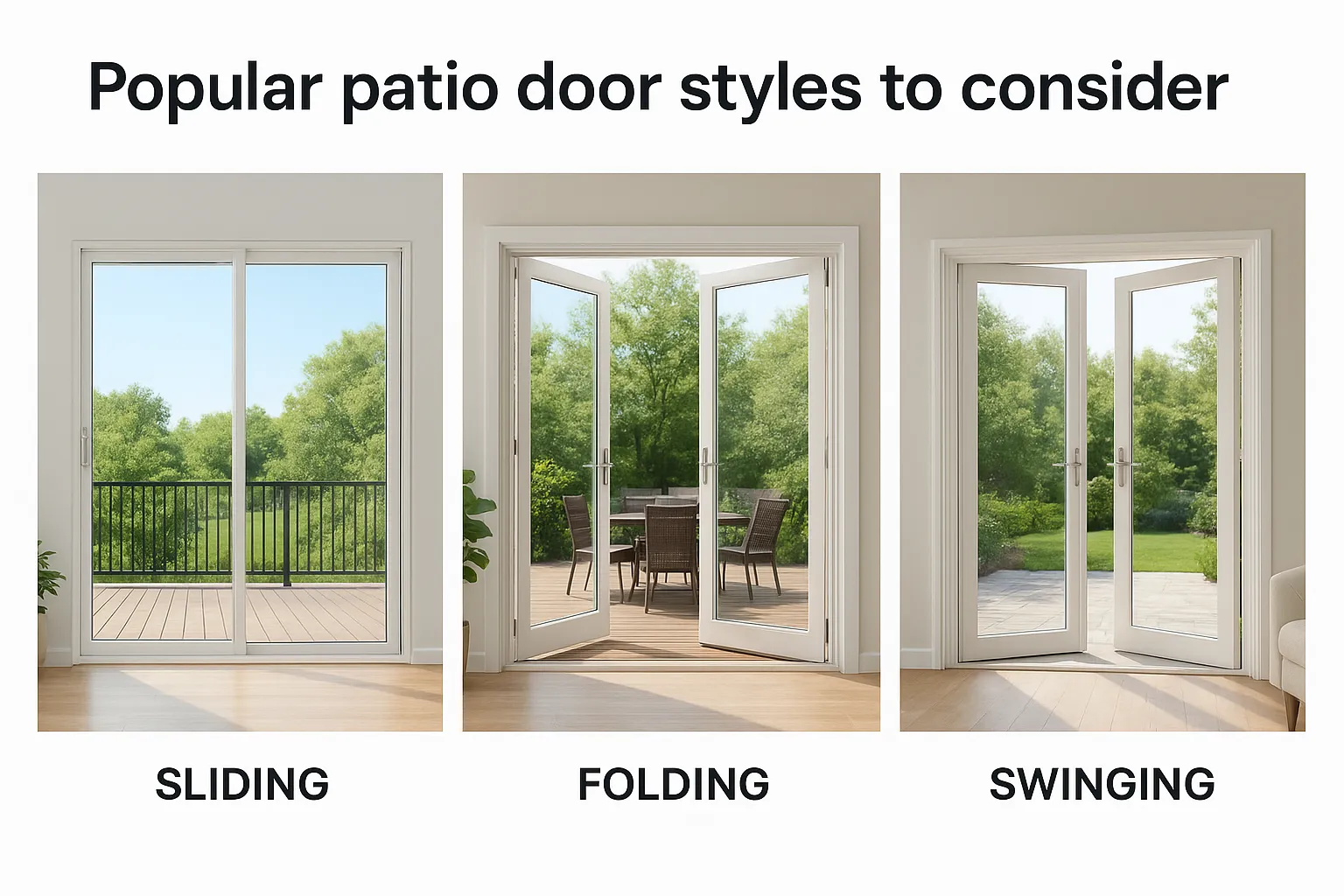
Sliding patio doors
Sliding patio doors remain the default choice for good reason. They don't need floor clearance to swing open, they fit almost any opening from a standard 6-foot slider up to a 12-foot-wide configuration, and the flat track keeps furniture placement simple on both sides of the glass. We build these with two, three, or four panel configurations, and multi-point locking hardware means the extra glass doesn't come at the cost of security.
If floor space is tight, a sliding patio door almost always wins over a hinged alternative.
Glass area is the other draw. A well-specced slider brings in more daylight than almost any other door style, which matters through Ontario's grey winter stretch from November to February.
Folding and French-style doors
Folding doors, sometimes called bi-fold or accordion doors, stack the panels to one side and open the entire width of the opening. That's the style to consider if you're merging an indoor living space with a deck or patio for entertaining, since nothing but the frame track separates the two spaces when fully open. French-style swinging patio doors give a more traditional look with two hinged panels meeting in the centre, which suits older or heritage-style Ontario homes better than a modern slider does.
Swinging patio doors
Swinging doors need clearance to open, so they work best where you've got room on the interior side and don't need the space for furniture. They also seal tighter than a slider in some cases, since the hinge-and-latch mechanism compresses the weatherstripping fully on close, which is worth weighing if draught resistance is your top priority.
| Style | Best for | Space needed | Typical width |
|---|---|---|---|
| Sliding | Tight interiors, max glass area | Minimal | Up to 12 ft |
| Folding | Full-width opening, entertaining | Wide interior clearance | 8 to 16 ft |
| Swinging (French) | Traditional look, tighter seal | Interior swing clearance | 5 to 8 ft |
Whichever style you're drawn to, every option in our door catalog for Ontario homes is built to the same Ontario-specific standard, so the decision comes down to layout and look, not compromise on performance.
Choosing the right material for Canadian weather
Frame material decides how well your replacement patio doors survive a Canadian winter more than any glass package or hardware upgrade you add on top. Vinyl, fiberglass, and aluminum all show up in patio door listings, but they don't perform the same once temperatures swing from minus 25 to plus 30 across a single Ontario year. Getting this choice right up front saves you from a door that sticks, warps, or fogs within a few winters.
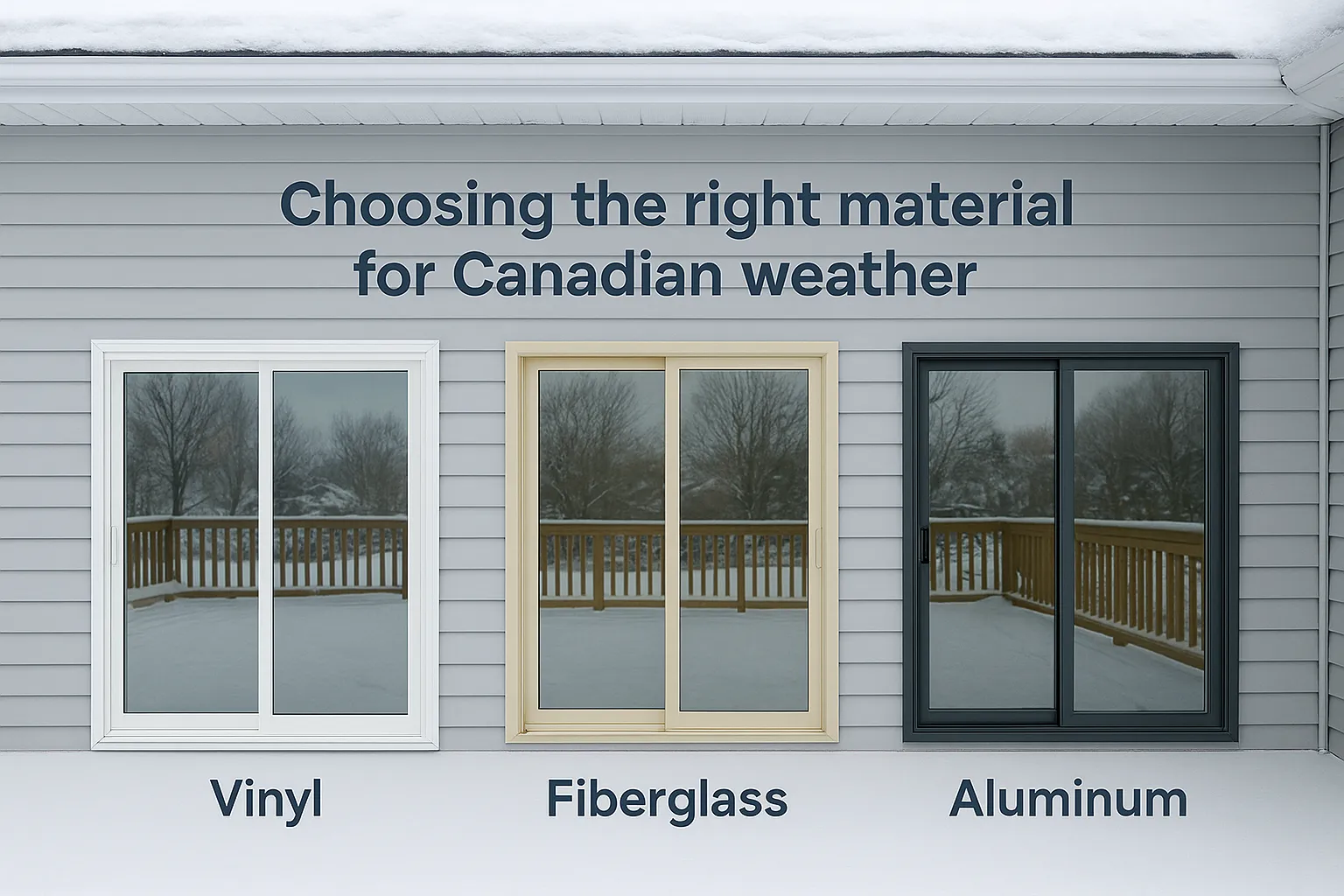
Vinyl frames
Vinyl is the material we install most often for sliding patio doors across Innisfil and the surrounding region, and for good reason. It expands and contracts with temperature swings without warping, it never needs painting or staining, and multi-chambered vinyl profiles trap air the same way a double-glazed window does. The tradeoff is colour choice, since vinyl typically comes in white, tan, or a handful of factory finishes rather than the custom paint options aluminum allows.
Fiberglass frames
Fiberglass costs more upfront, but it holds its shape better than vinyl over very large openings, which matters if you're looking at a 10 or 12-foot slider. It also takes paint well, so you can match trim colours exactly if that's a priority for your exterior. For homeowners who want the strength of a larger door without the bulk of aluminum, fiberglass is usually the right call.
Aluminum and thermal breaks
Aluminum frames look sleek and support very large glass panels with minimal visible frame, but bare aluminum conducts cold straight through the door unless it's built with a proper thermal break separating the interior and exterior metal. Skip any aluminum patio door quote that doesn't specify a thermal break, since without one you're effectively installing a metal radiator that pulls heat out of your living room all winter.
The frame material matters more than the glass package, because a poorly insulated frame undoes whatever the glass is doing.
| Material | Winter performance | Maintenance | Best for |
|---|---|---|---|
| Vinyl | Excellent, no thermal bridging | Low, no painting needed | Most Ontario homes |
| Fiberglass | Excellent, holds shape at large sizes | Low, paintable | Wide openings, custom colour |
| Aluminum (thermal break) | Good, only with break | Low | Modern, minimalist looks |
Whichever material you're leaning toward, ask for the specific profile spec sheet before you commit, since "vinyl" or "aluminum" on a quote can hide a wide range of actual insulation values.
How to plan a patio door replacement
Planning a sliding patio door replacement properly saves you from the two most common headaches: a door that doesn't fit the opening, and a quote that turns out cheaper than the final invoice once labour and disposal get added. Before you contact a supplier, walk through what you actually need from the space, how soon you need it done, and what a complete quote should include so you're comparing like for like.
Measure your existing opening first
Getting rough dimensions before your consultation speeds up the whole process and helps you spot a lowball quote that's missing something. You don't need to be exact, a supplier will confirm final measurements on site, but knowing the ballpark keeps early conversations useful.
- Width and height of the rough opening, not just the visible glass
- Depth of the wall from interior trim to exterior siding
- Any obstructions nearby, like a deck railing or interior flooring that sits proud of the threshold
- Whether the current unit is a standard size or a custom build, which affects lead time
Decide on timing around Ontario's seasons
Spring and early autumn are the busiest install windows in Ontario, since homeowners want the work done before winter locks in or before patio season starts. Booking in late winter, when demand is lower, often gets you a faster turnaround and sometimes a better price on replacement patio doors, since manufacturers aren't stacked with backlog. Lead times for custom sizes typically run four to eight weeks, so factor that into any renovation timeline rather than assuming next-week installation.
Book your patio door in the off season and you'll usually get it faster and for less than a spring rush order.
Get quotes that actually compare
Once you're ready to request pricing, make sure every quote covers the same ground, because a low number often means something's been left out rather than that the supplier is genuinely cheaper.
Quote checklist:
- Frame material and specific profile (not just "vinyl" or "aluminum")
- Glass package: Low-E coating, Argon fill, number of panes
- Hardware: lock type, number of locking points
- Installation labour, including removal and disposal of the old unit
- Warranty terms on both the product and the installation
- Estimated lead time and install date window
Requesting this breakdown from a few suppliers, including a factory-direct quote from our Ontario team, gives you a genuine apples-to-apples comparison rather than a race to the lowest headline number. It also flags early whether a quote is for a like-for-like swap or whether structural work is needed to widen or reframe the opening, which changes both cost and timeline significantly.
What patio doors cost in Ontario
Pricing for patio doors ontario homeowners get quoted varies more than most people expect, because style, material, size, and glass package all move the number independently. A basic 6-foot vinyl slider with standard hardware costs far less than a 12-foot fiberglass folding system with a full security glass package, so any single "average price" you read online is really just a guess without knowing which configuration it applies to. Below is the range we see most often on real Ontario installations, factoring in supply and professional installation together rather than product cost alone, much like the way we break down replacement pricing for windows across Ontario.
Typical price ranges by style and material
Getting a rough figure for your own project starts with matching your style and material choice against the ranges below, then adjusting for size and glass upgrades from there.
| Style and material | Typical installed price range (CAD) |
|---|---|
| Vinyl sliding, 2-panel, standard glass | $1,800 to $3,200 |
| Vinyl sliding, 3 to 4-panel, Low-E and Argon | $3,200 to $5,500 |
| Fiberglass sliding, wide opening (10 to 12 ft) | $5,000 to $8,500 |
| Vinyl or fiberglass folding, 4 to 6 panel | $6,500 to $12,000+ |
| Aluminum with thermal break, custom glass | $4,500 to $9,000 |
Get a quote broken down by frame, glass, and labour before comparing numbers, because two "vinyl sliding door" quotes can differ by thousands once the actual specs are laid out side by side.
What actually moves the price
Hardware upgrades, such as multi-point locking or laminated security glass, typically add a few hundred dollars but pay for themselves if security or noise reduction matters to you. Opening size has the biggest effect of all, since a custom 12-foot slider needs reinforced framing and heavier glass panels that a standard 6-foot unit doesn't. Reframing or widening the existing opening, rather than a like-for-like swap, adds labour and materials that can push a project well past the ranges above, which is why the measuring step covered earlier matters so much before you request pricing.
Why factory-direct pricing looks different
Quotes from retailers who don't manufacture their own product usually carry a distributor markup that factory-direct suppliers skip entirely. That's the gap that lets us match or beat competitor quotes by up to $500 on comparable replacement patio doors, since you're paying for manufacturing and installation without a middleman's margin stacked on top. Verifying that a quote genuinely comes from the manufacturer, rather than a reseller pricing someone else's product, is one of the easiest ways to make sure you're not paying for a markup you don't need to.
Installation and upkeep tips worth knowing
Getting a patio door installed correctly matters more than which brand or material you chose in the first place. A poor installation turns even the best fiberglass or vinyl unit into a draughty, sticking problem within a year or two, while a properly fitted budget slider will outperform a badly installed premium one every time. This is why we insist on licensed, insured installers for every job, whether it's a straightforward swap or a full reframe.
Why professional installation is non-negotiable
Squaring the frame, shimming correctly, and sealing the perimeter with the right insulation and flashing tape are the details that decide whether your new door performs the way its spec sheet promises. Skip any of these steps and you get air leaks around the frame that no amount of Low-E glass or Argon fill can fix. Homeowners sometimes ask why installation costs as much as the door itself, and this is the answer: the labour is what actually delivers the energy performance you're paying for.
A patio door is only as good as the installation around it, so never treat labour as the place to cut corners.
Seasonal maintenance that keeps a door performing
Once your patio door is in, upkeep is minimal but not optional. Vinyl and fiberglass frames need almost no attention, but the track, weatherstripping, and hardware do wear over time and benefit from a quick seasonal check.
- Vacuum the track every few months to stop grit and sand from wearing down the rollers
- Lubricate the rollers and lock mechanism once a year with a silicone-based product, never oil-based, which attracts dust
- Wipe down weatherstripping in autumn before the cold sets in, checking for cracks or gaps
- Clear the weep holes at the base of the frame each spring so meltwater drains properly instead of pooling
Doing this once each spring and autumn takes fifteen minutes and adds years to the hardware's working life.
Warning signs your door needs attention
Sticking or dragging on the track usually points to a roller adjustment issue rather than a full replacement, and it's worth calling a professional before you assume the worst. Fogging between the panes, on the other hand, means the seal has failed and no amount of cleaning fixes it, since moisture is trapped inside the sealed unit itself, so it's worth checking what a failed sealed glass unit costs to replace. Draughts around the frame that weren't there last winter often mean the weatherstripping has compressed or cracked, which is a cheap fix if you catch it early rather than letting it turn into a full frame problem. Left unaddressed, any of these signs eventually shows up as the higher heating bill and condensation issues we covered earlier in this guide.
Bringing more light into your home
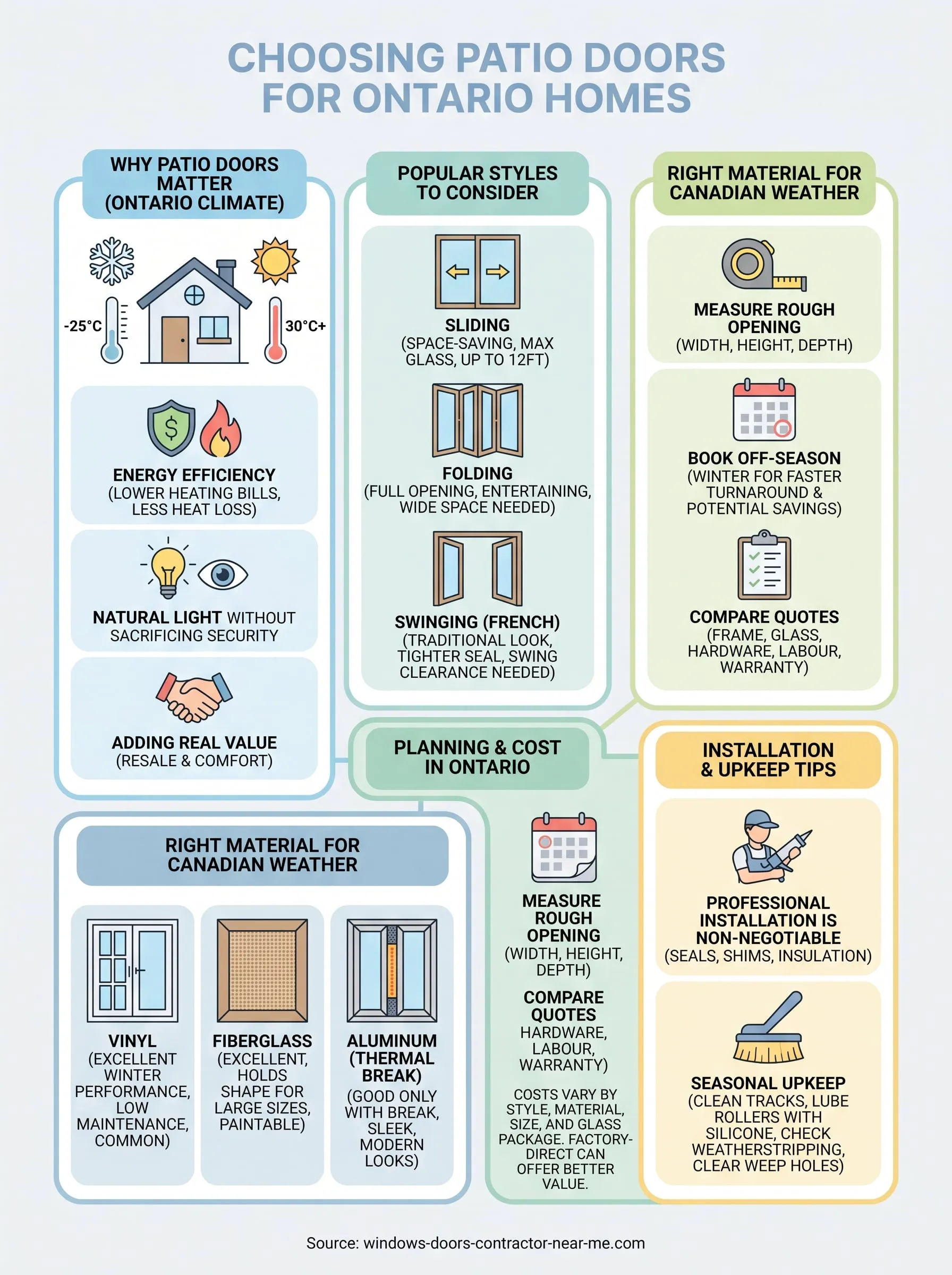
Getting a patio door right comes down to matching style, material, and glass package to how you actually live in the space, then backing that choice with an installation crew that seals it properly. Sliding patio doors suit tight interiors and maximum daylight, folding units suit entertaining and wide openings, and swinging doors suit a tighter seal on older Ontario homes. Vinyl and fiberglass both stand up to freeze-thaw cycling far better than ageing aluminum or wood, and that choice matters more than any single glass upgrade you add afterwards.
Whatever configuration you're leaning towards, the numbers in this guide give you a realistic starting point rather than a guess pulled from a generic average. Pricing, lead times, and installation quality all shift depending on who's actually manufacturing your door, so it pays to compare a factory-direct quote before you commit. Get in touch about our sliding and garden patio doors for Ontario homes and we'll walk you through options built for exactly this climate.