
If your awning windows have started sticking, leaking cold air, or fogging up between the panes, you're not alone. Awning windows take a beating in Ontario's climate, and after 15 to 20 years the seals and cranks wear out long before the frame gives you any warning. Searching for replacement awning windows usually means you've already decided the old ones aren't worth patching up again, and now you need to figure out what actually matters before you spend the money.
This guide answers that directly. We'll cover what separates a good awning window replacement from a mediocre one, including frame materials, glass packages like Low-E coatings and Argon gas fills, and the hardware that determines how long your new windows will last through wind, rain, and freeze-thaw cycles.
You'll also get a realistic look at pricing factors and installation considerations, so you know what to ask when comparing quotes. As a Canadian, factory-direct manufacturer handling windows and doors replacement in Innisfil, we build and install these windows daily, and we'll share what homeowners consistently overlook before they buy.
Why replace your awning windows
Awning windows crank outward from hinges at the top, which makes them great for ventilation in rain, but that same design puts constant strain on the hardware and seals. Ontario's freeze-thaw cycles work the weak points fast: the crank mechanism loosens, the weatherstripping compresses, and the seal between panes eventually fails. Once that happens, you're not looking at a simple repair. You're looking at energy-efficient awning windows installed across Ontario that restore the performance your originals had when they were new.
Signs the window is past saving
Homeowners often wait too long because the damage isn't obvious from across the room. Here's what to check up close:
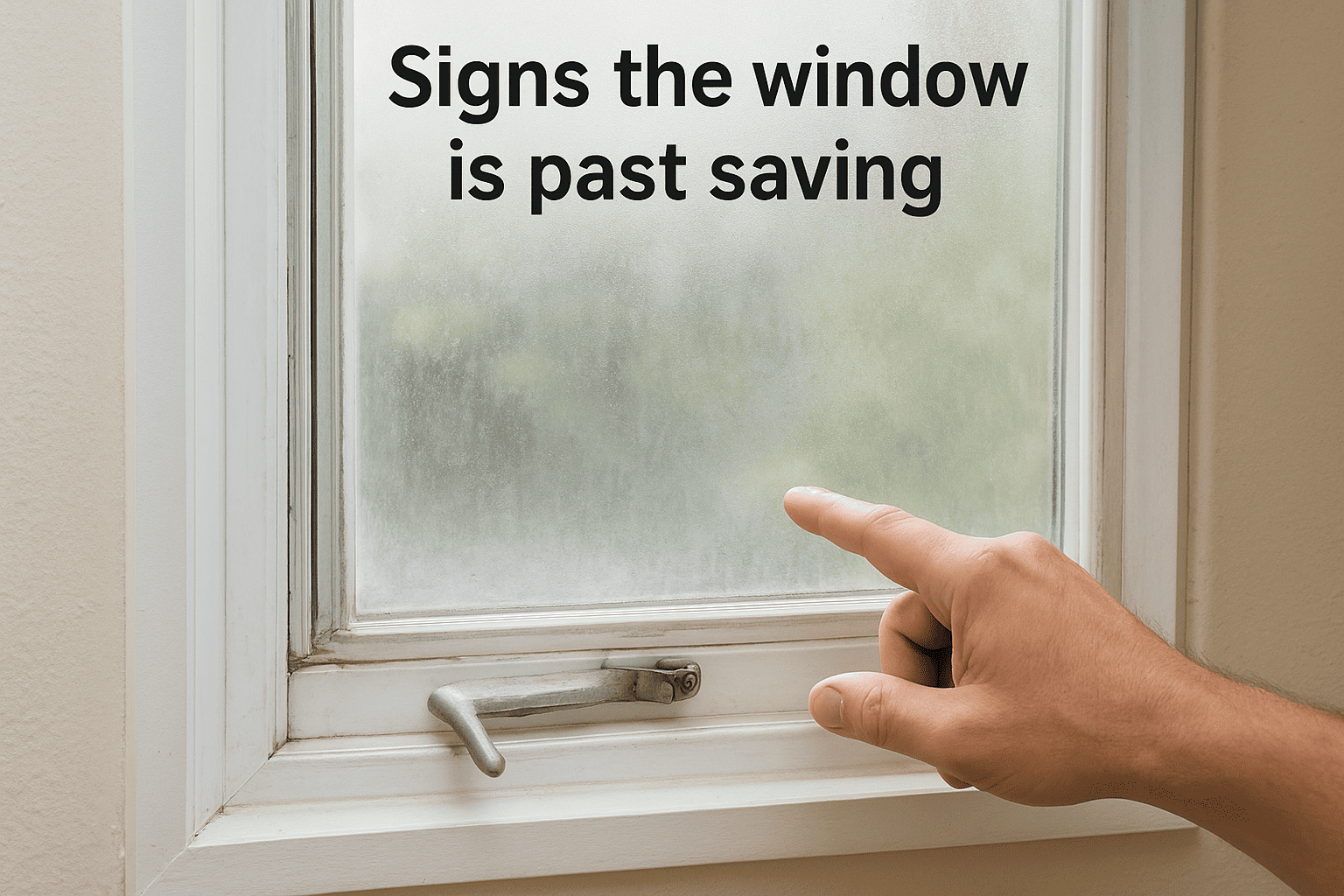
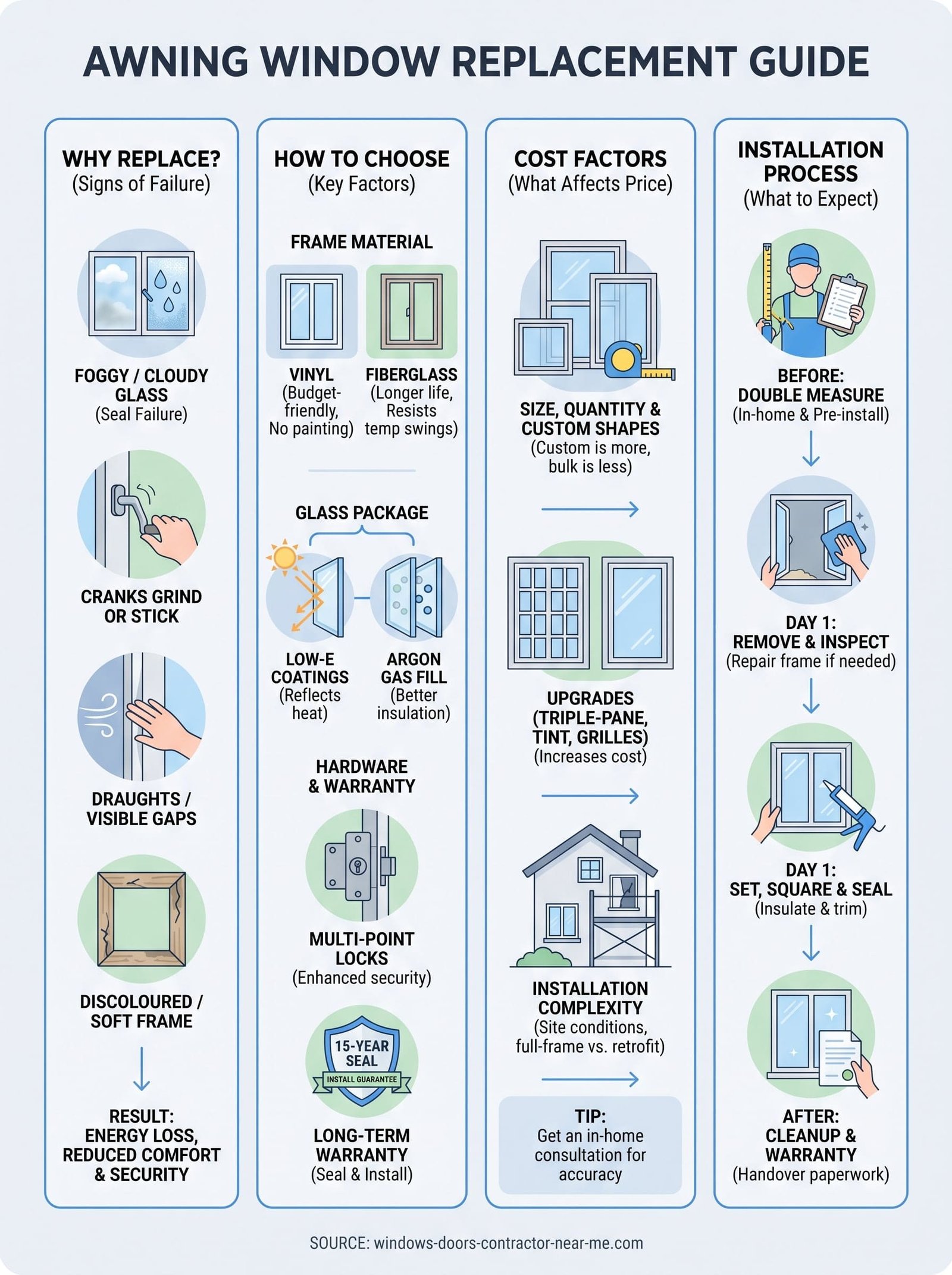
- Foggy or cloudy glass between the panes, which means the seal has failed and the Argon gas fill has escaped (see what glass replacement costs in 2026)
- Cranks that grind, stick, or spin freely without opening the sash properly
- Visible gaps around the frame where you can feel a draught with your hand
- Soft or discoloured frame material, especially on wood or older vinyl units
- Condensation on the inside glass during winter, a sign the insulation is no longer doing its job
If you spot two or more of these, the window has moved from "needs a tune-up" to "needs replacing."
The energy loss adds up quietly
Gaps and failed seals don't just let in draughts, they let your heating and cooling escape all winter and summer long. Natural Resources Canada notes that windows and doors account for a significant share of residential heat loss in older homes, and a failed seal on even one awning window can undo the benefit of a well-insulated wall around it, which is why it pays to know how to choose energy efficient windows for a Canadian home. You'll usually notice this first as a spike on your utility bill rather than a visible problem with the window itself.
A window that looks fine from the outside can still be costing you money every single month.
Security, noise, and comfort
Worn crank mechanisms and loose latches make a window easier to force open, which matters more than most homeowners assume until they've had a break-in attempt or a close call. Older single-pane or early double-pane awning windows also do a poor job blocking outside noise, something that becomes obvious the moment you're near a busy road or a neighbour's lawnmower. Replacing the unit with a modern double or triple-pane design with proper glass and hardware fixes both problems at once, and it's often the deciding factor for families who've put up with a draughty, noisy room for years.
Resale value and curb appeal
Buyers and home inspectors both notice tired-looking windows, and foggy glass or peeling frames can knock real dollars off an appraisal. Swapping in new awning window replacement units, especially ones that match the home's existing style and the rest of your modern window styles for Ontario homes, is one of the more visible upgrades you can make without a full renovation budget. It's a practical investment, not just a cosmetic one.
How to choose the right replacement awning window
Picking a replacement window isn't just about matching the old size and calling it done. Awning windows replacement projects succeed or fail based on three things: frame material, glass package, and hardware grade. Get any of those wrong and you'll be back to square one within a decade.
Frame material matters most
Vinyl and fiberglass dominate the Canadian market for good reason: both resist rot, don't need painting, and handle our temperature swings without warping. Fiberglass costs more upfront but expands and contracts at nearly the same rate as glass, which keeps seals intact longer. Vinyl remains the budget-friendly, maintenance-free choice for most homes.
| Frame material | Lifespan | Maintenance | Best for |
|---|---|---|---|
| Vinyl | 20-25 years | None | Most homes, budget-conscious buyers |
| Fiberglass | 30-40 years | None | Extreme temperature swings, premium finish |
Glass package: Low-E coatings and Argon fills
Glass does most of the insulating work, so don't skimp here. Low-E coatings reflect heat back into your home in winter and keep it out in summer, while an Argon gas fill between panes slows heat transfer further than plain air. Together they're the difference between a window that earns its keep and one that just looks new.
The frame gets noticed, but the glass package is what actually cuts your heating bill.
Hardware grade and warranty terms
Cranks, hinges, and locks take the physical abuse over the years, so cheap hardware undermines even the best frame and glass combination. Look for multi-point locking hardware and a manufacturer that backs its replacement awning windows with a real seal-failure warranty, not just a limited one-year promise. A 15-year seal warranty, paired with a solid installation guarantee, tells you the manufacturer expects the product to last.
What affects the cost of replacement awning windows
Cost estimates for replacement awning windows swing wildly because so many variables stack on top of each other. A single small unit in a bungalow costs far less than a full-home upgrade with custom sizes, and the quote you get should reflect your specific frame material, glass package, and installation complexity rather than a generic average pulled off a website.
Size, quantity, and custom shapes
Standard-sized awning windows cost less because manufacturers produce them in batches, while custom widths or heights require individual fabrication. Buying multiple windows at once for a full-home project also typically brings the per-unit price down, which is worth asking about before you commit to replacing them one at a time over several years.
Frame material and glass upgrades
Vinyl frames sit at the lower end of the price range, while fiberglass costs more but lasts longer, as covered earlier. Glass upgrades add cost too: triple-pane glazing, tinted or beveled glass, and internal grilles all push the price up, but they also improve the energy performance and security you're paying for in the first place.
Cheaper windows that fail again in ten years always cost more than paying properly the first time.
Installation complexity and site conditions
Labour costs rise when the old frame is rotted, the opening is out of square, or the window sits somewhere hard to access, like a second-storey bedroom. Straightforward retrofits into a sound existing frame install faster and cheaper than full-frame replacements that require rebuilding the rough opening.
| Cost factor | Impact on price |
|---|---|
| Frame material (vinyl vs fiberglass) | Fiberglass adds 20-30% |
| Glass upgrades (triple-pane, tinting) | Moderate to significant increase |
| Custom sizing | Higher than standard sizes |
| Full-frame vs retrofit installation | Full-frame costs more |
Getting a free in-home consultation rather than a phone quote is the only reliable way to know where your project lands on this scale, since window openings and existing frame condition vary from house to house even within the same neighbourhood.
What to expect during installation
Once you've picked your frame, glass, and hardware, the actual awning window replacement takes far less time than most homeowners expect. A single window swap typically takes a few hours, while a full-home project spans one to three days depending on how many openings need work and whether any require full-frame rebuilding rather than a straightforward retrofit.
Before the crew arrives
Good installers measure the opening twice before ordering, once during the free in-home consultation and again just before the install date, since houses settle and openings shift slightly over the years. Ask your contractor what they'll do if the measurements don't match on installation day, because a rushed fix here is where sloppy jobs start. You should also clear furniture and window coverings from the work area the night before, so the crew isn't waiting on you to start.
What happens on installation day
A licensed installer removes the old sash and frame, checks the rough opening for rot or water damage, and repairs or reframes it if needed before setting the new unit. Here's the general sequence:
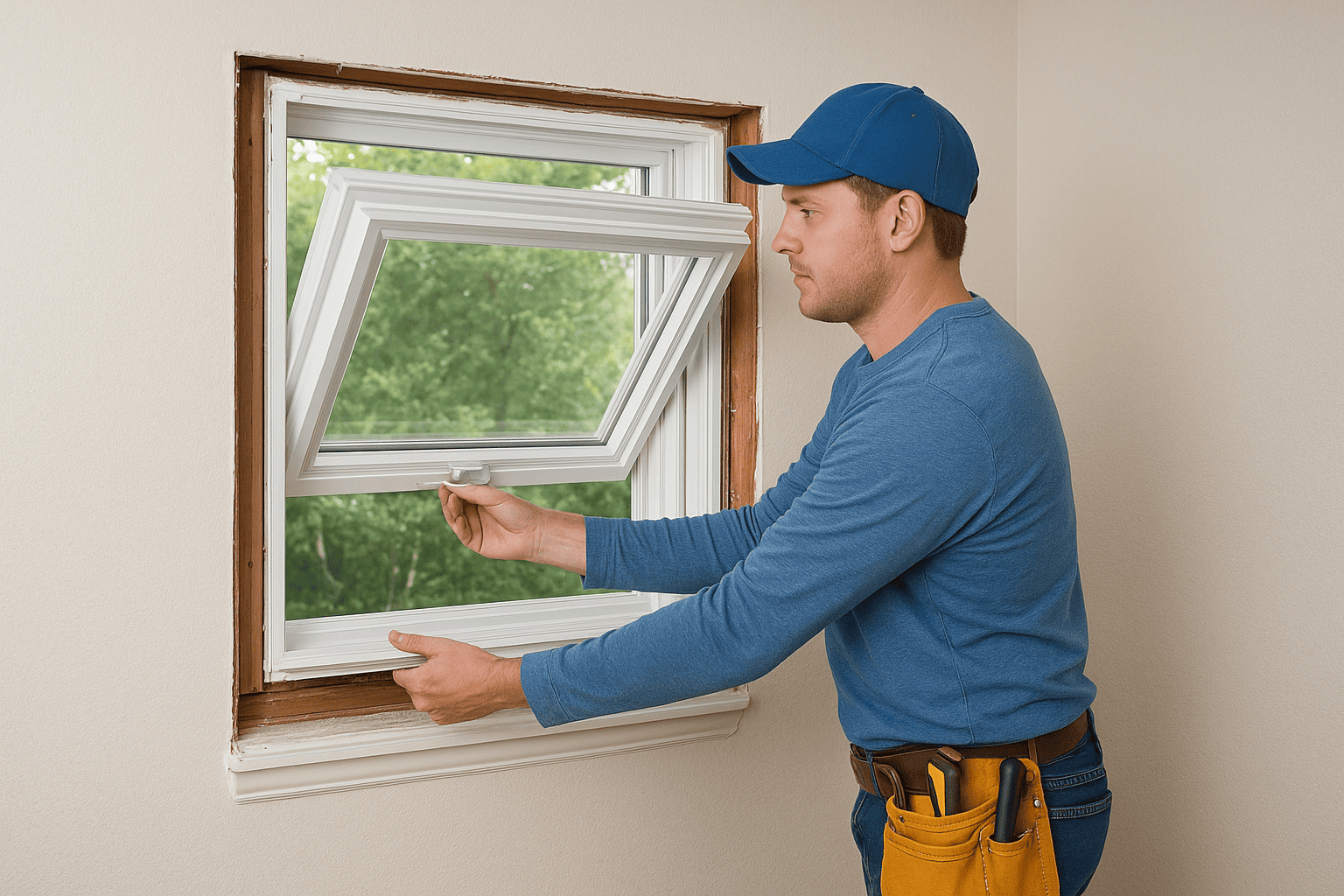
- Remove the old window and inspect the opening
- Repair or rebuild the frame if damage is found
- Set and square the new replacement awning windows
- Insulate around the frame and seal with weatherproof caulking
- Install interior and exterior trim
- Test the crank and lock hardware for smooth operation
A properly squared frame matters more than the window itself, since even the best unit will leak or stick in a crooked opening.
After the install: cleanup and warranty paperwork
Reputable crews clean up debris and old materials before they leave, and they'll walk you through operating the new cranks and locks so nothing feels unfamiliar. Vetted, licensed, and insured installers should also hand over your warranty documentation on the spot, covering both the product and the installation itself, typically backed by a five-year manufacturer guarantee alongside the longer seal-failure warranty on the windows.
Choosing awning windows with confidence
Replacing awning windows isn't a decision you should rush based on price alone. The frame material, glass package, and hardware grade you choose today determine whether you're back in this position in ten years or thirty. Fiberglass and vinyl both hold up in Ontario's climate, but the details, Low-E coatings, Argon fills, multi-point locks, are what separate a window that earns its keep from one that just looks new for a season.
Getting a proper quote means getting someone in your home to measure the opening and assess the frame condition, not guessing from a phone call. As a factory-direct manufacturer, we cut out the markups that inflate other quotes while still backing every install with real warranties. If you're ready to compare pricing and options honestly, book a free in-home quote with our windows and doors specialists and see what your project actually costs.