
Basement windows don't get much attention until one cracks, fogs up between the panes, or lets in a draught you can feel from across the room. Then you're stuck trying to figure out what a repair or replacement should actually cost, and most quotes you find online are for standard main-floor windows, not the smaller, often trickier units below grade.
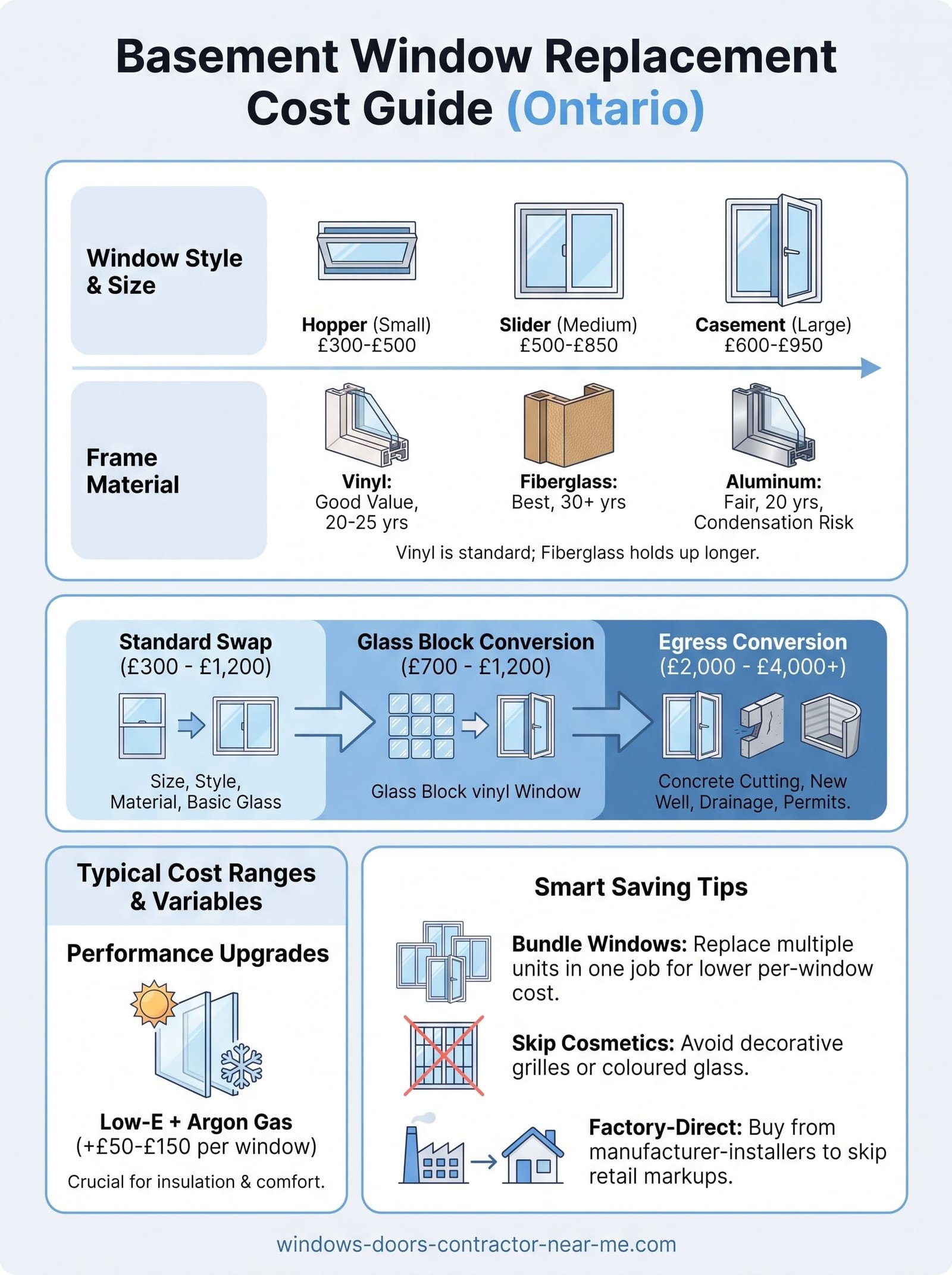
Here's the short answer: basement window replacement cost in Ontario typically runs between $300 and $1,200 per window, depending on size, frame material, and whether you're dealing with a straightforward swap or a full frame and glass block replacement. The cost of basement window replacement climbs quickly if egress requirements, structural work, or hopper and slider styles come into play.
In this article, we'll break down what drives that price range, from vinyl versus fiberglass frames to Low-E glass and Argon fills, and what homeowners looking at window replacement in Innisfil and across Ontario should expect to pay for materials versus professional installation. We'll also cover where you can realistically save money without sacrificing the insulation your basement needs to handle Canadian winters.
Why basement window replacement costs vary so much
Ask five contractors for a quote on the same basement window and you'll likely get five different numbers. That's not sloppy pricing, it's because basement window replacement cost depends on a stack of variables that interact with each other: the window's size and style, the frame material, the glass package, and how much concrete or masonry has to be disturbed to get the old unit out. Two houses on the same street can face bills that differ by hundreds of dollars simply because one has a standard hopper window and the other needs an egress-sized opening cut wider.
Window style and size drive the base price
Small fixed or hopper and awning basement windows sit at the cheap end of the range because they're simple to manufacture and quick to install. Tilt sliders and larger casement-style basement windows cost more just in materials, since there's more vinyl, more hardware, and more glass involved. Size matters even within the same style: a 24-inch by 12-inch hopper window costs noticeably less than a 36-inch by 24-inch version of the same design, because you're paying for more square footage of insulated glass and a bigger frame.
Frame material changes both price and lifespan
Vinyl is the standard choice for basement replacements in Ontario, and for good reason: it resists moisture, doesn't rot, and handles temperature swings well. Fiberglass frames cost more upfront but hold up even better against warping over decades. Here's a rough comparison of what you're trading off:
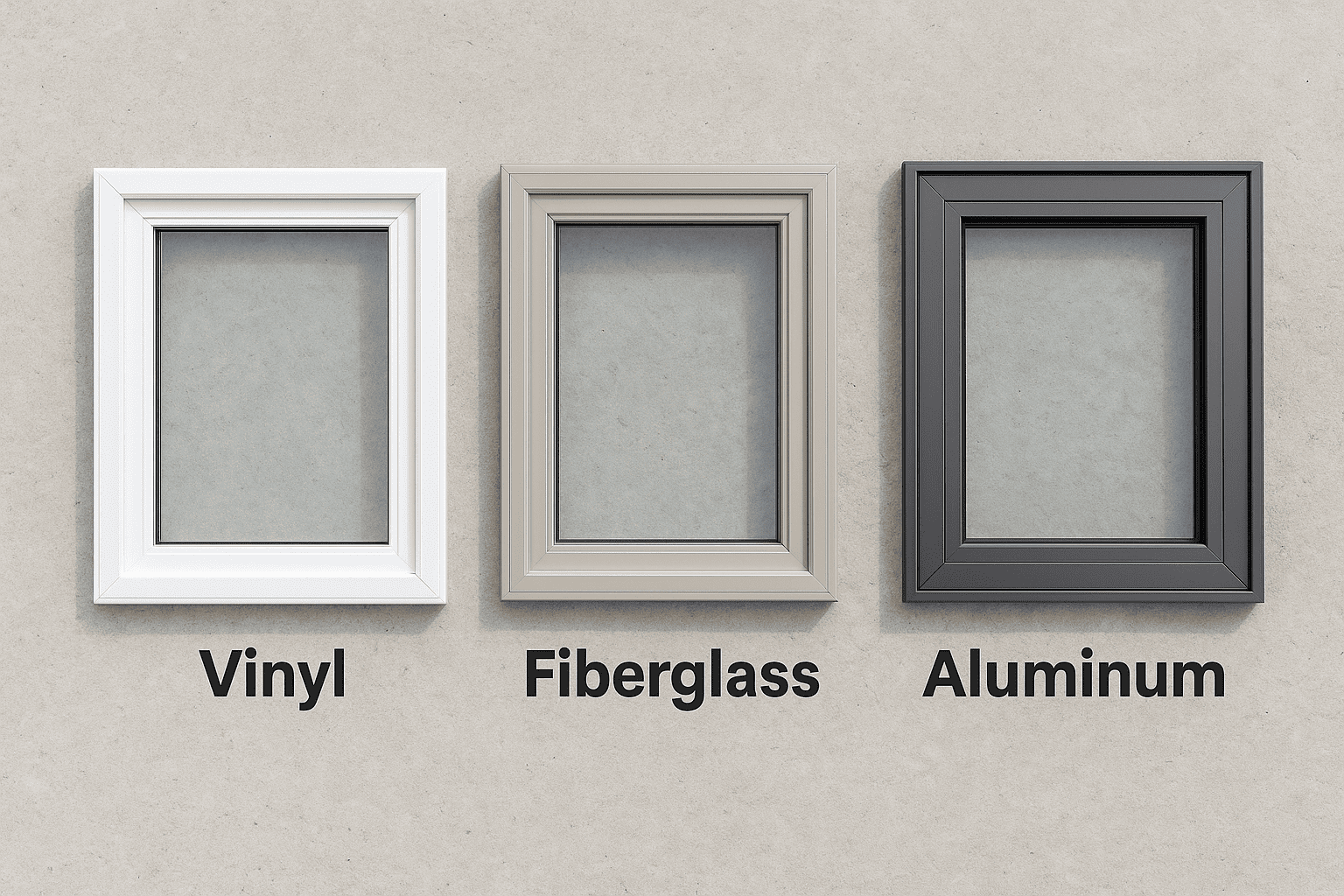
| Frame material | Relative cost | Moisture resistance | Typical lifespan |
|---|---|---|---|
| Vinyl | Lower | Excellent | 20-25 years |
| Fiberglass | Higher | Excellent | 30+ years |
| Aluminum | Mid-range | Fair (can condensate) | 20 years |
Basements are damp by nature, so skimping on frame quality tends to backfire within a decade through swelling, sticking sashes, or seal failure.
Glass upgrades add cost but pay for themselves
Low-E coatings and Argon gas fills add a modest amount to the sticker price, usually $50 to $150 per window, but they're not optional extras if you care about heating bills. A basement window without Low-E glass is a cold spot that your furnace has to fight against all winter. Given how many Ontario basements are finished living space now, rather than storage, that trade-off almost always makes financial sense over the life of the window, and it follows the same logic as choosing windows built for Canada's climate.
Access, structural work, and where you live
This is where quotes really start to spread apart. A basement window that's simply removed and swapped for a same-size replacement is a half-day job. One that requires enlarging the opening, cutting through poured concrete, or adding a window well is a different project entirely, often involving a second trade for excavation or foundation work.
The window itself is rarely what makes basement replacement expensive, it's the concrete, the well, and the code compliance around it.
Labour rates also shift depending on how far a crew has to travel and how accessible your basement is. A window well buried under three feet of soil and old landscaping takes longer to expose than one that's already clear, and that extra time shows up on the final invoice.
How to budget for a basement window replacement
Planning ahead for basement window replacement cost means more than picking a number out of the air, and it helps to know what Ontario homeowners pay for window replacement elsewhere in the house too. You need a realistic sense of how many windows you're replacing, what condition your foundation openings are in, and whether you're doing one window now or the whole basement over a few seasons. Homeowners who budget window by window, rather than assuming a flat per-house price, avoid the sticker shock that comes when the third or fourth quote turns out pricier than the first.
Get quotes that compare apples to apples
Ask every contractor to quote the same frame material, glass package, and installation scope, otherwise you're not actually comparing prices, you're comparing different products. Request a written breakdown that separates the window unit, labour, and any structural work like concrete cutting or window well adjustments. This makes it far easier to spot which quote is genuinely competitive and which one is cutting corners on materials to look cheaper.
Decide if you're replacing one window or several
Most basements have between two and six windows, and contractors often discount per-unit pricing when you replace several at once because setup and travel costs get spread across the job. If your budget is tight, prioritise the windows showing visible damage, fogging, or draughts first, and plan the rest in phases rather than delaying everything until you can afford all of them at once.
Leave room for the unexpected
Once a crew opens up an old basement window, they sometimes find rotted framing, cracked concrete, or moisture damage that wasn't visible beforehand. Building in a contingency of 10 to 15 percent on top of your quoted price protects you from having to stop mid-project to find more money.
Budget for the window you can see and the problems you can't, because basements rarely reveal everything until the old frame comes out.
Here's a quick checklist to keep your budgeting on track:
- Get at least three written quotes with matching specs
- Confirm whether egress or structural work is included or extra
- Ask about warranty terms on both the window and the installation
- Set aside a contingency fund for hidden damage
- Time your project for a dry season when possible, to avoid weather delays
Typical costs by window type and size
Once you know the variables that drive basement window replacement cost, it helps to see actual numbers side by side. Ontario homeowners near Innisfil typically see the widest price swings between hopper windows, which are the smallest and most common basement style, and larger slider or crank-out casement units that let in more light but need more material and labour to install.
Price ranges by common basement window styles
Here's what you can expect to pay per window, installed, for a standard swap without egress work or concrete cutting:
| Window type | Typical size | Installed cost (CAD) |
|---|---|---|
| Hopper (small) | 24" x 12" | $300-$500 |
| Hopper (large) | 36" x 24" | $450-$700 |
| Fixed/picture | 30" x 20" | $350-$600 |
| Slider | 36" x 24" | $500-$850 |
| Casement-style | 24" x 36" | $600-$950 |
| Glass block replacement (converted to vinyl) | Varies | $700-$1,200 |
These figures assume vinyl frames with standard double-pane glass. Add the Low-E and Argon upgrade mentioned earlier, and you're looking at another $50 to $150 per window on top of these ranges.
Why size pushes the price up faster than style
Manufacturers price windows largely by square footage, so a modest increase in dimensions often costs more than switching to a fancier style at the same size. A 36-inch by 24-inch hopper window, for instance, can cost nearly as much as a slider of similar dimensions, because the glass and frame materials scale with area regardless of how the window opens. If you're comparing quotes and one seems suspiciously low, check the exact measurements first, since a smaller unit than what you actually need won't fit your opening anyway.
Style matters less than square footage. Two windows the same size will usually cost close to the same, no matter how they open.
Homeowners replacing several windows of different sizes should ask for a per-window breakdown rather than a single lump sum, since it makes it far easier to spot where the money is actually going. If you're weighing your options across styles and budgets, our vinyl window styles built in Ontario break down the specific materials and glass packages available for basement-sized openings, which is worth checking before you commit to a quote.
Extra costs for egress windows and concrete cutting
Some basement window jobs stop being simple swaps the moment code requirements get involved. Egress windows, the kind Ontario's building code requires for basement bedrooms, need a minimum clear opening and often a much larger window well than what's already there. That single requirement can turn a $500 job into a $2,000 to $4,000 one, depending on how much concrete has to move.
What makes egress windows pricier
Egress-compliant basement windows need enough clear opening for someone to climb out in an emergency, usually a minimum of 5.7 square feet with no dimension smaller than 20 inches. Getting there from a standard hopper opening means enlarging the hole in the foundation, which means concrete cutting, a bigger window well, drainage, and sometimes a permit. Ontario's Building Code sets these minimums, and inspectors do check them when a basement bedroom is involved, so this isn't a corner you can quietly cut.
An egress window isn't really a window upgrade, it's a foundation project with a window at the end of it.
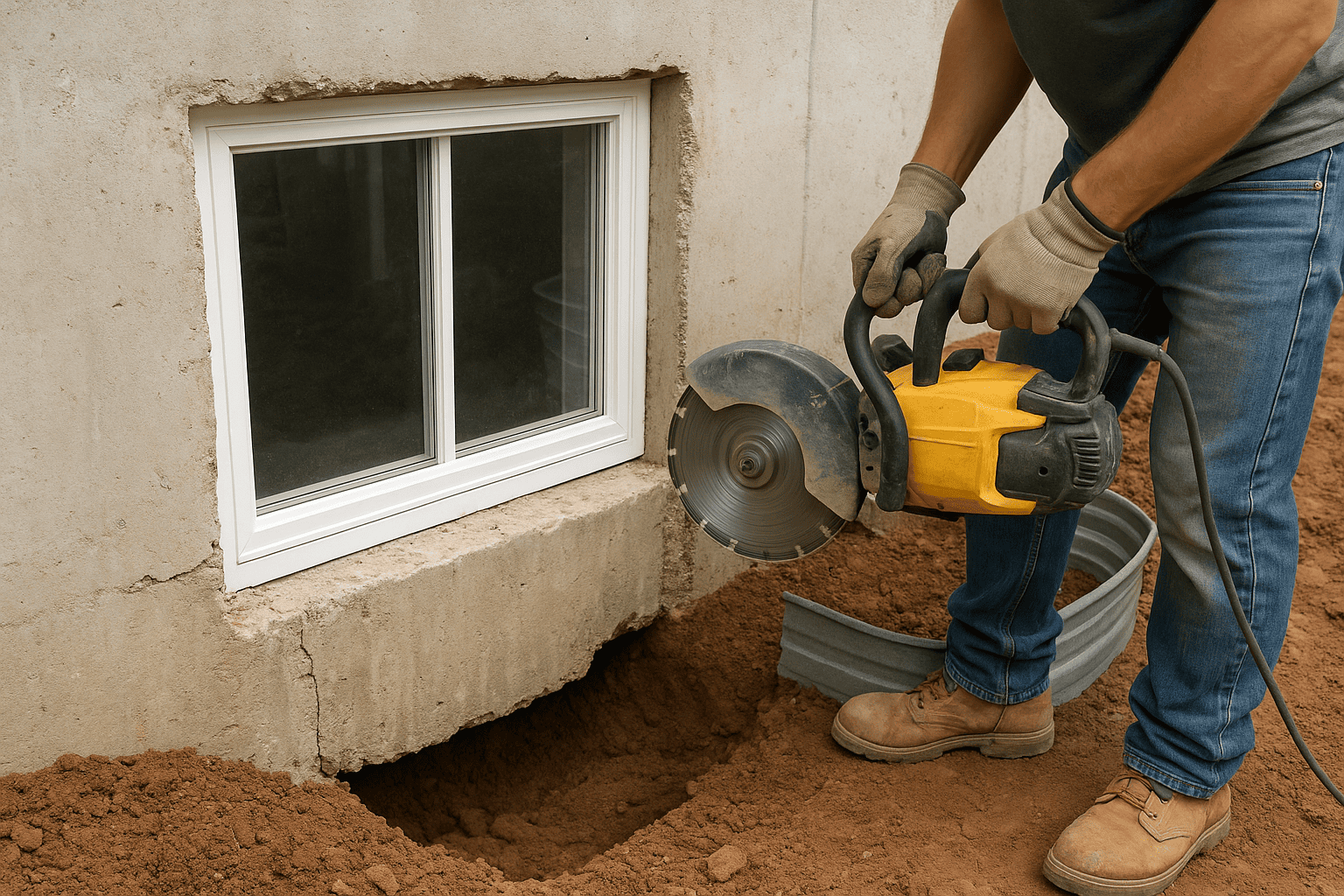
Concrete cutting and window well costs
Cutting concrete is priced separately from the window itself, and it varies with wall thickness and how much material needs removing. Here's a rough breakdown of what adds to the bill:
| Extra work | Typical added cost (CAD) |
|---|---|
| Concrete cutting (per opening) | $500-$1,500 |
| New or enlarged window well | $300-$800 |
| Drainage upgrade for the well | $150-$400 |
| Permit and inspection fees | $100-$300 |
Adding these to a standard installed window price explains why egress conversions land in that $2,000 to $4,000 range rather than the $300 to $1,200 you'd pay for a straightforward swap.
Deciding if egress is worth it now
Getting a bedroom code-compliant now, rather than later, tends to cost less than doing it as a rushed fix during a resale inspection. Homeowners finishing a basement for rental income or a growing family should budget for egress from the start rather than treating it as an afterthought once the drywall's already up. If you're unsure whether your basement needs an egress-rated window, ask your contractor to check against current code before you commit to a quote, since retrofitting later almost always costs more than planning for it upfront.
Ways to lower your basement window replacement costs
Lowering your basement window replacement cost doesn't have to mean settling for a thinner frame or skipping the glass upgrade that keeps your basement warm. Most of the real savings come from how you plan the job, not from cutting the materials that actually protect your home. A few practical choices, made early, can shave a genuine chunk off the final invoice without leaving you with a window that fails again in ten years.
Bundle multiple windows into one job
Bundling every basement window into a single project, rather than replacing them one at a time over several years, spreads the contractor's setup and travel costs across more units. Crews typically charge less per window when they're already on site with equipment out, so five windows done together often costs less per unit than one window done in isolation. If your basement has several ageing units, get a whole-house quote even if you only plan to pay for two now.
The cheapest window is rarely the smallest job, it's the one done alongside its neighbours.
Skip upgrades you don't actually need
Skipping decorative grille patterns or coloured glass on windows nobody sees from the street is an easy way to trim cost without touching performance. Keep the Low-E coating and Argon gas fill, since those pay you back through lower heating bills, but drop finishes that only matter for curb appeal on a window below grade.
Buy factory-direct and time the work smartly
Buying from a manufacturer that also installs, rather than paying a retail markup between the factory and the crew on your porch, removes a layer of cost that adds nothing to the window itself. MK Windows and Doors builds and installs every unit in Ontario, which is why factory-direct pricing beats most retail quotes for the same specification. Scheduling your project outside peak spring renovation season can also get you a better rate, since contractors have more flexibility in their calendar during quieter months.
- Bundle all basement windows into one project
- Keep Low-E glass and Argon fills, drop cosmetic extras
- Ask for factory-direct pricing to skip retail markups
- Book during off-peak months for better scheduling rates
- Compare price-match offers before signing a contract
Making sense of your basement window budget
Most Ontario homeowners land somewhere between $300 and $1,200 per window for a straightforward swap, with egress conversions and concrete cutting pushing that number into the thousands. The variables you now understand, frame material, glass package, size, and access, explain why one quote can look so different from another for what seems like the same job. Getting a handle on basement window replacement cost isn't about finding the cheapest number on paper, it's about knowing which corners are safe to cut and which ones cost you more down the road through drafts, fogging, or a failed egress inspection.
If you're ready to see what a factory-direct quote actually looks like for your basement, talk to our Ontario window specialists about a free in-home measure. You'll get a real number for your windows, not a generic range pulled from someone else's job.