
If you're replacing old windows and keep seeing the term casement windows pop up in quotes and showrooms, you're not alone. Homeowners across Ontario ask us the same thing: what makes these different from a standard slider, and why do installers push them so hard for cold Canadian winters?
A casement window is hinged at the side and cranks open outward like a door, sealing tighter against the frame than sliding styles when it's shut. That tighter seal matters here, where wind-driven snow and sub-zero temperatures punish weak spots in a home's envelope. Because the sash presses into the frame rather than sliding along it, you get better weatherstripping contact and, typically, stronger energy performance.
In this guide, we'll walk through exactly how casement windows work, where they perform best around your home, and what casement windows prices in Canada actually look like once you factor in size, glass upgrades, and installation. We'll also cover how they stack up against other styles, so you can decide with real numbers instead of guesswork.
Why choose casement windows for your home
Homeowners across Across Innisfil and the surrounding GTA area switch to casement windows for Ontario homes for three main reasons: energy performance, ventilation, and security. Each of these matters more here than in milder climates, since your windows need to handle deep freezes, humid summers, and everything in between without failing at the seals.
Better energy efficiency in Canadian winters
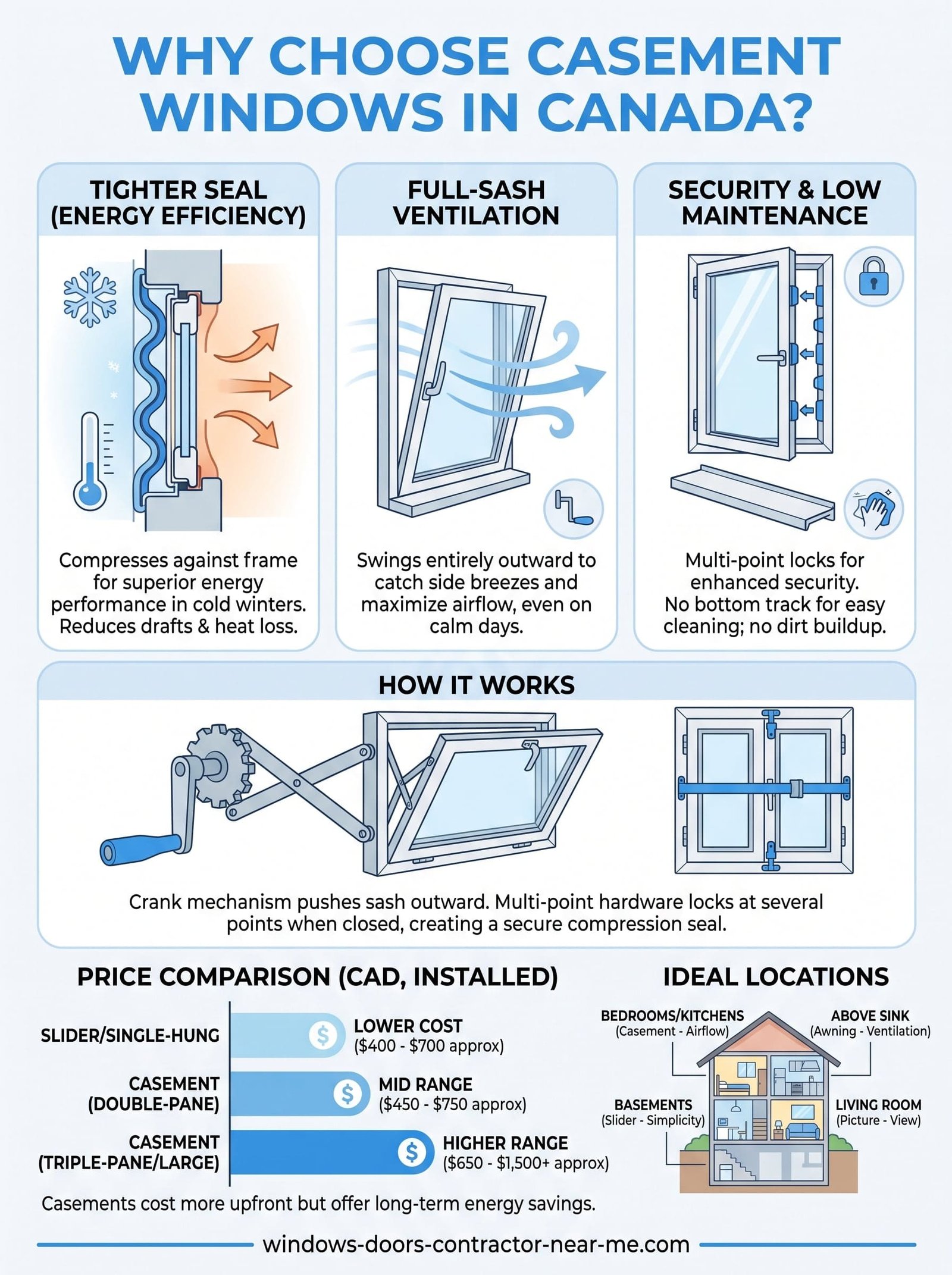
Because the sash compresses against the frame when you crank it shut, casement windows create one of the tightest seals available in residential windows. Combined with Low-E glass coatings and Argon gas fills, that tight seal cuts down on drafts and heat loss far more effectively than a slider or single-hung window with the same glass package, which is worth keeping in mind when you're picking energy efficient windows for a Canadian home. Natural Resources Canada notes that window and door upgrades remain one of the most effective ways to reduce home heating costs in colder provinces, and the seal design of a casement plays a direct role in that.
A casement window seals like a door, not a drawer, and that's why it holds heat better through an Ontario winter.
Ventilation that actually works
Unlike a slider that only opens halfway across its own frame, a casement window swings its entire sash outward, catching side breezes and funnelling air into the room even on days with barely any wind. This makes them a strong pick for kitchens, bathrooms, and rooms above grade where you want airflow without cracking open a wall-sized opening. Homeowners who ask us what is a casement windows upgrade actually gains over their old sliders usually mean this exact point: more usable airflow from the same rough opening size.
Security and low maintenance
The multi-point locking hardware built into most casement windows presses the sash into the frame at several points, not just one latch at the edge. That's a harder barrier to force open from outside compared with a slider that only locks at the meeting rail. Add in the fact that there's no track for dirt, dead bugs, and moisture to collect in, and cleaning becomes a wipe-down job rather than a scrub session.
Quick comparison of the main benefits
| Benefit | Why it matters in Ontario |
|---|---|
| Tight seal on close | Reduces drafts during sub-zero winters |
| Full-sash ventilation | Captures side breezes other styles miss |
| Multi-point locks | Harder to force open than sliding hardware |
| No bottom track | Less dirt and moisture buildup |
| Unobstructed glass | Better sightlines and more natural light |
Put together, these advantages explain why casement windows keep showing up as the default recommendation whenever a contractor is quoting a full windows casement replacement package rather than a like-for-like swap. They're not the cheapest option on the shelf, but the performance gap shows up on your heating bill and your comfort level room by room.
How casement windows work
A casement window operates on a simple crank mechanism mounted on the interior sill, the same setup used in casement crank windows. Turn the handle, and a scissor-arm or gear-driven operator pushes the sash outward on hinges fixed to one side of the frame, usually the left or right depending on which way you want the window to catch prevailing wind. Release the crank, and the same mechanism pulls the sash back until it presses flush against the frame, compressing a continuous strip of weatherstripping around all four sides.
The hinge and hardware setup
Hinges sit at the top and bottom of one vertical edge, letting the sash swing like a door rather than sliding on tracks. Most Canadian-made units pair this with multi-point locking hardware, a bar system that engages three or four points along the sash edge the moment you close the crank fully. That's a meaningful upgrade over the single cam lock found on older aluminium sliders, and it's part of why installers rarely mention a slider in the same breath as a quality casement unit.
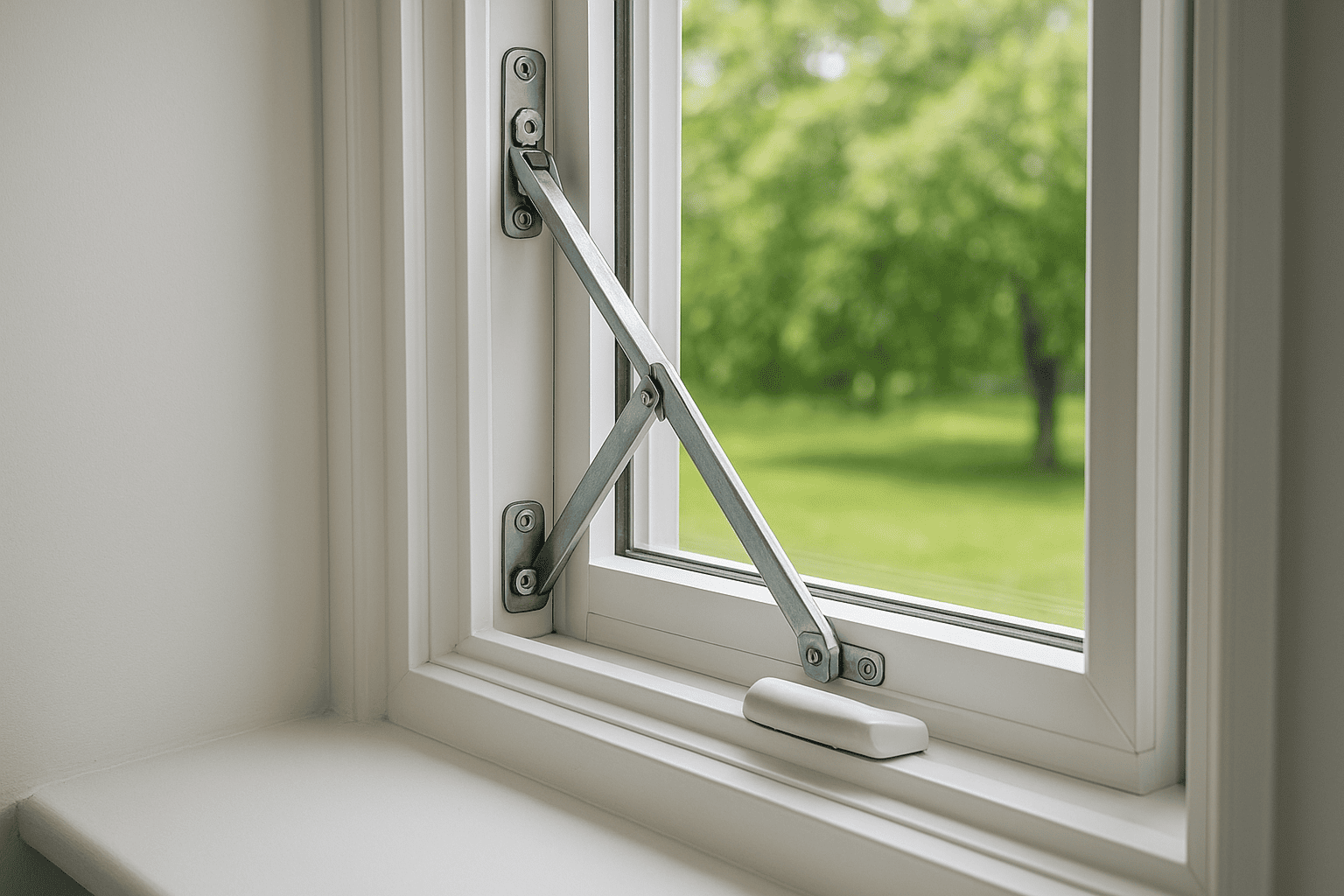
Turn the crank, and the whole sash locks itself into place at multiple points, not just one.
Frame materials and glass configuration
Vinyl frames dominate the Canadian market for casement windows because they don't conduct cold the way aluminium does, and they hold their shape through decades of freeze-thaw cycles. Inside the sealed unit, manufacturers pack Argon gas between two or three panes and apply a Low-E coating to the glass surface facing outdoors, which reflects summer heat while retaining indoor warmth in winter. Sizing runs from narrow basement units to wide picture-flanked configurations, and each one operates independently, so a bank of three casements can give you one open for airflow while the others stay sealed tight against the cold.
Casement window prices in Canada
Budget is usually the first question homeowners ask once they've decided casement windows suit their home. Casement windows prices in Canada typically run higher than sliders or single-hung units because of the crank hardware, multi-point locks, and heavier frame construction needed to support an outward-swinging sash. Expect a wider spread depending on size, glass package, and whether you're replacing a standard opening or a custom bay configuration.
Generally, a standard-size casement window with double-pane Low-E glass and Argon fill lands in the mid range, while triple-pane units or larger custom widths push the price up considerably, much like what Canadians pay for glass replacement on existing frames. Installation adds a separate cost on top of the unit price, and that figure shifts depending on whether the existing frame needs full removal or just a sash swap.
| Configuration | Typical price range (CAD, installed) |
|---|---|
| Standard single casement, double-pane | $450 - $750 |
| Standard single casement, triple-pane | $650 - $1,000 |
| Large or custom-width casement | $900 - $1,500+ |
| Bank of two or three casements | $1,800 - $4,000+ |
Casement windows cost more upfront than sliders, but the seal quality often pays that difference back through lower heating bills.
Factory-direct pricing changes this picture considerably. Because MK Windows and Doors manufactures every unit in Ontario rather than buying from a middleman distributor, quotes typically land below the range a big-box retailer or general contractor would offer for the same specifications, and the company backs that with a price-match guarantee against competitor quotes. Homeowners comparing multiple quotes for casement windows prices Canada wide should always ask whether the number includes installation, disposal of old units, and warranty coverage, since those extras vary wildly between suppliers and can shift a seemingly cheap quote into the most expensive one once the job wraps up.
Casement windows vs other window styles
Once you've seen the price range, it helps to weigh casement windows against the other styles sitting on the same showroom floor. Tilt slider windows win on upfront cost and simplicity, since there's no crank mechanism to fail, but they can't match the seal quality of a casement window and their ventilation stops at whatever half the frame allows. Double-hung replacement windows split the difference: familiar look, decent airflow from top and bottom sashes, but two moving sashes mean two sets of weatherstripping that can wear unevenly over the years. Top-hinged awning windows share the same crank hardware and tight seal as casements, just hinged at the top instead of the side, which makes them a natural pairing above or below a fixed casement unit.
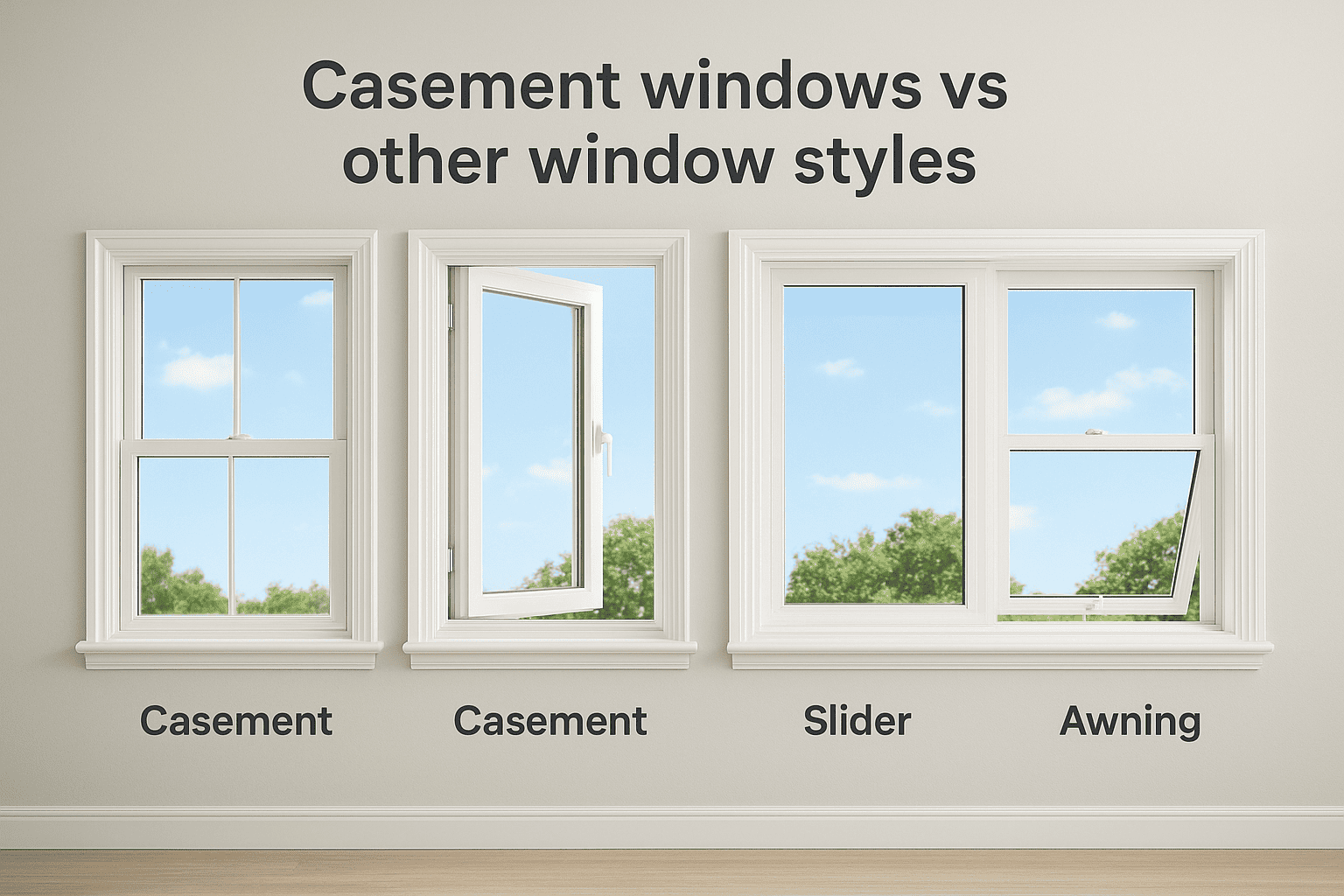
Where each style makes sense
- Casement windows: bedrooms, kitchens, and any wall where you want maximum airflow and the tightest possible seal.
- Sliders: basements, budget renovations, or openings where crank hardware isn't practical.
- Double-hung: heritage-style homes where the classic look matters as much as function.
- Awning: above sinks, in basements, or stacked with fixed glass for a layered look.
- Picture windows: living rooms and sightlines where fixed casement glass and unobstructed views matter more than ventilation.
If airflow and a hard seal both matter to you, nothing on the market beats a casement window doing both jobs at once.
Price tends to follow performance here. Basic sliders and single-hung units cost less because they're mechanically simpler, while casement style windows and awnings cost more because of the crank operator and multi-point lock hardware baked into every unit. For homeowners weighing a mixed installation, a common approach uses casements on bedrooms and living spaces for ventilation, then fixed or picture windows where the view matters more than airflow, keeping the overall budget in check without sacrificing comfort where it counts.
Choosing the right window for your home
A casement window earns its higher price tag through a tighter seal, easier ventilation, and hardware that outlasts a basic slider. If your home fights draughts every winter or you're tired of scrubbing tracks, that upfront cost pays itself back in comfort and lower heating bills within a few seasons. Basic sliders still have their place in basements or budget jobs, but for bedrooms, kitchens, and living spaces, casements are the style installers reach for first, and now you know why.
Getting the right fit still depends on your home's layout, existing frames, and budget, which is exactly what a proper in-home consultation sorts out. Rather than guessing at sizes or comparing vague online quotes, book a free quote with our windows and doors specialists who can measure your openings, walk you through glass options, and give you a factory-direct price with installation included.