
If you've ever wondered what are casement windows while browsing replacement options for your home, you're not alone. Homeowners across Ontario ask this question constantly, especially when comparing styles for a renovation or new build. Casement windows look simple from the street, but the way they open, seal, and perform through a Canadian winter sets them apart from sliders or double-hung units, and that difference matters when you're spending thousands on new windows.
In short, a casement window is a window hinged on one side that swings open outward using a crank handle, much like a door. That single design choice affects ventilation, sealing, and even how much natural light reaches your living room. Understanding this operation is the fastest way to know if casement windows suit your home before you request a quote.
This article walks through exactly how casement windows work, the parts that make them function, and how they stack up against other window styles for energy efficiency, security, and long-term durability, drawing on what we've learned manufacturing and installing them across Ontario since 2006.
Why casement windows are worth choosing
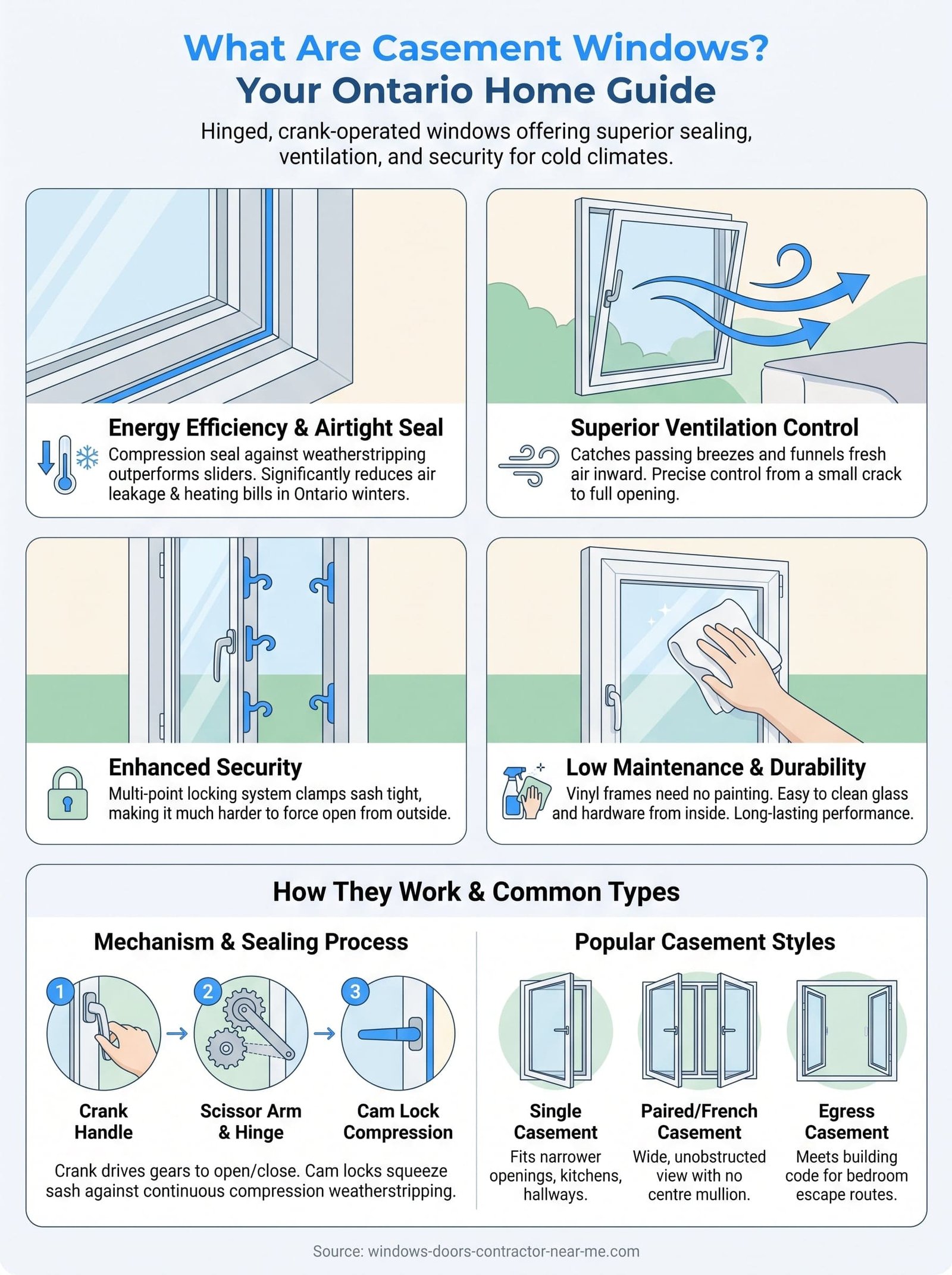
Casement windows earn their reputation the moment you feel a draught, or don't. Because the sash presses tightly against the frame when the crank closes it, you get an airtight seal that outperforms most sliding or double-hung styles. That tight compression is the main reason so many Ontario homeowners upgrade to casements after a decade of chasing cold spots near their old windows. The seal isn't a gimmick either; it's the physical result of the sash closing against weatherstripping from the outside in, rather than sliding past it, which is exactly why energy efficiency ratings on casement windows tend to sit higher than comparable sliders.
Energy efficiency you can measure
Because the whole sash locks tight against the frame, casement windows lose less conditioned air than styles that rely on tracks or overlapping panes. Paired with Low-E coatings and Argon gas fills, which we build into every unit we manufacture, that tighter seal translates into a noticeably lower heating bill through an Ontario winter. Here's how the common window styles compare on the factors that matter most for a cold climate:
| Window Style | Air Leakage Risk | Ventilation Control | Typical Seal Type |
|---|---|---|---|
| Casement | Low | Excellent | Compression |
| Double-hung | Medium | Good | Sliding/friction |
| Slider | Medium-High | Fair | Sliding/friction |
| Fixed/picture | None | None | Compression (no opening) |
A casement window seals by pressing shut, not sliding shut, and that single difference is why it holds heat better through a Canadian winter.
Ventilation you actually control
Ventilation with a casement window works differently than with a slider. Opening the sash outward catches passing breezes and funnels them directly into the room, so even a small crank-open casement can move more air than a slider opened halfway. Homeowners with kitchens or bathrooms facing a prevailing wind often notice this the most, since a casement can be cracked open just an inch for steady airflow without letting in rain.
Added security and lower maintenance
Security is another reason casements outperform sliders on our installs. The hook-shaped locks embedded in the frame pull the sash tight against the weatherstripping when engaged, making the window far harder to force open from outside than a slider's simple latch. Vinyl frames also mean no scraping, sanding, or repainting down the line, which matters if you're comparing long-term maintenance costs across window styles before committing to a full-home replacement project.
How casement windows open and seal
Understanding what a casement window is really comes down to the hardware hidden inside the frame. A crank handle connects to a scissor-arm mechanism bolted to the bottom of the sash, and turning that handle pushes the arm outward, swinging the whole sash open like a small door. Hinges run along one vertical edge, usually the side facing away from your main sightline, so the opening sash doesn't block your view when it's fully extended.
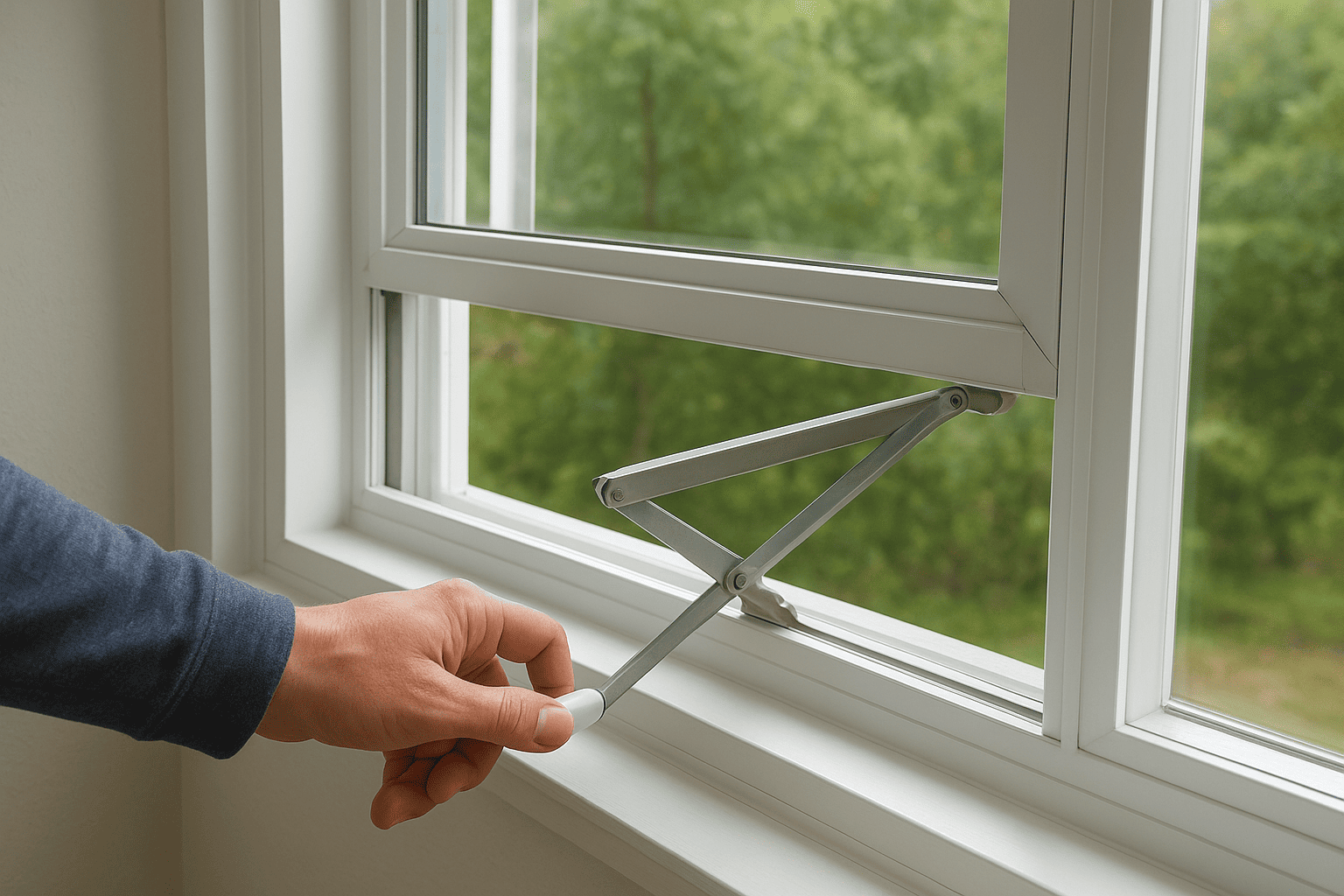
Cranking the handle drives a small gear train, and that gear train does more work than most homeowners realise. Here's the sequence on every unit we install:
- Turning the handle rotates a gear inside the operator housing.
- The gear drives the scissor arm, which pushes the sash away from the frame.
- Reversing the handle pulls the sash back until it presses flush against the frame.
- A separate locking lever, usually cam-shaped, cinches the sash tight for the final seal.
Locking is where casement windows separate themselves from sliders and double-hung units. The cam lock pulls the sash inward against a continuous strip of compression weatherstripping running around the entire frame, squeezing out gaps that would otherwise let cold air seep through. Because the pressure is even on all four sides, rather than concentrated at a latch point, the seal holds up even as vinyl frames expand and contract through Ontario's temperature swings.
A casement window doesn't just close, it clamps shut, which is why the seal stays airtight year after year.
Weatherstripping quality matters here too. We use compression-grade seals rather than the thinner friction strips found in cheaper sliders, since friction seals wear down faster with repeated opening and closing. That difference alone can add years to how long a casement window keeps performing the way it did on installation day.
Types of casement windows explained
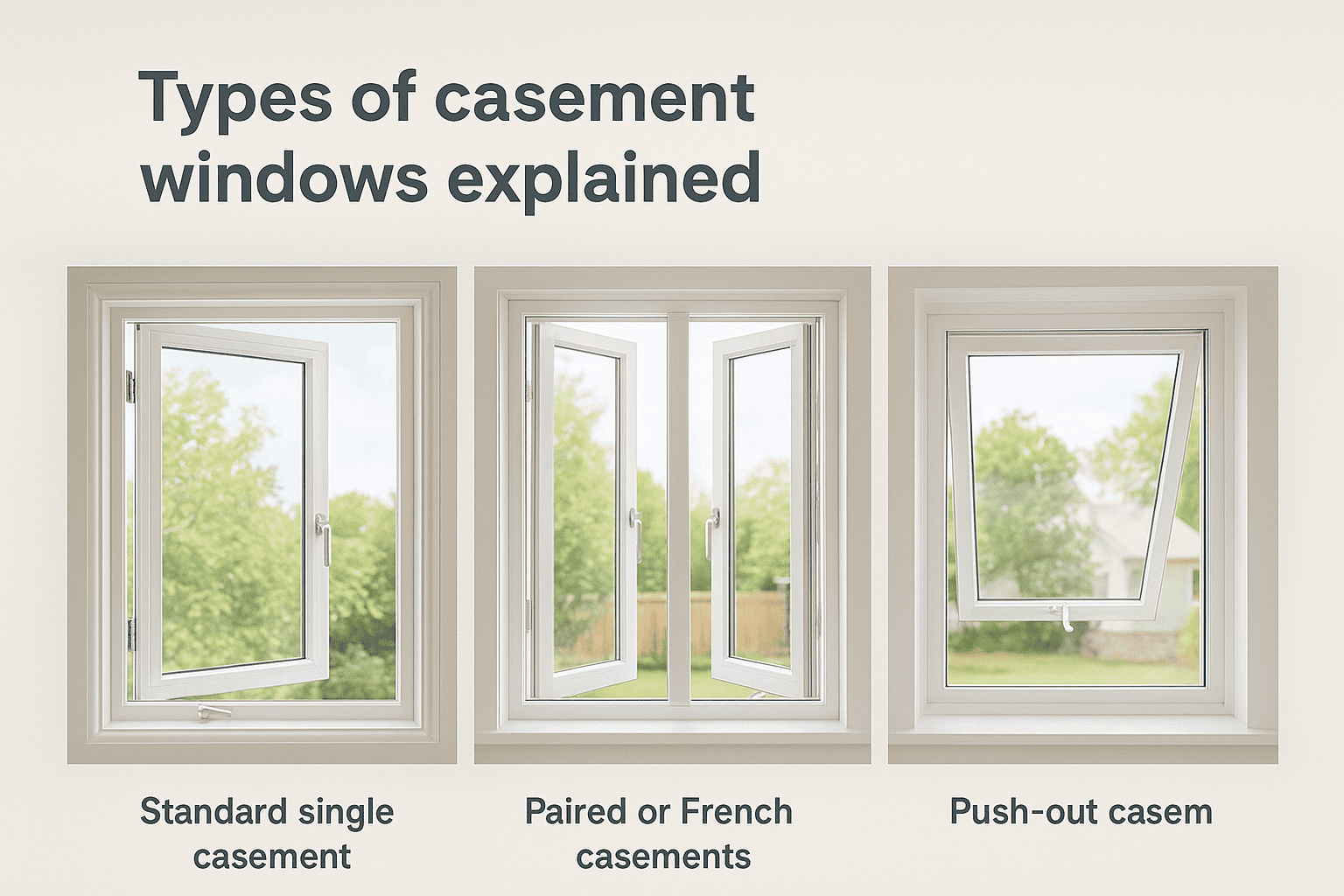
Not every casement window looks or opens the same way, and knowing the variations helps you match the right style to each room. The core mechanism, a hinged sash swinging outward, stays consistent, but manufacturers adjust the configuration, hardware, and size to suit different openings and building codes. Here's a breakdown of the styles we manufacture most often for Ontario homes.
Standard single casement
A single casement is one sash hinged on either the left or right side, opened with a single crank handle. Most kitchens, hallways, and smaller bedrooms use this configuration since it fits narrower openings without sacrificing airflow. This is the version most people picture when they first ask what is casement windows, and it remains the most common style we install across Ontario.
Paired or French casements
Paired casements set two sashes side by side, hinged on opposite edges, so they swing open in mirror image and meet in the centre when closed. Removing the centre mullion on this configuration gives you an unobstructed view when both sashes are shut, which homeowners often choose for larger windows overlooking a backyard.
Two casements meeting without a centre post give you a wall of glass with none of a slider's sealing weaknesses.
Push-out and egress casements
Some casements skip the crank entirely and use a push-out handle instead, common in smaller awning-style openings above a sink or shower. Larger casements, meanwhile, are often built as egress-rated units, meaning the opening meets the minimum clear width and height Ontario's building code requires for a bedroom escape route.
| Type | Best For | Opening Method |
|---|---|---|
| Single casement | Kitchens, hallways | Crank |
| Paired casement | Living rooms, sightlines | Dual crank |
| Egress casement | Bedrooms, basements | Crank, code-compliant size |
How to maintain and clean casement windows
Maintaining a casement window takes far less effort than most homeowners expect, which is part of the answer when people ask what are casement windows in the context of long-term upkeep. Vinyl frames never need painting or sealing, so your main job is keeping the moving parts clean and the weatherstripping free of grit that could stop the sash from closing flush. A few minutes twice a year keeps the mechanism running the way it did on installation day.
Cleaning the frame and glass
Glass and vinyl clean up with nothing more than warm water and a mild soap, since harsh chemicals can dull the vinyl finish over time. Swing the sash fully open to reach the outer pane and the frame's edges, something a slider simply can't offer, then wipe the weatherstripping channel where dust tends to collect. Dirt left in that channel is one of the few things that can stop a casement sash from sealing tightly, so don't skip it.
A clean weatherstripping channel is the single biggest factor in keeping a casement window's seal airtight for decades.
Caring for the hardware
Hardware needs a little more attention than the glass. Follow this routine once or twice a year:
- Wipe the scissor arm and hinges with a dry cloth to clear dust and debris
- Apply a light silicone-based lubricant to the crank gear and hinge pins, never oil-based products
- Check the cam lock engages fully and pulls the sash flush against the frame
- Test the crank handle for smooth rotation without grinding or resistance
Grinding or stiffness in the crank usually points to a dry gear, and catching that early avoids a costlier repair down the line. Keeping this simple maintenance routine on schedule is what lets a casement window outlast most other styles without losing performance.
Finding the right window for your home
Now you know what a casement window is: a hinged sash that cranks open and clamps shut against a continuous seal, giving you tighter energy efficiency and better airflow control than most sliders or double-hung units. That single mechanism explains why so many Ontario homeowners choose casements when replacing draughty, ageing windows, and why the style holds up so well through decades of harsh winters and hot summers.
Deciding whether casements suit your home comes down to your rooms, your sightlines, and your budget, and that's a conversation worth having with people who manufacture the windows themselves rather than resell someone else's stock. We've built and installed casement windows across Ontario since 2006, and we can walk you through sizing, glass options, and pricing for your specific home. If you're ready to compare styles and get a real quote, book a free consultation with MK Windows and Doors and see what factory-direct pricing looks like.