
Picking new windows gets confusing fast once you start comparing terms like casement, double-hung, and top-hinged awning windows. If you've landed here searching for double casement windows, you're probably trying to figure out whether two side-by-side crank-out sashes actually suit your home better than the sliding sash windows you're used to, and what it will cost you to switch.
Here's the short answer: double casement windows are two crank-out casement sashes for Ontario homes mounted in a single frame, each cranking outward from hinges on opposite sides, meeting in the middle for a clean look and a wide, unobstructed view. They seal tighter than sliding styles, which matters a lot through an Ontario winter, and they open fully for real airflow rather than the half-open gap you get with a slider.
In this article, we'll walk through how they compare to double-hung windows, what to expect from casement windows with screens, and the material choices you'll face, including wood casement windows versus vinyl or fiberglass, plus rough pricing so you can budget before you call anyone for a quote.
Why double casement windows suit modern Canadian homes
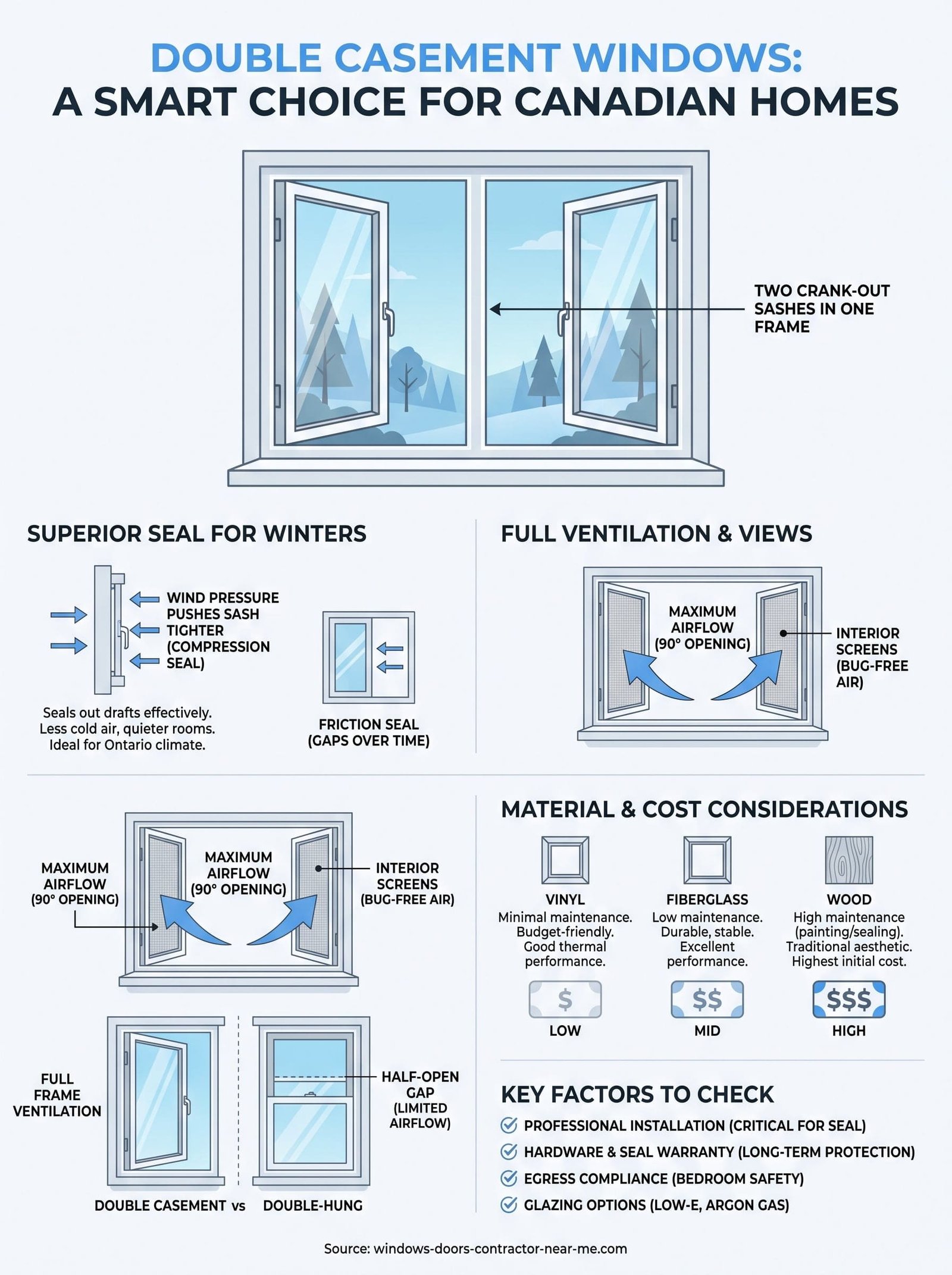
Canada's climate punishes windows that don't seal properly, and that's exactly where casement styles earn their reputation. Because the sash swings outward on hinges rather than sliding along a track, wind pressure actually pushes the sash tighter against the frame instead of working it loose. Homeowners across Ontario notice the difference during a February windstorm: less draft along the sash edges, less cold air pooling near the floor, and a noticeably quieter room even when gusts hit the glass directly.
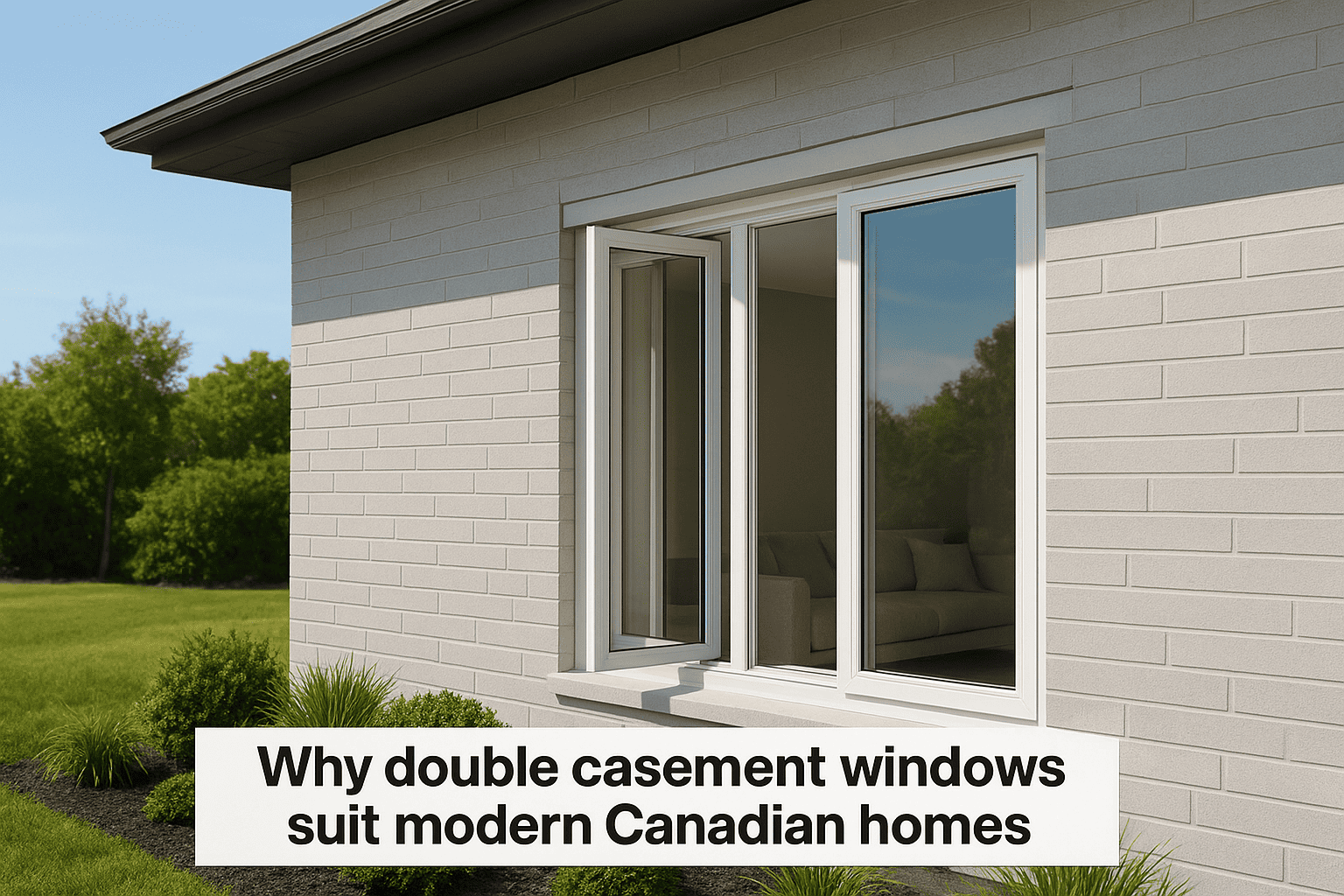
A casement sash that seals tighter against the frame when the wind blows is doing the opposite of what a sliding window does under the same conditions.
A tighter seal than sliding windows
Double-hung and slider windows rely on friction and weatherstripping alone to keep air out, and that weatherstripping compresses and gaps over the years. Casement mechanisms use a compression seal that stays effective for decades, provided the crank hardware gets a light lubrication now and then. Pair that seal with Low-E glass coatings and Argon gas fills, both standard across MK Windows and Doors' vinyl and fiberglass frames, and you've got a window built to handle a minus twenty night without turning your living room into a cold spot near the sill.
Ventilation without the trade-offs
Full ventilation is where casement windows genuinely outperform tilt slider windows. Most double-hung sashes only open halfway at best, but a casement cranks open a full 90 degrees, catching side breezes that a purely vertical opening simply misses. Screens fitted to casement windows with screens sit on the interior side of the frame, so you get that airflow without inviting in bugs, dust, or pollen, which is exactly why a lot of homeowners stop opening their old sliders altogether by mid-July.
A quick rundown of what this design gives you over a typical sliding window:
- Full 90-degree opening for genuine cross-ventilation
- Compression seal that resists drafts far longer than friction-fit sliders
- Compatibility with Low-E coatings and Argon fills for winter performance
- Interior-mounted screens that keep insects out without blocking airflow
- A crank mechanism that's easier on arthritic hands than a heavy sash lift
Aesthetic advantages for contemporary design
Modern Canadian homes lean heavily on clean lines and large glass expanses, and double casement windows deliver both. Two tall, narrow sashes meeting at a centre mullion read almost as one continuous pane when closed, giving you a wider, unobstructed view than a double-hung's horizontal rail ever allows, much like a fixed casement unit. Builders working on open-concept interiors or homes with vaulted ceilings often specify casement pairs for exactly this reason: the sightlines stay clean from floor to header.
Noise reduction is the other quiet win here. Because the sash presses directly against the frame rather than resting in a track, outside noise transmission drops noticeably, something homeowners near busier Ontario roads mention often once they've made the switch. Between the tighter seal, the full ventilation, and the streamlined look, it's easy to see why double casement windows have become a default choice rather than a niche upgrade for anyone renovating a home built to handle Canadian winters and Canadian summers in equal measure.
How to choose the right double casement windows
Choosing between window types isn't just about looks. You need to think about frame material, glass performance, hardware, and how the pair will sit within your wall opening before you commit. Get these details right and you'll avoid the common regret of picking a window that looks great in a showroom but underperforms once it's installed on a north-facing wall through an Ontario winter.
Material choice: vinyl, fiberglass, or wood
Frame material drives most of the cost and performance difference between quotes. Vinyl frames stay maintenance-free and resist moisture well, making them the most popular pick for straightforward replacements. Fiberglass frames cost more upfront but expand and contract less with temperature swings, which matters if your home sees big daily temperature shifts. Traditional wood casement windows still appeal to homeowners restoring a period home, though casement windows wood options need repainting or resealing every few years to avoid rot at the joints.
The frame material you pick decides how much maintenance you're signing up for over the next twenty years, not just how the window looks today.
| Material | Maintenance | Thermal performance | Best for |
|---|---|---|---|
| Vinyl | Minimal | Strong with Low-E and Argon | Most homes, budget-focused buyers |
| Fiberglass | Low | Excellent, stable in extremes | Larger openings, harsh exposures |
| Wood | High (repainting/sealing) | Good if maintained | Heritage or period-style homes |
Glass, screens, and hardware options
Beyond frame material, glass configuration changes how the window performs day to day. Double or triple glazing with Argon fill is standard for Canadian climates, and Low-E coatings cut UV fading on your furniture without dimming the room. Screens matter too: casement windows with screens should have the mesh fitted on the interior track so it doesn't interfere with the crank mechanism when the sash swings fully open. Hardware finish, whether it's a multi-point lock or a simple crank window mechanism, should match your other fixtures so the pair doesn't look bolted on as an afterthought.
Sizing and placement considerations
Sizing a double casement pair correctly means measuring the rough opening precisely, since these units don't have the same forgiving tolerances as a slider. Placement near a walkway or deck also needs a check, because an outward-swinging sash can obstruct foot traffic if it's mounted too low or too close to a railing. A quick consultation with an installer before ordering saves you from discovering that problem after the windows arrive.
Double casement windows vs double-hung windows
Comparing the two styles side by side makes the trade-offs obvious fast. Double-hung window installation gives you two sashes that slide vertically past each other, which keeps them tidy in tight spaces like above a kitchen sink, but it also means you're only ever moving air through half the opening at most. Double casement windows crank the entire sash outward, so the whole frame becomes a vent rather than half of one, and that difference shows up every time you're trying to cool a stuffy room in July.
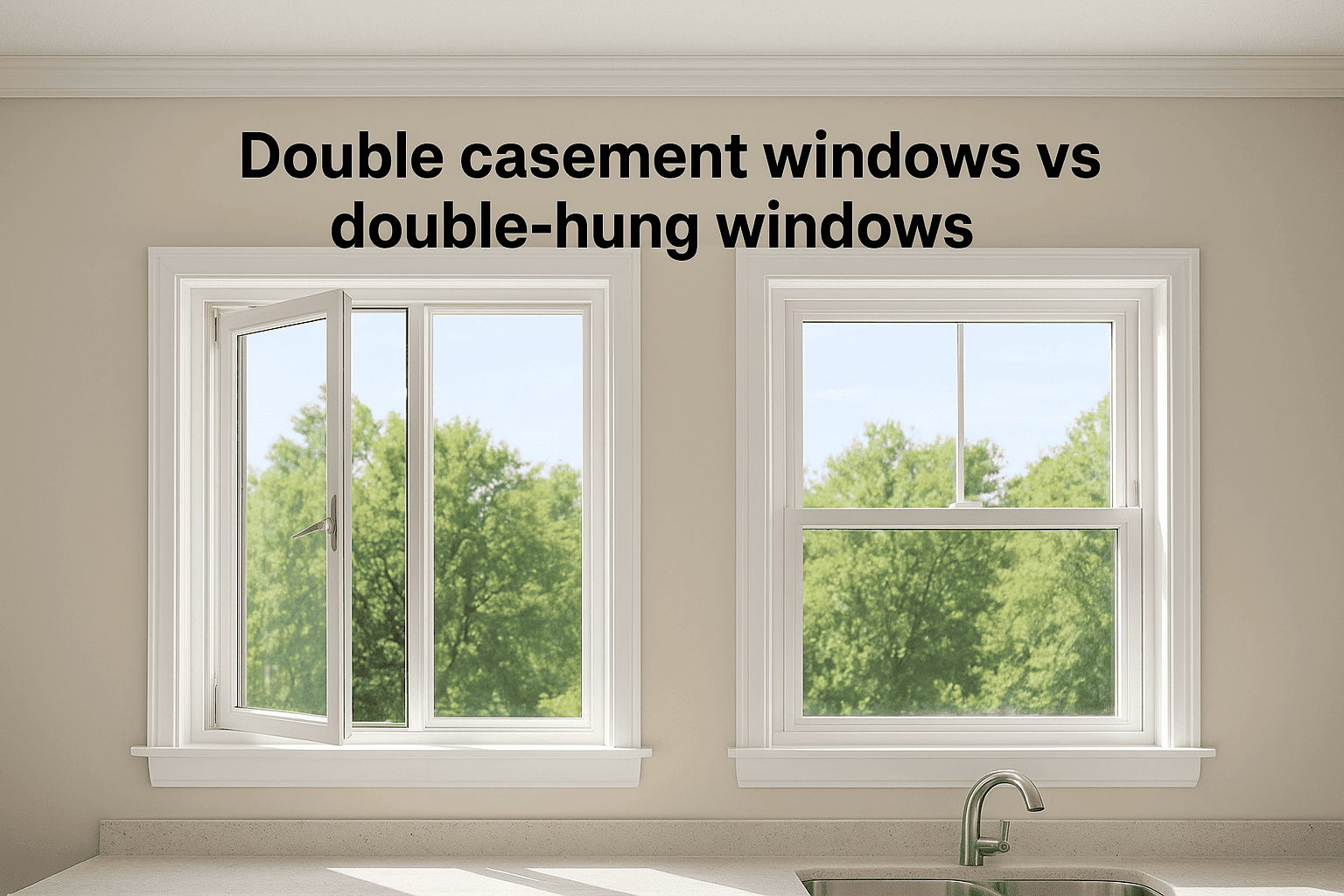
Sealing performance is where the gap really widens. A double-hung sash relies on gravity, weight, and a track full of weatherstripping that wears thin over time, while a casement sash compresses against the frame every time you crank it shut. That's not a marginal difference in an Ontario winter.
Two windows can look similar from the street and perform completely differently once the wind starts blowing.
Cleaning is another practical point people overlook until they're standing on a ladder. Double-hung units usually tilt inward for cleaning from inside, which is genuinely convenient on a second storey. Casement pairs, by contrast, swing fully open so you can reach every pane from indoors too, though the crank mechanism needs occasional lubrication to keep that motion smooth. Neither style wins outright here; it comes down to which maintenance habit you'd rather keep up with.
Egress and safety codes also factor in for bedroom windows. Fully opening casements often meet emergency escape and egress requirements more easily than a half-open double-hung sash, something worth flagging to your installer if you're replacing a bedroom window and need to satisfy Ontario building code minimums.
| Feature | Double casement | Double-hung |
|---|---|---|
| Opening | Full 90 degrees, both sashes | Half the frame at a time |
| Seal type | Compression, tightens with wind | Friction and weatherstripping |
| Cleaning | Swings open fully from inside | Tilts inward, second-storey friendly |
| Egress size | Generally larger clear opening | Limited by sash overlap |
| Best fit | Ventilation-focused, drafty walls | Tight spaces, traditional look |
Ultimately, the choice depends on what you're solving for. If drafts and stuffy rooms are your complaint, casement pairs address both directly; if you're matching a specific traditional façade or working around a low sill, replacing with double-hung units still has its place.
Cost, installation and warranty considerations
Price is usually the deciding factor once you've settled on style, so let's get specific. A single double casement window unit typically runs higher than an equivalent double-hung because of the crank hardware and the compression seal system, but the gap narrows once you factor in long-term energy savings. Expect vinyl pairs to sit at the lower end, fiberglass in the middle, and wood casement windows at the top of the range once you account for the finishing and joinery work that timber frames demand.
| Frame material | Typical price range per unit (CAD) | Installation complexity |
|---|---|---|
| Vinyl | $450 - $750 | Standard, fast turnaround |
| Fiberglass | $650 - $1,100 | Standard, slightly longer lead time |
| Wood | $900 - $1,600+ | Higher, needs precise fitting and finishing |
Installation quality matters as much as the window itself. A poorly fitted casement will leak air around the frame regardless of how good the compression seal is, so it's worth confirming your installer is licensed, insured, and experienced specifically with outward-swinging sashes rather than sliders. MK Windows and Doors handles both manufacturing and installation in-house, which removes the usual finger-pointing between supplier and installer when something doesn't sit flush.
A window is only as good as the seal around its frame, and that seal is entirely down to how carefully it was installed.
Warranty terms tell you a lot about how confident a manufacturer is in their own product. Look for coverage on both the glass unit and the moving hardware, since a cranked mechanism sees far more mechanical wear over twenty years than a fixed pane ever does, and replacing failed glass on its own carries its own price tag. MK Windows and Doors backs its windows with a 15-year seal failure warranty and a 5-year warranty covering both the product and the installation work itself, which protects you against the two most common failure points: fogged glass and callback repairs.
Before signing anything, ask your installer these questions:
- Does the warranty cover labour if a seal fails, or only the replacement glass?
- Is the installer factory-trained on casement hardware specifically?
- What's the lead time between order and installation, especially for custom sizing?
- Does the quote include disposal of your old windows?
Getting straight answers here saves you from a cheap quote that turns expensive the first time a seal fails outside a narrow warranty window.
Finding the right fit for your home
Double casement windows earn their spot in Canadian homes because they seal tighter, open wider, and hold up better against harsh winters than sliding alternatives. Getting there means weighing frame material against your budget, matching glass and screen options to your climate exposure, and being honest about how much maintenance you're willing to keep up over the next twenty years. None of that decision-making happens in isolation from a solid installation, since even the best compression seal fails if the frame isn't fitted properly on day one.
So before you compare another quote online, get someone who manufactures and installs these windows to walk through your specific openings with you. Factory-direct pricing, a proper warranty, and installers who know casement hardware inside and out make the difference between a window that performs for decades and one that needs revisiting in five years. Book a free in-home consultation with MK Windows and Doors and get a straight answer on what double casement windows will actually cost for your home.