
A double hung window that won't stay up, drops shut on its own, or refuses to seal properly isn't just annoying, it's letting cold Ontario air straight into your home. If you've been searching for double hung windows repair advice, chances are you're dealing with one of a handful of common culprits: a snapped balance spring, worn sash cords, a jammed track, or a sash that no longer sits flush in the frame.
The good news is that repairing double hung windows is often a manageable weekend job if you know what's actually wrong and understand how a double hung window is built and operates. Most failures come down to the balance system, the locking hardware, or years of paint and grime clogging the tracks, and each of these has a specific, testable fix rather than a guess-and-check approach.
In this guide, we'll walk through how to diagnose your specific problem first, then cover step-by-step repairs for the most frequent issues: replacing balance springs, freeing stuck sashes, fixing locks that won't catch, and resealing gaps that cause draughts. We'll also flag the point where a professional repair makes more sense than a DIY fix, especially if your windows are older or the frame itself has shifted.
Diagnosing the problem before you start
Before you touch a screwdriver, spend ten minutes figuring out what's actually broken. Double hung window repair goes faster and cheaper when you match the fix to the symptom instead of replacing parts at random. A sash that slides down on its own almost always points to a failed balance spring or snapped sash cord. A sash that won't budge usually means paint has sealed the tracks or the frame has swollen with humidity. A window that won't lock flush often has a warped sash or misaligned strike plate rather than a hardware failure.
Common symptoms and their likely cause
Run through this list before you start pulling anything apart:
- Sash drops shut on its own – broken balance spring or worn tape balance
- Sash won't stay up at all – balance shoe has popped out of its track
- Hard to slide up or down – paint buildup, swollen wood, or debris in the tracks
- Won't lock or feels loose – bent sash lock, worn keeper, or frame racking
- Draughty even when locked – compressed or missing weatherstripping
Match the repair to the symptom first, or you'll waste a weekend replacing parts that were never the problem.
Quick tests before you disassemble anything
Once you've narrowed down the likely cause, confirm it with a simple physical test. Push the sash up halfway and let go gently; if it drifts down, the balance system is the culprit. Try locking the sash and watch where it gaps; a gap on one side only usually means the frame has shifted, not the hardware. Repairing double hung windows without this quick diagnostic step is how simple jobs turn into half-day projects, so take the extra few minutes now.
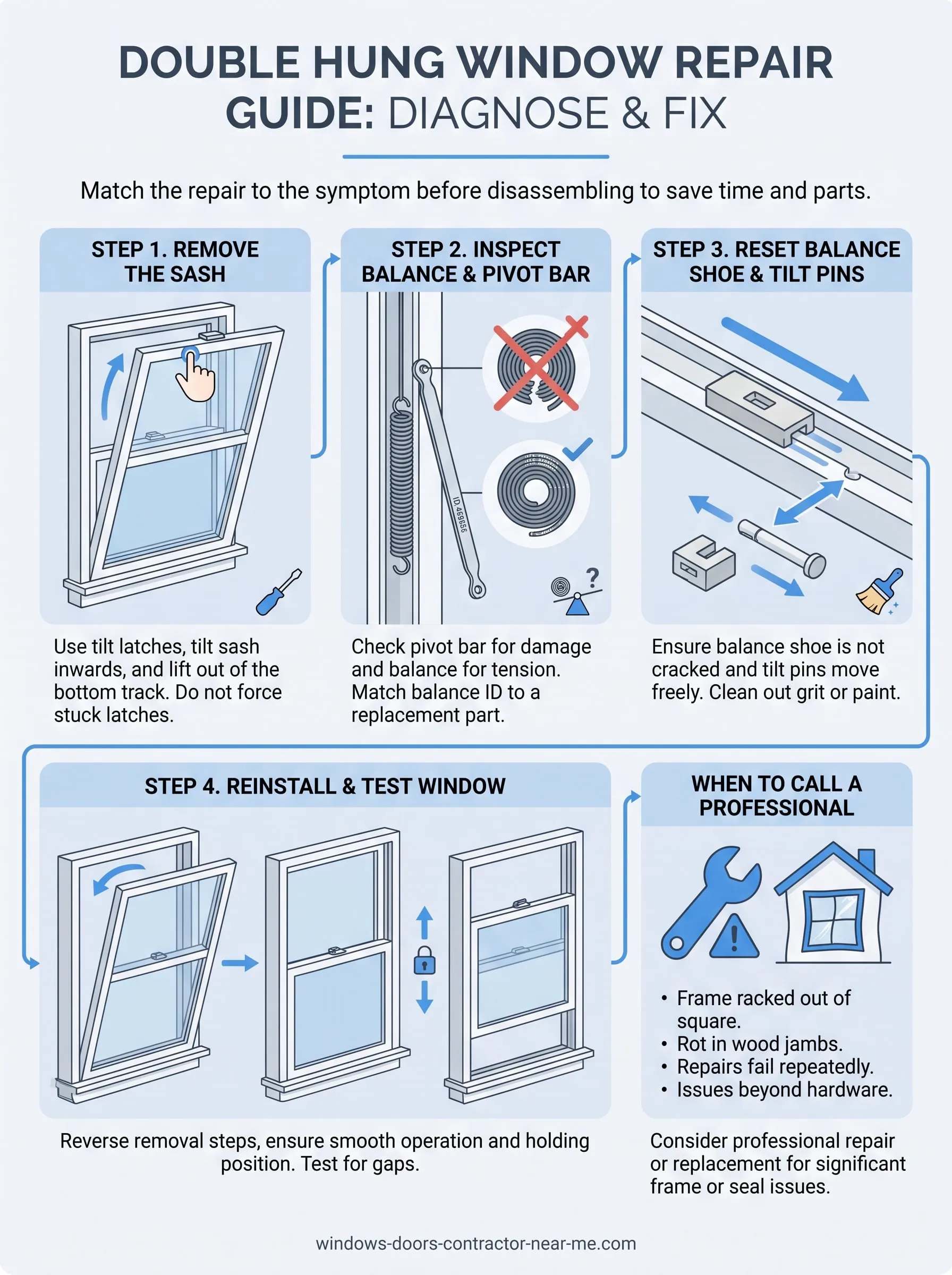
Step 1. Remove the window sash
With your diagnosis in hand, start by removing the lower sash so you can access the balance system and tracks. Double hung windows repair almost always begins here, since the hardware you need to inspect sits behind the sash channel, not in front of it.
- Raise the sash to about waist height and locate the tilt latches on either side of the top rail.
- Press or slide both tilt latches inward at the same time.
- Tilt the top of the sash toward you until it clears the frame.
- Lift the sash straight up and out of the bottom track, supporting both corners evenly.
- Set the sash flat on a padded surface, glass facing up, so you don't stress the balance cords still attached.
Never force a stuck tilt latch, a seized one usually means paint or corrosion, not a broken part.
If the latches won't budge, work a flathead screwdriver gently behind the latch housing rather than prying at the sash itself. Repairing a jammed latch now saves you from cracking the vinyl or wood frame later, and it gets you one step closer to the balance and pivot components underneath.
Step 2. Inspect and replace the pivot bar or balance
Once the sash is out, look straight down the side channel and find the pivot bar or balance shoe sitting near the bottom. Repairing double hung windows at this stage means checking whether the balance still holds tension, since a spent balance is the single most common cause of a sash that won't stay put.
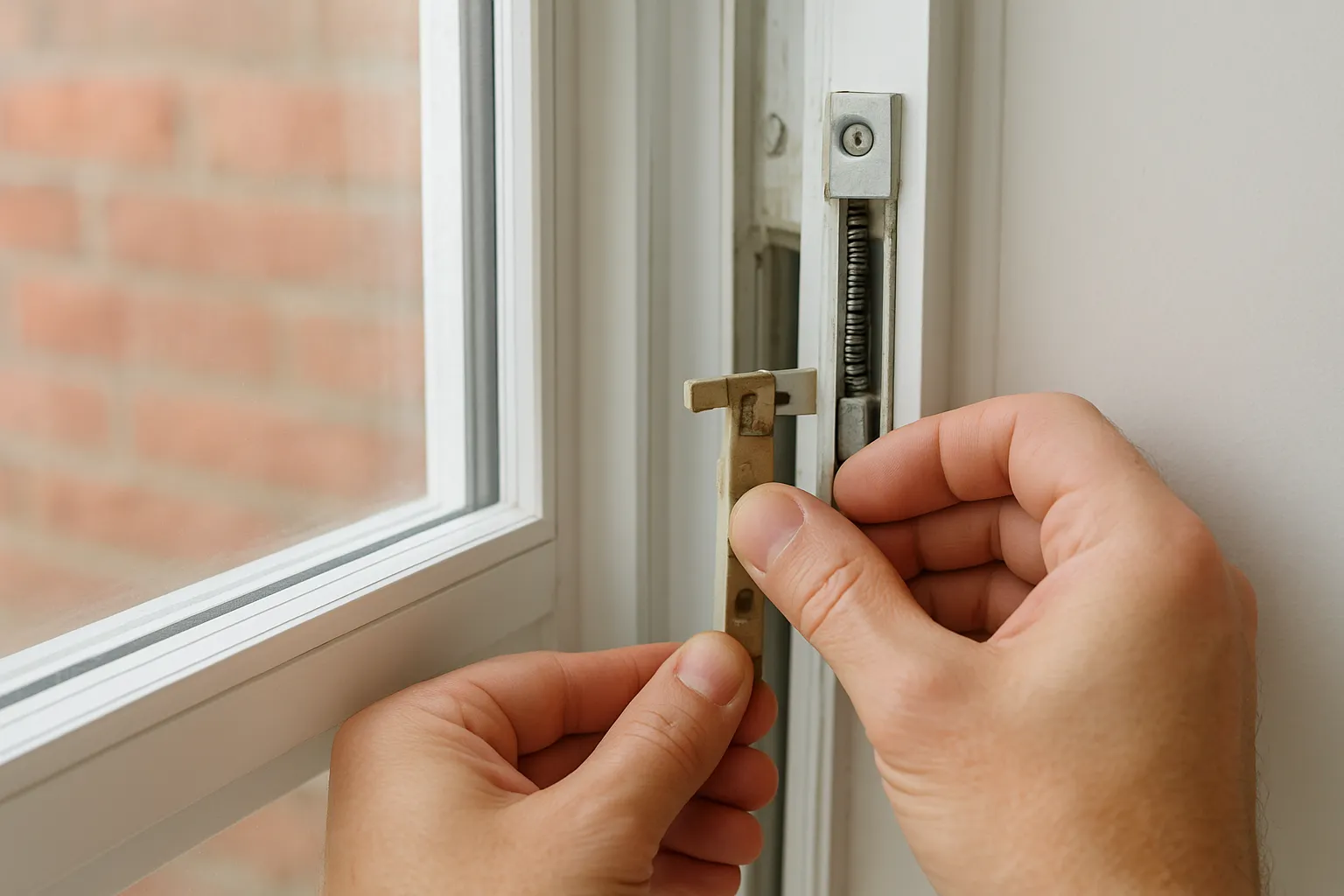
- Slide the pivot bar out of its channel and check for cracks, rust, or a spring that's gone slack.
- Pull the balance itself partway out and note the tension. It should resist firmly, not flop loose.
- Match the balance's identification number (usually stamped or printed on the tube) to a replacement from your window manufacturer or a hardware supplier.
- Fit the new balance into the channel, seating it fully before you reattach anything.
A balance that doesn't resist when you pull it is already dead, no amount of lubrication will bring it back.
Don't try to stretch or re-tension a worn spring balance yourself. It's a cheap part, usually under $20, and swapping it outright is faster and more reliable than fiddling with adjustment screws that rarely hold for long.
Step 3. Reset the balance shoe and tilt pins
With the new balance seated, turn your attention to the balance shoe and tilt pins, the small plastic or metal pieces that let the sash tilt in and out for cleaning. A shoe that's cracked or sitting crooked in the channel is often why a sash rocks side to side even after you've fixed the balance itself. Repair double hung window hardware in this order, balance first, shoe second, and you avoid chasing a wobble that was never about tension at all.
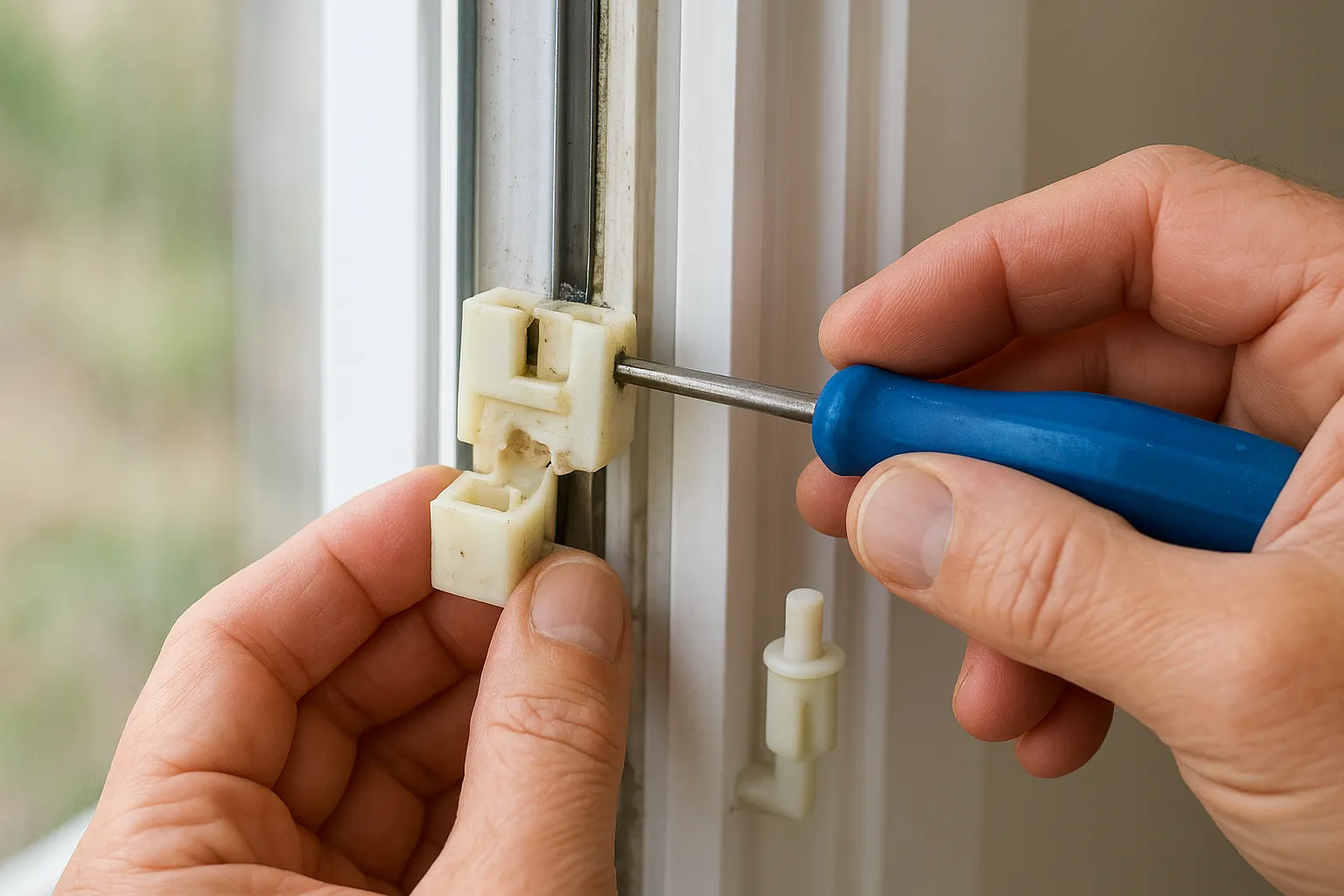
- Check the balance shoe for cracks, warping, or a chewed-up locking clip.
- Snap a new shoe onto the balance stem if the old one is damaged, pressing until it clicks fully home.
- Inspect the tilt pins on the sash itself; they should extend and retract freely under light spring pressure.
- Clean out any paint or grit from the pin housings with a small brush before testing movement again.
A cracked balance shoe undoes every other repair, since it lets the sash tilt out of alignment no matter how good the balance is.
Once both pins move smoothly and the shoe sits flush, you're ready to put the sash back where it belongs.
Step 4. Reinstall the sash and test the window
Now reverse the removal steps from Step 1, guiding the sash back into the frame with the balance shoes lined up in their tracks. Double hung windows repair isn't finished until you've confirmed the sash moves and seals correctly, so don't skip the testing phase just because the parts look right.
- Angle the bottom of the sash into the frame first, letting the balance shoes settle into the side channels.
- Tilt the sash upright until the tilt latches click back into place on both sides.
- Slide the sash up and down its full range, checking for smooth, even resistance with no dragging.
- Push it up halfway and let go; it should hold position without drifting.
- Lock the sash and check for gaps along the sides and top rail.
A properly repaired sash should hold any position you set it at, with no drift and no rocking.
If it still drops or rocks, one of the balances is likely mismatched or under-tensioned. Test both sides independently before assuming the whole job needs redoing.
When it's time to call in a professional
Some jobs go beyond a new balance or a snapped tilt pin. If the frame itself has racked out of square, if rot has softened the wood around the jambs, or if you've replaced parts twice and the sash still drops, you're not looking at a hardware problem anymore. Double hung windows repair has its limits, and pushing past them usually means paying twice, once for parts and again for a proper fix, so it's worth knowing what to look for in a replacement double hung window before you spend more on parts.
At that point, a full window replacement often costs less over time than chasing repeated repairs on an ageing frame, and it helps to see what a replacement window actually costs an Ontario homeowner. Professional installation of double hung windows built for Ontario homes also catches issues a DIY repair can't, like failed seals between panes or a frame that's no longer square with the rough opening.
If your windows are past patching up, get a straight answer from people who build and install them daily. Book a free in-home consultation with MK Windows and Doors and find out whether repair or replacement makes more sense for your home.