
You have probably seen the term on a quote or heard it from a contractor, and you want a straight answer before you commit to a purchase. What are double hung windows? They are windows with two sashes that both slide vertically within the frame, letting you open the top, the bottom, or both at once. That simple design difference matters more than it sounds like, especially when you are comparing options for a Canadian home that needs to handle deep winter cold and humid summer heat.
If you are asking what is a double hung window versus a single-hung one, the short version is that single-hung windows only let the bottom sash move, while double-hung gives you control over airflow from two directions. That flexibility affects ventilation, cleaning, and even how well a window seals against draughts once it ages.
In this guide, we will walk through the full double hung window description, how the mechanism actually works, and where these windows perform well or fall short compared with other styles. By the end, you will know whether they suit your home's layout, your energy goals, and your budget for replacement windows.
Why double-hung windows are worth considering
Double-hung windows earn their spot in so many Canadian homes because they solve a practical problem: you need fresh air without turning your living room into a wind tunnel or a security risk. Two operable sashes mean you can crack the top open on a stuffy summer night while keeping the bottom locked, which is a level of control single-hung and crank-out casement styles simply can't match. This isn't just a design preference either; it directly affects how comfortable your home feels through Ontario's swing from humid July afternoons to crisp autumn evenings.
Ventilation that actually works with your home's airflow
Hot air rises, so opening the top sash lets it escape while the bottom sash draws in cooler air from outside, creating a natural convection loop without running the air conditioner. This dual-direction airflow is especially useful in upstairs bedrooms and kitchens, where trapped heat and cooking odours tend to linger.
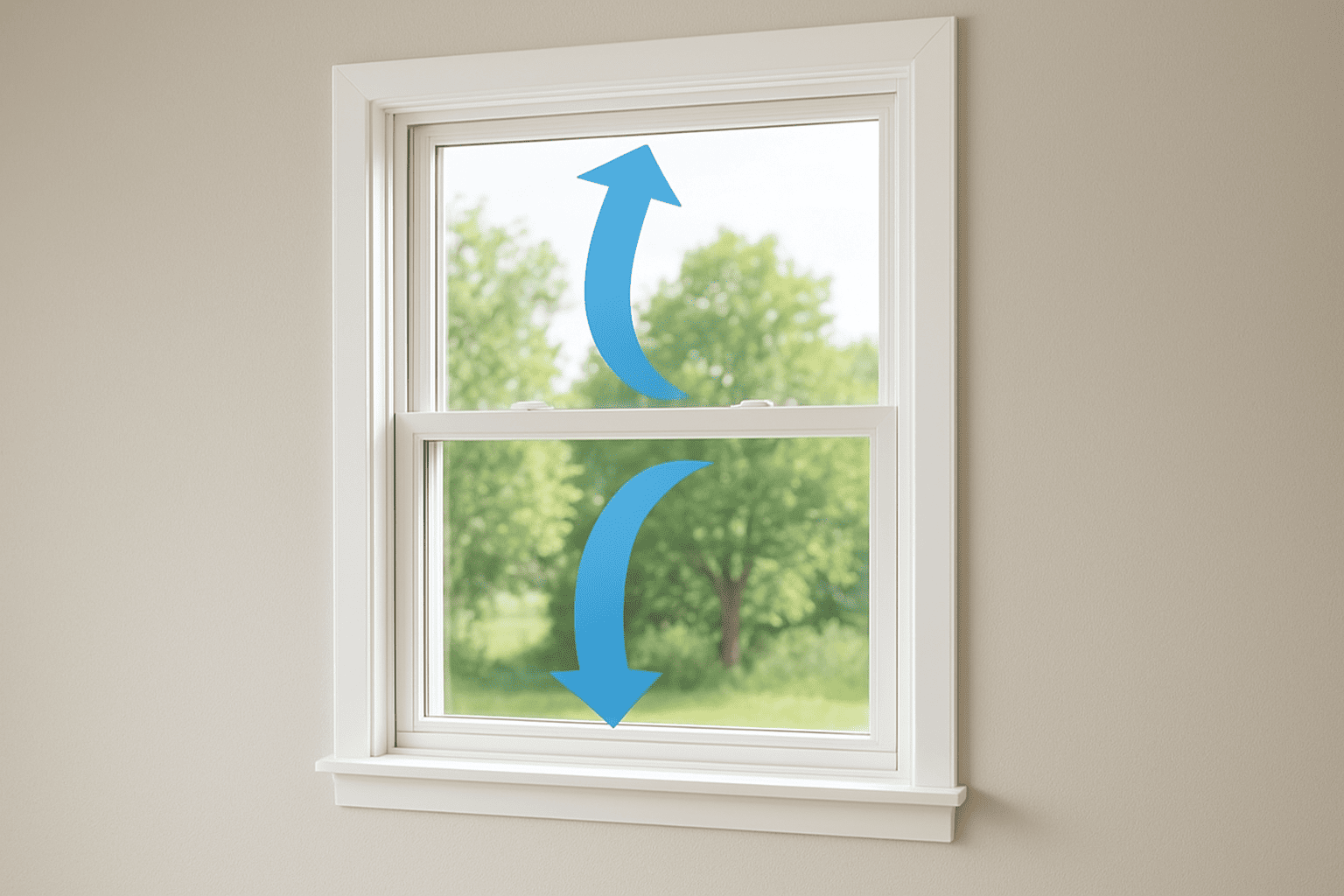
Two sashes that move independently give you a level of airflow control that single-hung windows can't offer.
Cleaning without the ladder or the awkward reach
Most double-hung windows sold today, including the custom double-hung windows we manufacture, use a tilt-in sash design that lets both the upper and lower panes fold inward for cleaning from inside the house. That matters a lot if you live in a two-storey home in Innisfil or anywhere else where getting a ladder up to the second floor isn't practical or safe every spring and fall. You get the exterior glass cleaned properly without hiring someone or risking a fall off a wet ladder.
A classic look that suits almost any home style
Double-hung windows fit comfortably on everything from century farmhouses to modern subdivisions, which is part of why they remain a top seller across Ontario. Their vertical proportions and traditional grille patterns complement brick, siding, and stucco exteriors alike, and you can still choose from a wide range of frame colours and finishes to match your home's character. If you want to see how a custom double-hung window looks against your own siding and trim before committing, a factory visit or in-home consultation is the easiest way to compare finishes side by side.
Security is another point worth noting. Because both sashes lock independently, most double-hung windows include two separate locking points rather than one, which adds a layer of protection that single sash designs don't offer. Combined with tempered or laminated glass options, that makes them a solid choice if home security ranks high on your list alongside energy performance and looks.
How double-hung windows work
Understanding the mechanics behind a double-hung window helps you see why it performs the way it does year after year. Each sash sits in its own track within the frame, and a balance system (usually spring-loaded or block-and-tackle) holds the sash at whatever height you leave it, so it doesn't slam shut or drift open on its own. This is the core of any double hung window description worth reading, because the balance system is what separates a smooth, reliable window from one that sticks or sags within a few years.
The balance system and locking hardware
Most modern units use spiral or spring balances hidden inside the jamb rather than the old-fashioned sash weights and pulleys you might remember from an older house. When you lift the sash, the balance compresses and holds it in place at any position. A cam-style lock on the meeting rail, where the top and bottom sashes overlap, pulls the two sashes tight against each other and against the frame, closing the gap that draughts sneak through.
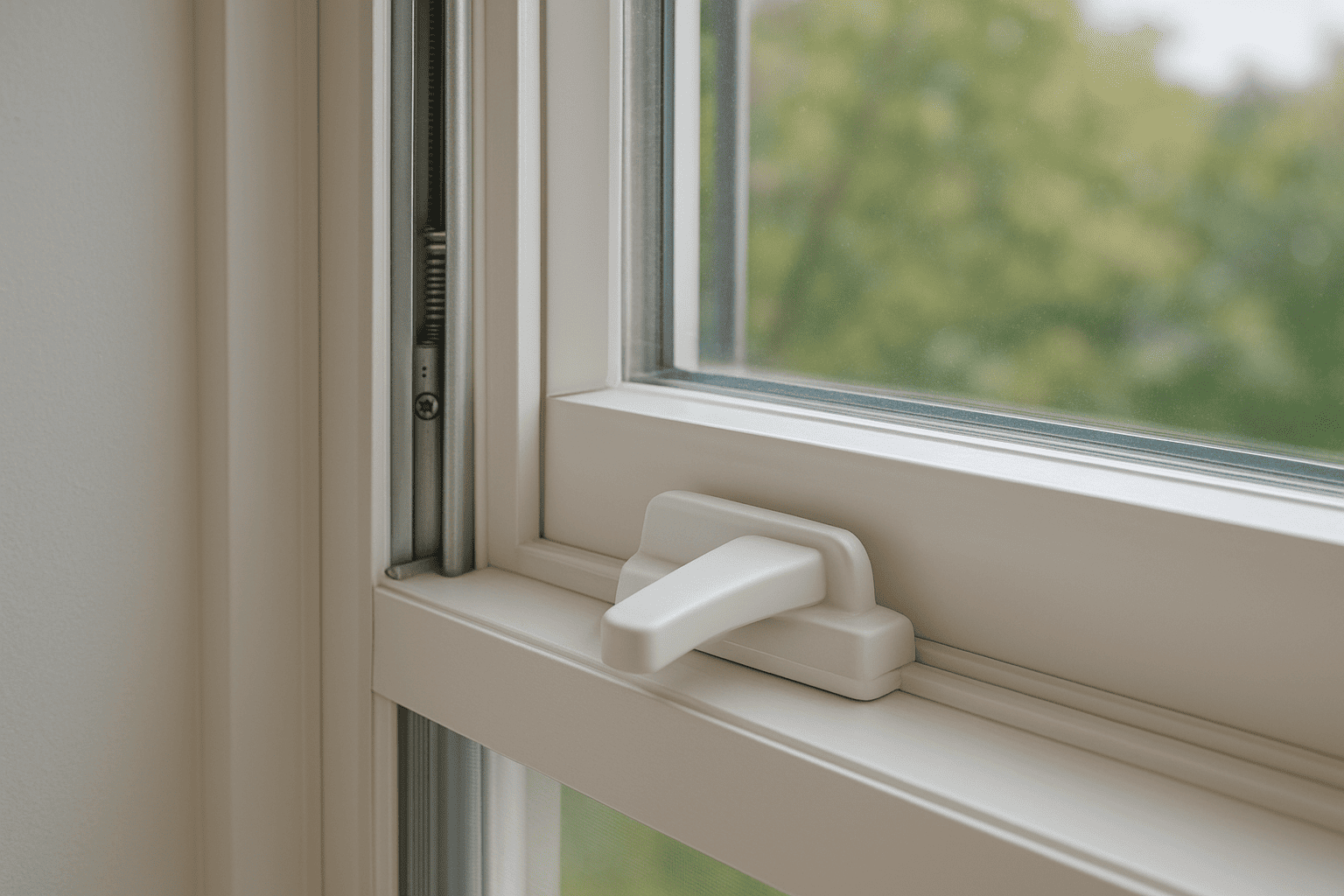
A good balance system is the difference between a window that glides for twenty years and one that needs replacing in five.
Tilt latches and the seal that keeps weather out
Small tilt latches on the top corners of each sash release the frame so it swings inward for cleaning, then lock it back into the track once you push it flush again. Weatherstripping runs along every contact point, sash-to-frame and sash-to-sash, and this is what actually determines how well the window resists Ontario's wind-driven rain and winter cold. Cheaper windows skimp here, so ask about the weatherstripping material and thickness before comparing prices on any quote.
Double-hung vs single-hung windows: what's the difference
Once you understand how a double-hung window operates, the comparison with a single-hung window becomes easy to picture. A single-hung window has a fixed top sash and only the bottom sash moves, while a double-hung window lets both slide independently, and which style is right for you usually comes down to that detail. That one mechanical difference changes ventilation, cleaning, cost, and even how the window ages over the years you own it.
Where single-hung windows hold their own
Single-hung units are usually cheaper to manufacture because there's only one moving sash and one balance system to build. They also have fewer moving parts, which can mean fewer things to service down the line, and they still deliver a solid seal when installed properly. If your budget is tight and you don't need top-sash ventilation in a particular room, a single-hung window is a reasonable choice for basements or spare rooms where airflow control matters less.
Where double-hung windows pull ahead
Double-hung windows cost more upfront, but that extra cost buys you real functionality: two-way airflow, tilt-in cleaning on both sashes, and two independent locking points instead of one. For bedrooms, kitchens, and upper floors where heat and odours collect, that flexibility pays off every season, not just occasionally.
If you only remember one thing, remember this: single-hung saves you money today, double-hung saves you effort every year after.
| Feature | Single-Hung | Double-Hung |
|---|---|---|
| Sashes that open | Bottom only | Top and bottom |
| Interior cleaning | Bottom sash only | Both sashes tilt in |
| Locking points | Usually one | Usually two |
| Typical upfront cost | Lower | Higher |
| Best suited for | Basements, budget rooms | Bedrooms, kitchens, main living areas |
So when someone asks what is double hung windows compared with single-hung, the honest answer is that it comes down to how much control and convenience you're willing to pay for over the life of the window.
Choosing the right double-hung windows for your home
Picking the right double-hung windows means matching frame material, glass performance, and size to how your home actually behaves through the seasons. Vinyl frames dominate the Canadian market because they resist warping, don't need repainting, and hold up against the freeze-thaw cycles that crack weaker materials over a decade. Before you sign a quote, walk through what to know before you buy replacement double hung windows, so you understand what each option actually changes about comfort and cost rather than just comparing sticker prices.
Frame material and glass performance
Glass package matters just as much as the frame around it. A Low-E coating with argon gas fill cuts heat transfer in both directions, so your home stays warmer in January and cooler in July without leaning harder on the furnace or air conditioner, which is the heart of window energy performance in a Canadian climate.
- Vinyl frames: low maintenance, strong insulation, wide colour range
- Low-E glass with argon fill: reduces heat loss and UV fading
- Tempered or laminated glass: adds impact resistance and security
- Grille patterns: match heritage or modern exteriors
The glass package does more for your energy bill than the frame colour ever will.
Sizing, style matching, and installation
Getting the size right is where a lot of homeowners run into trouble, because double-hung windows need enough wall depth and height to accommodate two full sashes and their balance systems. Handling this yourself with a tape measure often leads to a poor fit, so a proper in-home consultation catches rough-opening issues before manufacturing even starts. Style-wise, stick with proportions and grille patterns that echo your home's era rather than mixing eras across the façade, since that consistency affects resale value more than most buyers expect.
Installation quality decides whether all this careful selection actually pays off, and it is a real part of what Ontario homeowners pay for window replacement. Licensed installers who seal and shim correctly prevent the draughts and moisture problems that undo even the best window on paper, which is why warranty coverage on both product and installation matters as much as the window itself.
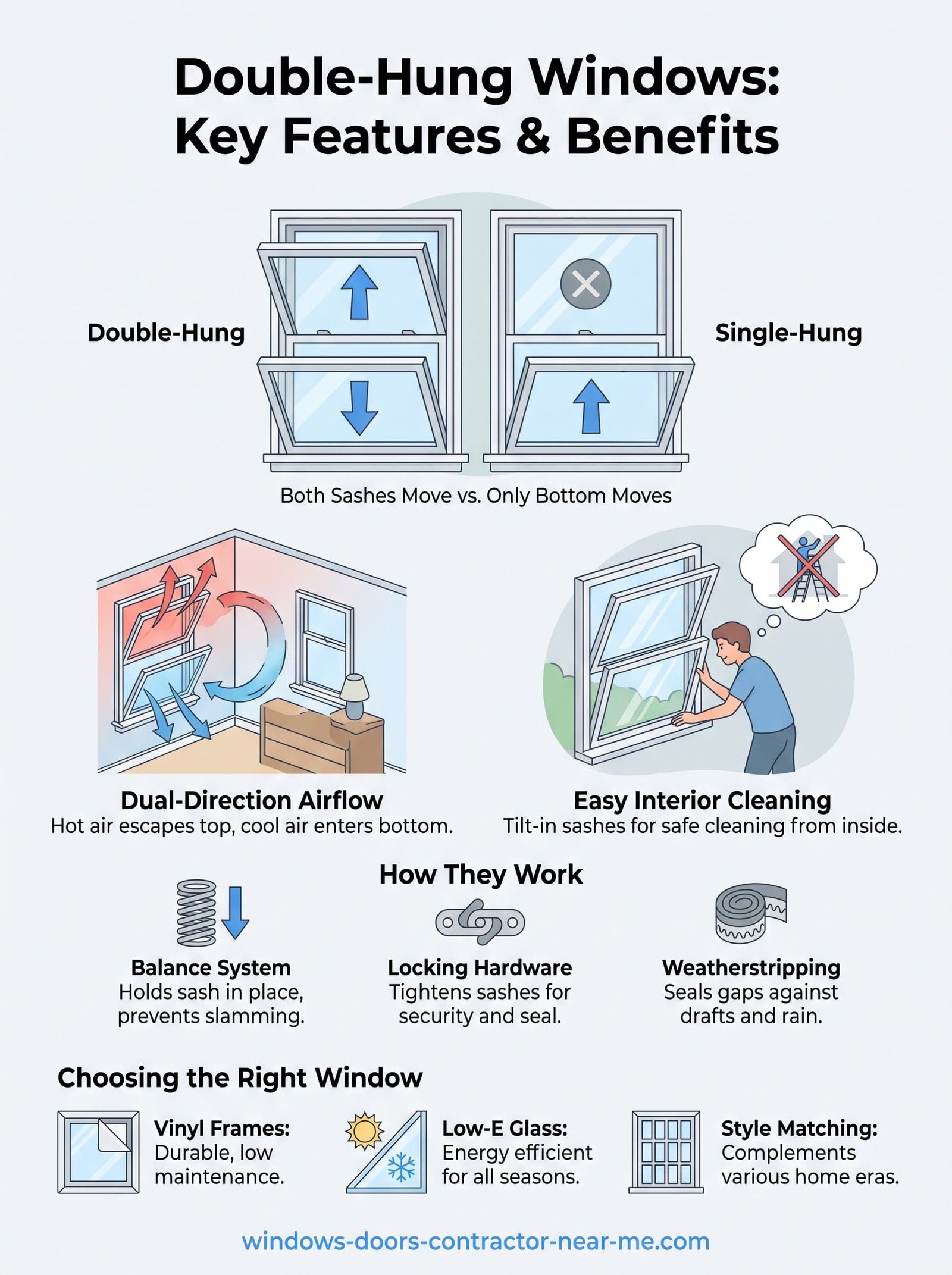
Making the right window choice
By now you've got a clear answer to what are double hung windows and why that two-sash design earns its place in so many Ontario homes. They cost more than single-hung units, but the payoff shows up every time you crack the top sash on a humid night or tilt both panes in for a quick clean without dragging out a ladder. The real decision isn't whether double-hung windows work well, it's whether the specific frame, glass package, and installer you choose will deliver on that promise for the next twenty years.
Don't leave that to guesswork. Schedule a free in-home measurement and factory-direct quote with MK Windows and Doors, and we'll measure your openings, match the style to your home, and price the job with a warranty that backs the work, not just the glass.