
A casement window that won't crank shut properly, or a handle that spins without catching, usually isn't a sign you need a whole new window. Most of the time, the fix is finding the right parts for casement windows and swapping out the worn piece yourself or with a quick visit from an installer. The trouble is figuring out which part you actually need, since cranks, hinges, and locks vary a lot between manufacturers and window ages.
This guide walks you through the main components that make up casement windows hardware, from operators and hinges to locking mechanisms, and helps you identify what's failing before you buy anything, assuming you already know what casement windows are and how they work. We'll cover how to measure and match a casement windows crank replacement to your existing setup, what to check before ordering, and when a repair makes more sense than a replacement window altogether.
We deal with these repairs regularly at MK Windows and Doors, working alongside Ontario homeowners whose windows have taken a beating from years of hot summers and cold winters. Whether you're sourcing replacement window cranks for casement windows or just trying to understand your options, this buying guide gives you the practical detail you need before spending a cent.
Why casement window hardware wears out and needs replacing
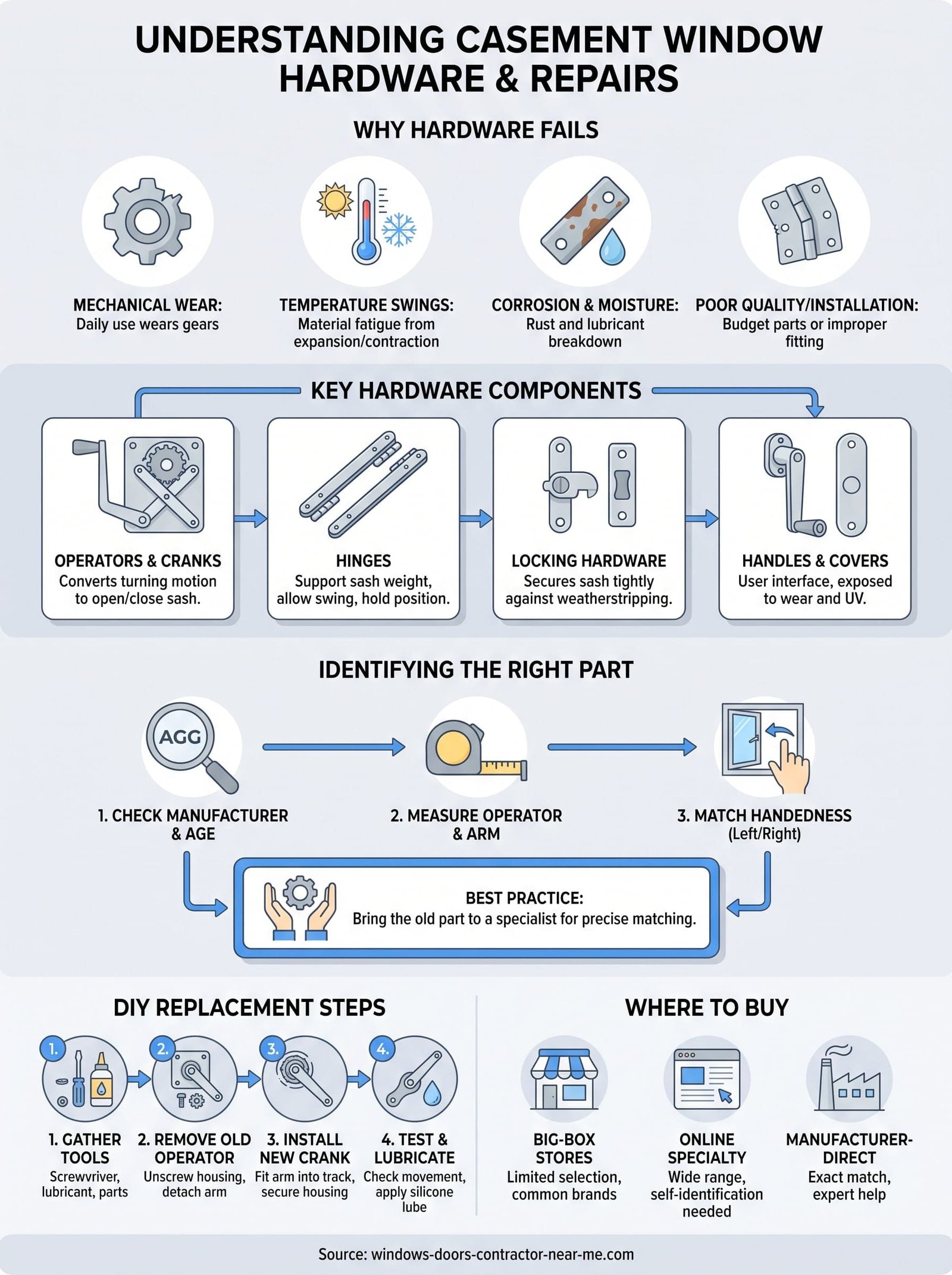
Every time you crank a casement window open or closed, several small metal components take on friction, tension, and load. Over years of daily use, this wear adds up. A window that opened smoothly a decade ago starts to grind, stick, or spin freely without engaging the sash. Understanding why this happens helps you decide whether you're looking at a five-minute fix or a sign that other hardware nearby is about to fail too.
Mechanical wear from daily use
Casement operators rely on a scissor arm or track mechanism connected to a gear system inside the crank housing. Each rotation moves small metal teeth against each other, and like any gear, those teeth wear down over thousands of cycles. Hardware for casement windows installed in the early 2000s has often seen fifteen to twenty years of opening and closing, sometimes several times a day during Ontario summers. Once the gear teeth strip or the scissor arm bends slightly out of alignment, the crank either spins loosely or jams halfway through its arc.
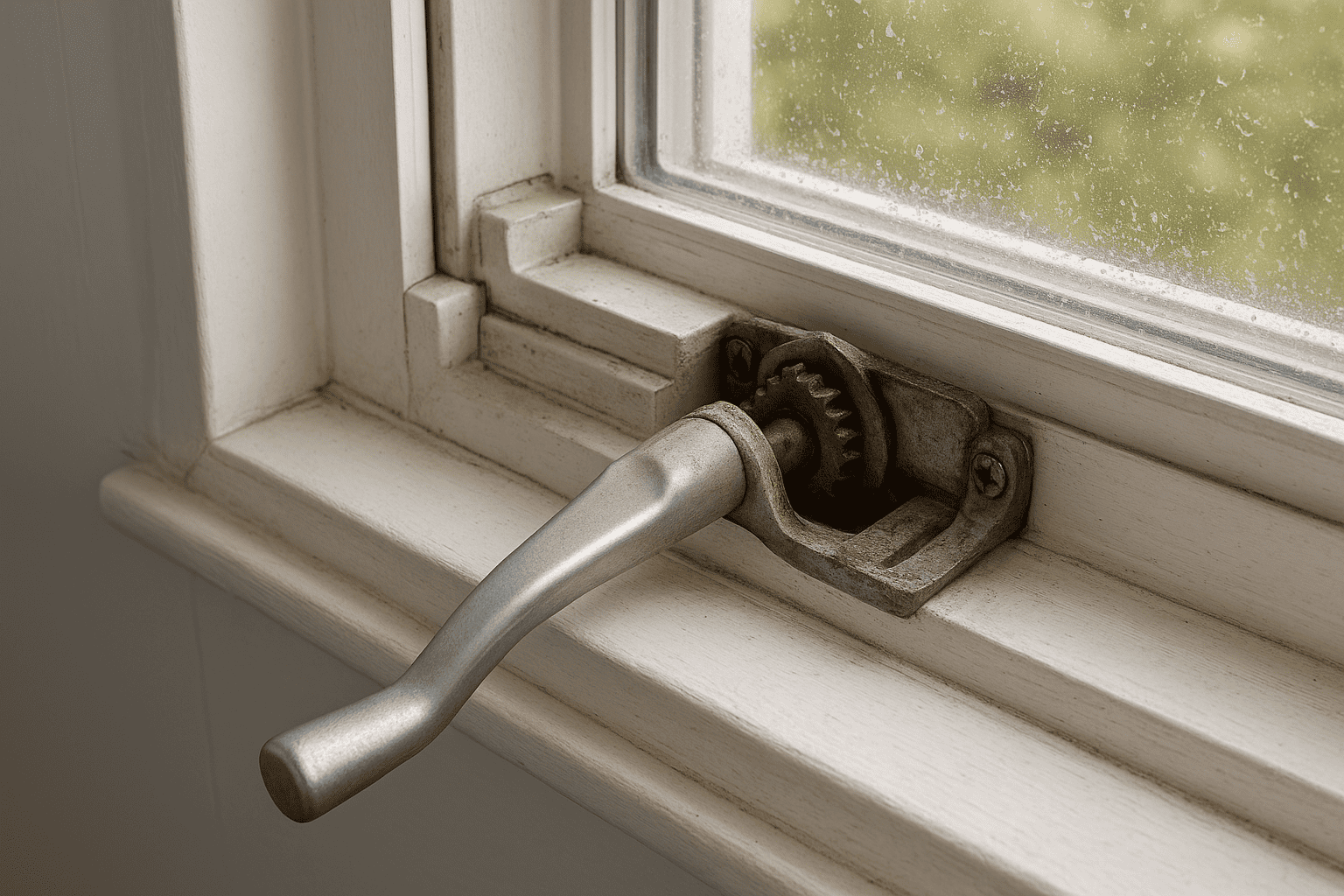
Worn gears don't fail all at once, they slip a little more each season until the handle spins freely and does nothing.
Temperature swings and material fatigue
Ontario's climate puts unusual stress on window hardware compared to milder regions. Summers push vinyl frames and metal components through repeated expansion, while winters below minus twenty Celsius make the same metal contract and stiffen. This constant cycling causes metal fatigue in cranks, hinges, and locking arms, and it's a big reason why replacement parts sell steadily across the province even on windows that are otherwise in decent shape. Frames also shift slightly with freeze-thaw cycles, which throws hinges and strike plates out of alignment and puts uneven pressure on the entire operator assembly.
Corrosion, moisture, and lubricant breakdown
Moisture is the other major culprit. Condensation collects at the base of the sash where hinges sit, and over time this promotes rust on steel components, especially in older housings that weren't finished with a corrosion-resistant coating. Even zinc-plated or stainless hardware isn't immune once the factory lubricant dries out or washes away. Without lubrication, metal-on-metal contact accelerates wear dramatically, turning what should be a twenty-year component into one that fails in half that time.
Low-quality hardware and poor installation
Not every failure comes down to age. Some windows are fitted with budget-grade cranks or operators from the factory, particularly in older builder-grade homes or windows sourced through big-box retailers rather than a dedicated manufacturer. Thin stamped-metal gears and plastic housings simply don't hold up the way a cast operator does. Poor installation compounds this: a sash that wasn't hung perfectly square puts constant sideways load on the hinges and operator arm, accelerating wear well beyond what you'd expect from normal use.
Here's a quick reference for the most common wear patterns we see during service calls:
| Symptom | Likely Cause | Typical Fix |
|---|---|---|
| Handle spins without moving the sash | Stripped gear teeth in operator | Crank/operator replacement |
| Window feels stiff or grinds when opening | Dried lubricant, corrosion, or misalignment | Cleaning, lubrication, or hinge adjustment |
| Sash sags or won't close flush | Worn or bent hinges | Hinge replacement |
| Handle won't lock or catch | Worn locking cam or strike plate | Lock hardware replacement |
| Visible rust on metal components | Moisture exposure, coating failure | Full hardware replacement |
Knowing which of these patterns matches your window narrows down the exact part you need long before you start comparing suppliers or part numbers, which is exactly what the next section covers.
How to identify the right parts for your casement window
Before you order anything, you need to know exactly what's on your window right now. Casement hardware isn't universal: a crank that fits a Truth operator won't fit an Amesbury or a Ferco, even if they look similar at a glance. Hardware for casement windows varies by manufacturer, model year, and sometimes even by production batch, so guessing rarely ends well.
Start with the window's age and manufacturer
Older windows, especially anything installed before 2010, often used operator brands that have since been discontinued or replaced with updated part numbers. Check the sash edge or frame for a manufacturer sticker or stamped logo. If nothing's visible, the crank housing itself usually carries a small embossed brand name once you remove the cover plate. Knowing the manufacturer and rough installation date narrows your search dramatically before you even look at measurements.
Measure the operator and crank arm
Grab a tape measure and note these details before shopping:
- Housing shape: square, rectangular, or teardrop
- Arm length: measured from the pivot point to the end of the scissor arm
- Number of mounting screw holes: usually two or four
- Crank handle style: folding, straight, or telescoping
- Handedness: left-hand or right-hand operator, depending on which side the window hinges from
Get the operator arm length and mounting pattern wrong, and even the right-brand crank simply won't line up.
Match handedness before you buy
Casement windows swing either left or right, and the operator is built specifically for that direction. Stand inside looking out: if the window opens to your left, you likely need a left-hand operator, and vice versa. Ordering the wrong handedness is the single most common mistake homeowners make when sourcing replacement window cranks for casement windows, and it's an easy one to avoid with a thirty-second check before checkout.
Bring the old part with you when possible
If you're at all unsure, remove the failing crank or operator and take it with you to a supplier, or photograph it from multiple angles alongside a ruler for scale. Suppliers who deal in parts for casement windows every day, including our team at MK Windows and Doors, can usually match a part on sight far faster than working from a verbal description. This step alone saves most of the return trips and mismatched orders we see from DIY repairs.
Once you've confirmed the brand, measurements, and handedness, you're ready to either order a replacement or move straight into swapping the crank yourself, which is exactly what we'll walk through next.
How to replace a casement window crank
Swapping a worn operator is one of the more approachable repairs a homeowner can tackle, and most casement windows crank replacement jobs take under thirty minutes once you have the right part in hand. You don't need specialist tools, just a screwdriver, the new crank assembly matched to your window, and a bit of patience with small screws that have been sitting in place for years.
Gather your tools first
Before you touch the window, lay out everything you'll need so you're not hunting for a dropped screw halfway through:
- Phillips or flathead screwdriver, matched to the mounting screws
- The replacement crank or operator, confirmed for handedness and arm length
- A small container to hold screws
- Silicone-based lubricant (not household oil, which attracts grit)
- A rag for wiping down the track and housing
Carpenter's caution applies here too: work with the sash fully closed and locked before you start, so the operator arm sits in a neutral position and doesn't spring loose under tension.
Remove the old operator
Start by prying off the decorative cover plate at the base of the handle, usually with a flathead screwdriver or your fingernail. Underneath, you'll find two to four mounting screws holding the operator housing to the frame. Loosen these fully and lift the housing away from the frame, then carefully disengage the scissor arm from its track on the sash. Some arms simply slide free; others have a small pin or clip that needs releasing first. Note how the old arm sat in the track, since the new one installs the same way.
Install the new crank
Fit the new operator's scissor arm into the same track, sliding it until the pivot point lines up with the mounting holes. Hold the housing flush against the frame and start the mounting screws by hand before tightening, which avoids stripping the holes if the housing shifts slightly. Once secure, snap the cover plate back into place over the housing.
A crank that binds after installation almost always means the arm went into the track at the wrong angle, not that the part is faulty.
Test and lubricate
Open and close the window through its full range several times, checking for smooth movement without grinding or catching. Apply a light coat of silicone lubricant to the arm's pivot points and track. Genuinely stubborn resistance after installation usually points back to measurement or handedness, which is worth double-checking against the guidance in the previous section before assuming the parts for casement windows you bought are the wrong ones.
Common types of casement window hardware explained
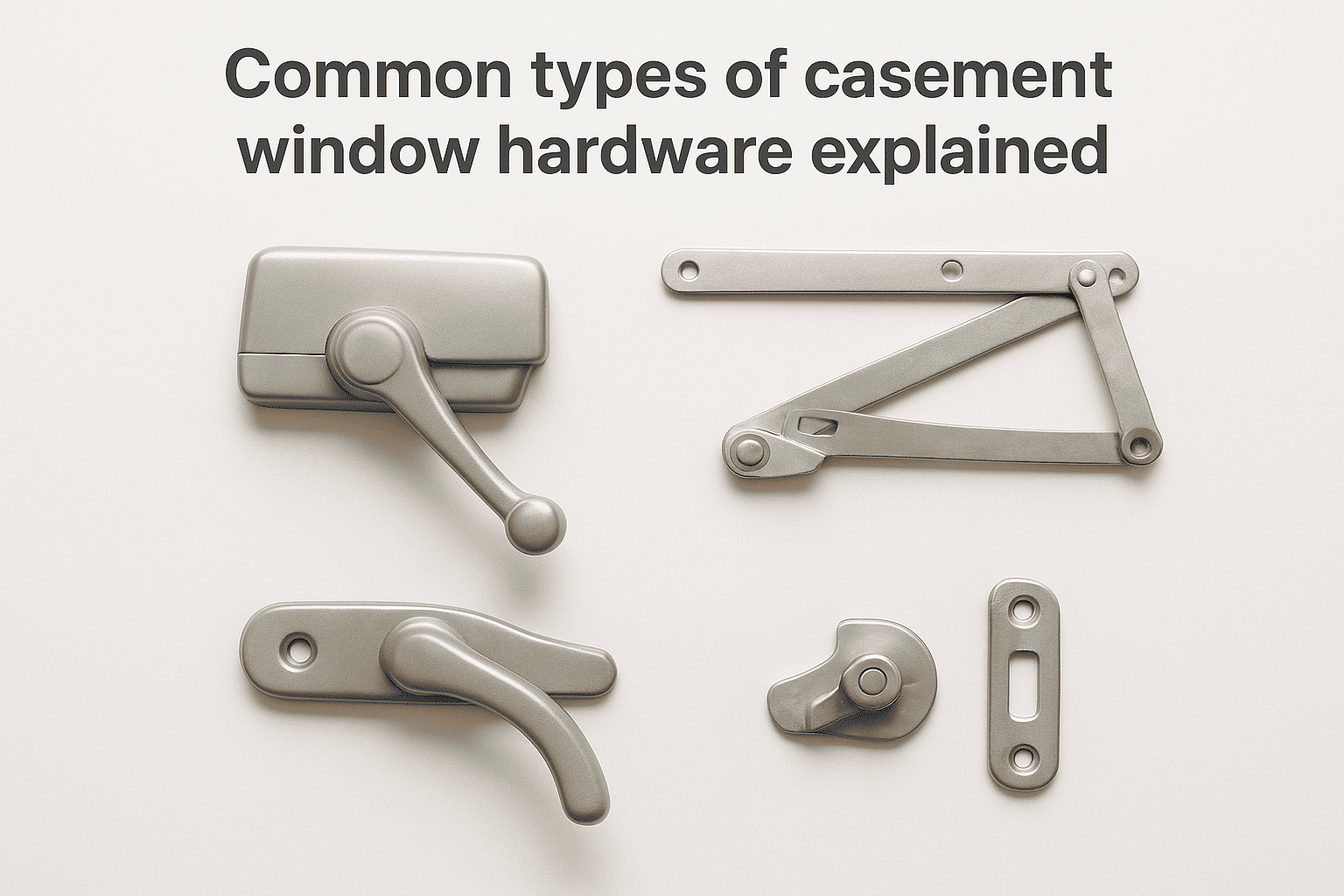
Most people picture a crank when they think of casement hardware, but a working window depends on several distinct components working together. Knowing what each part does makes it far easier to diagnose a problem and order the right hardware for casement windows instead of guessing based on symptoms alone.
Operators and cranks
The operator is the geared mechanism inside the housing that translates a turning handle into the push-pull motion that swings the sash open. This is the part most people mean when they ask about casement windows hardware, and it helps to understand how crank-operated casement windows work, since the operator is also the most common point of failure and does the bulk of the mechanical work. Operators come in different arm lengths and mounting patterns, which is why matching them precisely matters so much during a casement windows crank replacement.
Hinges
Hinges bear the physical weight of the sash every time it opens, and unlike the operator, they take constant load even when the window sits still. Casement hinges are usually four-bar or friction-style, both designed to hold the sash at any angle without drifting shut in the wind. Worn hinges show up as a sash that sags on one side or won't close flush against the frame.
Locking hardware and strike plates
Locking cams, keepers, and strike plates work together to pull the sash tight against the weatherstripping and hold it there. A worn cam often lets the handle turn without the lock actually engaging, which feels similar to a stripped operator but has a completely different fix, so it's worth reading up on how to choose and replace casement window locks.
Two window problems can feel identical from the handle, but the part behind them is never interchangeable.
Handles and covers
Handles and their decorative cover plates rarely fail on their own, but they're the piece most exposed to daily wear and UV exposure, so cracking and discolouration show up here first.
| Component | Function | Common Failure Sign |
|---|---|---|
| Operator/crank | Converts handle turns into sash movement | Handle spins freely |
| Hinges | Support sash weight while allowing swing | Sagging, uneven closing |
| Locking cam/strike plate | Pulls sash tight and secures it shut | Handle turns but won't lock |
| Handle and cover | User interface for the operator | Cracking, looseness |
Ordering replacement window cranks for casement windows without checking the rest of this list often means missing a second failing part sitting right next to it. Our team at MK Windows and Doors can walk you through which component matches your symptoms during a free consultation.
Where to buy quality casement window parts in Canada
Once you know what part you need, the next question is where to actually buy it. Canada's supply chain for casement hardware splits roughly into three camps: big-box hardware stores, online specialty suppliers, and manufacturers who sell parts directly. Each has trade-offs worth understanding before you commit to an order, especially since hardware for casement windows isn't always returnable once installed.
Big-box stores and general hardware shops
Stores like Home Depot or Rona stock a narrow range of generic operators and handles, usually aimed at common brands sold through big builders. They're convenient for basic parts, but selection thins out fast once you're dealing with an older window or a less common operator brand. Staff also rarely have the technical background to match handedness or arm length accurately, so you're doing most of the identification work yourself before you even reach the till.
Specialty online suppliers
Online retailers dedicated to window hardware carry a far wider range of casement windows hardware, often organised by brand and part number rather than by generic descriptions. This works well if you've already identified your operator brand and model, but it puts the burden of correct identification entirely on you, since there's no one to physically compare your old part against. Return policies on electrical or mechanical hardware also tend to be stricter online, so a mismatched order can be costly.
Buying direct from a manufacturer
A manufacturer who built your window in the first place can match a part faster and more accurately than any catalogue search ever will.
This is where a factory-direct supplier has a clear edge. At MK Windows and Doors, we manufacture windows and doors ourselves in Ontario, including the casement windows we build for Ontario homes, which means we stock parts for casement windows that match the products we've installed across the province for close to two decades. Bring in your old operator, handle, or hinge, and we can identify the exact match on the spot rather than guessing from a photo.
| Source | Selection Depth | Identification Help | Best For |
|---|---|---|---|
| Big-box retailer | Narrow, generic | Minimal | Common, newer windows |
| Online specialty supplier | Wide, brand-specific | Self-service | Homeowners with confirmed part numbers |
| Manufacturer (factory-direct) | Matched to installed stock | Hands-on, in-person | Older, discontinued, or uncertain hardware |
Whatever route you choose, factor in wholesale windows and doors pricing if you're a contractor or retailer ordering in volume. Manufacturers who supply both retail and wholesale customers, like we do, can often price-match or beat a competitor's quote outright, which matters when you're stocking parts rather than buying one at a time.
Keeping your casement windows operating smoothly
A sticking crank or a sagging sash rarely means your window is finished. Once you've matched the parts for casement windows you're dealing with, whether that's a worn operator, a tired hinge, or a locking cam that won't catch, most repairs take less than an hour and cost a fraction of a full replacement. The key is identifying the fault correctly the first time, checking handedness and arm length before you order, and treating nearby hardware as suspect once one component starts failing.
Ontario's temperature swings will keep testing your hardware year after year, so a bit of lubrication and an annual check goes a long way toward avoiding a full casement windows crank replacement down the road. If you're unsure which part fits your window, bring it to people who manufacture and install these systems every day. Talk to our Ontario windows and doors specialists for a free consultation and get the right part matched on the spot.