
You're standing in a showroom or scrolling through a supplier's site, and the terms awning and casement windows keep getting used almost interchangeably. That's fair, since both hinge open with a crank rather than sliding, but the way they hinge changes everything about how they perform on your house, from ventilation to weather resistance.
Here's the short answer: casement windows hinge on the side and swing outward like a door, giving you full-pane ventilation and an unobstructed view. Awning windows hinge at the top and open outward from the bottom, so you can crack them open during a light rain without water pouring in. Both seal tightly against Ontario's wind and cold, but they suit different rooms, sightlines, and budgets.
We've built and installed both styles, and this guide walks through the practical differences that actually matter: airflow, sealing, sightlines, placement, and cost, so you can decide which one belongs on your home rather than just picking whichever your neighbour has.
Why the difference matters for your home
The hinge direction on awning and casement windows isn't just a manufacturing detail, it decides how much air moves through your house and how much water gets in when a storm rolls through Innisfil in April. Casement windows crank fully open, catching breezes from angles a slider never could, which makes them the better choice for rooms that need real cross-ventilation. Awning windows only tilt from the bottom, so airflow is gentler, but that same shape acts like a small roof over the opening.
Ventilation and weather sealing
Because a casement window presses its sash against the frame when closed, it forms one of the tightest seals available in vinyl construction, which matters when you're fighting January wind chill. An awning window from our Ontario range seals just as well shut, but its real advantage shows up when it's open: the top-hinged design sheds rain instead of funnelling it inside, so you can ventilate a bathroom or basement during a downpour without soaking the sill.
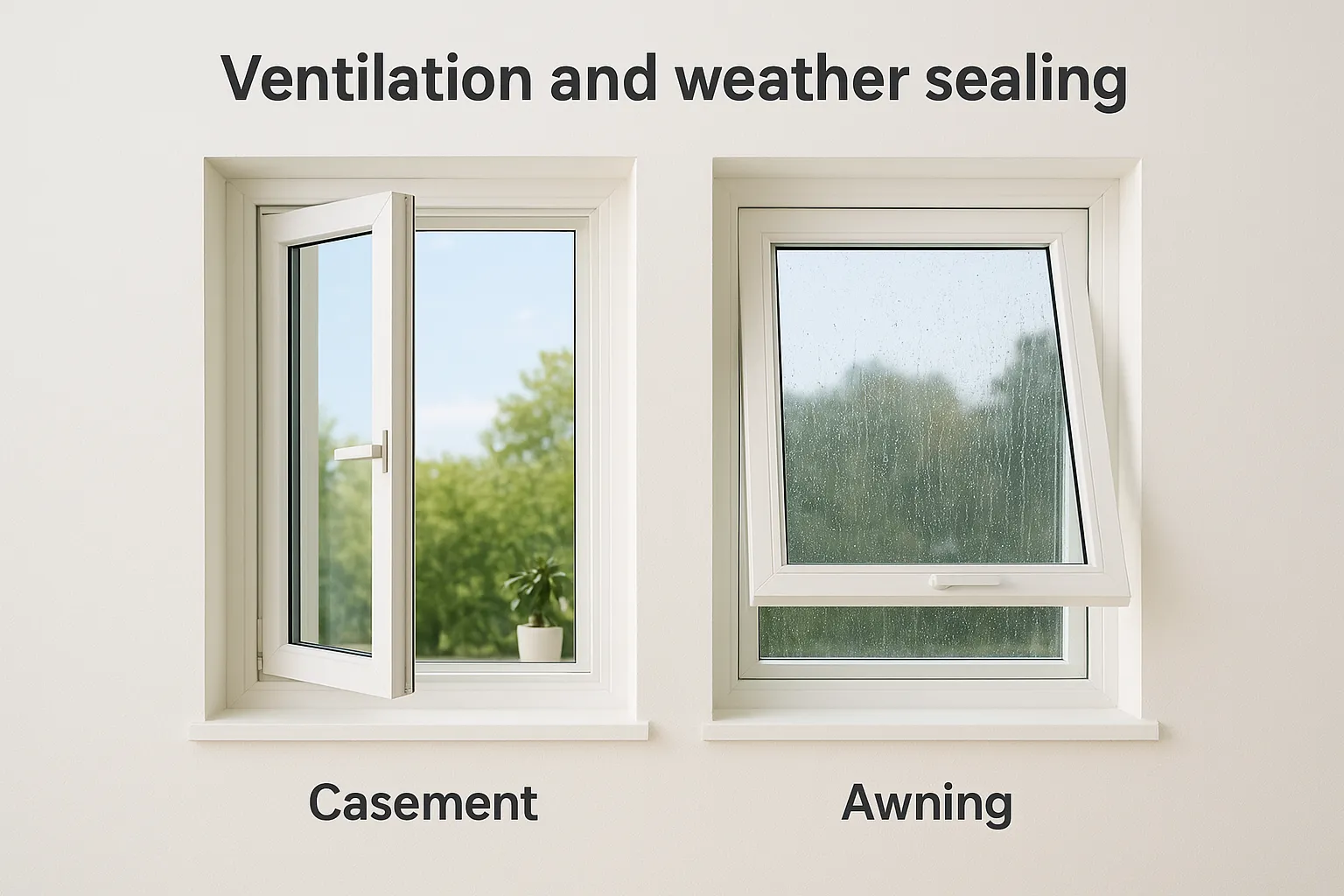
A casement window moves more air; an awning window lets you use that air even when it's raining.
Sightlines and energy performance
Sightlines change too. Casement sashes swing wide and can obstruct a view when open, while awning units stay compact and are often stacked above fixed casement picture windows for a layered look. Both styles outperform sliders on energy efficiency, since compression seals beat friction seals for stopping drafts (here's how casements compare with sliding windows), but the numbers below show where each one edges ahead.
| Factor | Casement | Awning |
|---|---|---|
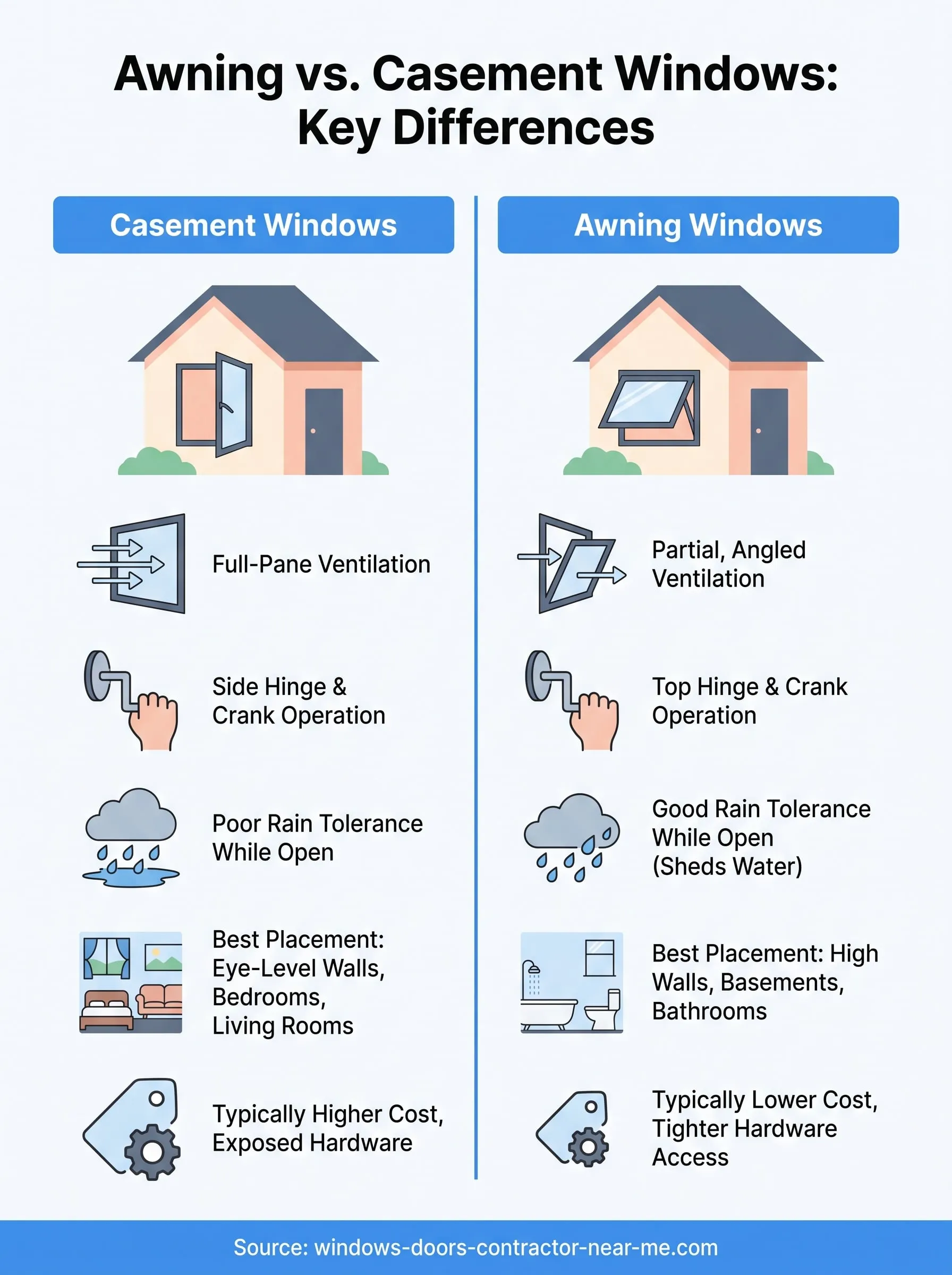
| Ventilation area | Full pane opens | Partial, angled opening |
| Rain tolerance while open | Poor | Good |
| Air seal when closed | Excellent | Excellent |
| Typical placement | Eye-level walls | High walls, basements |
Getting this wrong means living with a window that fights your climate instead of working with it, so the choice deserves more thought than matching what's already on the house next door.
How to choose between awning and casement windows
Picking between a casement awning window and a straight casement often comes down to one question: do you need the opening to double as a rain guard? If your climate throws sudden downpours at you, as Ontario does most springs, an awning window lets you keep air moving without racing outside to close it. If you want maximum airflow and don't mind shutting the window before a storm hits, casement wins on raw ventilation.
Match the window to the room's function
Think about what the room actually needs before you think about looks. A stuffy upstairs bedroom benefits from a casement's full swing, while a kitchen sink or basement window benefits from an awning's weather tolerance. Budget matters too, since larger casement sashes with heavier hardware can cost more than a comparably sized awning unit.
Choose based on how the room is used, not on which style looks better in the showroom.
A quick decision checklist
- Need maximum airflow? Choose casement.
- Want ventilation during rain? Choose awning.
- Placing it above a counter or appliance? Awning fits tighter spaces.
- Want an unobstructed outdoor view when open? Casement swings clear.
- Combining styles? Stack an awning above a fixed casement for layered light and air.
Run your own home through that list room by room, and the right combination usually becomes obvious before you've finished the walk-through.
Comparing cost and maintenance side by side
Price tags on awning and casement windows look similar on paper, but the hardware inside tells a different story. Casement windows use a heavier crank mechanism to support a full-size sash swinging outward, and that extra hardware adds cost, especially on wider units, which is reflected in what casement windows cost in Ontario. Awning windows use a lighter operator since the sash is usually shorter and lifts less weight, which keeps awning window prices down on a like-for-like size comparison.
What drives the price difference
Don't assume the smaller awning window is always cheaper though. A casement awning window combo, where you stack an awning above a fixed casement pane, often costs more than either style alone because you're paying for two frames and two seals instead of one. Glass upgrades, grille patterns, and colour finishes move the price more than the hinge style does on most quotes we write.
The hinge type sets the starting price, but glass and finish choices decide the final number.
Long-term upkeep
Maintenance favours casement windows slightly, since the crank mechanism is exposed and easy to lubricate or replace if it seizes after a decade of Ontario winters. Awning windows tuck their hardware into a tighter cavity, which protects it from dust but makes servicing a bit more involved if something jams.
| Factor | Casement | Awning |
|---|---|---|
| Typical price (same size) | Higher | Lower |
| Hardware access | Easy | Tighter |
| Long-term repair cost | Lower | Slightly higher |
Either way, a 15-year seal warranty covers you long before hardware wear becomes a real concern.
Best rooms and situations for each window style
Every room in your house has different demands for light, air, and privacy, so the right pick for awning and casement windows changes as you move through the floor plan. A living room wants airflow and a clear view, while a basement wants ventilation without a puddle on the sill. Walking through each room with its actual use in mind, rather than a single house-wide standard, gets you a mix that performs better than picking one style for everything.
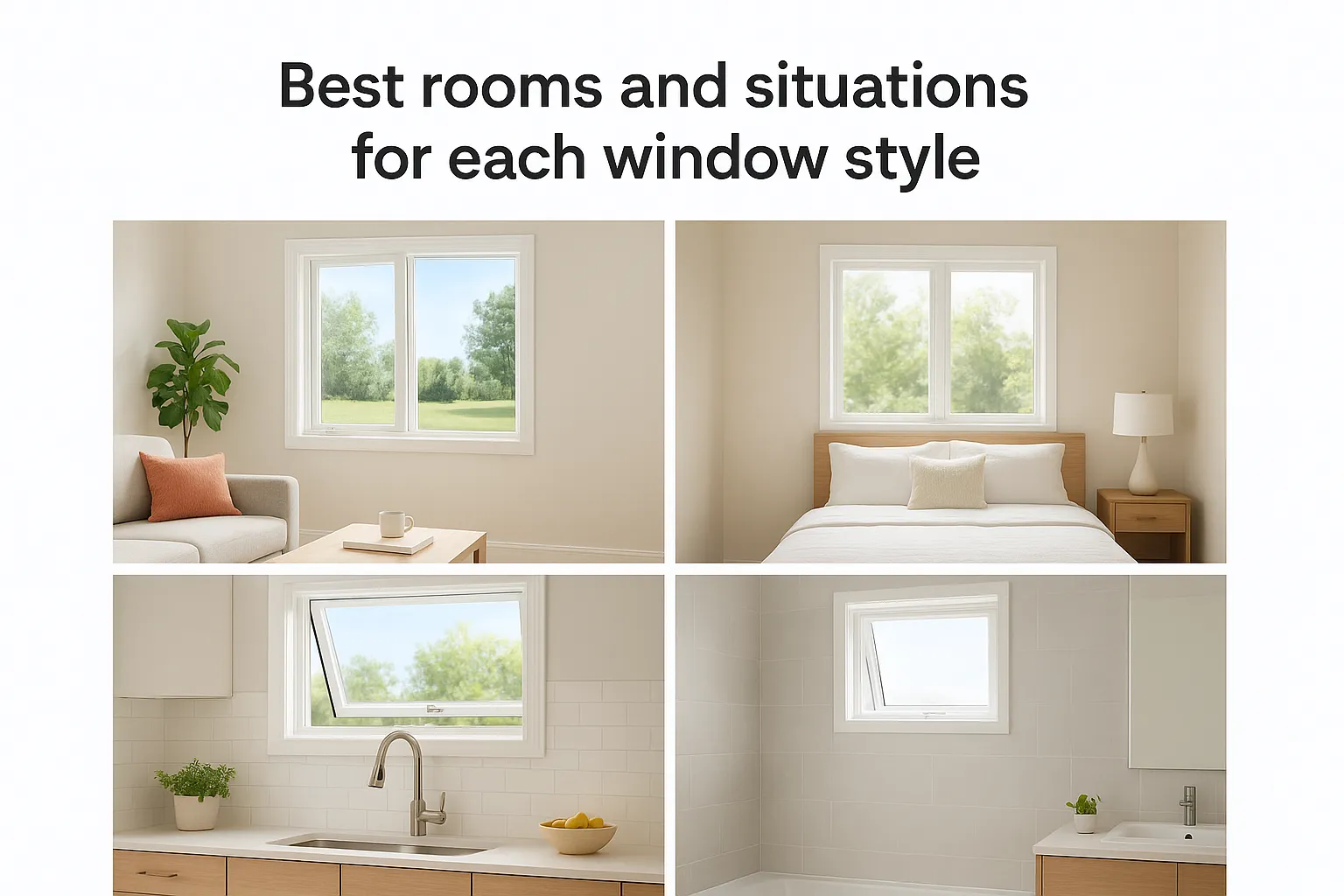
Where casement windows shine
Bedrooms, living rooms, and kitchens at eye level all suit a full-swing casement window, since you get maximum airflow and an unobstructed sightline to the yard. They're also a strong pick above a kitchen sink where you want to reach the crank without leaning over an appliance.
Where awning windows earn their keep
Basements, bathrooms, and rooms with high or narrow wall space favour an awning window, because the top hinge sheds rain and the shorter sash fits tight openings above counters or shower stalls, which is exactly why awning windows work so well below grade.
Put casement windows where you want a view and awning windows where you want ventilation without worrying about the weather.
- Bedrooms and living rooms: casement
- Basements and bathrooms: awning
- Above kitchen counters: awning for tight clearance
- Combined stacks: awning over fixed casement in mudrooms or hallways for layered light
Making the right choice for your home
So where does that leave you? Awning and casement windows both seal tightly and outperform sliders, but the hinge direction decides how they fit your life. Pick casement for full airflow and a clear view where a room needs to breathe. Pick awning where rain tolerance and tight clearances matter more than a wide-open sash. Most Ontario homes end up with a mix of both, matched room by room rather than picked once for the whole house.
Questions still nagging you about sizing, glass options, or which combination suits your floor plan? That's exactly what a proper site visit sorts out. Book your free in-home consultation with MK Windows and Doors and we'll walk your house with you, room by room, and build the casement and awning combination that actually earns its keep through an Ontario winter and summer alike.