
Cleaning the outside of an upstairs window without hauling a ladder onto the lawn sounds like a small thing, until you're the one doing it every spring. That's where double hung tilt windows earn their keep. Both sashes tilt inward on hinges, so you can wash the exterior glass from inside your living room, and you get two operable sashes instead of one, which means better airflow control at the top and bottom of the frame.
If you're searching for how a double hung window tilt mechanism actually works, it comes down to spring-loaded pivot locks built into the sash frame. Release the latches, tilt the sash toward you, clean both sides, then tip it back until it clicks into place. No special tools, no removing the sash entirely.
This article walks through what makes a double hung tilt window different from how a standard double hung window works, how the tilt-in hardware holds up over years of Canadian winters, and what to look for when you're comparing models for a replacement project in Ontario.
Why double hung tilt windows are a practical choice
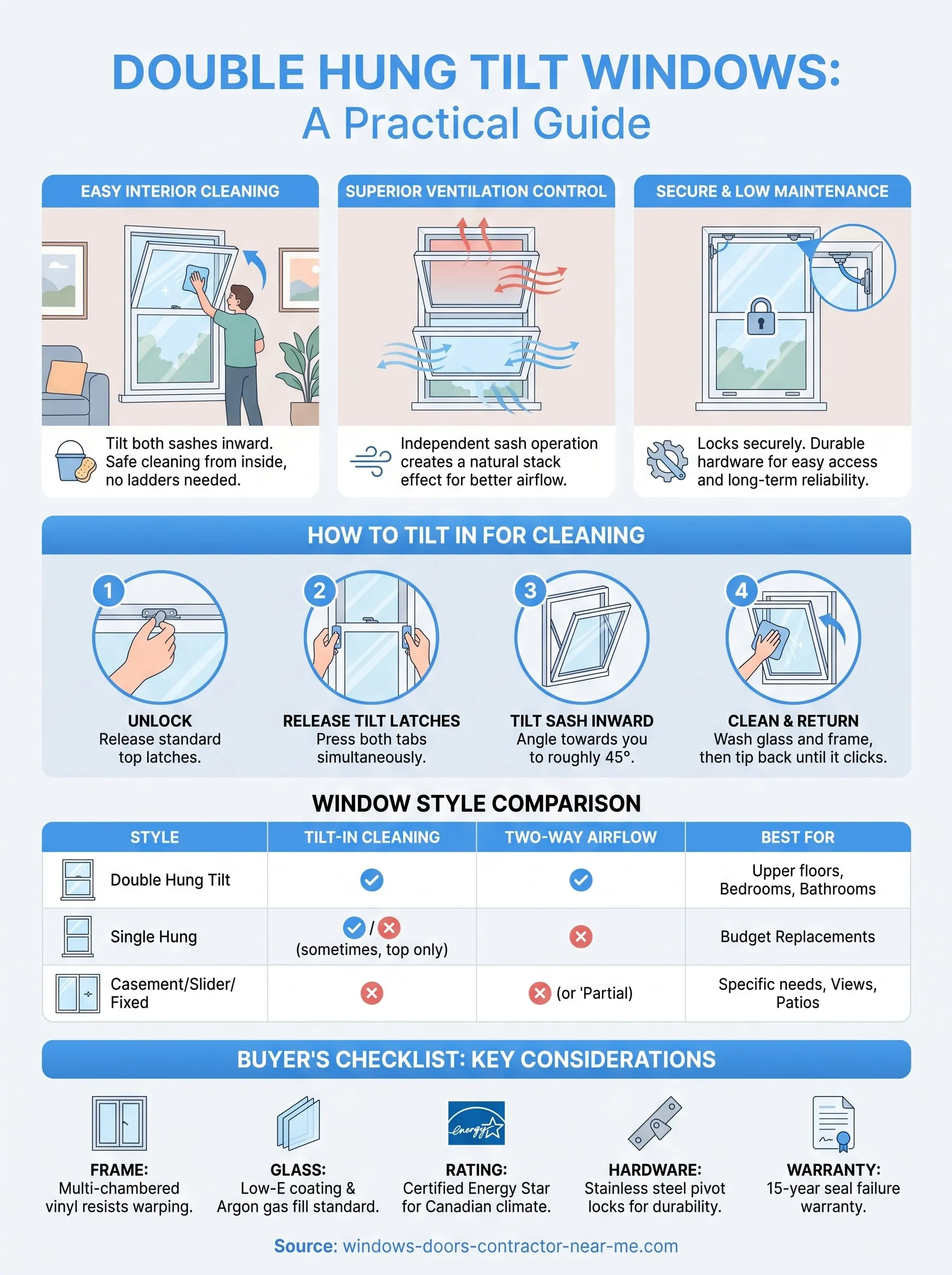
Homeowners across Ontario choose double hung tilt windows for reasons that go well beyond convenience. Every sash tilts independently, so you get airflow at the top of the frame to push out warm air and airflow at the bottom to pull in a cooler breeze at the same time. That's a real advantage over single-sash designs, where you're stuck choosing one opening point. On a humid July afternoon, running both sashes partway open creates a natural stack effect that moves stale air out faster than a single opening ever could.
Access is the other half of the story. A double hung window tilt mechanism means you never need a ladder to reach the outside glass on a second-storey window. This matters more than people expect once they've actually tried cleaning a fixed-frame window on a two-storey home in a Canadian winter, when ice on the eaves makes ladder work genuinely dangerous.
Tilt-in sashes turn a once-a-year ladder job into a five-minute task you can do from your living room.
Beyond ventilation and cleaning, there's a maintenance argument too. Because both sashes tilt free of the frame, you can inspect and clean the weatherstripping and tracks directly, catching wear before it turns into drafts or water infiltration. Retailers and contractors sourcing from a wholesale windows and doors supplier serving Toronto often flag this as a selling point for clients who want low-maintenance products without sacrificing performance.
Where a double hung tilt window pulls its weight
Think about the rooms where this style actually earns its cost:
- Upper-floor bedrooms and bathrooms, where ladder access is impractical and privacy matters during cleaning.
- Homes near busy streets, where partial-sash ventilation lets you control noise and airflow without opening the window fully.
- Kitchens above grade, where quick tilt-in cleaning handles grease and condensation buildup on interior and exterior glass alike.
- Rental properties and condos, where tenants need a simple, tool-free way to clean windows themselves.
Security plays a role here as well. Unlike windows that rely on removable sashes or storm panels, a double-hung tilt in windows design keeps the sash locked into the frame during normal use, with the tilt function only accessible from inside. That's a meaningful difference for anyone weighing convenience against break-in risk, since the tilt hardware doesn't create an external access point.
Finally, consider resale value. Buyers touring a home notice details like window condition and ease of upkeep, even if they can't articulate why a room feels well maintained. Vinyl-framed, Low-E coated double hung windows with tilt-in sashes signal that a home has been cared for, which is a quiet but real factor when it's time to sell.
How to tilt in a double hung window for cleaning
Cleaning a double hung tilt window takes less time than filling a bucket with soapy water. The process is the same whether you're working on the top or bottom sash, and once you've done it once, you won't need instructions again.
Step-by-step tilt-in process
Follow these steps to tilt in a sash safely:
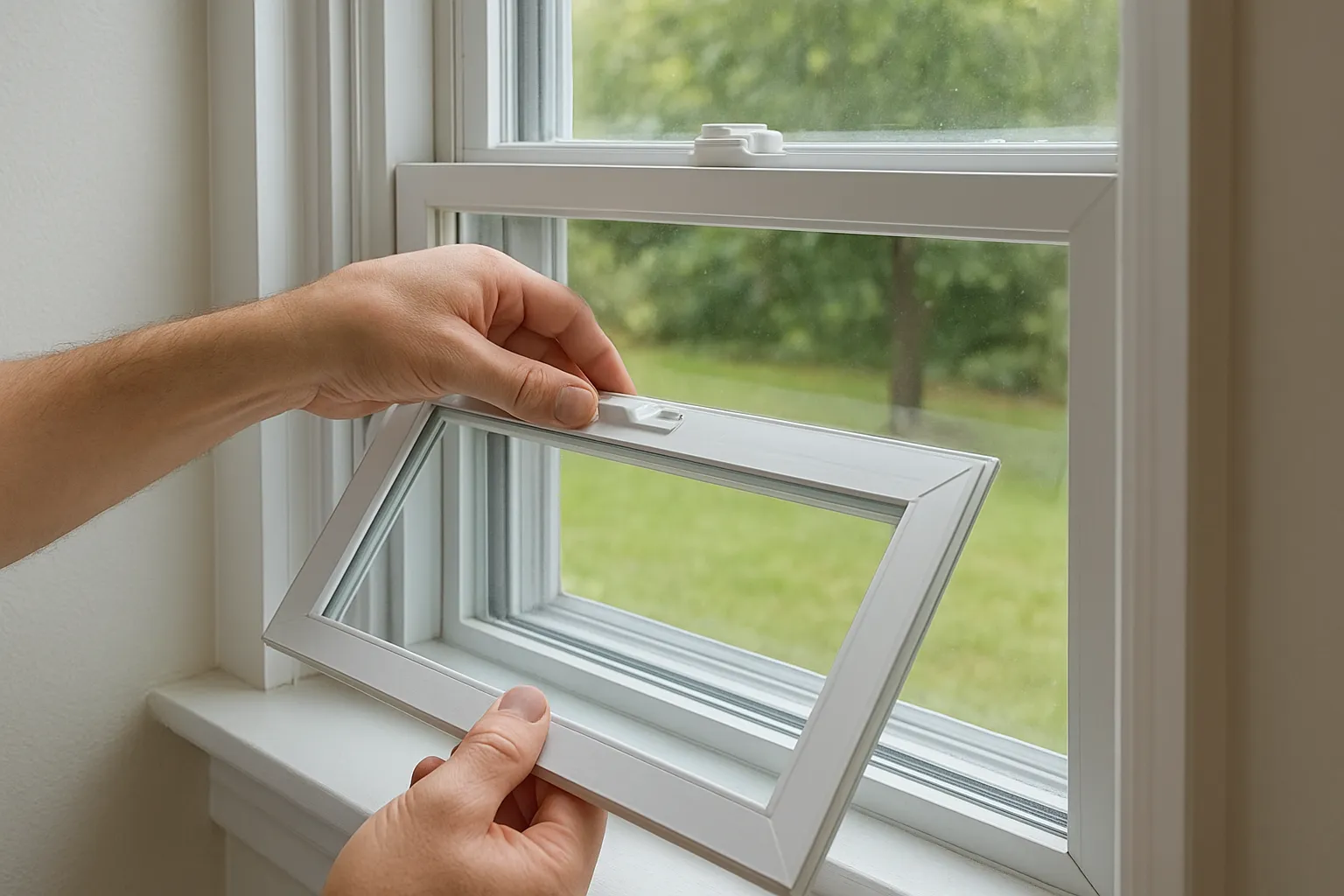
- Unlock the sash using the standard latch at the top rail, just as you would to open the window normally.
- Locate the tilt latches, usually small tabs or levers on either side of the sash frame near the top corners.
- Press or slide both tilt latches at the same time, this releases the sash from its pivot locks.
- Tilt the sash inward towards you until it rests at roughly a 45-degree angle, held open by the pivot arms.
- Clean both sides of the glass, along with the frame and weatherstripping while you have access.
- Tip the sash back into the frame and press until you hear or feel the pivot locks click into place.
A double hung window tilt only works when both latches release together, so if one side won't budge, don't force it.
That last point matters more than most homeowners realise. Forcing a stuck latch is the most common cause of tilt hardware failure, and it's an easy fix to avoid. If a latch feels stiff, a drop of silicone lubricant on the pivot pin usually solves it, rather than pushing harder on one side.
Seasonal checks help too. Before the first real freeze of the year, tilt each sash in and wipe down the tracks, since grit and dried leaves left in the channel can wear down the pivot arms over a Canadian winter. Doing this once in autumn and once in spring keeps the tilt mechanism moving smoothly for years, and it's far cheaper than replacing a worn sash balance down the line.
Double hung tilt windows compared to other styles
Casement windows crank outward on a side hinge, which gives you a tighter seal against drafts but blocks the tilt-in cleaning option entirely, since the entire sash swings away from the frame rather than pivoting inward. Sliding windows, whether single or double slider, move side to side on tracks, and while they're simple to operate, cleaning the exterior pane usually still means reaching around from outside or removing the sash altogether, unless you choose tilt-in slider windows for Ontario homes. Against both of these, a double hung tilt window holds a clear edge for anyone who wants ventilation control without giving up easy access to the glass.
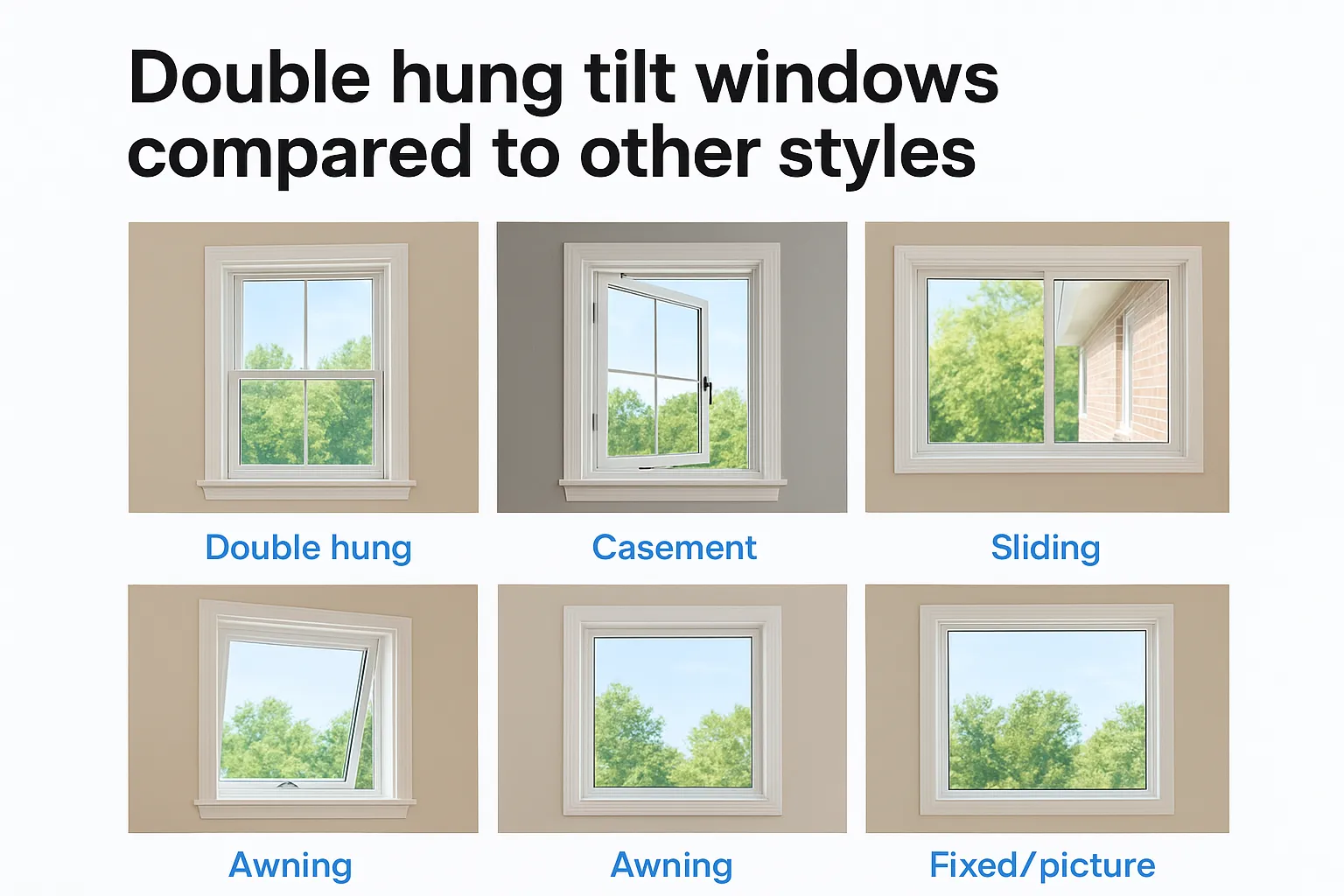
Awning windows hinge at the top and swing out from the bottom, which works well for ventilation during light rain but offers no tilt-in feature at all. Fixed picture windows skip ventilation entirely, trading them for uninterrupted views and slightly better thermal performance since there's no operable sash to seal. Single-hung windows look nearly identical to double hung models from the street, but only the bottom sash moves, so you lose half the airflow control and, in most designs, the tilt-in convenience on the upper pane too.
If tilt-in cleaning matters to you, double hung and single hung with tilt hardware are really the only styles built for it.
Here's how the main styles stack up on the features homeowners ask about most:
| Style | Tilt-in cleaning | Two-way airflow | Best for |
|---|---|---|---|
| Double hung tilt | Yes, both sashes | Yes | Upper floors, bedrooms, bathrooms |
| Single hung | Sometimes, top only | No | Budget replacements |
| Casement | No | Partial | Tight seals, hard-to-reach spots |
| Slider | Rarely | Partial | Wide openings, patios |
| Awning | No | Partial | Rain-tolerant ventilation |
| Fixed/picture | No | None | Views, natural light |
Wholesale buyers comparing catalogues for retail clients often default to double hung tilt models precisely because they check more boxes at once, ventilation, access, and resale appeal, without pushing the price above comparable casement or slider options.
What to check before buying double hung tilt windows
Getting a good double hung tilt window isn't just about picking a colour and moving on, and it pays to know what to check when comparing double hung replacement models. The tilt hardware itself varies a lot between manufacturers, and cheap pivot locks are the first thing to fail once a Canadian winter gets into the tracks. Ask any installer who's replaced sash balances on a five-year-old window and they'll tell you the same story: the glass was fine, the frame was fine, but the tilt latches had corroded or seized.
Hardware quality matters more than most buyers realise. Look for pivot locks made from stainless steel or a similarly corrosion-resistant alloy rather than painted zinc, since coastal humidity and road salt spray both eat through cheaper metals fast. Also check the sash balance system, the springs or block-and-tackle mechanism that holds the sash open at any height, because a weak balance means the sash slams shut or won't stay tilted during cleaning.
A tilt window is only as good as its pivot locks, everything else is cosmetic.
A quick buyer's checklist
- Frame material: vinyl with multi-chambered construction resists warping better than aluminium in freeze-thaw cycles.
- Glass package: confirm Low-E coating and Argon gas fill are standard, not optional add-ons.
- Energy rating: check for Energy Star certification suited to the Canadian climate zone.
- Warranty terms: a 15-year seal failure warranty tells you the manufacturer trusts its own weatherstripping.
- Installer credentials: confirm the crew is licensed and insured, since a poor install undoes even the best hardware.
Don't skip the in-person test either. A double hung window tilt mechanism should release smoothly with light finger pressure on both latches at once, not require you to yank or wiggle the sash. If a showroom sample feels stiff before it's even left the store, that's a preview of what you'll deal with in five years. Comparing a few models side by side, ideally through a free in-home consultation, makes these differences obvious fast.
Finding the right fit for your home
Getting this decision right comes down to matching hardware quality with how you actually live in your home. Double hung tilt windows solve two problems at once, ventilation control and safe cleaning access, without asking you to compromise on security or energy performance. Every point covered here, from pivot lock materials to sash balance strength, feeds into how long that tilt mechanism keeps working smoothly through Ontario winters.
Quality varies wildly between manufacturers, so the checklist matters more than the marketing brochure. A double hung tilt window with stainless pivot locks and a proper Low-E glass package will outlast a cheaper unit by a decade or more, and you'll notice the difference every time you tilt a sash in for cleaning. Rather than guessing from a showroom floor, get a proper comparison against your specific home and budget. Book a free in-home consultation with our Ontario window specialists and see exactly what fits your home and budget before you commit.