
Standing in a showroom or scrolling through quotes, most homeowners hit the same wall: what's the actual difference between single and double hung windows, and does it matter enough to pay more for one over the other? The names sound almost identical, so it's easy to assume they're interchangeable. They're not, and the distinction affects everything from your monthly cleaning routine to how much cold air sneaks in during an Ontario winter.
The short answer is that single hung windows have one operable sash on the bottom while the top stays fixed, whereas double hung windows and how they work let both sashes slide, giving you airflow control at the top and bottom. That single design choice changes ventilation, ease of cleaning, and long-term energy performance more than most buyers expect.
In this guide, we'll break down how each style works, weigh the pros and cons of single versus double hung and double single hung windows, and help you match the right option to your home. As a Canadian manufacturer building custom vinyl windows for Ontario's climate since 2006, we've fitted both types into homes across the province, and we'll share what actually holds up over time.
Why the single vs double hung choice matters for your home
The difference between these two window styles isn't cosmetic. It changes how air moves through a room, how often you'll be climbing a ladder to clean glass, and how much heat escapes through the frame on a January night in Barrie, where we install windows and doors, or Innisfil. Picking the wrong type for a given room can leave you with a stuffy nursery, a stubborn stain on a second-storey pane you can never reach, or a draft that shows up as a line item on your gas bill. Getting this right upfront saves you from a costly do-over five or ten years down the road.
How airflow actually works in each style
Single hung windows only move air through the bottom sash, which pulls cooler air in low while stale warm air has nowhere to escape near the ceiling. Double hung windows, on the other hand, let you drop the top sash and raise the bottom one at the same time, creating a natural convection loop that pushes warm air out the top while fresh air enters below. This matters more than people assume in kitchens, bathrooms, and any room prone to condensation, where cross-ventilation clears humidity faster and helps prevent mould around the frame.
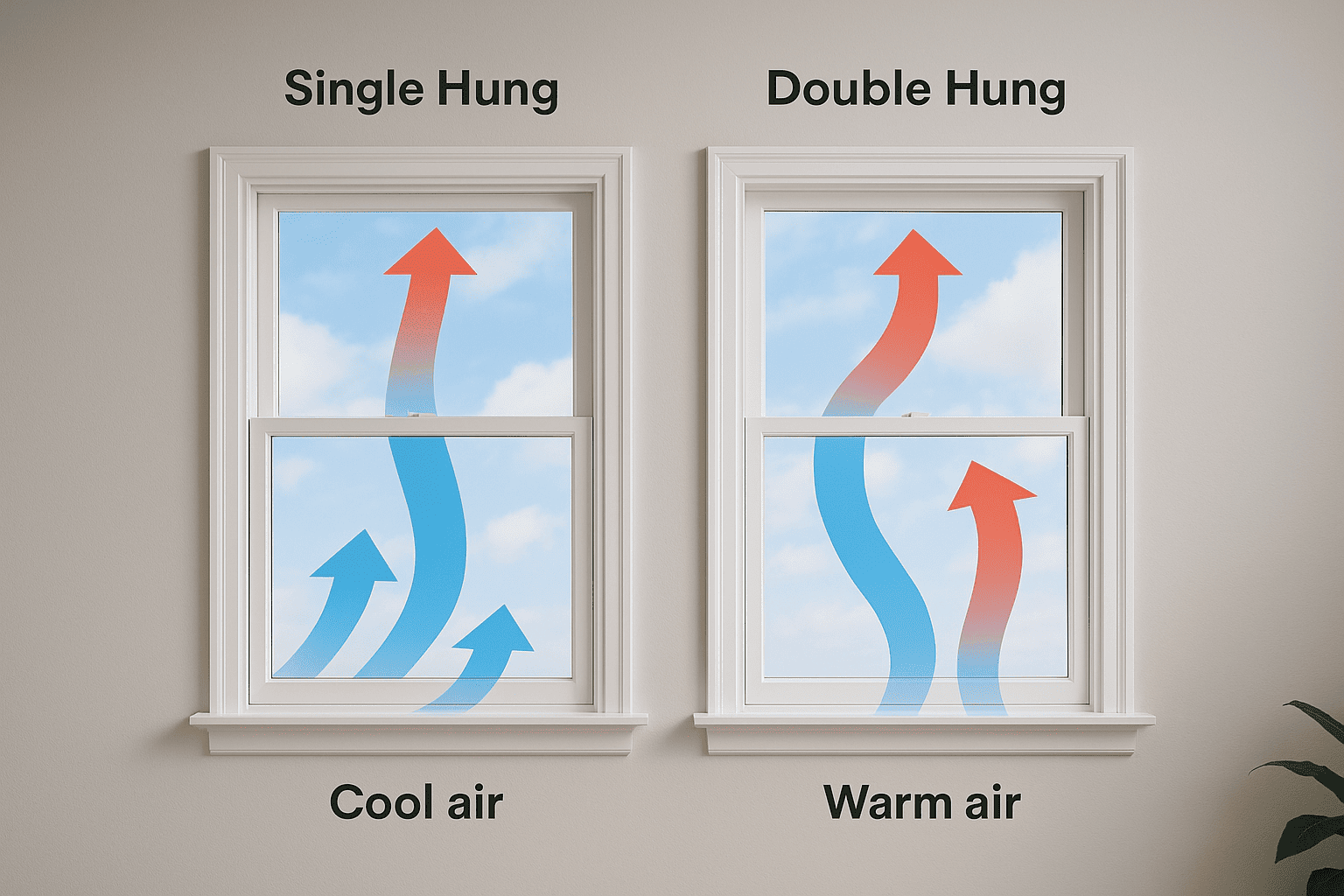
Double hung windows create a natural air exchange that single hung units simply can't match, which is why they perform better in humid or stuffy rooms.
Cleaning access and long-term convenience
Anyone who has scrubbed the outside of a second-floor window from a ladder understands why this factor deserves real weight in your decision. Both single and double hung windows can tilt inward for cleaning on most modern vinyl builds, but double hung models tilt both sashes, so you're never stuck with a fixed, unreachable top pane on upper floors. Single hung windows only offer that tilt-in convenience on the bottom sash, meaning the top stays exactly where it was installed, permanently, unless you're comfortable on an extension ladder. For bungalows and single-storey homes this distinction barely registers, but for two-storey properties across Ontario it's often the deciding factor between the two.
Air leakage and long-term energy performance
Fewer moving parts generally means fewer places for air to sneak through, which is why single hung windows have a slight edge on draft resistance since the top sash is sealed permanently into the frame rather than relying on a second moving track. That said, this advantage only holds if the double hung unit is poorly built. A properly manufactured double hung window with tight weatherstripping, multi-point locking hardware, and quality vinyl extrusions seals just as well as a single hung equivalent, which is why sourcing from a manufacturer that controls the build from start to finish matters more than the style itself. This is exactly where the window styles we manufacture in-house come in, built with Low-E coatings and Argon gas fills regardless of whether you choose single or double hung, so you're not trading energy efficiency for functionality either way.
Resale value and how buyers perceive each style
Appraisers and real estate agents in Ontario increasingly note double hung windows as a value-add on listing sheets, partly because buyers associate them with easier upkeep and better ventilation control. Single hung windows aren't a red flag by any stretch, and plenty of well-maintained homes sell just fine with them, but if you're weighing a double single hung window upgrade purely as an investment in resale, the double hung option tends to edge ahead. Comparing them side by side on the factors that matter most makes the tradeoffs clearer:
| Factor | Single Hung | Double Hung |
|---|---|---|
| Ventilation | Bottom sash only | Top and bottom sashes |
| Cleaning from inside | Bottom sash tilts in | Both sashes tilt in |
| Air leakage risk | Slightly lower | Slightly higher if poorly built |
| Typical cost | Lower | Moderately higher |
| Best storey placement | Ground floor, single-storey homes | Any floor, especially upper storeys |
| Resale perception | Neutral | Generally favourable |
Ultimately, the right choice depends on which of these factors matters most in your specific home, and that's exactly what the next section will help you work through room by room.
How to choose between single and double hung windows
Deciding between single and double hung windows isn't about finding the objectively "better" style, since neither one wins in every category. It's about matching the window to the room, the floor, and the budget you're working with. Walk through your home floor by floor and ask what each window actually needs to do before you settle on a style, because the right answer often changes from the kitchen to the upstairs bedroom.
Start with how you use the room
Begin by thinking about ventilation needs in the specific space you're replacing windows in. A bathroom or kitchen benefits enormously from a double hung window's ability to vent warm, moist air out the top while pulling fresh air in below, which cuts down on condensation and mould around the frame. A living room or bedroom on the ground floor, where you're mainly opening the bottom sash for a breeze, doesn't need that extra function, so a single hung window does the job just as well for less money. If a room already runs stuffy or holds onto cooking smells and steam, that's your signal to lean towards double hung.
Factor in the floor and access
Consider next which floor the window sits on, because access changes the calculation completely. Second-storey and upper-floor windows are far easier to live with long-term as double hung units, since both sashes tilt in for cleaning and you're never stuck hauling a ladder around the outside of your house every spring. Ground-floor windows don't carry that same burden, since you can usually clean the outside from the yard or a short stool, which is why plenty of homeowners choose single hung on the main floor purely to save money and reserve the double hung upgrade for upstairs.
If you only upgrade one thing, make it the upper-floor windows to double hung, since that's where the cleaning and ventilation gap actually shows up.
Weigh your budget against the upgrade
Budget realistically plays a role too, and it's worth being upfront about it rather than pretending price doesn't matter. Single hung windows typically cost less per unit because they have simpler hardware and fewer moving parts, so if you're replacing a full house worth of windows and doors on a tight budget, mixing styles by room lets you spend where it counts. Double hung windows cost more, but the price gap has narrowed over the years as manufacturing has improved, and it's often smaller than homeowners expect once you compare full quotes rather than per-unit pricing.
A quick checklist before you decide
Run through this list room by room before finalising your order:
- High humidity or odours (kitchen, bathroom, laundry room): choose double hung for better airflow
- Upper floor or hard-to-reach exterior: choose double hung for easier cleaning
- Ground floor with easy outdoor access: single hung saves money without a real downside
- Tight overall budget: mix styles, reserving double hung for the rooms that need it most
- Selling within a few years: lean towards double hung for stronger resale appeal
Once you've mapped out each room against this list, book a free in-home consultation with our team, and we'll help you finalise the mix that fits both your home and your budget before anything gets manufactured.
Cost, energy efficiency and maintenance compared
Money talks, and it's usually the first question homeowners ask once they've settled on style. Comparing single and double hung windows on cost alone misses half the story, because the sticker price only tells you what you'll pay today, not what you'll spend heating your home or replacing hardware ten years from now. Looking at cost, energy efficiency, and maintenance together gives you a far more honest picture of the true cost of ownership.
Upfront cost differences
Generally speaking, single hung windows cost less per unit than double hung windows, sometimes by 10 to 20 percent depending on size and glass options, simply because they have one moving sash instead of two and less hardware to manufacture, though what window replacement costs in Ontario depends on the full project too. That gap shrinks once you start adding premium features like triple-pane and upgraded glass pricing or specialty grilles, since those upgrades apply the same cost regardless of style. Homeowners replacing a full house of windows and doors often find the total project cost difference between the two styles is smaller than expected once labour, trim work, and glass upgrades are factored into the quote rather than comparing bare unit prices.
Energy efficiency over the long run
Energy performance comes down to build quality far more than it comes down to style, and this is where a lot of showroom advice gets it backwards. A double hung window with proper weatherstripping, Low-E coatings, and Argon gas fills performs just as well thermally as a single hung equivalent, because what actually makes a window energy efficient is the seal quality and glass package rather than how many sashes move. Ontario's Energy Star ratings apply to the whole assembly, not just the sash count, so don't assume single hung automatically means a lower heating bill.
The style of your window matters far less to your heating bill than the quality of the seal, the glass package, and the installation behind it.
Where style does matter slightly is long-term seal integrity, since a double hung window has twice the moving parts and twice the weatherstripping that can wear down over fifteen or twenty years. That's a manageable risk if you buy from a manufacturer that backs the product with a proper warranty, which is why our windows carry a 15-year seal failure warranty regardless of whether you go single or double hung.
Maintenance and weatherstripping wear over time
Maintenance is where the practical differences show up most clearly, and it's worth planning for rather than discovering after the fact:
- Single hung windows: fewer moving parts, less hardware to lubricate, but the fixed top sash can trap dust and grime that's hard to reach
- Double hung windows: both sashes need occasional cleaning of the tilt-in mechanism and track, plus periodic weatherstripping checks on both sashes rather than one
- Both styles: vinyl frames need only an occasional wipe-down, unlike wood frames that demand repainting or resealing every few years
Regardless of which style you choose, sticking with vinyl construction keeps ongoing upkeep minimal compared with older wood or aluminum frames, and it's a big reason vinyl has become the standard choice across Ontario homes.
Best rooms and home styles for each window type
Beyond the room-by-room checklist, it helps to picture the whole house and think about which window style suits which architectural era, since some Ontario homes practically demand one over the other. Matching the window to both the function of the room and the character of the house keeps the finished project looking intentional rather than mismatched.
Kitchens, bathrooms and moisture-heavy spaces
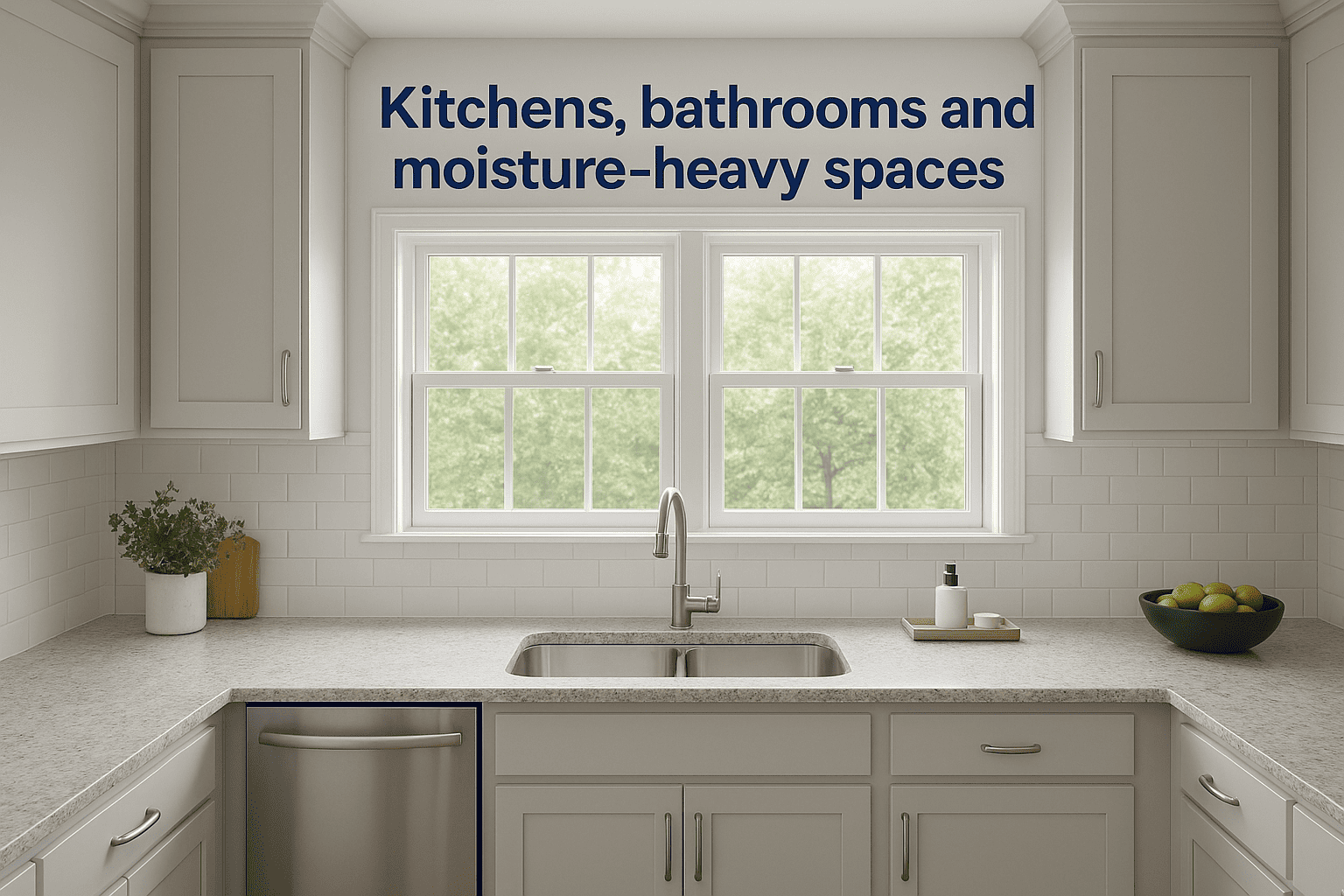
Steam from cooking and showers needs somewhere to go, and this is where double hung windows consistently outperform single hung units. Venting warm, humid air out the top sash while pulling drier air in below reduces condensation on the glass and cuts the risk of mould forming around the frame, which matters most in kitchens above the sink and bathrooms without strong exhaust fans. Homeowners who've fought a recurring mildew smell near an old single hung window almost always notice the difference once they switch to a double hung replacement in the same opening.
Bedrooms, living rooms and everyday spaces
Functional needs ease up once you move into bedrooms and living rooms, where airflow demands are lower and a single hung window does the job without any real compromise. These rooms rarely deal with heavy moisture, so the bottom-sash-only design still lets you crack a window for a breeze without leaving money on the table for ventilation you won't use. Ground-floor bedrooms in particular are a strong fit for single hung, since the fixed top sash never becomes an access headache when the exterior glass is within easy reach.
Matching window style to home architecture
Architectural style plays a bigger role in this decision than most homeowners expect walking into a showroom. Traditional and heritage-style homes across Ontario, including Georgian, Colonial, and Victorian-inspired builds, were originally designed around double hung proportions, and keeping that style maintains the visual balance the facade was built for. Modern and contemporary builds lean more forgiving, and single hung windows fit cleanly into minimalist elevations where the priority is a clean sightline rather than a period-accurate detail.
Match the window to the house it's going into, not just the room, since a double single hung window mismatch on a heritage facade is one of the easiest renovation mistakes to spot from the street.
Here's a quick reference for matching style to home type:
| Home Style | Recommended Window Type | Why |
|---|---|---|
| Victorian, Georgian, Colonial | Double hung | Matches original proportions and period detailing |
| Bungalow, ranch (single-storey) | Single hung | Easy exterior access makes the fixed top sash a non-issue |
| Two-storey modern build | Double hung | Easier upkeep on upper floors, cleaner ventilation |
| Contemporary minimalist | Single hung | Simpler lines, lower cost, fits clean facades |
| Cottage or seasonal property | Single hung | Lower cost per unit for a property used part-time |
Installation and replacement tips for Canadian homes
Getting the window style right only pays off if the installation itself holds up to an Ontario winter. A perfectly chosen double hung window with a sloppy install will leak air just as badly as the wrong style choice, so treat installation planning as seriously as the single versus double hung decision itself.
Timing your replacement around Ontario's climate
Spring and early autumn remain the best windows for replacement work across most of Ontario, since temperatures sit mild enough that your home isn't exposed to a cold snap while the old frame is out and the new one is being sealed. Winter installs aren't impossible, and our crews handle them regularly for emergency replacements, but they demand tighter scheduling and faster sealing to limit heat loss during the swap. Homeowners planning ahead should book installation appointments for shoulder seasons whenever the timeline allows, since it gives installers more room to work without rushing the caulking and insulation steps that matter most for long-term performance.
Choosing the right installer and warranty coverage
Workmanship matters more than most homeowners realise, because even a well-built single or double hung window fails to perform if it's shimmed unevenly or sealed with the wrong foam. Ask any installer directly how they handle air sealing around the frame, whether they use low-expansion foam rather than standard cans that can bow a frame out of square, and what warranty covers the labour itself rather than just the product. This is exactly why we send vetted, licensed, and insured installers on every job, and back the work with a 5-year warranty on both the product and the installation, not just the glass unit.
A window is only as good as the seal around it, so the installer matters just as much as the style you chose.
What proper installation actually involves
A proper replacement follows a consistent sequence regardless of whether you're fitting a single hung window on the ground floor or a double hung unit upstairs:
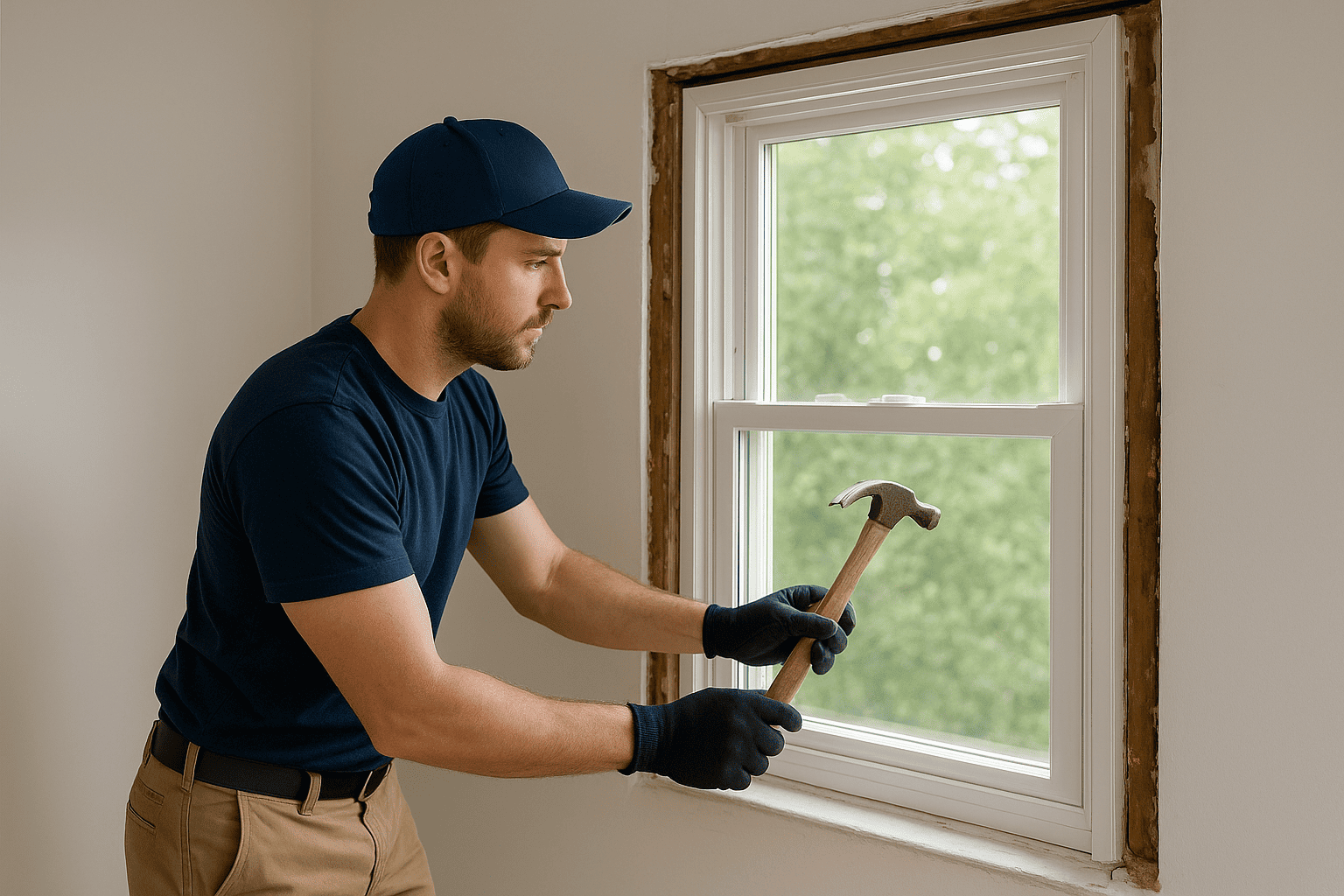
- Remove the old sash and frame without damaging the surrounding wall or trim
- Check the rough opening for square and address any rot or moisture damage before the new unit goes in
- Set the new window, shim it level, and confirm it operates smoothly before fastening
- Apply low-expansion spray foam insulation around the perimeter, followed by exterior caulking
- Reinstall or replace trim and confirm both sashes tilt and lock correctly on double hung models
Skipping any of these steps, particularly the rough opening check, is where most problems trace back to months later, so it's worth knowing what to check before buying replacement double hung windows.
Common mistakes to avoid during replacement
Rushing the rough opening inspection ranks as the most common installer shortcut, since covering up rot or an out-of-square frame with foam and trim only hides a problem that resurfaces as a draft or a sticking sash within a year or two. Overlooking flashing and drainage around the exterior is another frequent miss, especially on older Ontario homes where the original construction never accounted for modern window profiles. Book a free in-home consultation before your replacement date, so any structural issues get flagged and priced honestly upfront rather than discovered mid-installation.
Which window is right for your home
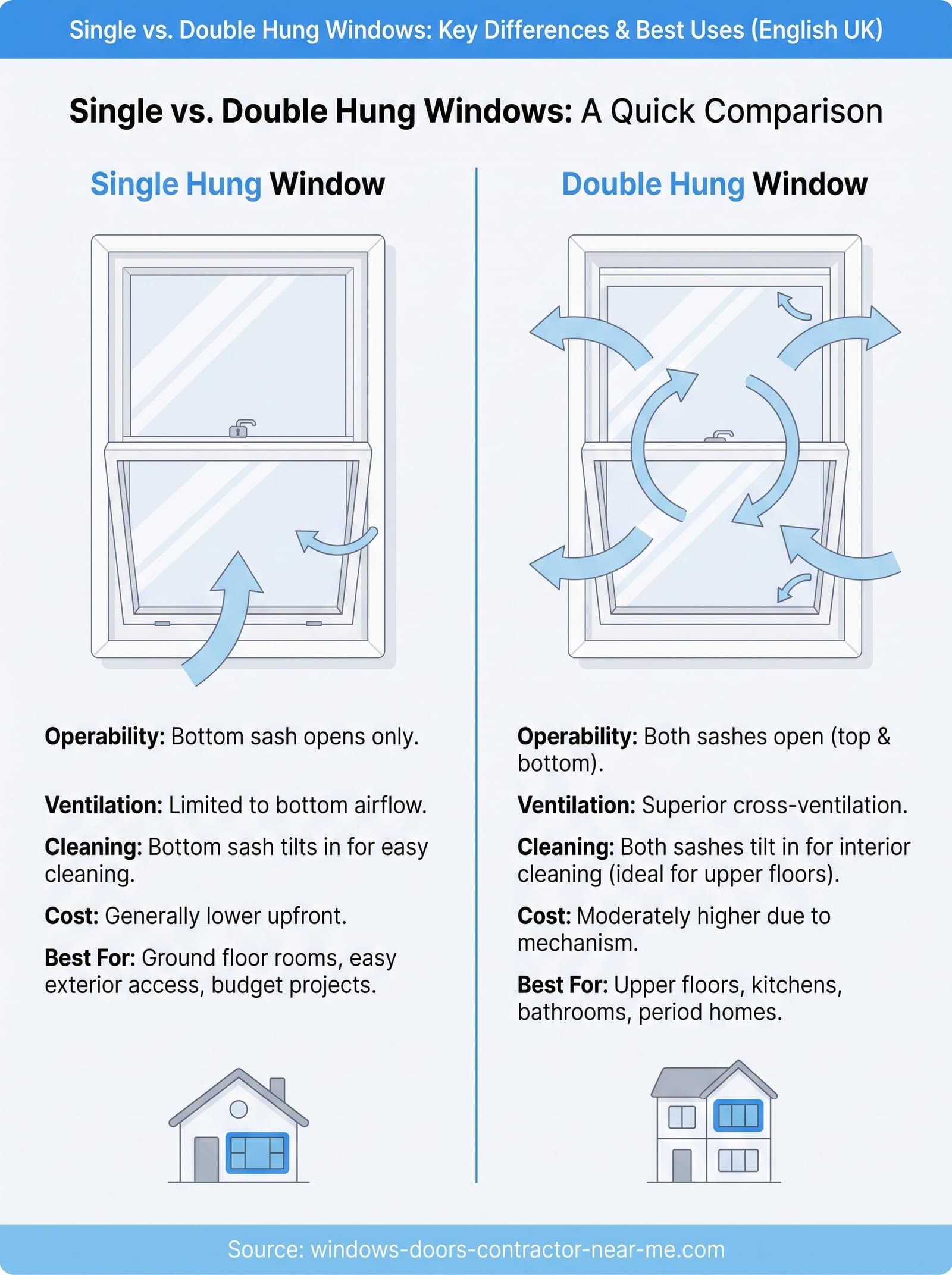
Neither style wins outright. Single hung windows suit ground-floor rooms with easy outdoor access and tighter budgets, while double hung windows earn their higher price on upper floors, in humid spaces, and on period-style homes where cleaning and airflow matter most. The real decision comes down to matching each opening to how you actually live in that room, not picking one style for the whole house out of habit.
Getting this right saves you from regretting a fixed top sash you can never reach or paying for ventilation a bedroom never needed. Once you've walked your home floor by floor against the checklists above, you'll have a clear picture of where each style belongs.
Ready to put that plan into action? Book a free in-home consultation with our Innisfil team, and we'll help you finalise the right mix of custom double hung windows for Ontario homes and single hung units before anything goes into production.