
You have probably seen awning windows on modern builds and wondered how they differ from the casement or slider already installed in your home. Maybe you like the idea of a window that stays open during a light rain without letting water in, or you want something that ventilates a bathroom without sacrificing privacy. Whatever brought you here, you are trying to work out if this window style suits your house, and what to know before you buy replacement awning windows once you start shopping.
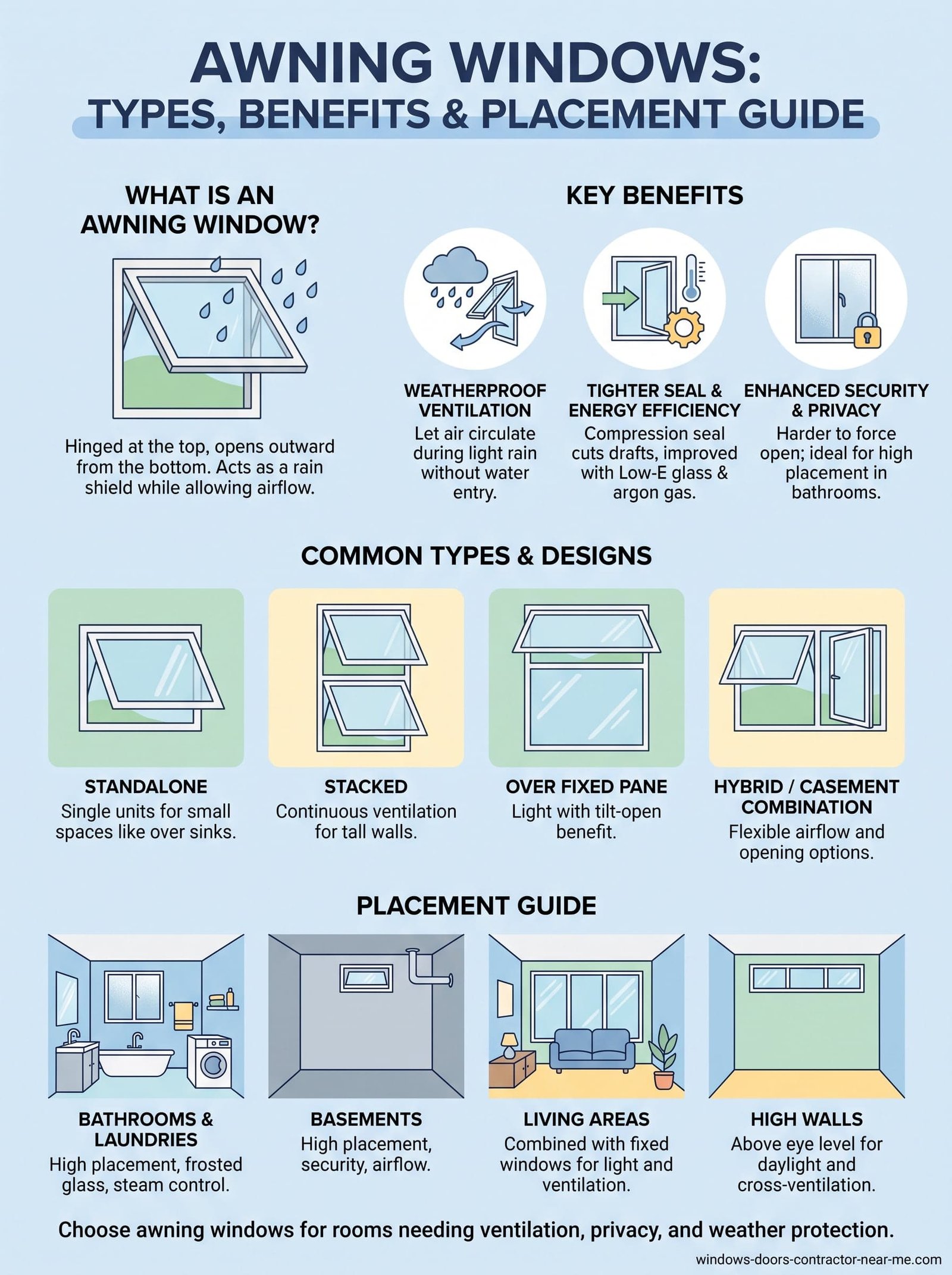
An awning window is a window hinged at the top that opens outward from the bottom, working almost like a small canopy. That hinge position is what sets it apart from a casement window, which swings open from the side. Beyond that basic definition, there is a real range of awning window styles to consider, from compact units suited to awning bathroom windows through to larger picture-style combinations used in contemporary Ontario homes.
In this article, we walk through the different types of awning windows, how they compare to casement designs, and where each style works best in a home layout. We also look at modern awning windows and finishing options, so you can picture how they would look and perform on your own house before you ask for a quote.
Why awning windows are worth considering
Ontario weather swings between driving rain, biting wind, and humid summer heat, and this is exactly where an awning window earns its keep. Because the sash tilts outward from the top, you can crack it open during a downpour and let air circulate through a room without water pooling on the sill. That single feature answers one of the most common questions homeowners ask when they first learn what is an awning window and start comparing it to the sliders or double-hung units already in their home.
An awning window lets you ventilate a room in weather that would force any other window shut.
Better ventilation and weatherproofing
The top-hinged design channels a natural overhang effect, so even a moderate downpour runs off the glass rather than into the house. This makes awning styles a strong pick for awning basement windows, laundry rooms, and anywhere you want fresh air moving through without babysitting the forecast.
Energy performance built for Canadian winters
When the sash closes, it compresses against the frame from multiple sides at once, which creates a tighter seal than a slider ever manages. Paired with Low-E coated glass and argon gas fills, this compression seal cuts drafts and heat loss through the coldest Ontario months, which matters when you're weighing lifetime energy costs against what awning windows cost upfront.
Added security and privacy
Because the opening mechanism sits above eye level and the hardware locks from inside, awning windows are harder to force open from outside than a standard slider. That's part of why they show up so often as awning bathroom windows, where you want daylight and airflow without anyone on the street seeing in. Positioned higher on a wall, they still bring in light and ventilate steam from a shower without compromising the room's privacy.
Combine those three factors, weatherproof ventilation, tighter seals, and improved security, and you get a window style that pulls its weight in rooms where standard designs fall short. That's the practical case for awning window styles before you even get into how they look on a facade.
How to choose the right awning window style
Picking the right awning window comes down to where it sits and what job you need it to do. A small unit above a kitchen sink or beside a shower calls for compact awning bathroom windows that ventilate without inviting a view in, while a wide living room wall can carry a larger awning combined with fixed panes for light without losing the tilt-open benefit. Start with the room, not the catalogue, and the right style narrows itself down quickly.
Match the window to the room's job first, then choose the finish.
Think through these points before you settle on a size or finish:
- Room function: bathrooms and basements favour smaller sashes for privacy and steam control, while living areas suit larger openings.
- Wall height: awning windows work well set high, so measure your existing sill line before ordering.
- Frame material: vinyl resists Ontario's freeze-thaw cycles better than older wood or aluminum frames.
- Glass package: Low-E coatings and argon fills matter more on north-facing or exposed walls.
- Hardware finish: crank handles and locks should match the rest of your home's window hardware for a consistent look.
Beyond the technical checklist, think about how the window reads from the street. A single awning window rarely stands out, but stacking two or three across a wall, or pairing one under a picture window, gives a facade a distinct, layered look while keeping every practical advantage of the awning window design intact.
Popular awning window types and designs
Manufacturers offer more variety than most homeowners expect once they start comparing awning window types side by side. Some are built as standalone units, others are designed to sit above or beside a fixed pane, and a few combine the tilt-out sash with a casement frame for extra flexibility. Knowing the main categories makes it far easier to picture which one suits your project.
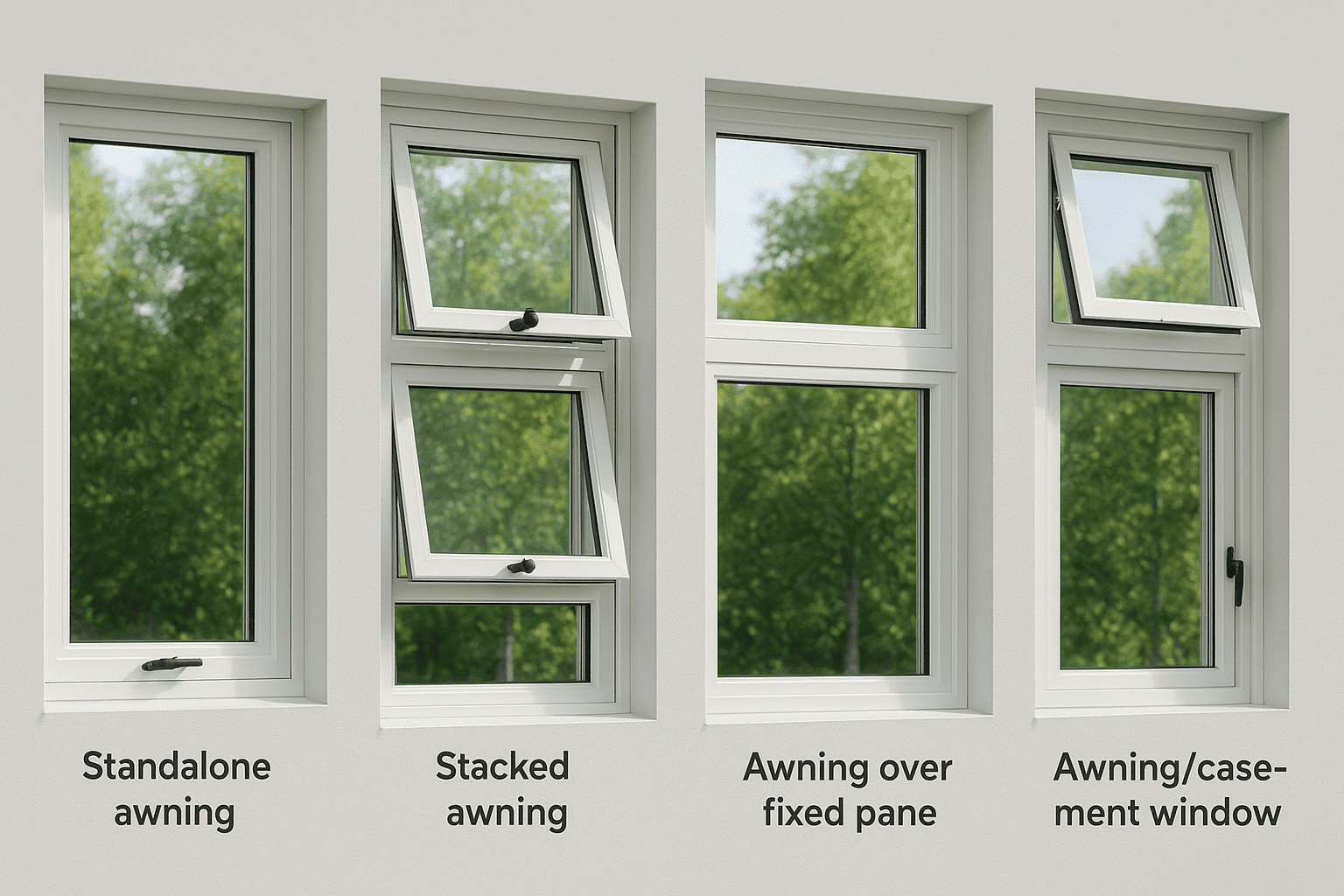
The right awning window design depends on whether you need airflow, light, or both working together.
Standalone and stacked units
Single awning units work well as a standalone window over a sink or beside a door, while stacked pairs, two or three set on top of each other, suit taller walls where you want continuous ventilation from floor to ceiling. Stacking is a favourite in modern awning windows used on new-build facades across Ontario, since it reads as one clean glass panel from the street.
Combination and hybrid designs
Combination designs pair an awning sash with a fixed picture window, giving you a wide, unbroken view with just a narrow strip that opens for air. A few manufacturers also build a hybrid awning casement window, where the same frame can be ordered with either hinge style depending on the opening you need.
| Type | Best use |
|---|---|
| Standalone awning | Bathrooms, laundry rooms |
| Stacked awning | Tall living room or hallway walls |
| Awning over fixed pane | Kitchens, dining rooms |
| Awning/casement window | Mixed rooms needing flexible airflow |
Awning vs casement windows: what's the difference
Side by side, an awning window and a casement window look similar until you watch them open. A casement swings outward from a hinge on the left or right, like a door, while an awning tilts out from a hinge along the top. That difference in hinge placement changes almost everything about how each window performs in daily use.
The hinge position, not the glass, is what separates an awning window from a casement.
Crank hardware operates both styles, so the way casement windows work will feel familiar if you already own them elsewhere in the house. Weather is where the two part ways: a casement caught open in rain lets water run straight down the glass and onto the sill, while an awning window's top hinge sheds rain like a small roof. That's why so many Ontario homeowners researching an awning/casement window end up choosing awning for exposed walls and casement for sheltered ones.
Security and sightlines also differ slightly. Casements offer a wider unobstructed opening for larger rooms, while awnings suit smaller openings set higher on a wall, which is part of why they dominate bathroom and basement installations.
| Feature | Awning window | Casement window |
|---|---|---|
| Hinge position | Top | Side |
| Rain performance | Sheds water while open | Lets water in while open |
| Typical placement | High walls, bathrooms | Eye-level walls, living areas |
| Opening size | Narrower | Wider |
Design ideas for modern homes and bathrooms
Contemporary builds across Ontario favour awning windows design choices that lean minimal: slim black or dark bronze frames, flush glazing, and stacked units running floor to ceiling along a stairwell or hallway wall. Pairing an awning with a large fixed pane keeps the glass line uninterrupted while still giving you a working vent, which is why so many new builds lean on this combination instead of a full wall of casements. Vinyl frames finished in matte black or graphite read as sleek rather than industrial, and they hold that finish through Ontario's freeze-thaw cycles far better than painted wood ever did.
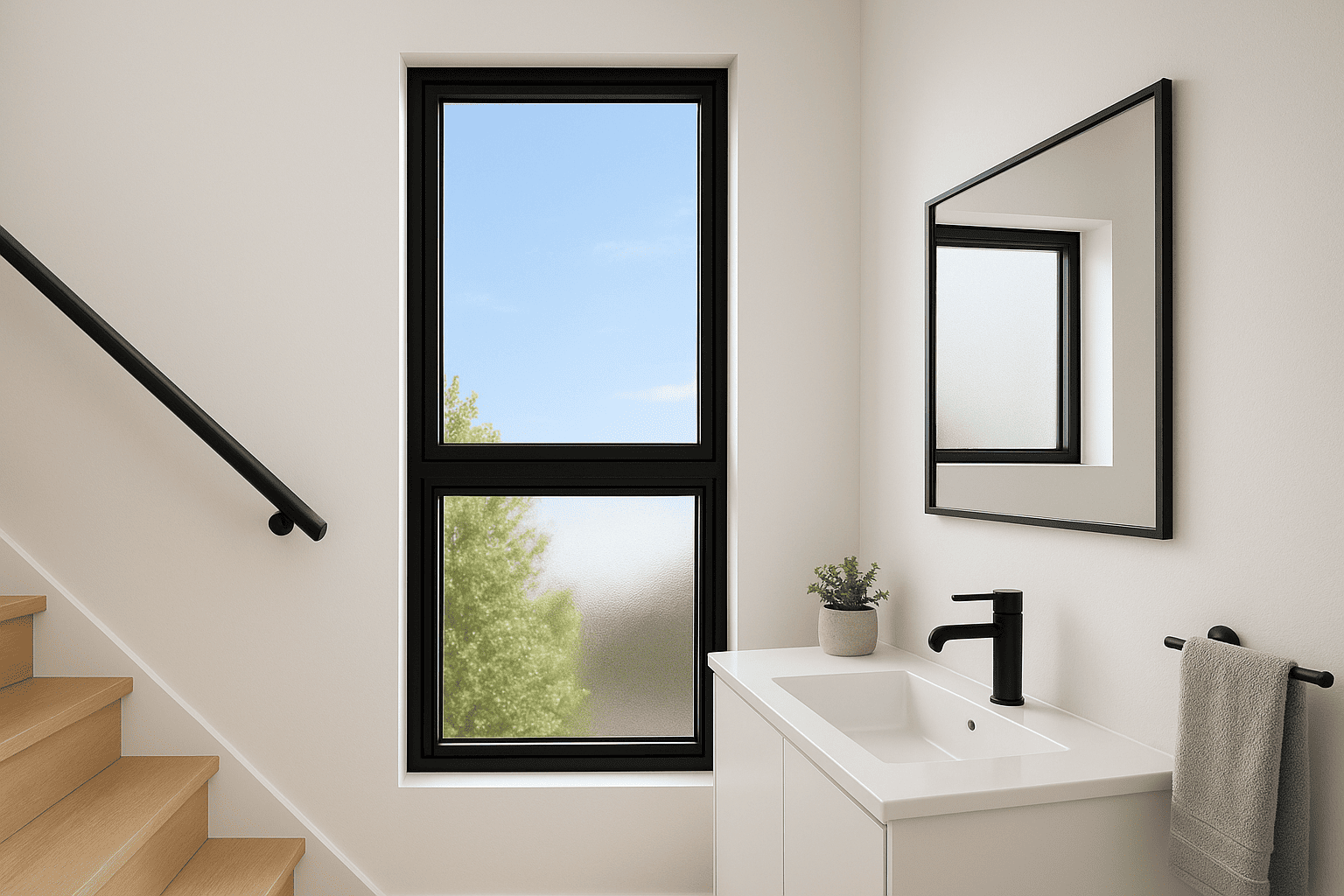
A well-placed awning window can vent a room without ever showing up as the focal point of the wall.
Bathroom styling that works
For awning bathroom windows, frosted or obscure glass is the detail that makes the whole idea work: you get daylight and steam control without anyone outside seeing in. Set the window higher than a standard sill, above a vanity or beside a shower enclosure, and you free up wall space below for tile or storage while keeping the room ventilated.
- Frosted or reeded glass for privacy without blocking light
- Higher sill placement above vanities or tubs
- Matching hardware finish to taps and fixtures
- Narrow widths that still crank open fully for steam release
These small choices are what separate a generic vent window from one that actually suits a finished bathroom.
Where to go from here
You now know what separates an awning window from a casement, where each style earns its keep, and how the details, glass, hardware, frame finish, shape the final look. Awning window styles aren't a niche choice anymore; they're a practical answer to Ontario's rain, wind, and privacy concerns, whether you're venting a bathroom or finishing a modern facade.
Getting the details right, sill height, glass package, frame colour, matters more than picking a style off a brochure. That's where a factory-direct manufacturer makes the difference: custom sizing, real warranty backing, and installers who understand Ontario's climate rather than a generic national supplier.
If you're ready to see how these options would look and perform on your own house, book a free in-home consultation with our Ontario windows and doors team at MK Windows and Doors and get a straight, factory-direct quote before you decide.