
If your old windows are letting in draughts, fogging up between the panes, or just sticking every time you try to open them, you're probably weighing up your options for a replacement. Double hung window vinyl models come up constantly in that search, and for good reason: they combine two moving sashes with a low-maintenance frame that holds up well through an Ontario winter. Before you commit, it helps to know exactly what you're buying.
This guide breaks down what makes vinyl double hung windows worth considering, from their dual-sash design to the practical trade-offs against casement or slider styles. You'll see how Low-E coatings and Argon fills affect your energy bills, what installation involves, and where these windows tend to fall short compared to other frame materials.
We'll also cover realistic pricing ranges you can expect across Canada, so you're not caught off guard by a quote. As a factory-direct manufacturer, we build and install custom vinyl windows daily, and we'll share the practical details homeowners actually need before replacing theirs.
Why vinyl double hung windows are worth considering
Double hung windows have been around for over a century, but the vinyl versions solve most of the headaches that plagued their wooden predecessors. Both sashes slide up and down independently, so you get top-and-bottom ventilation without propping anything open with a stick. Vinyl frames don't rot, warp, or need repainting every few years, which matters when you're comparing lifetime costs rather than just the sticker price at installation. If you've been putting off a replacement because the last set of windows you owned needed constant upkeep, that's the problem vinyl was built to fix.
Ventilation control that actually works
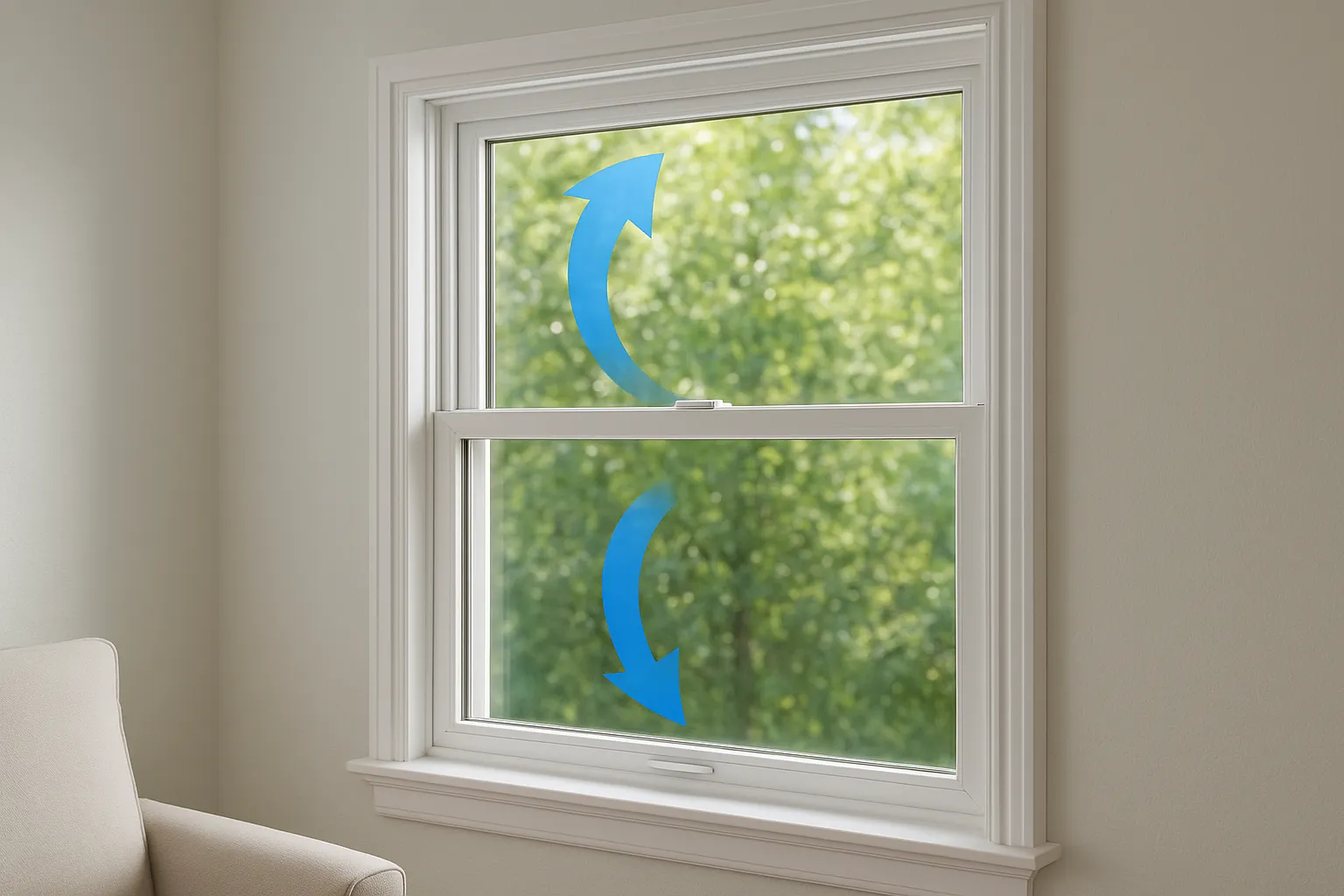
Anyone who's lived with a stuck sash knows how annoying single-direction airflow gets in a house that needs cross-ventilation. With double hung window vinyl styles, you can crack the top sash to let hot air escape near the ceiling while the bottom stays shut, or open both partway for a gentle draught through a bedroom on a mild evening. This flexibility is one reason the style keeps showing up in kitchens and bathrooms, where moisture needs somewhere to go without a full window swung wide open.
Energy performance suited to Ontario winters
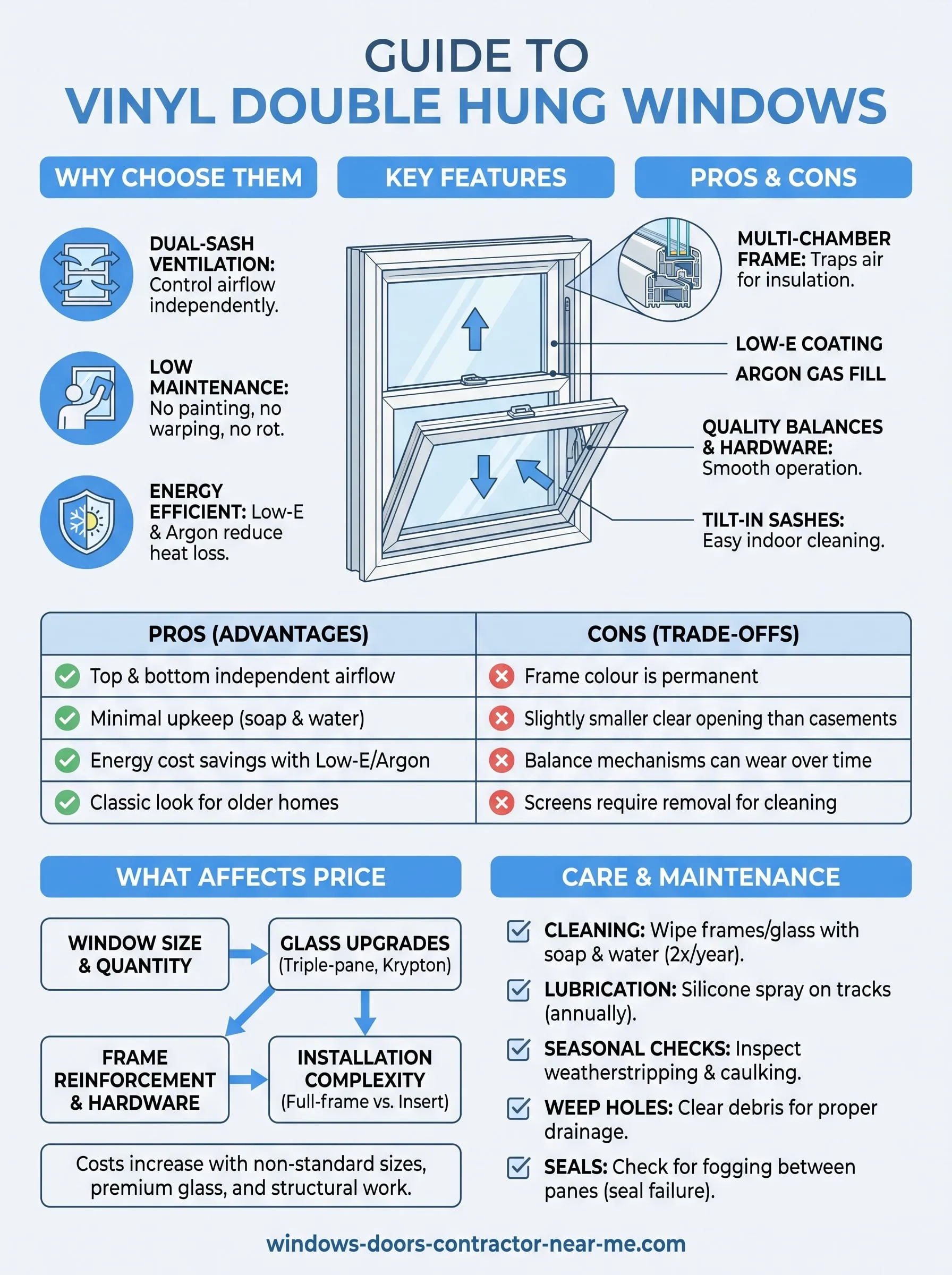
Vinyl frames insulate better than aluminium and compete well with wood once you factor in Low-E coatings and Argon gas fills, both of which we build into our standard window packages at MK Windows and Doors. The multi-chamber vinyl profile traps air inside the frame itself, cutting down on the conductive heat loss that makes older aluminium-framed windows feel cold to the touch in January. According to Natural Resources Canada, window upgrades rated to ENERGY STAR standards can meaningfully reduce a home's heating demand in a climate zone like ours.
A well-sealed double hung vinyl window can pay for itself in lower heating bills long before it needs replacing again.
Lower maintenance than wood or aluminium
Wood needs sanding, staining, and caulking on a schedule; aluminium conducts cold straight through the frame and can pit or corrode near the coast. Vinyl needs neither. A quick wipe with soap and water twice a year keeps the frames looking new, and there's no repainting cycle to budget for. This is a big part of why retrofit projects in older Innisfil homes needing window replacement so often land on vinyl rather than trying to match the original wood frames.
A practical fit for resale value
Buyers touring a house notice window condition fast, especially foggy glass or frames that won't latch properly. Swapping in vinyl double hung windows signals that the home has been kept up, and appraisers factor energy-efficient upgrades into their assessments more than they used to. Homeowners planning to sell within five to ten years often find that new windows return a solid chunk of their cost at closing, on top of the comfort gained while living there.
Where they make the most sense
Vinyl double hung windows suit almost any room, but they shine in specific spots:
- Bedrooms and living rooms, where flexible ventilation and a classic look matter
- Second-storey rooms, where tilting sashes make cleaning the outside glass possible without a ladder
- Older homes, where the traditional double hung profile matches the original architecture better than a slider or casement would
If your house already has double hung openings, replacing like-for-like with the vinyl double hung windows we install across Ontario is usually the simplest and most cost-effective route, and it avoids the structural changes that switching styles can require.
How to choose the right vinyl double hung windows
Picking the right window comes down to matching specs to your house, so it's worth knowing what to check before you buy a replacement double hung window rather than grabbing whatever's cheapest at the hardware store. Start with the room: a bathroom needs different glass and hardware than a north-facing living room that loses heat all winter. Getting this wrong means paying for features you don't need, or worse, missing ones that would have solved your actual problem.
Match glass and coatings to your climate
Ontario winters and summers both push windows hard, so choosing the right glass package for a Canadian climate matters more here than in milder regions. Ask any supplier whether their Low-E coatings and Argon fills come standard or cost extra, since some quotes look cheap until you add these back in. We include both as standard on every vinyl double hung window we build, because leaving them out barely saves money but noticeably hurts performance.
The glass package does more for your comfort than the frame colour ever will.
Check frame quality, not just price
Not all vinyl is equal. Multi-chamber frames with reinforced corners outlast thin single-chamber profiles by years, even though they look nearly identical in a showroom. When comparing quotes, ask directly about chamber count and reinforcement, since this detail rarely appears on a price sheet but drives long-term durability.
Confirm hardware and screen options
Tilt latches, locking mechanisms, and screen quality vary a lot between manufacturers. A window that's hard to tilt back for cleaning becomes a chore you avoid, so test the hardware in person if you can before ordering.
A quick checklist before you order
Use this list when comparing suppliers or reviewing a quote:
- Does the quote specify chamber count and reinforcement type in the frame?
- Is Low-E glass and Argon fill included, or listed as an upgrade?
- What warranty covers seal failure, and for how many years?
- Does the installer carry licensing and insurance for your province?
- Can you see a sample sash tilted and latched before committing?
- Does the price include removal and disposal of your old windows?
Running through these questions before signing anything protects you from the two most common regrets homeowners mention: paying for a glass package that wasn't actually upgraded, and discovering the installer subcontracted the job to someone with no local reputation.
Key features of vinyl double hung windows
Understanding what's actually inside a vinyl double hung window helps you spot a quality build from a bargain-bin one. Every model shares the same basic anatomy: two vertically sliding sashes, a multi-chamber vinyl frame, and a glass package that does most of the energy-saving work. The details within each of those parts, though, vary enormously between manufacturers, and that's where the real differences in performance and price show up.
The dual-sash mechanism
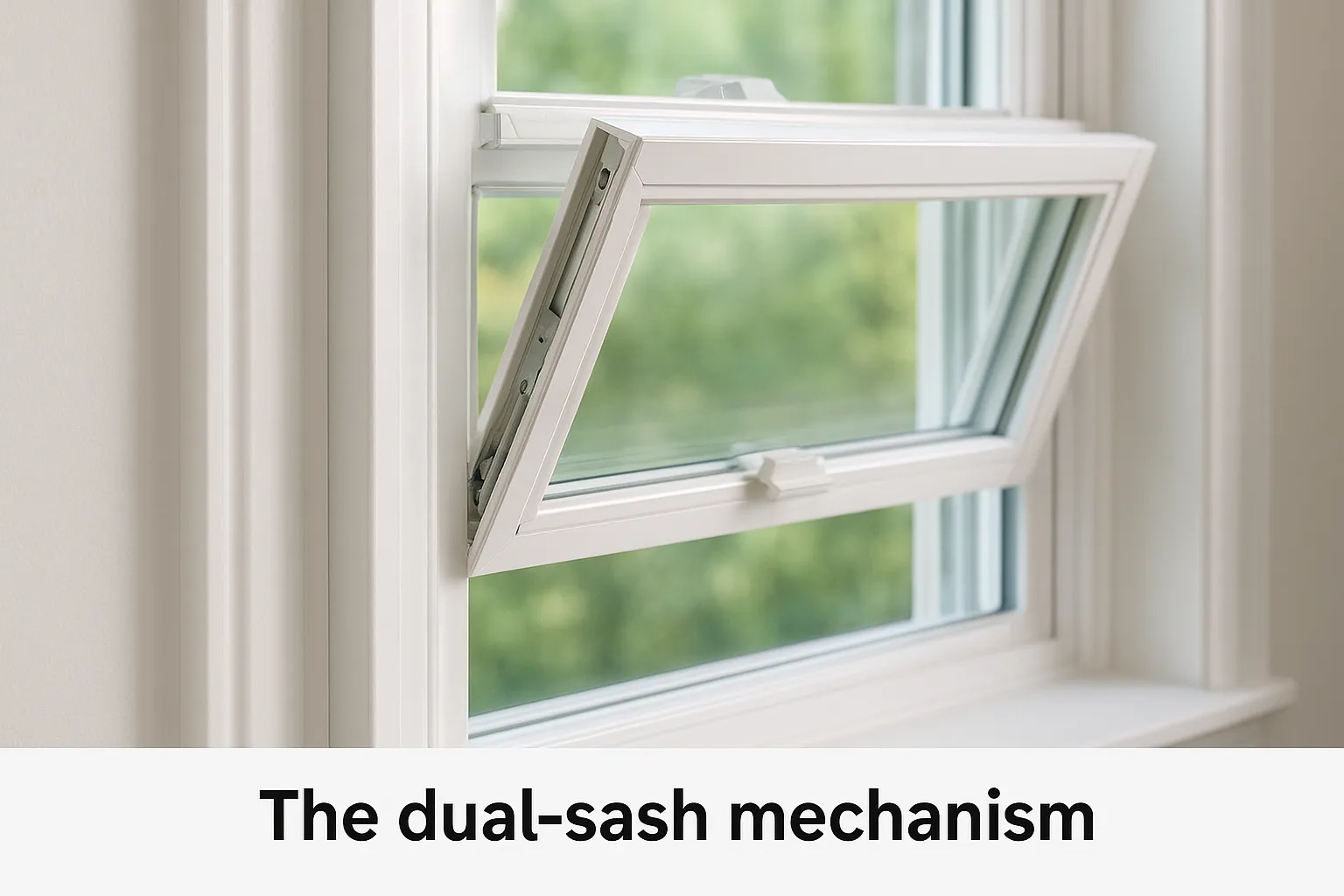
Both sashes in a double hung window vinyl unit move independently along their own tracks, and most modern versions tilt inward for cleaning without you needing a ladder, which is worth understanding if you're new to how double hung windows work. Balance systems, usually a spring or block-and-tackle mechanism, hold each sash at whatever height you set it, so it won't slide shut on its own. Cheaper balance hardware wears out within a few years and starts letting sashes drift, so ask what type is used before you buy.
A window that won't hold its position isn't saving you anything on your energy bill.
Frame construction and chambers
Vinyl frames are extruded with hollow internal chambers that trap air and add rigidity, and more chambers generally means better insulation and less flex over time. Reinforced corners, usually welded rather than mechanically fastened, keep the frame square through decades of temperature swings, which matters given how much Ontario frames expand and contract between January and July.
Glass, coatings, and gas fills
The glass package is where most of the actual performance lives. Low-E coatings reflect heat back into the room in winter, and Argon gas fills between the panes slow heat transfer far more than plain air does.
| Feature | Standard option | Upgrade option |
|---|---|---|
| Panes | Double-glazed | Triple-glazed |
| Coating | Low-E | Low-E with tinting |
| Fill | Argon | Krypton |
| Frame colour | White, almond | Custom colour match |
| Grille pattern | None | Internal grilles |
Hardware and screens
Latches, tilt-lock levers, and half-screens round out the build. Screens should lift out easily for cleaning, and locks should engage firmly without forcing. We build all of these details into each custom window in our lineup, so you're not choosing between features and fit.
Pros and cons of vinyl double hung windows
Every window style trades one advantage for another, and vinyl double hung windows are no exception. Weighing these points against your own priorities, whether that's budget, maintenance, or ventilation style, helps you decide if this is the right fit for your project rather than just the popular default.
The clear advantages
Starting with what draws most homeowners to this style: dual-sash ventilation lets you control airflow from top and bottom independently, which single-hung windows and picture windows can't match. Vinyl's low upkeep means no repainting, sanding, or sealing over the years, and the tilt-in sashes make cleaning second-storey glass possible without renting a ladder. Energy performance holds up well too, especially once you add Low-E coatings and Argon fills, which we build into every double hung vinyl window as standard rather than an upsell.
The style that lets you control airflow from both the top and bottom of the window is hard to beat for everyday comfort.
The trade-offs to weigh
Understanding the downsides matters just as much. Vinyl frames can't be painted to match a new exterior colour scheme the way wood can, so your colour choice is largely locked in at purchase. Vertical sliding windows also have a slightly smaller unobstructed opening than casement windows of the same size, since half the frame is always occupied by the opposite sash. Older or poorly built units can develop drafts around the balance mechanism if the hardware wears out, which is why checking balance system quality before buying matters more than most buyers realise.
A side-by-side summary
| Pros | Cons |
|---|---|
| Independent top and bottom ventilation | Smaller clear opening than casement styles |
| Low maintenance, no repainting needed | Frame colour is fixed once ordered |
| Tilt-in sashes for easy cleaning | Cheap balance hardware wears over time |
| Strong energy performance with Low-E and Argon | Slightly less airtight than fixed or casement seals |
| Classic look suits traditional homes | Screens need periodic removal for cleaning |
Virtually every drawback on that list comes down to build quality rather than the style itself. A well-made vinyl double hung window with reinforced balances and a proper glass package avoids most of these issues entirely, which is why it pays to ask pointed questions about hardware and chamber construction before signing a quote.
What affects the price of vinyl double hung windows
Most homeowners want a number before they even call a supplier, but vinyl double hung windows price out differently depending on size, glass, and how complicated the installation turns out to be. Expect a standard-size unit with Low-E glass and Argon fill to land somewhere between $400 and $900 installed, with larger or custom-shaped openings pushing past $1,200. Getting a firm number means walking through each variable that moves the price up or down, and it helps to see typical window replacement costs in Ontario first.
Size and number of openings
Bigger obviously costs more, but the jump isn't always linear. A window wider than standard stock sizes often needs a custom-built sash and frame rather than a factory-standard one, which adds cost beyond simple square footage. Ordering multiple openings at once usually earns a better per-unit rate too, since the crew is already on site and the manufacturer batches the cutting.
Glass upgrades and coatings
Standard double-glazed Low-E coatings and Argon fills are included in our base price at MK Windows and Doors, but triple-glazing, Krypton fill, or tinted glass all add cost, as our breakdown of glass upgrade costs in 2026 shows. These upgrades matter most on north-facing walls or rooms that run cold in January, so it's worth spending here before cutting corners elsewhere.
Paying extra for glass almost always beats paying extra for frame colour, because glass is what actually keeps the heat in.
Frame reinforcement and hardware
Reinforced corners, upgraded balance systems, and better tilt-latch hardware all push the price up slightly, but they're the parts that determine whether the window still works smoothly in ten years. Cheap hardware saves you $20 to $30 per window now and costs you a service call later.
Installation complexity
A straightforward swap into an existing opening costs far less than a job requiring structural changes, rotten sill repair, or brick-cutting for a size change. Full-frame replacements also run higher than insert-style installs, since more of the original structure needs removal and rebuilding.
| Price factor | Typical impact on cost |
|---|---|
| Standard vs custom size | +10-30% for non-standard dimensions |
| Low-E and Argon | Included as standard with us |
| Triple-glazing or Krypton | +$50-150 per window |
| Reinforced frame and hardware | +$30-80 per window |
| Insert vs full-frame install | Full-frame typically 20-40% higher |
Requesting an itemised quote, rather than a single lump figure, is the fastest way to see exactly which of these factors is driving your price up.
Vinyl double hung windows vs other window styles
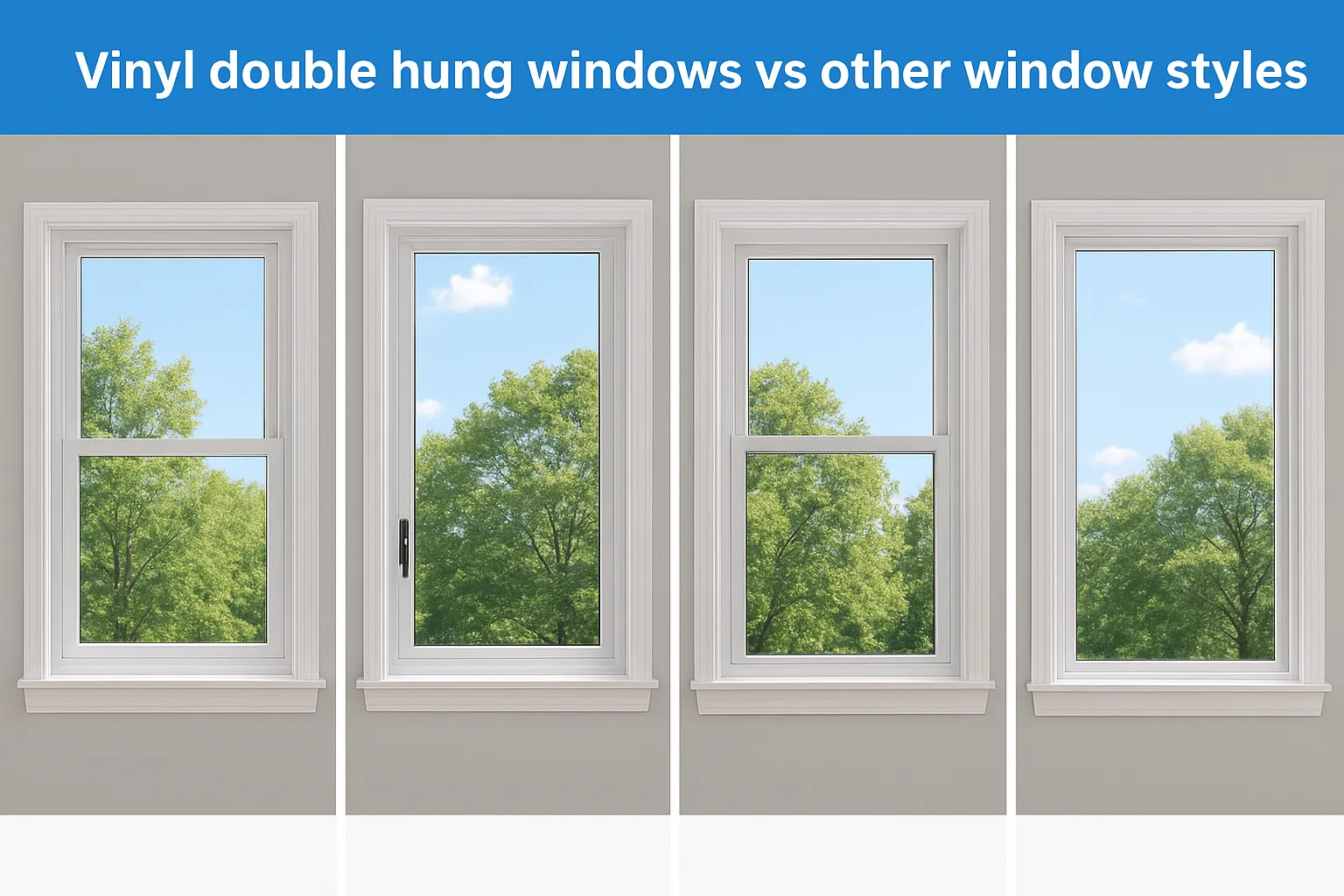
Choosing between window styles usually comes down to how you actually use the room, not which one looks best in a brochure. Casement units built for Ontario homes crank open like a door and seal tighter against the frame, which suits a home office or a spot near the coast where wind-driven rain is a problem. Side-to-side sliding windows move horizontally instead of up and down, and they're a natural fit for wide openings where a double hung sash would look cramped. Picture windows don't open at all, trading ventilation entirely for an unbroken view and slightly better insulation since there's no moving parts to seal.
Where double hung windows pull ahead
Versatility is the real selling point here. A double hung window vinyl unit gives you top-and-bottom airflow that casements and sliders simply can't match, since both sashes move independently along their own track. Traditional home styles, especially older Innisfil builds with original double hung openings, also tend to look right with this profile rather than a modern slider or casement bolted into a period frame.
No other common window style lets you draw hot air out the top and cool air in the bottom at the same time.
Where the alternatives win
Casements seal more tightly because the sash compresses against the frame when cranked shut, which trims a small amount of air leakage compared to a double hung's sliding seal. Sliders cost slightly less to manufacture for wide openings and skip the balance hardware altogether, so there's one less mechanical part that can eventually wear out. Awning window styles, which hinge at the top and tilt outward, let you leave a window cracked during light rain, something a double hung can't manage without water finding its way in.
A side-by-side comparison
| Style | Ventilation | Sealing | Best use case | |---|---|---| | Double hung | Top and bottom, independent | Good | Bedrooms, traditional homes | | Casement | Full opening, crank-out | Excellent | Coastal or windy sites | | Slider | Side to side | Good | Wide openings, modern homes | | Awning | Top-hinged, rain-safe | Very good | Basements, rainy climates | | Picture | None | Excellent | Views, fixed light sources |
If you're also weighing sliding windows against casement styles, matching the style to the room rather than picking one for the whole house usually gets you the best mix of ventilation and energy performance without paying for features you won't use.
Caring for your vinyl double hung windows
Vinyl double hung windows need far less attention than wood or aluminium, but a few minutes twice a year keeps them performing the way they did on installation day. Skipping this upkeep doesn't cause dramatic failures overnight, but it does let small problems, like a sticky track or a worn weatherstrip, turn into draughts and higher heating bills over a few seasons.
Cleaning the frames and glass
Soap and warm water handle nearly everything a vinyl frame encounters. Avoid abrasive pads or solvent-based cleaners, since they can dull the finish and void the manufacturer's warranty on some products. Tilt both sashes inward twice a year to wipe down the glass and track, and check the weep holes at the bottom of the frame for dirt or dead insects blocking drainage.
A window that drains properly never gets the chance to trap moisture that rots a sill or fogs the glass.
Maintaining balances and hardware
The balance mechanism is the part most likely to wear out first, since it's doing physical work every time you raise or lower a sash. Lubricate the tracks once a year with a silicone-based spray, never petroleum-based grease, which attracts grit and gums up the mechanism. Test the tilt latches while you're at it; a latch that needs force to engage is usually a sign the balance is starting to fail rather than a hardware fault on its own.
Seasonal checks worth doing
Running through a short list each spring and autumn catches most issues before they cost you money:
- Inspect weatherstripping around both sashes for gaps or compression
- Check caulking on the exterior frame for cracks after winter
- Clean tracks and weep holes of debris
- Confirm screens sit flush and lift out without sticking
- Look for condensation between panes, a sign of seal failure
When to call in a professional
Condensation trapped between the glass panes means the seal has failed and no amount of cleaning fixes it, since the insulating gas has already escaped. That's when a warranty claim matters, which is why our windows and doors come with a 15-year seal failure warranty as standard. Catching this early protects the energy performance you paid for in the first place.
Final thoughts on choosing your windows
Vinyl double hung windows earn their popularity honestly. You get independent top-and-bottom ventilation, low upkeep, and solid energy performance once Low-E glass and Argon fills are part of the package rather than an upsell. The trade-offs are real but manageable: a fixed frame colour, a slightly smaller opening than a casement, and hardware that needs decent balance mechanisms to stay smooth for decades. None of that outweighs the benefits for most Ontario homes, especially older ones where the double hung profile already matches the architecture.
What separates a good window from a disappointing one usually comes down to build quality, not style choice. Chamber count, reinforced corners, and a proper warranty matter more than a flashy showroom display. If you're ready to compare quotes on vinyl double hung windows built specifically for Canadian winters, request a free factory-direct quote from MK Windows and Doors and see exactly what that pricing looks like for your home.