
Standing in front of a window catalogue trying to pick between two styles that look almost identical on paper gets frustrating fast. That's the exact spot most homeowners hit when comparing awning vs casement windows, since both crank open, both seal tightly, and both come in the same vinyl frames with Low-E glass. The difference matters more than it looks, though, especially once you factor in Ontario's swing between icy winters and humid summers.
The short answer: casement windows hinge on the side and open outward like a door, giving you full ventilation and an unobstructed view, while awning windows hinge at the top and open outward from the bottom, which lets you crack them open during rain without water getting inside. That single hinge placement changes how each performs for weather resistance, airflow, and where they work best on your house.
This guide breaks down how each style handles ventilation, energy efficiency, security, and placement, from basements to bathrooms to living rooms, so you can match the right window to the right room before you request a quote from a manufacturer like ours.
Why the difference between awning and casement windows matters
Picking the wrong style between casement vs awning windows doesn't just affect how your house looks from the street. It changes how much cold air leaks in every January, how well you can vent a steamy bathroom, and how vulnerable a ground-floor room is to a break-in. Ontario homeowners deal with driving rain, heavy snow loads, and humid summers all in the same year, so the hinge placement on a window stops being a cosmetic detail and starts being a performance decision.
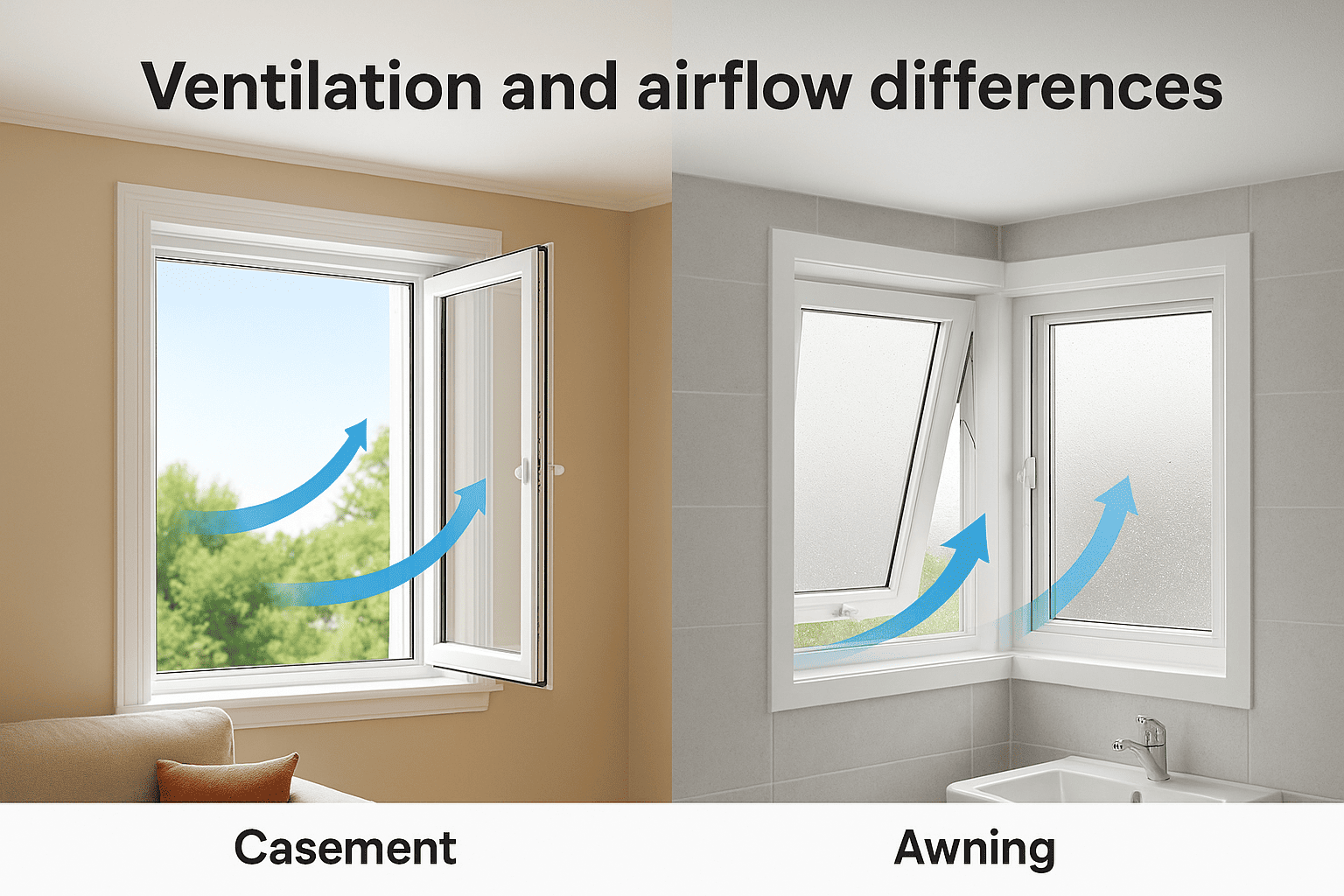
Ventilation and airflow differences
Casement windows swing fully open like a door, catching passing breezes from almost any angle and funnelling them straight into the room. That makes them the stronger choice for a living room or bedroom where you want maximum airflow on a warm evening. Awning windows open less dramatically, hinged at the top and pushed out from the bottom, so they scoop air upward and in rather than sweeping it across the whole opening. You still get real ventilation, just at a gentler volume, which happens to suit small or damp rooms where you want steady airflow without a gust knocking papers off a desk.
Weather resistance and energy efficiency
Here's where the hinge position really earns its keep. An awning window's top-hinged design lets the sash act like a small awning over its own opening, so you can leave it cracked during a downpour without water running down the glass and into the room. Casement windows don't have that built-in overhang, so an open casement in the rain means a wet windowsill. Both styles seal with a compression method rather than sliding past a track, which is why they consistently outperform sliding windows on air infiltration ratings, but the awning's angled sash gives it a slight edge in wind-driven rain.
An awning window sheds rain while open; a casement window has to be shut before the storm hits.
Security considerations
Both styles use multi-point locking hardware that presses the sash tight against the frame, which makes them harder to pry open from outside than a standard slider. Security becomes a genuine factor when you're placing a window within reach of the ground.
| Feature | Casement | Awning |
|---|---|---|
| Hinge position | Side | Top |
| Ventilation style | Full, sweeping airflow | Gentle, upward airflow |
| Open in rain | No | Yes |
| Typical placement | Living rooms, bedrooms | Bathrooms, basements |
| Ground-floor security | Good | Very good, harder to reach the latch |
Understanding these mechanical differences before you compare awning windows vs casement on price or looks saves you from a costly reinstall two years down the line, once you realise the bathroom window fogs up because it can't stay open during a shower, or the living room window won't vent enough on a humid August afternoon.
How to choose between awning and casement windows
Deciding between these two styles gets easier once you stop comparing them as abstract products and start thinking about how you actually use the room. A side-hinged casement window rewards you with a wide, unobstructed opening and strong airflow, which suits anyone who wants to throw a window open on a mild afternoon and let a room breathe. A rain-friendly awning window rewards you with flexibility, since you can leave it cracked during a light rain or overnight without worrying about water pooling on the sill. Neither choice is wrong, but one will always fit your habits better than the other.
Start with how you use the room
Think about what actually happens in the space day to day. Somebody who cooks often and needs a kitchen window that vents steam quickly leans toward a casement. Somebody who wants a window left open for airflow through a light Ontario drizzle, like above a kitchen sink or in a mudroom, leans toward an awning. If you're still torn between awning windows vs casement for a specific room, picture the window mid-use rather than closed in a showroom photo.
Run through a quick checklist
A short list of questions clears up most indecision faster than scrolling through more product photos:
- Does the room need full ventilation or just steady airflow? Choose casement for the former, awning for the latter.
- Will it ever need to stay open during rain? Awning wins here every time.
- Is the window within reach from outside? Either style locks securely, but awning hardware sits slightly further from a would-be intruder's grip.
- Do you want an unobstructed view when it's open? Casement swings clear; awning's sash partially blocks the lower view.
- Is your budget tight? Sizes and features matter more than style here, so get quotes on both before deciding.
Running through these five questions against each room in your home usually narrows the decision down before you even request a free consultation to compare actual pricing and sizing options.
Best rooms and locations for each window style
Matching the window to the room stops being guesswork once you know each style's strengths. Kitchens above a sink, bathrooms next to a shower, and basement window wells all benefit from an awning window, since you can leave it cracked for airflow without worrying about a sudden shower ruining the sill or fogging up the mirror. Bedrooms, living rooms, and dining areas usually call for a casement window instead, because those rooms benefit more from a wide, unobstructed opening than from rain-friendly ventilation.
Where casement windows perform best
Grand front-facing rooms, home offices, and any space where you want an uninterrupted view when the window's shut all suit casement windows well. Their side-hinge design also makes them a strong pick for hard-to-reach spots, like over a kitchen counter or above a bathtub, where a hand crank does the opening instead of you leaning over furniture.
Where awning windows perform best
Lower-level rooms take the biggest advantage of an awning window's design. Awning windows in basements, mudrooms, and laundry rooms often sit at or below grade, where driving rain and snowmelt pool against the foundation, so a top-hinged sash that sheds water while venting moisture matters more there than almost anywhere else in the house.
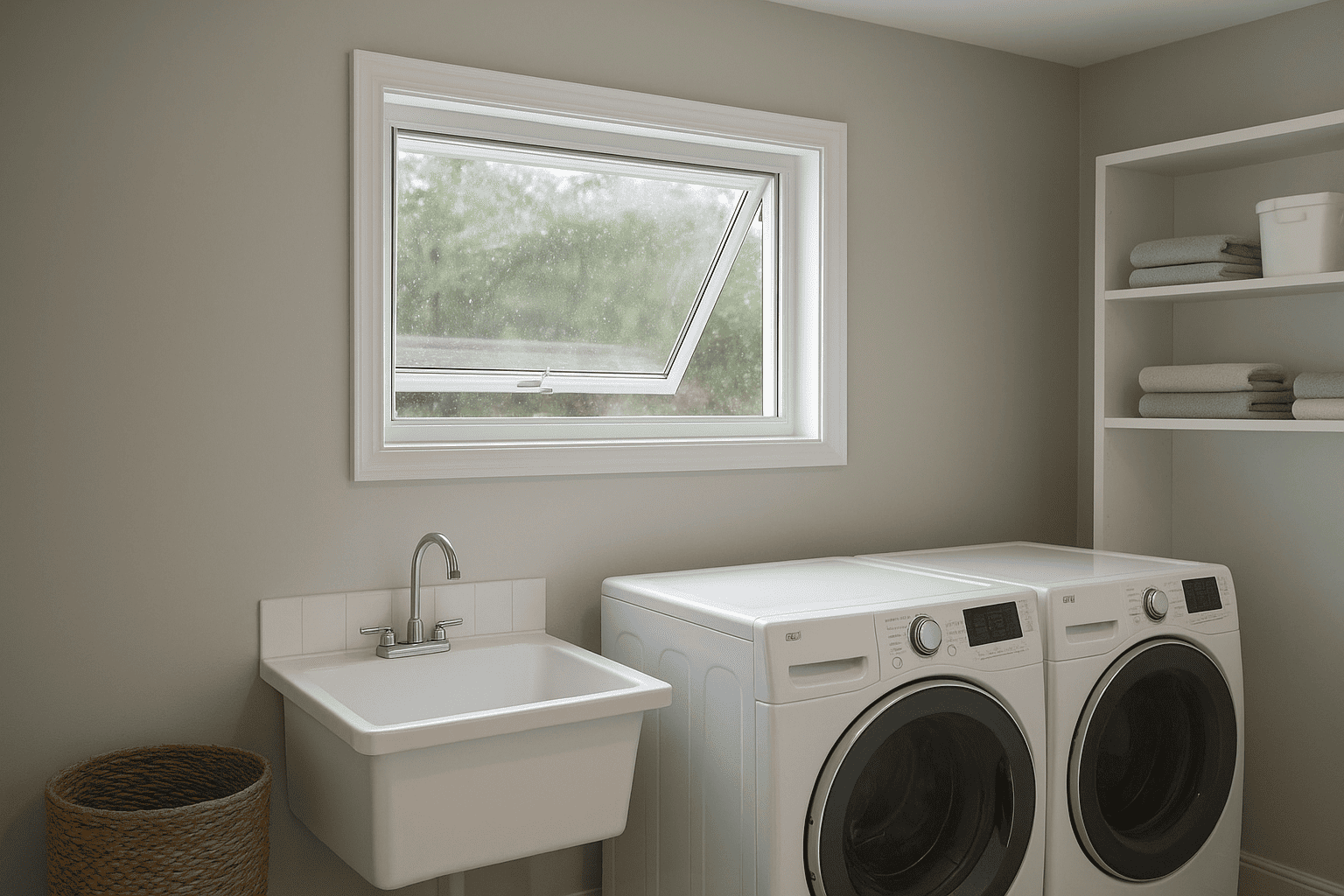
Put awning windows where rain is a risk and casement windows where the view matters most.
Garages and attached workshops also do well with awning windows placed high on the wall, since they clear stored items below while still pulling out stale air.
| Room or location | Recommended style | Why |
|---|---|---|
| Living room, bedroom | Casement | Full airflow, clear view |
| Kitchen, above sink | Awning | Ventilates without rain damage |
| Bathroom | Awning | Privacy with steady airflow |
| Basement, below grade | Awning | Sheds rain, resists flooding risk |
| Home office, dining room | Casement | Unobstructed sightlines |
Factoring in placement before comparing awning windows vs casement on price alone keeps you from installing a style that looks right in the showroom but underperforms once it's facing a driveway puddle every spring thaw.
Comparing costs and maintenance requirements
Price tends to be the deciding factor once the ventilation and placement questions are settled, so it helps to know where casement vs awning windows actually differ on the invoice. Casement windows generally run a little higher per unit because the hardware, the multi-point locks, and the larger hinge assembly needed to support a full swing-out sash cost more to manufacture. Awning windows use a similar mechanism but on a smaller sash, so the hardware and glass area shrink together, which usually knocks a modest amount off what Canadians pay for awning windows in a comparably sized opening.
Upfront pricing and installation
Buying factory-direct changes this equation more than the style choice does. A wholesale manufacturer cuts out the retail markup that inflates both styles equally, so the gap between an awning and a casement window often narrows to the size of the glass rather than the mechanism itself. Installation labour runs about the same for either style, since both need the same careful shimming and sealing around the rough opening to hold their energy ratings.
The style rarely swings your budget as much as buying factory-direct does.
Long-term maintenance
Maintenance is where the two styles actually separate. Awning windows collect debris and grime along the top-hinge track, which sits exposed to falling leaves and roof runoff if it's mounted under an eave. Casement windows keep their hinges along the side, away from most overhead debris, so they generally need less frequent cleaning at the mechanism itself, though the crank operator on a casement window can loosen over years of heavy use and need tightening or replacing.
| Factor | Casement | Awning |
|---|---|---|
| Typical unit cost | Slightly higher | Slightly lower |
| Hardware wear point | Crank handle | Top-hinge track |
| Cleaning difficulty | Easier hinge access | Debris collects at hinge |
| Warranty coverage | Same as awning | Same as casement |
Warranty coverage should stay identical between the two if you're buying from a manufacturer that stands behind its own product, so check that a 15-year seal failure warranty applies regardless of which style you pick.
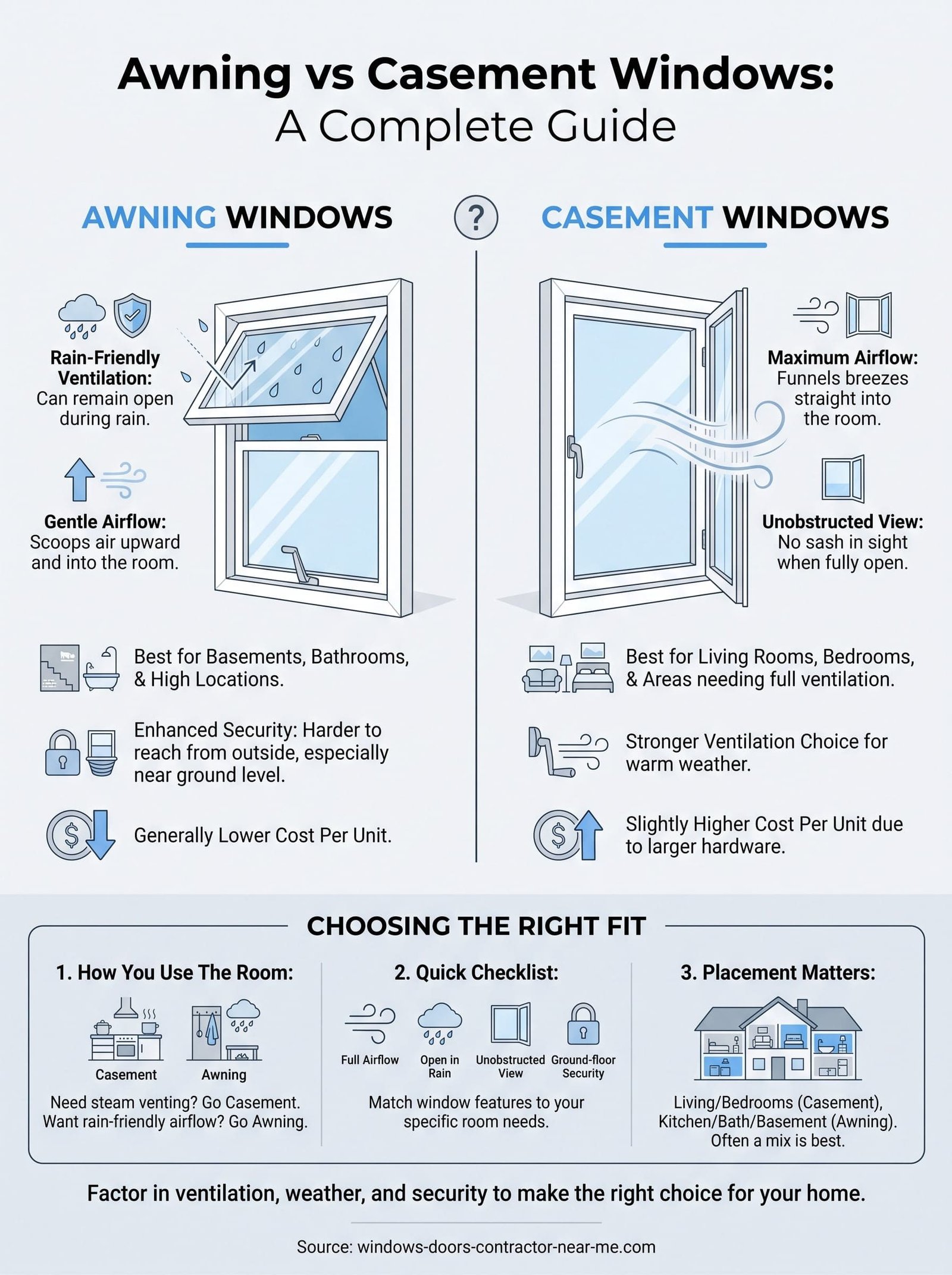
Choosing the right fit for your home
Neither style beats the other outright. Casement windows win when a room needs full airflow and an unobstructed view, like a living room, bedroom, or home office. Awning windows win when a room needs ventilation that can stay open through a downpour, like a basement, bathroom, or kitchen sink. Weighing awning vs casement windows always comes back to how you use the specific room, not which style looks better in a brochure.
Go room by room through your house, check the ventilation, weather, and security needs against the checklist earlier in this guide, and you'll land on the right mix faster than any showroom visit could get you there. Most homes end up with both styles installed in different spots, and that's the correct outcome, not a compromise.
Ready to compare real pricing on both styles for your home? Browse the window styles we build for Ontario homes and book a free in-home consultation for a factory-direct quote before you decide.