
You want fresh air in a spring rainstorm without soaking your window sill, and that's exactly the problem awning windows with screens solve. Hinged at the top and opening outward, awning windows let you crack a window during a downpour while the screen keeps mosquitoes and wasps out. It sounds simple, but the mechanics of where that screen sits, inside or outside the glass, trip up a lot of homeowners comparing options.
If you're searching for how awning windows with screens actually work, you've likely also wondered how to buy the right configuration, or how to get the screen off when you need to clean the glass. Because these windows swing outward, the screen has to sit on the interior side, which changes how it's framed, clipped in, and removed compared with a standard slider or double-hung window.
In this article, we'll walk through how the screen mechanism works on an awning window with screen, what product options exist for Ontario homes built for real winters and summers, and the exact steps for installing or removing the screen yourself. As a Canadian manufacturer that builds and installs these windows daily, we'll give you the practical detail other guides skip.
Why choose awning windows with screens for your home
Awning windows, and why Canadians choose them, earn their keep because they solve a problem most other window styles can't: airflow during bad weather. The outward-hinged sash acts like a small awning, deflecting rain away from the opening even when it's tilted open several inches. Add a screen behind the glass, and you get ventilation without the trade-off of bugs, pollen, or debris blowing into the room. For homeowners in Ontario dealing with humid summers and unpredictable spring storms, that combination matters more than it might on paper.
Ventilation you can trust in any weather
Because the sash opens outward from the top, you can leave an awning window with screen cracked open overnight during a thunderstorm without worrying about water pooling on the sill. This is a real advantage over sliders and double-hung windows, which typically need to be closed the moment rain starts. The screen sits on the interior track, so it stays protected from wind and precipitation while still letting air move freely through the opening. Homeowners in basements, bathrooms, and kitchens tend to like this style specifically because it lets them ventilate steam or cooking odours even when the forecast looks rough.
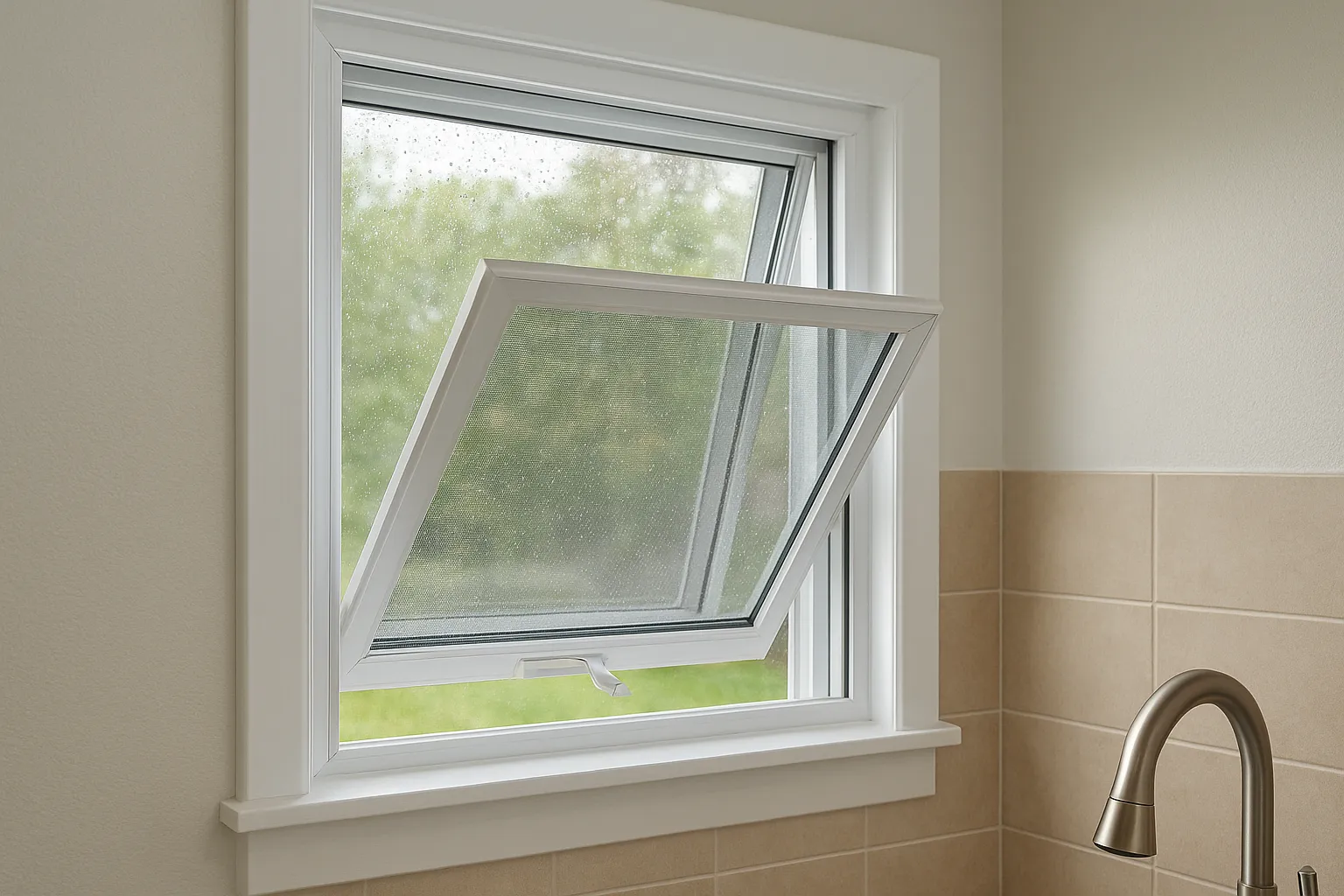
An awning window with a screen is one of the few styles you can safely leave open in the rain.
Built for energy efficiency in Canadian winters
Energy performance is where awning windows with screens pull ahead of older casement or slider designs. Because the sash compresses against the frame when closed, awning windows typically create a tighter seal than horizontal sliders, which reduces air leakage during Ontario's cold months. Pairing that tight seal with Low-E glass coatings and Argon gas fills, which is standard on the custom awning windows we build for Ontario homes, keeps heating costs down without sacrificing the ventilation benefit in warmer seasons. The screen itself has no bearing on thermal performance since it sits entirely on the interior side, away from the insulated glazing unit, so you don't lose any efficiency by having one installed.
Security, privacy, and flexible placement
Security-conscious buyers also gravitate toward this style because the top-hinge design makes forced entry harder compared with a window that slides open on a track. Placement flexibility is another underrated benefit, and the range of awning window designs and ideas shows it: awning windows work well positioned high on a wall, above a kitchen sink, or stacked below a fixed picture window, all locations where you want light and airflow but not necessarily an unobstructed view in from outside. Combined with a well-fitted screen, this makes them a practical choice for ground-floor bedrooms or bathrooms where privacy and ventilation both matter.
Where this window style earns its keep
Here's a quick rundown of the rooms and situations where awning windows with screens tend to outperform other styles:
- Awning windows in basements and below-grade rooms, where you need ventilation but limited swing clearance rules out a casement
- Bathrooms and kitchens, where steam and odour need an outlet even during wet weather
- Above sinks or counters, where a crank handle is easier to reach than a sash you'd have to lift
- Combined with fixed and casement picture windows, adding function to an otherwise static wall of glass
- Homes near busy streets, where the tighter seal cuts down on outside noise compared with older slider designs
Regardless of where you install them, the screen is what makes the window livable day to day. Without it, you're back to choosing between fresh air and a bug-free room, which defeats half the point of installing an awning window in the first place. Get the screen right, and this style genuinely earns its reputation as one of the most practical window choices for the Canadian climate.
How to install and remove an awning window screen
Because the screen on an awning window with screen sits on the interior side of the frame, taking it out or putting it back is a different job than popping out a slider screen from the outside. Most Ontario homeowners find it straightforward once they know where the retaining clips or spring tabs sit, but it helps to slow down the first time so you don't bend the frame or crack a mesh panel that's otherwise perfectly good.
Removing the screen for cleaning or repair
Start by opening the window sash fully so you've got clear access to the interior screen frame. Like the rest of the awning window hardware, screens are almost always held in place with either spring-loaded pins at the corners or small plastic tension clips along the top and bottom rails. Here's the general process:
- Locate the retaining clips or spring pins, usually at the top two corners of the screen frame
- Press or pull the pins inward while gently pulling the bottom of the screen toward you
- Once the top releases, angle the screen down and lift it out of the bottom track
- Set the screen flat on a towel or workbench to avoid warping the frame
Never force a stuck screen. A bent frame rail almost always costs more to replace than the ten minutes it takes to find the actual retaining clip.
If the screen won't budge, check for paint buildup around the clips first. That's the most common culprit on older homes, not a stuck mechanism.
Reinstalling the screen correctly
Once cleaning or repair work is done, reinstalling follows the reverse order, though the fit needs to be snug or you'll get gaps that let insects through. Line up the bottom edge of the screen frame with the interior track first, then tilt the top into place until the spring pins click or the tension clips seat fully. Run a hand around all four edges afterward to check for light gaps, since a screen that's even slightly misaligned defeats the entire purpose of having one.
- Fit the bottom rail into the interior track
- Tilt the top of the frame inward until it seats against the frame stop
- Press until the spring pins or clips click into place
- Close the sash partway and check for daylight gaps around the edges
Professionals install screens this way at the factory stage too, which is one reason we fit and test every screen before an installation goes out the door on our awning window orders. Getting the fit right the first time saves the homeowner from chasing gaps later. Testing the seal with the sash cracked open, the way you'd actually use the window, catches problems a flat bench test misses.
Choosing the right screen mesh and frame for your window
Not every screen mesh does the same job, and picking the wrong one is how homeowners end up with a screen that lets in dust or sags after a single Ontario winter. Standard fibreglass mesh is the default on most awning windows with screen fitted in Canada because it's cheap, flexible, and resists corrosion, but it's not the only option worth considering once you understand what each material trades off.
Comparing mesh materials
Aluminum mesh holds its shape better over time and resists tearing from pets or curious kids, though it's more prone to denting and can corrode near the coast or in high-humidity rooms like bathrooms. Solar screen mesh, a tighter weave designed to block UV and glare, cuts down on furniture fading but also reduces airflow slightly, which matters on a window style whose whole appeal is ventilation. Pet-resistant mesh, made from a heavier vinyl-coated polyester, costs more upfront but survives claws and noses far longer than standard fibreglass.
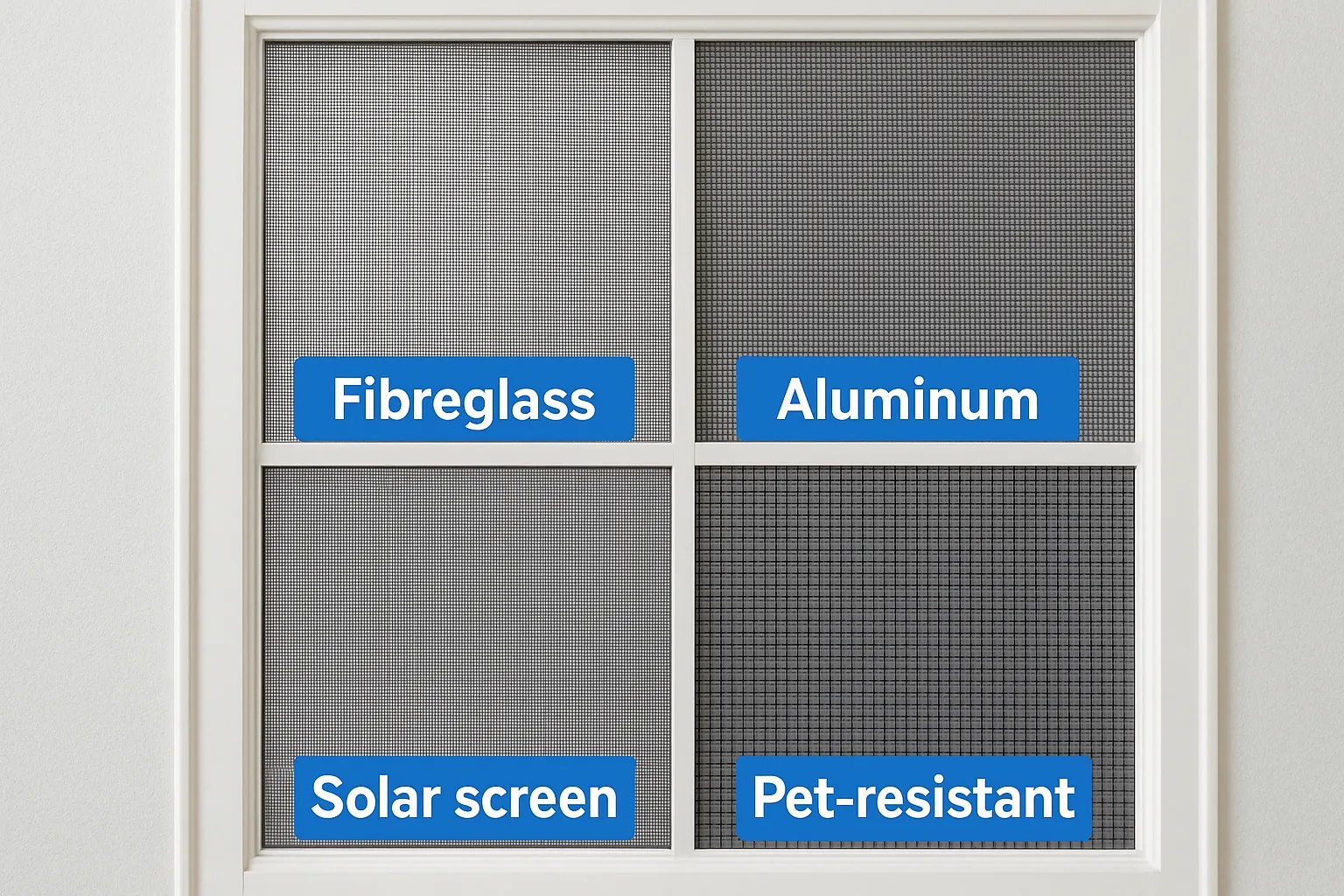
| Mesh type | Best for | Trade-off |
|---|---|---|
| Fibreglass | General use, budget installs | Sags slightly with age |
| Aluminum | High-traffic frames, durability | Can dent or corrode |
| Solar screen | Sun-facing rooms, glare reduction | Slightly reduced airflow |
| Pet-resistant | Homes with cats or dogs | Higher upfront cost |
The right mesh depends on what's actually bothering you, bugs, glare, pets, or all three, not on which option sounds premium.
Frame material and how it affects the fit
Beyond the mesh itself, the screen frame material determines how well the whole assembly holds up against the tension of daily opening and closing. Vinyl and aluminum frames are the two options you'll see on most Canadian-made awning windows, and both work fine, but aluminum frames tend to hold their shape better under the repeated flexing that comes from an outward-swinging sash. Vinyl frames are lighter and cheaper, which suits smaller basement or bathroom windows where the screen doesn't take as much daily wear.
Matching the screen to the room
Thinking through where the window sits helps you decide faster than comparing spec sheets. A kitchen window over the sink benefits from a tighter solar mesh to cut glare while cooking, while a basement egress window does better with a durable aluminum frame that won't warp in a damp environment. Awning windows with screens installed in a sunroom or south-facing wall are worth pairing with solar mesh regardless of cost, since UV exposure there is constant rather than occasional. When in doubt, ask your installer what mesh and frame combination they'd put in their own home facing the same direction, since that answer usually cuts through the marketing noise faster than a spec comparison ever will.
Awning window screens compared to other window styles
Once you understand how the screen sits on an awning window, it's worth seeing how that setup stacks up against the styles most Ontario homeowners are also weighing. Casement windows share the outward-swinging mechanism, and the way a casement sash opens puts their screens on the interior side too, so the comparison usually comes down to hinge placement rather than the screen itself. Sliders and double-hung windows work differently enough that the screen experience changes in ways that matter once you're living with the window day to day, which is a big part of the sliding windows versus casement debate.
Awning versus casement screens
Casement windows hinge on the side rather than the top, which means the screen frame on a casement tends to be taller and narrower than the wide, short screen on an awning window. Functionally, both keep the screen protected from weather since neither sash slides through the screen plane the way a slider does. The real difference shows up during a storm: a casement cranked open on a windy day can catch gusts like a sail, while an awning window's top hinge keeps the sash more stable and the screen behind it undisturbed.
Awning versus sliding and double-hung windows
Sliding windows and double-hung windows mount their screens on the exterior track, which means the screen takes the brunt of wind, rain, and UV exposure that an awning screen never sees. That exterior placement also means you can't leave a slider or double-hung window open during rain without water working past the screen and onto the sill. It's a meaningful gap for anyone comparing an awning window with screen against a traditional double-hung, so it's worth knowing how double-hung windows work before you decide, especially in a climate where sudden downpours are common.
If you've ever had to slam a window shut mid-rainstorm, that's the exact problem an awning screen is built to avoid.
Side-by-side comparison
| Window style | Screen location | Rain performance | Airflow while open |
|---|---|---|---|
| Awning | Interior | Excellent, stays open in rain | Good, angled airflow |
| Casement | Interior | Good, but wind-sensitive | Very good, full opening |
| Slider | Exterior | Poor, must close in rain | Moderate |
| Double-hung | Exterior | Poor, must close in rain | Moderate to good |
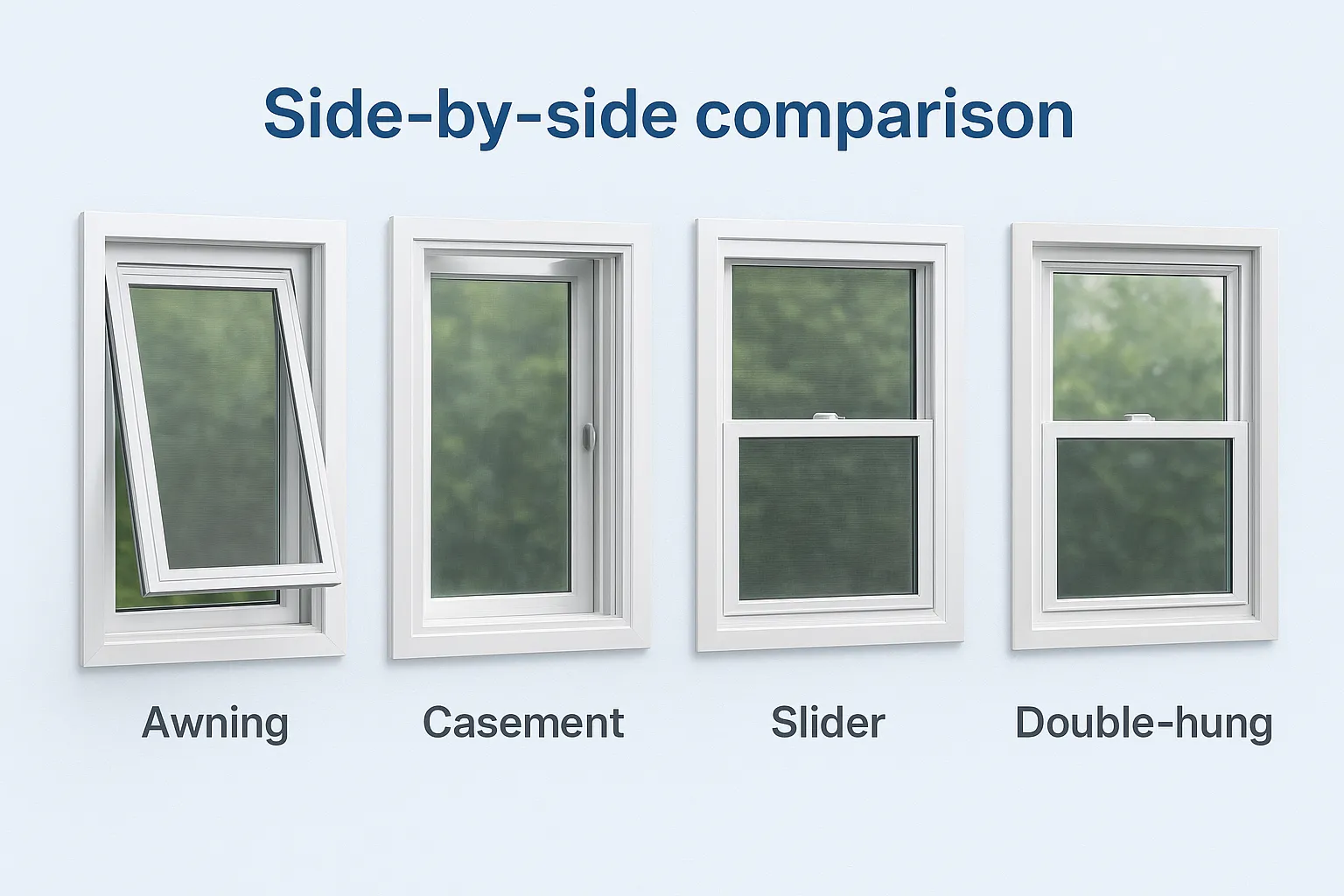
Which style actually suits your situation
Seeing the styles side by side usually makes the decision easier than reading spec sheets in isolation. Basements, bathrooms, and rooms where you want ventilation regardless of forecast tend to favour awning windows precisely because of that interior screen placement. Kitchens and living rooms where you want a wider, unobstructed opening might still lean toward the casement units we install across Ontario, accepting the wind trade-off for the extra airflow. Bedrooms on upper floors, where weather exposure and security are less pressing, are often where sliders and double-hung windows still make sense, screen placement and all. There's no single right answer here, but knowing exactly what each screen setup costs you in bad weather makes the choice a lot less of a guessing game.
How to clean and maintain your awning window screen
A screen that's clogged with dust and pollen doesn't just look grubby, it actually chokes airflow, which defeats the entire reason you installed an awning window with screen in the first place. Regular cleaning keeps the mesh doing its job and stops small tears from turning into holes big enough for wasps and flies to squeeze through. Most of the maintenance is quick, and none of it requires special tools beyond a soft brush and a garden hose.
A simple cleaning routine that actually works
Twice a year, once in spring and once before winter, take the screen out using the removal steps covered earlier and give it a proper wash rather than a quick wipe. Vacuum both sides first with a soft brush attachment to lift dry dust before it turns into grime once water hits it. Lay the frame flat on a towel outdoors, spray it down with a garden hose on a gentle setting, and scrub gently with a soft-bristle brush and mild dish soap if there's built-up residue.
- Vacuum both sides of the mesh with a soft brush attachment
- Rinse with a garden hose on low pressure, never a pressure washer
- Scrub gently with mild soap on a soft cloth for stubborn grime
- Dry flat before reinstalling to avoid warping the frame
Skip the pressure washer. It stretches fibreglass mesh and pops it right out of the frame channel.
Checking the mesh and frame for wear
While the screen is out, run your fingers along the mesh looking for small punctures, since a pinhole left alone tends to grow every time the screen flexes in the wind. Inspect the frame corners too, checking that the spring pins or tension clips still hold firm pressure rather than rattling loosely, which is usually the first sign a replacement corner key is needed. Fibreglass mesh sags a little over the years regardless of care, so if you're noticing visible dips or a wavy look to the screen, that's a sign it's due for a re-mesh rather than another wash.
Seasonal habits that extend screen life
Ontario's freeze-thaw cycle is hard on any exterior fitting, and although the screen sits on the interior side, condensation and frost can still creep in around the frame edges during winter. Storing the screen indoors over the coldest months, if your household is comfortable leaving the window sealed until spring, takes the mesh out of the temperature swings entirely and noticeably extends its lifespan. Paint splatter from exterior trim work is another common culprit behind stuck clips, so cover the screen or remove it entirely before any painting project near the window. Between seasons, a five-minute check each time you swap screens in and out catches small problems long before they turn into a full mesh replacement.
What to look for when buying awning windows with screens
Buying a replacement awning window with a screen isn't just about picking a size and colour. The details that matter most, like how the screen clips in, what mesh it uses, and whether the frame is rated for Canadian winters, rarely show up on a showroom display. Knowing what to ask before you sign a quote saves you from discovering gaps, sagging mesh, or a screen that fights you every time you try to remove it for cleaning.
Checking the screen mechanism before you buy
Ask to see the actual retaining system, not just a photo, since spring pins, tension clips, and friction-fit frames all behave differently after a few years of use. Vinyl frames with reinforced corners tend to hold their shape longer than basic stapled mesh, particularly on wider awning sashes where the screen spans more surface area. Push gently on a display model's screen corners in the shop; if it flexes or rattles on a brand-new unit, it will only get looser once it's installed and exposed to daily opening and closing.
A screen that rattles on the showroom floor will rattle a lot more after a Canadian winter.
Frame material and energy ratings
Because the window frame itself, not just the screen, determines long-term performance, check that the base unit meets the energy ratings that matter in a Canadian home, like Energy Star or NFRC, for your climate zone. Low-E coatings and Argon gas fills should come standard rather than as an upsell, and a manufacturer confident in its build quality will happily walk you through the glazing specs without prompting. Custom sizing matters too, since a screen cut slightly undersized to fit a mass-produced sash frame is a common shortcut that leads to gaps within the first year.
Questions to ask your supplier or installer
Before committing to a quote, and once you know what awning windows cost in Ontario, run through this list with whoever's selling or installing the window:
- What mesh type comes standard, and what upgrades are available?
- Is the screen custom-fitted to this exact window, or a stock size trimmed down?
- What's covered under warranty, the glazing, the screen, or both?
- Who installs the unit, and are they licensed and insured?
- Can I see a sample of the frame material in person before ordering?
Getting straight answers to these questions tells you more about a supplier's quality than any brochure. Homeowners who skip this step are the ones who end up calling installers back within a year to fix a sagging screen or a draughty frame.
Why factory-direct buying changes the equation
Working with a factory-direct manufacturer, rather than a retailer reselling someone else's stock, means the person quoting you actually knows how the screen and frame are built. Our custom awning windows are manufactured, fitted, and installed under one roof in Ontario, backed by a 15-year seal failure warranty, so there's no middleman guessing at specs on your behalf.
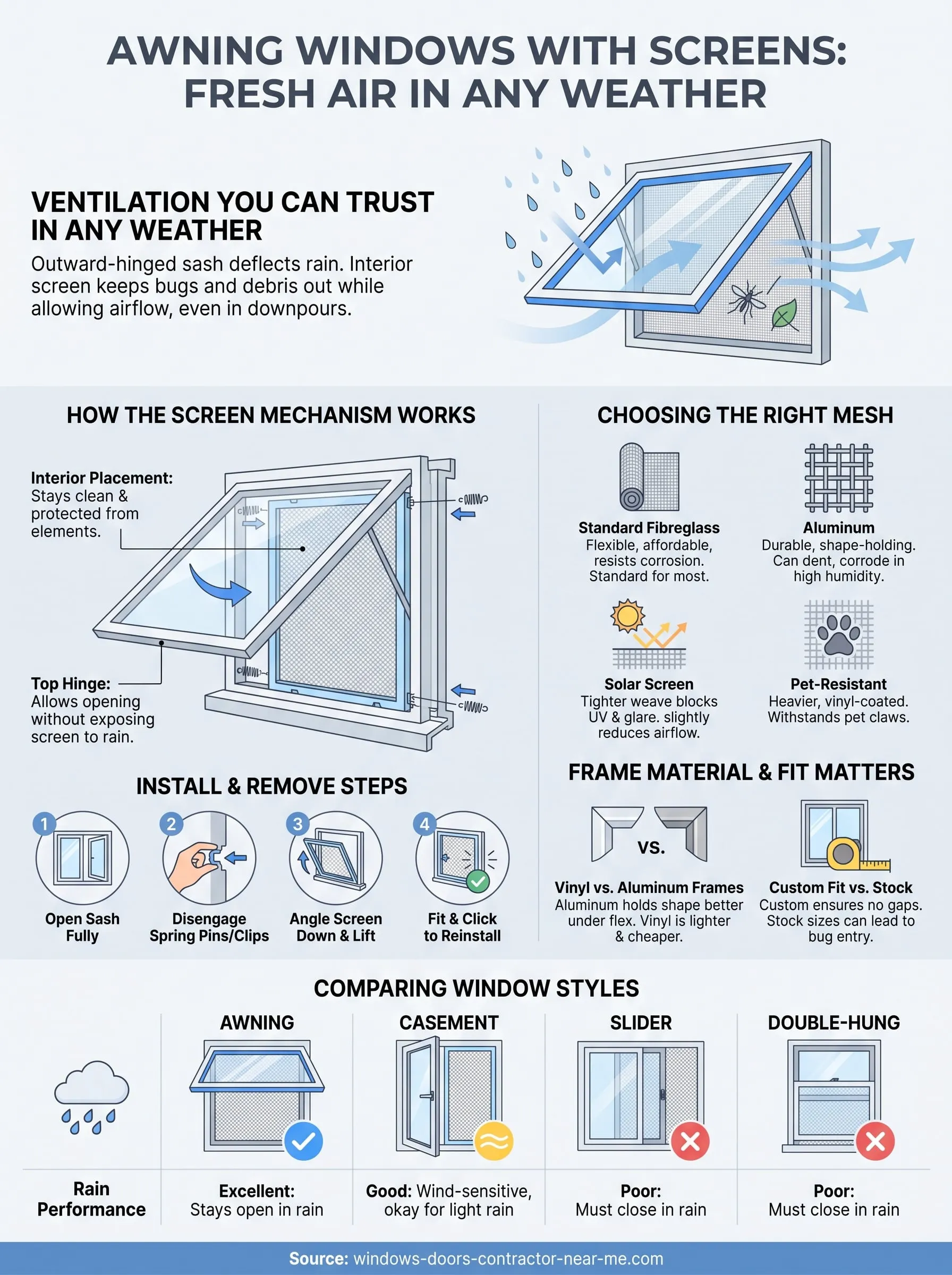
Fresh air, without the fuss
An awning window with screen does one job well: it lets you ventilate a room without gambling on the weather or the bugs. Once you understand where the screen sits, how the mesh options differ, and what a proper installer checks before quoting you, the whole style stops feeling like a mystery and starts looking like the practical choice it actually is. Basements, bathrooms, kitchens, sunrooms, wherever steam or stuffiness is a problem, this is the window style built to solve it.
Getting the screen right matters just as much as picking the frame colour, and that's where a lot of off-the-shelf suppliers fall short. If you're weighing options for your own home in Ontario, talk to MK Windows and Doors about custom-built awning windows with screens fitted to last through a Canadian winter, not just a showroom display.